Finland’s opener against Slovakia stayed level into the middle of the game, then broke quickly in the third period. Slovakia scored first, Finland tied it early in the second, then conceded the go-ahead goal off a lost draw and never recovered. Then, two more Slovakia goals within 13 minutes of one another. Finally, Juuse Saros was pulled for the extra attacker with 4:25 left, and the empty-netter finished it.
Finland’s Top Line Needs a Real Identity
The Granlund-Hintz-Rantanen unit has been assumed to be an automatic advantage due to its recent success and line chemistry in the Dallas Stars’ recent playoff run, but the five-on-five profile does not match the reputation. As a line, they have lived off individual heroics, with the recent Stars postseason samples sitting around 42 percent in shot share and 45 percent in expected goal share. (Thank you for the stat, David Castillo from Stars Stack)
That showed up here. Finland’s top group had touches, entries, and controlled looks, but not enough possessions that ended at the net front. Their was just no momentum behind their assumed dominate line and the group did not seem to mesh as well as they would on paper.
This is also Mikko Rantanen’s paradox. His underlying numbers are not always dominant, yet he can still decide a game with one sequence. Finland did not get that bailout moment, and the line did not win enough shifts to create it.
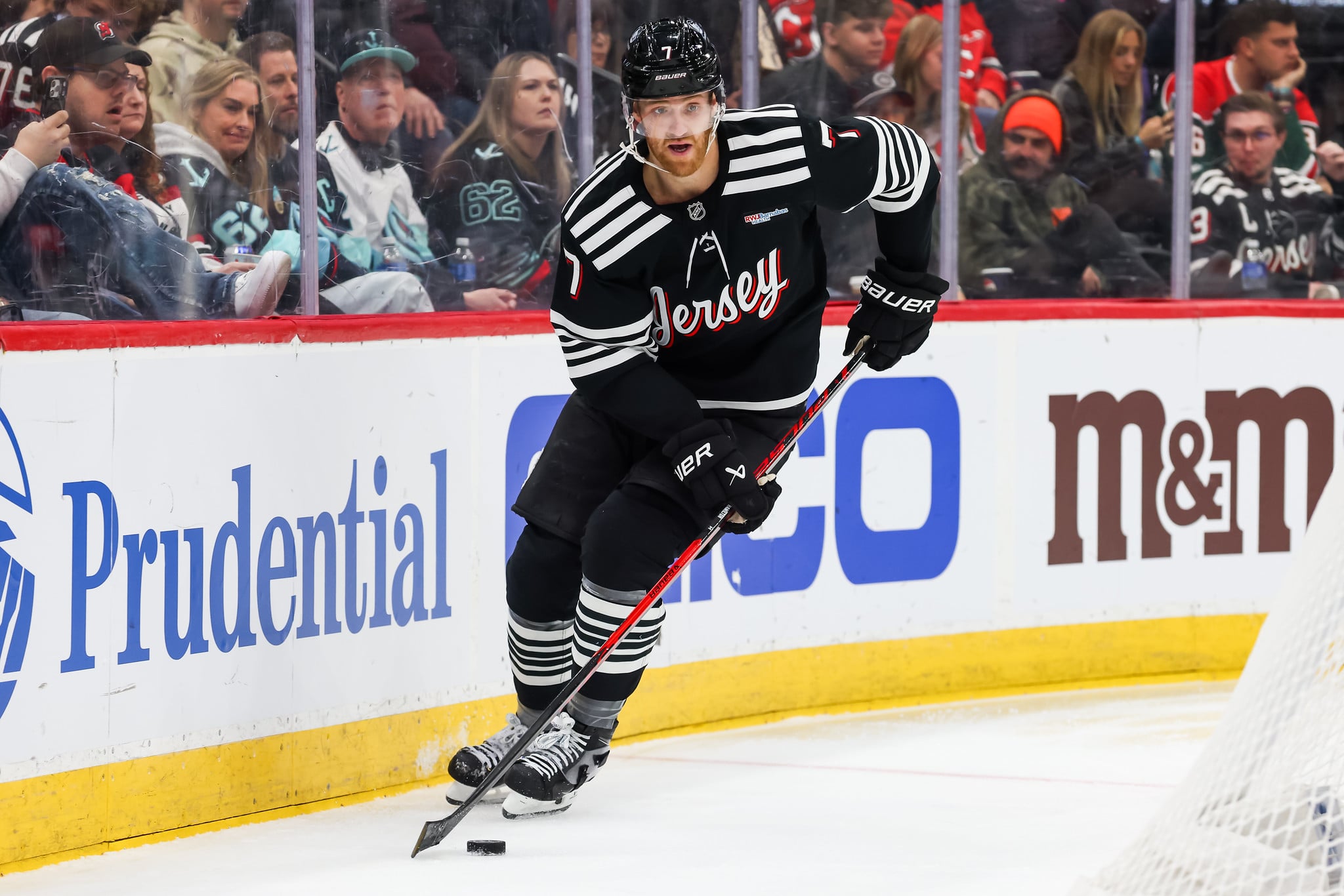
Artturi Lehkonen looks like the simplest fix alongside Roope Hintz and Rantanen. He plays through contact and extends zone time, adding the needed pressure. Finland’s best offensive minutes came when shifts stayed alive long enough for layers to arrive, not when the first look was clean.
Finland Played Like a Favorite, Not a Team Chasing Points
Finland’s pace was controlled for long stretches, especially after the tying goal early in the second period. The problem was urgency. The group played like it expected the game to open naturally, then did not have a second gear when it tightened.
The third period punished small details. Slovakia’s 2-1 goal came right after a faceoff win, and Ilta-Sanomat noted Sebastian Aho’s issues in the circle earlier, including a 33 percent faceoff rate after two periods. Finland did not lose on one play, but the go-ahead goal was a clean example of how thin Olympic margins are.
From there, Finland chased. After Slafkovsky’s move on the 3-1 goal, with Nemec and Dvrsky involved, that was the moment the game felt out of reach.
Juuse Saros Did Not Stop the Run
Juuse Saros did not have a catastrophic night, but Finland needed a stabilizing save when the game flipped. It did not come.
Related: 3 Players on Finland’s Men’s Team to Watch at the 2026 Winter Olympics
Once Slovakia took the lead, Finland’s bench posture changed. With 4:25 left, Saros went to the bench for the extra attacker at 3-1. Ilta-Sanomat logged the timing, then the empty-net goal after a scramble in Finland’s attacking end that turned into a turnover and a finish.
Saros entered this tournament carrying pressure, and this opener added to it. Finland’s defensive detail in front of him has to be cleaner, but the short-tournament reality is that Finland also needs its starter to blunt momentum when the game turns.
Finland Will Return to Face Their Rival
Finland’s next game at the 2026 Milan Olympics will be versus their main Hockey Rival, Sweden, on Friday February 13th.