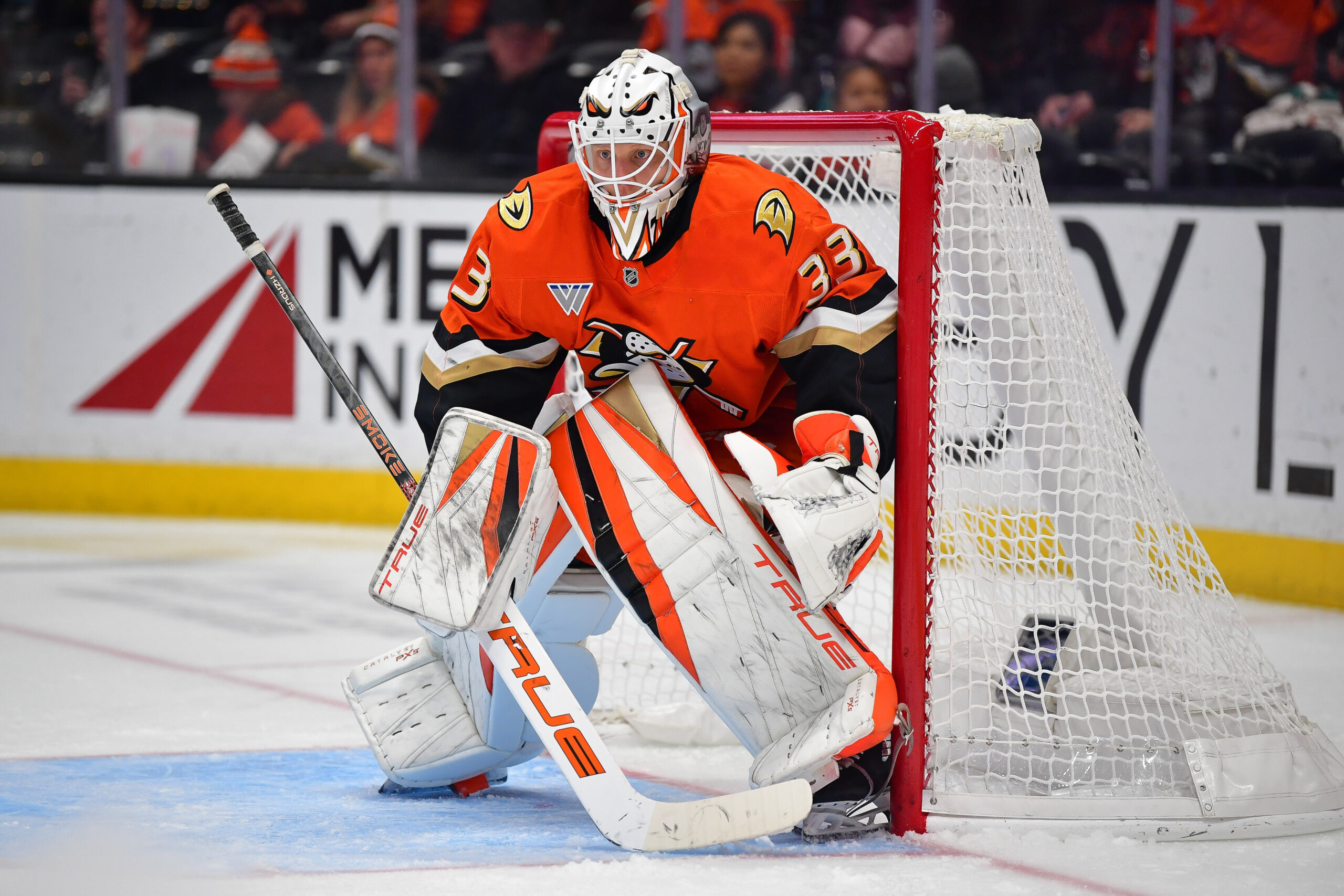
With Lukas Dostal and Petr Mrazek both on the shelf, the Anaheim Ducks have turned to Ville Husso, a Helsinki-born, HIFK-trained veteran who has already ridden the full starter-backup roller coaster in St. Louis and Detroit. For Ducks fans suddenly watching a lot of Husso, his recent form and longer Finnish track record give a pretty clear picture of what he can and cannot do for this season’s playoff push.
From Helsinki to Honda Center
Husso is very much a classic Finnish goalie prospect. He grew up in HIFK’s system in Helsinki and broke into Liiga as a teenager, eventually posting a .927 save percentage (SV%) and 1.91 goals-against average (GAA) in 2015-16 while backstopping HIFK to the Liiga final. That season earned him the Urpo Ylönen Award as Liiga’s top goaltender and a spot on the league’s All-Star team.
Related: Ducks News & Rumors: Goalie Changes and Young Players Stay Hot
St. Louis drafted him in the fourth round in 2014, then brought him over to the American Hockey League (AHL), where he continued to grade out as a calm, structured technician rather than a pure chaos, standing-on-his-head goalie. The template has held ever since. Husso’s game is built on balance, tight routes, and reading traffic, which should sound familiar to anyone who watches Juuse Saros or old Pekka Rinne tape and sees the Finnish goalie school fingerprints.
Why Husso Is Back in an NHL Crease Now
The Ducks acquired Husso from the Detroit Red Wings in February 2025 for future considerations after a rough Red Wings season that saw him post a 3.69 GAA and .866 SV% before being bumped to Grand Rapids. The Ducks stashed him in San Diego, where he steadied his game and put up an 8-4-0 line with a 2.70 GAA and .912 SV% to finish the year, plus a brief, solid NHL look.
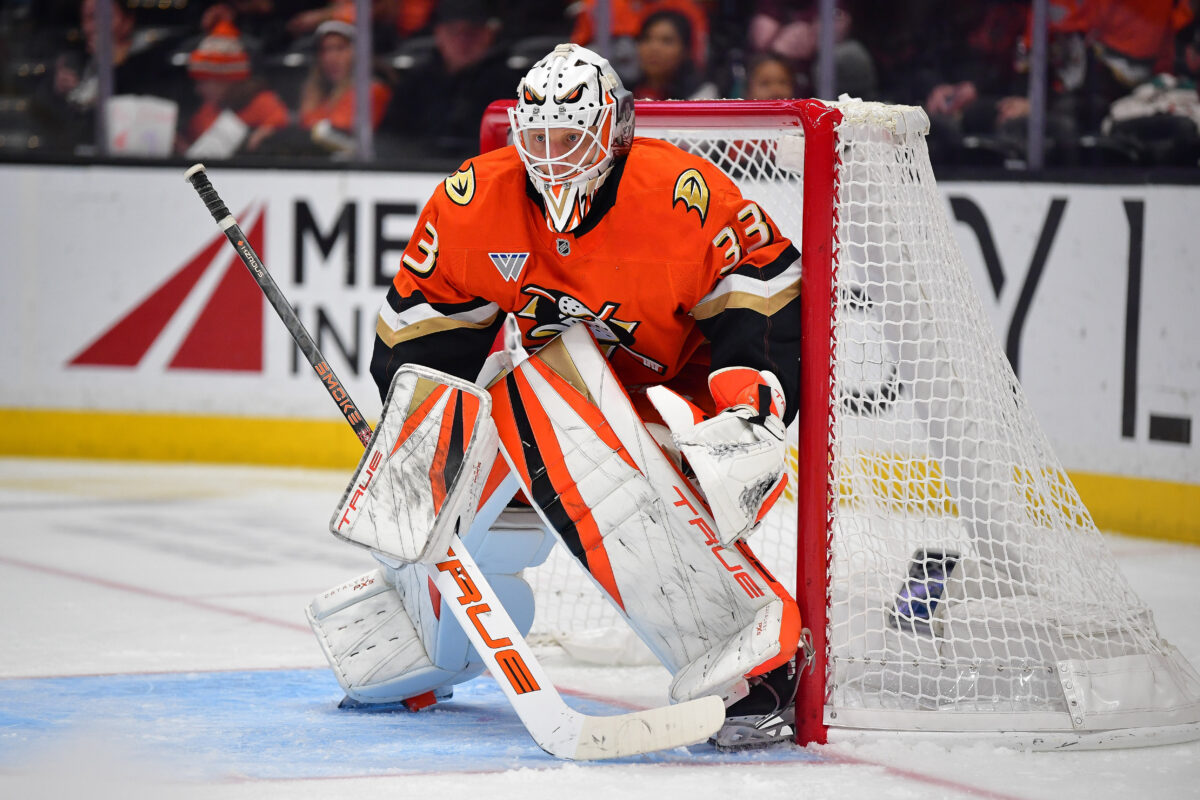
That was enough for Anaheim to bet on him as a bridge piece. In June they signed him to a two-year extension through 2026-27, a clear signal that they viewed him as more than emergency depth behind Dostal.
This fall, he started in San Diego again and quietly posted a 6-4-3 record with a 2.49 GAA, .908 SV%, and three shutouts in 13 AHL games before his late November recall. When Dostal went down with an upper-body injury, and Mrazek followed with a lower-body issue, Anaheim suddenly needed that insurance policy to play real games, not just sit on the bench.
Recent Results, Not Just Reputation
Husso’s early NHL sample with Anaheim this season is small but important. Through four appearances, he is 2-2-0 with a 3.46 GAA and .859 SV%. The raw numbers look ugly, yet they hide two very visible high points.
In his first start of the season, he stopped 23 of 27 shots and then turned away every attempt in a shootout win over the Los Angeles Kings, helping the Ducks finish a six-game homestand at 4-2-0. Three nights later, he beat his old team from St. Louis with 21 saves in a 4-1 win that snapped a ten-game losing streak against the Blues.
Toss in a rocky appearance in the wild Chicago Blackhawks comeback game, and you have a pretty good snapshot of the Husso experience in one week: he can look composed and efficient when the team is organized in front of him, and he can get dragged into chaos when the game breaks open.
Using the six-category goalie rubric from my “Finding A System” framework, we can get a better breakdown of Husso’s toolkit.
Skating (Crease Mobility And Balance)
Husso’s edgework is one of his quiet strengths. He plays from a wide, stable base and uses efficient T-pushes to hit his spots instead of scrambling. The Finnish development path shows up in how rarely he over-slides. When he does get into trouble, it is usually late in long shifts or games when his feet stop quite as early.
Transitions (Up-Down And Post Integration)
At his best, he is smooth into and out of reverse-VH, especially when plays originate below the goal line. In Detroit and now at times in Anaheim, you can see a lag when he has to go post-to-post on quick seams. If his feet are not set when the puck moves east-west, his recovery up to his edges can be a half-beat late.
Hands (Rebound Management And Puck Touches)
This is the trait fans talk about most. Husso does a good job swallowing low-danger looks and first shots from in tight when he has clear sight. From the tops of the circles in, especially on rising wristers, pucks tend to hit him and drop into dangerous space. That rebound pattern frustrated Red Wings fans and is already a talking point in Anaheim game threads.
Tracking (Through Traffic And Lateral Reads)
The Liiga background shows here. Husso is comfortable looking through layers, tracking tips, and holding his feet on screens instead of defaulting to RVH and hoping. When he is on time, he makes net-front chaos look routine. When he is late, the puck can beat him clean over the shoulders, which is where some of the ugly Red Wings goals against came from.
Post Play And Depth
He trusts his posts and usually forces shooters to pick corners from bad angles rather than opening up the middle of the ice. Depth-wise, he likes to play a little above the paint when he trusts the defensive coverage. That worked in St. Louis in front of a heavier, more experienced blue line, but it looked riskier in Detroit and can look exposed in front of young Ducks defenders when rotations break down.
How He Fits Behind Anaheim’s Young, Imperfect Defense
Context matters here. The Ducks have been one of the more entertaining teams in the league, scoring about three and a half goals per game and sitting with a 16-10-1 record that has them in the Western Conference playoff mix. They are not winning because they lock games down. They are winning because Leo Carlsson, Cutter Gauthier, Troy Terry, and friends are filling the net.
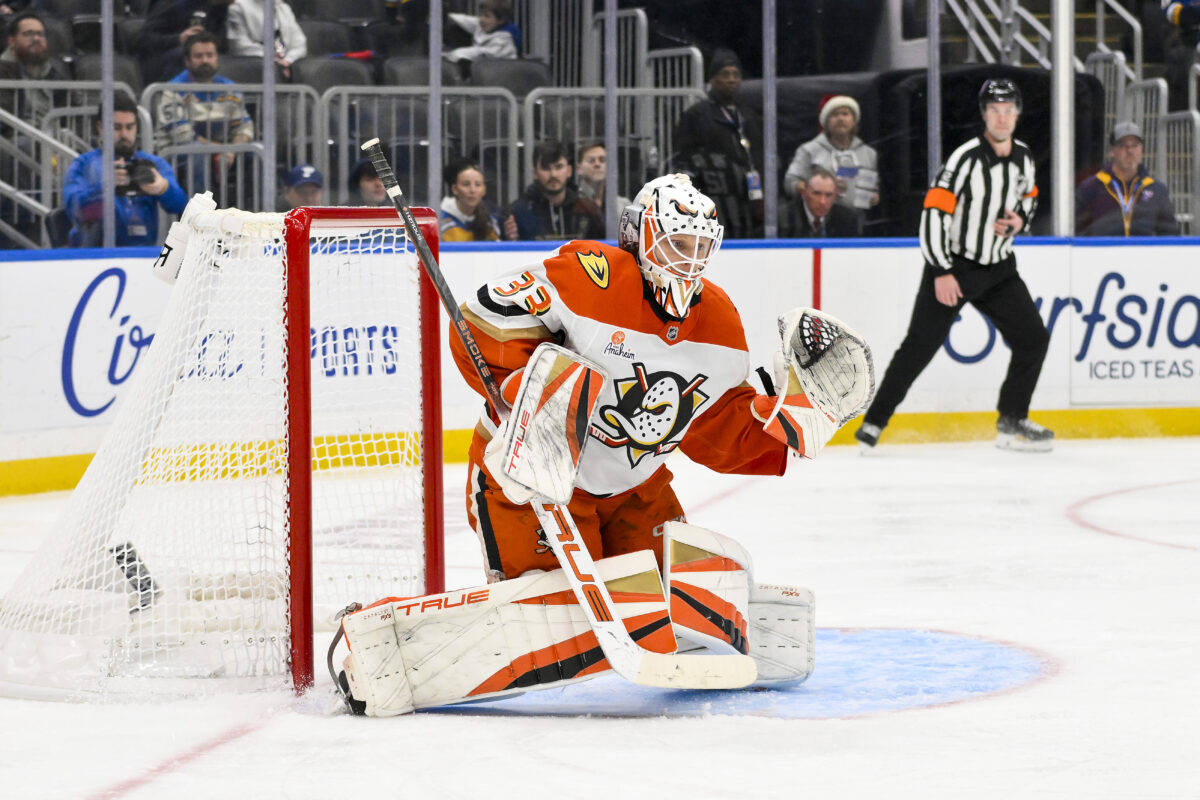
On the other side of the ledger, Anaheim has allowed 3.3 to 3.4 goals per game, a bottom-ten figure leaguewide that reflects both an aggressive style and a still-developing blue line. Olen Zellweger and Pavel Mintyukov are pushing play and creating offense, yet they are still learning timing, net-front box-outs, and when to live with a dump instead of forcing a play.
Husso is a better fit for that reality than the raw save percentage suggests. Because he is structured and generally predictable in his routes, he tends to make life easier for defensemen who are still learning NHL reads. You can see it in how comfortable Mintyukov and Zellweger look walking pucks out of the zone after routine first saves in the Kings and Blues games.
On the flip side, his biggest weak spot is controlling rebounds on mid-range shots, and that really shows when defenders lose track of sticks and bodies around the crease, leaving a goalie out to dry. If Anaheim’s young defenders leak pucks around the crease, Husso’s style will amplify those mistakes instead of erasing them.
Playoff Math: How Much Does Husso Move the Needle?
Right now, is Anaheim scoring enough that they can survive average goaltending and still sit comfortably in the playoff picture? Their risk is not “can Husso steal the Pacific Division” so much as “can Husso keep the floor high enough while Dostal and Mrazek heal.”
If Husso runs close to his career line of a 3.05 GAA and .901 SV% over the next three to four weeks, the Ducks probably tread water. That version of Husso keeps Anaheim in the mix, lets the skaters decide most nights, and buys Dostal time to return at full strength instead of rushing back. In that scenario, the Ducks enter the stretch drive with fresh legs in net and a standings cushion that still looks very real.
If he plays like the 2024-25 Detroit version with a sub .870 SV%, the picture changes. Anaheim’s defense already leaks chances. Spotty goaltending on top of that would turn some of their 5-4 wins into 5-4 losses and chip away at their early-season banked points. A five or six-game skid in a tight Western Conference can wipe out an October and November heater in a hurry.
The good news is that his AHL and early Ducks sample point closer to the first outcome. Husso is coming into this run off a stretch in San Diego where he was above .900 and tied the franchise shutout record, not off the cold bench. For a team with a weaker defensive environment, that is about as stable a short-term bet as Anaheim could reasonably make at this point in the year.
What Comes Next
When Dostal or Mrazek returns, the most likely configuration is a true tandem or a 1A-1B arrangement that leans back toward the two old starters. Anaheim did not extend Husso to block anyone. They signed him to raise the floor and to give this scoring core a chance to play meaningful games all season.
For Ducks fans, the expectations are simple. If the team is still hovering around three and a half goals for and three and a half against by the time the calendar flips to February, Husso will have done his job, even if the box scores are bumpy. If he steadies the goals against without killing the offense, he gives Anaheim a real shot to stay in the playoff picture while a young defense continues to figure itself out.