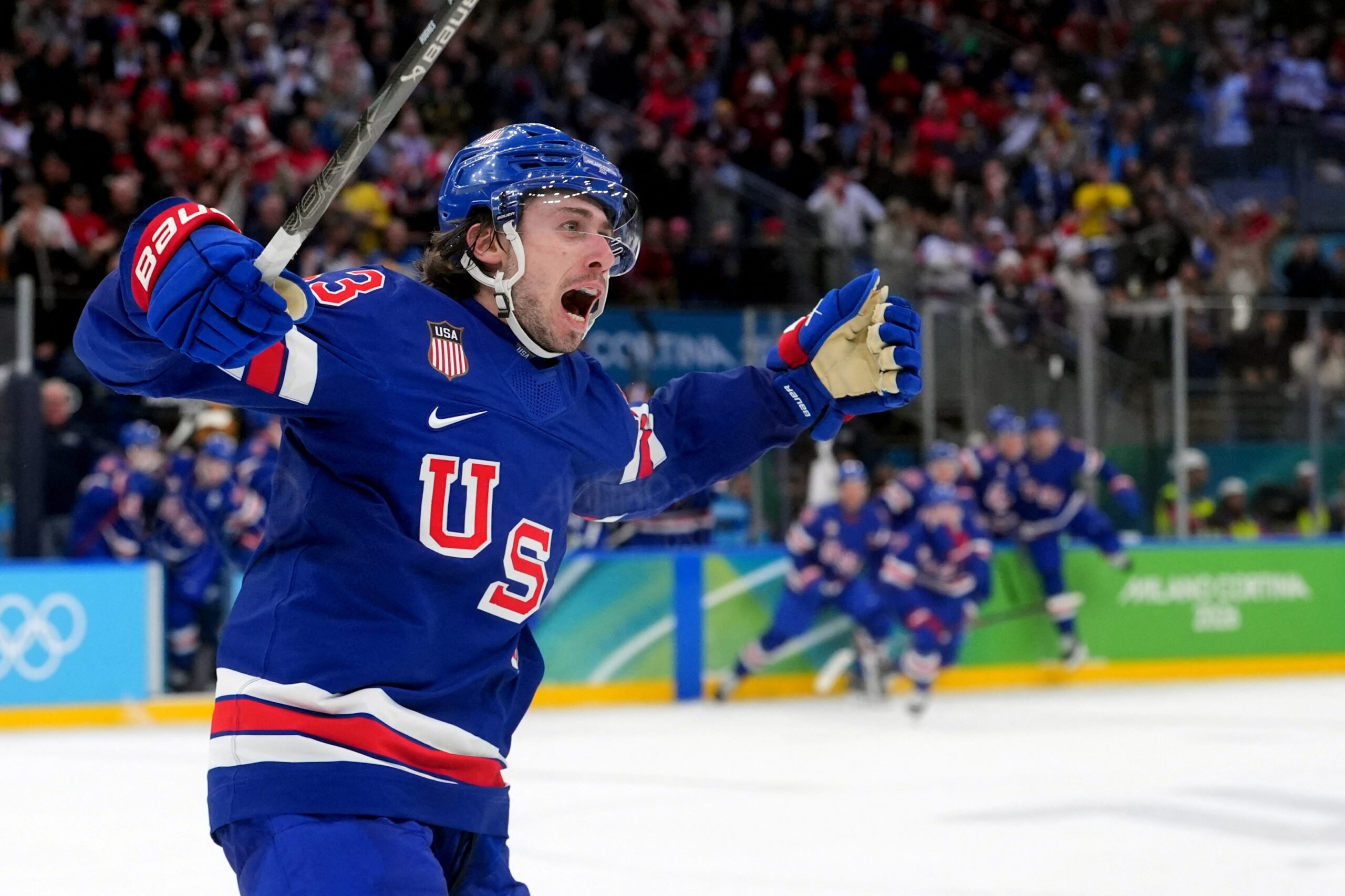
Wow, what a day of quarterfinal hockey at the Olympics. The final game of the day saw Team USA defeat Sweden 2-1 in overtime, the third quarterfinal game that required extra time. This was another excellent game, which saw physicality, late tying goals, and dramatic endings. This was as entertaining a 2-1 game as you’ll see.
The Americans opened the scoring midway through the second period courtesy of a point shot that was redirected in by Dylan Larkin. That lead held up until Mika Zibanejad tied the game in the final minutes to force overtime. That comeback bid fell short as Quinn Hughes walked in and ripped the game-winner, solidifying Team USA’s spot in the semifinals. Here are three takeaways from this nail-biting, low-scoring affair.
Sweden’s Ice Time Distribution Was Questionable
You’re allowed to dress 13 forwards and seven defensemen in international competition, as opposed to the usual 12 forwards and six defensemen in the NHL. However, Sweden didn’t use that to their advantage. Defenseman Victor Hedman got injured during pregame warmups and was ruled out for this matchup. Despite that, he still dressed and sat on the bench, wasting a roster spot that could’ve been given to Rasmus Andersson, who was healthy scratched.
Related: Guide to the 2026 Winter Olympics Men’s Hockey Tournament
The most mind-boggling decision was Jesper Bratt’s usage. Bratt didn’t take a shift in the first two periods but finally saw the ice for the first time at the start of the third. The Swedes lacked pace against the USA’s stingy defense, and could’ve used Bratt’s tenacity much sooner. Once he entered the game, he was noticeable and created chances in the offensive zone that weren’t there in the first two periods.
The New Jersey Devils forward is a speedster who gets in on the forecheck and creates turnovers, leading to scoring chances. Sweden couldn’t generate sustained offensive zone time and quality scoring chances because the Americans were able to break the puck out with ease. Sweden couldn’t disrupt the breakout, and Bratt would’ve helped with that earlier in the game. He’s easily a top-10 Swedish forward, but he wasn’t utilized correctly, and it cost them. He finished the game with 6:25 of ice time.
This Game Was a Defensive Battle
Both these nations have strong defensive units, and that was on full display in this one. There was a feeling-out process to start the game, as neither team wanted to make a mistake. Therefore, the first goal wasn’t scored until halfway through the contest, which was the longest time in the whole tournament before the opening goal. Both countries have physicality and exceptional puck-moving defensemen who can transport the puck to the forwards, which is a lethal combination. Team USA was led by Hughes, who scored the overtime winner and added an assist while leading the team with 27:31 of ice time. He was outstanding.
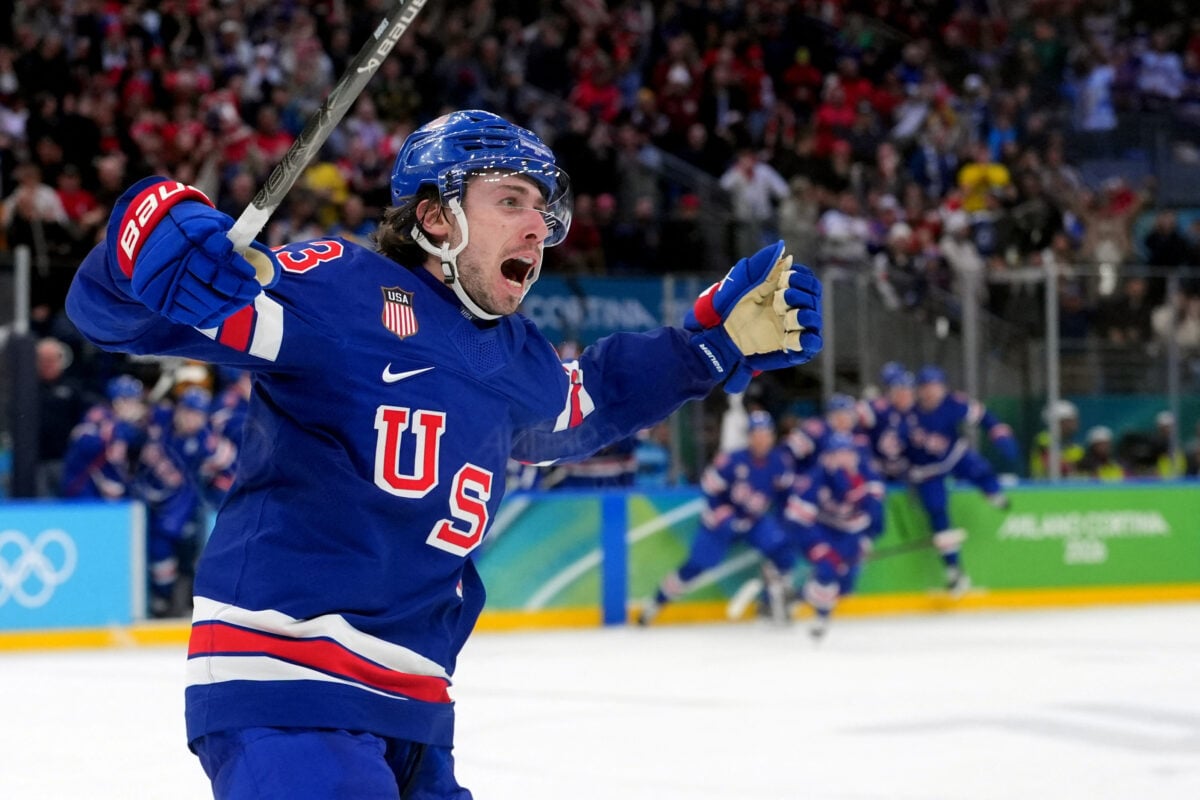
However, let’s focus on the physicality. Charlie McAvoy was a menace out there and hit everything he saw. He had a plethora of massive hits, but more importantly, he kept his opponents to the perimeter and didn’t allow anything easy in his 19:22 of ice time. He was a clear standout on the blue line for the Americans.
You can’t talk about the defense without mentioning the goaltending. Both netminders were fantastic in this one. Connor Hellebuyck stopped 28 of 29 shots for a .965 save percentage (SV%) in the win, while Jacob Markstrom stopped 37 of 39 shots for a .949 SV% in defeat. Markstrom was the busier netminder, and he made some massive saves to keep Sweden within striking distance until they finally found their legs in the third period. However, Hellebuyck was one save better. Team USA has the defense and goaltending to win it all.
USA Faced Toughest Challenge
Out of the four quarterfinals, this was the toughest matchup on paper. Sweden is no pushover, and as expected, they gave Team USA all they could handle. Like Team Canada, USA cruised to a division win, outscoring its opponents 16-5 in the process. Also, like Canada, they faced adversity in the quarterfinals and overcame it. Adversity is important in a short tournament because it makes you stronger. It pushes you to your limits and shows how you must play to be successful. That will bode well in the semifinals and in a potential gold medal game. They are one of the best teams in the tournament, and they proved it in this one.
The semifinal stage is set for Friday (Feb. 20). Team Canada will face Finland, and Team USA will battle Slovakia with a spot in the gold medal game up for grabs. Keep following The Hockey Writers for all your Olympic coverage.