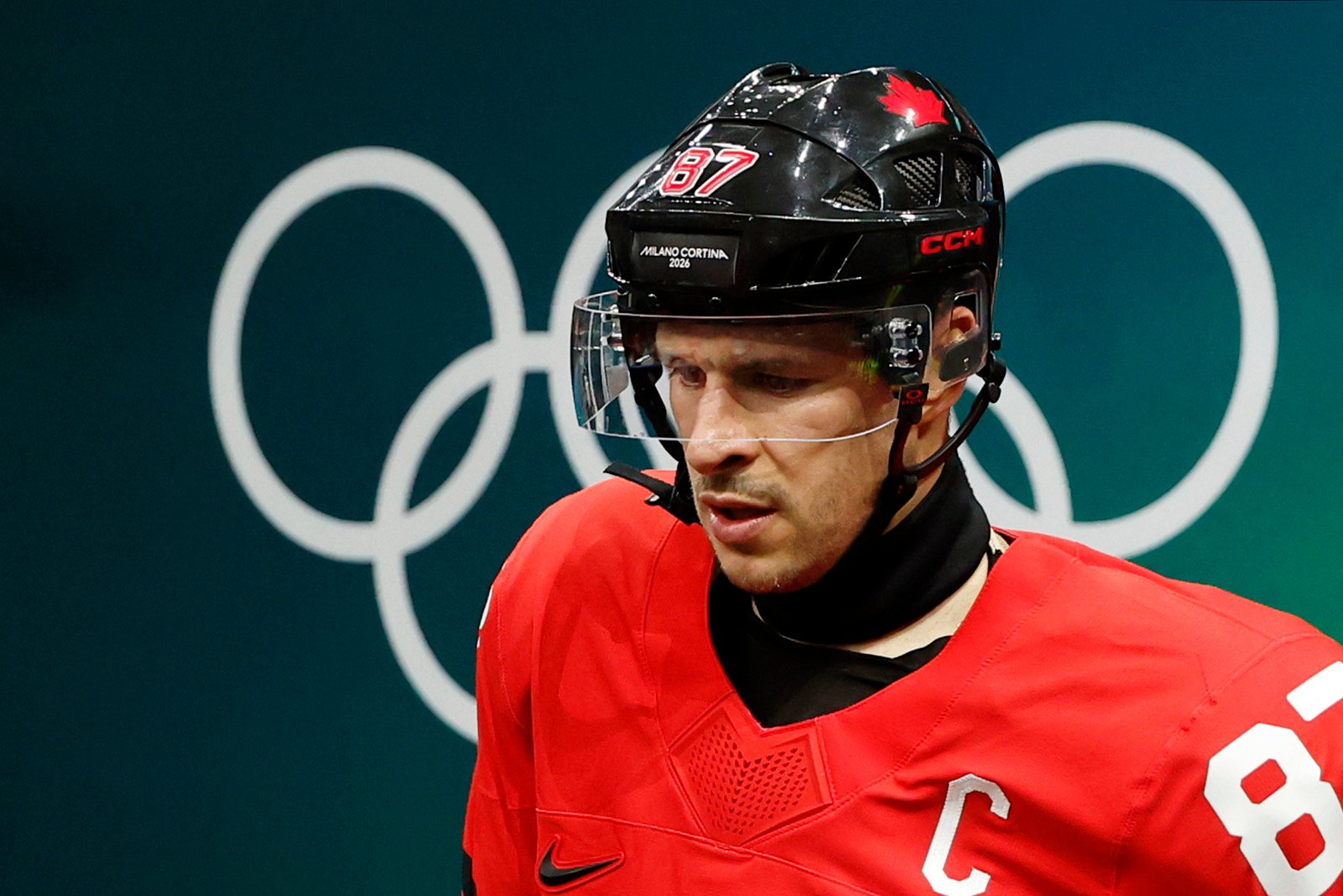
Team Canada escaped with a dramatic 4–3 overtime win over Czechia in the Olympic quarterfinals at the Milano Cortina 2026 Winter Games — but the celebration was muted. The bigger story coming out of Milan was the status of captain Sidney Crosby, who left the game in the second period with a lower-body injury and did not return.
For a tournament that has already been filled with intensity and high stakes, seeing Crosby hobble down the tunnel sent a ripple through Canada’s bench — and back home to Pittsburgh.
How the Injury Happened
The sequence began when Crosby was involved in a tangle with Radko Gudas near the red line between the benches. Crosby’s legs seemed to separate awkwardly as Gudas fell on top of him, although Crosby managed to remain upright while clearly favouring his right leg.
Thirteen seconds later, he was struck again along the boards by Martin Necas and Gudas near the Canadian bench. Crosby took a few strides into the zone before stopping and turning back. After a brief stop at the bench to be checked by medical personnel, he went to the dressing room with just under 14 minutes left in the period.
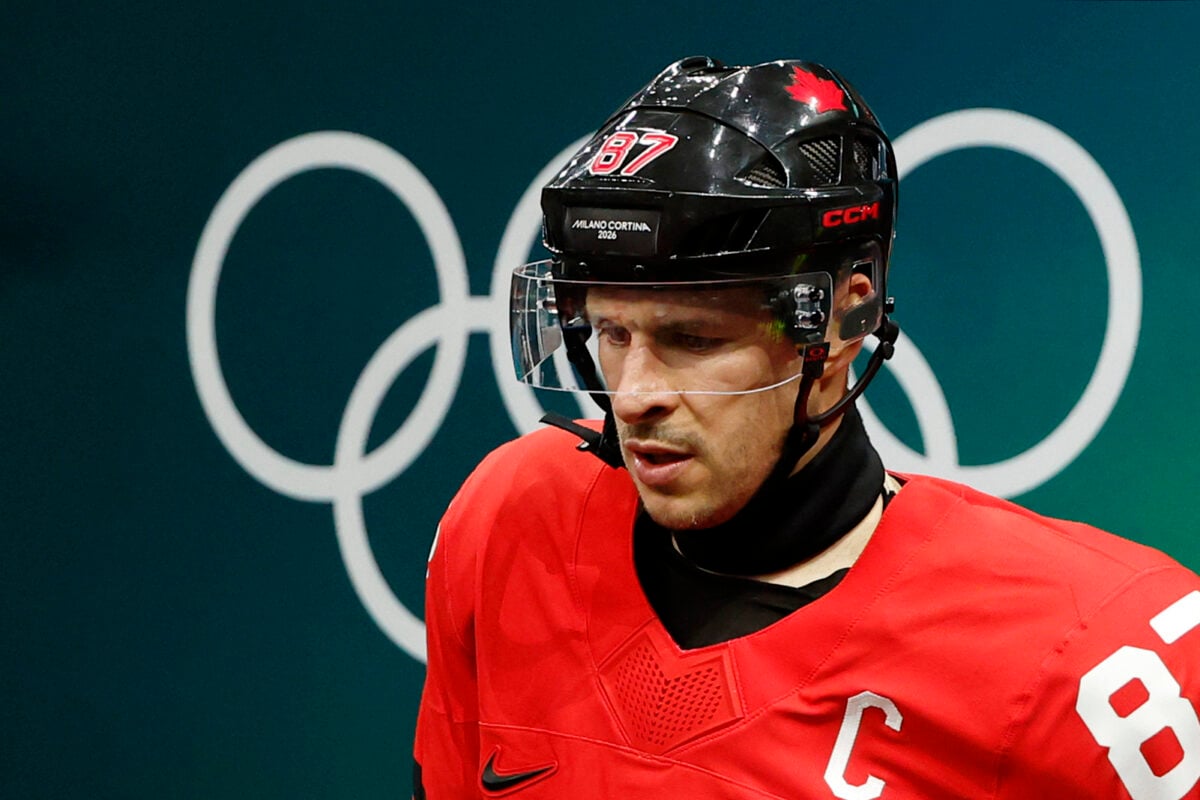
Canada coach Jon Cooper had very little to say after the game, only that Crosby would be further evaluated. The fact that Crosby was able to speak to the team during the second intermission indicates that he was able to move around, but his absence from the game is telling.
Crosby had been one of Canada’s most consistent players in the tournament, registering six points (two goals, four assists) in four games. But beyond the numbers, Crosby’s leadership, puck possession, and defensive play are essential building blocks of Canada’s system.
Related: Crosby Sets Record, Celebrini and McDavid Wow In Team Canada Win Over France
When Crosby went down, the domino effect was swift. Macklin Celebrini filled Crosby’s spot on the first unit of the power play and assisted on Nathan MacKinnon’s tying goal. Nick Suzuki later tied the game in the third before Mitch Marner sealed the win in overtime.
Canada has now shown it can live without Crosby for a night. But living to see another day in a quarterfinal is one thing; living in the pressure cooker of a semifinal and, perhaps, a gold medal game is quite another.
If Crosby is out for the semifinal against Finland, Canada will likely rely more on MacKinnon and Connor McDavid down the middle. Canada has depth to spare, but there’s no substitute for Crosby’s pace management in tight Olympic games. He excels in these situations, slowing the game down, winning battles for pucks, and making world-class defensive decisions when the game is this close.
Without Crosby, Canada’s margin for error shrinks.
Leadership Void on the Olympic Stage
This isn’t just about ice time. Crosby is the captain for a reason.
Olympic tournaments are unique. They are short, emotionally intense, and built on chemistry that must develop quickly. Crosby’s presence calms a bench. Younger players — including Celebrini and other first-time Olympians — look to him for cues in high-leverage moments.
His voice between periods, especially after an injury scare, likely served as a rallying point in Canada’s comeback. But leadership from the stands or locker room is not the same as leadership on the ice in the final minute of a tied semifinal.
Should Crosby miss time, Canada’s veteran core — including MacKinnon and McDavid — will have to shoulder both the offensive load and the emotional steadiness he provides.
What This Means for the Pittsburgh Penguins
While Canada focuses on a medal, the Pittsburgh Penguins are likely holding their breath.
Crosby remains the cornerstone of the franchise. Even at 38, he continues to drive play at a high level and is central to the Penguins’ push in what has been a competitive Metropolitan Division race.
A lower-body injury can range from a minor strain to something far more concerning. Given the awkward split motion in the initial collision, speculation will naturally center around groin or knee-related issues — both of which can linger if not handled carefully.
The Penguins have structured their lineup around Crosby’s presence. His chemistry with linemates, his role on the top power-play unit, and his ability to anchor tough matchups are not easily replicated. Evgeni Malkin can absorb additional responsibility, but Pittsburgh’s forward depth has already been tested at various points this season.
If Crosby were to miss extended time, the Penguins’ playoff positioning could be jeopardized. In a tightly packed Eastern Conference, a two- or three-week absence could swing multiple games — and potentially the season.
Balancing Olympic Glory and NHL Realities
This situation underscores the inherent tension when NHL players participate in international tournaments. The pride of representing one’s country is immense, especially for a player like Crosby, whose Olympic résumé includes iconic performances. But franchises invest heavily — financially and strategically — in their stars.
Pittsburgh management will undoubtedly defer to medical evaluations, but their priority will be ensuring Crosby returns fully healthy rather than rushing back for an Olympic semifinal.
For Crosby himself, the decision could be complicated. Competitors of his caliber rarely want to sit out meaningful games, particularly on the Olympic stage. Yet long-term durability matters — not just for the Penguins’ season but for Crosby’s legacy as he navigates the latter years of a Hall of Fame career.
The Road Ahead
Canada will prepare for Finland with contingency plans in place. If Crosby is cleared, even at less than 100 percent, his presence would provide a massive psychological lift. If he cannot go, Canada still boasts elite talent capable of contending — but the path becomes steeper.
For Pittsburgh, the waiting game begins. Medical updates in the coming days will determine whether this was a scare or a significant setback.
In Milan, Canada celebrated an overtime victory. But as they shift focus to the semifinals, the lingering question remains: can they chase gold without their captain?
And in Pittsburgh, the stakes feel just as high.