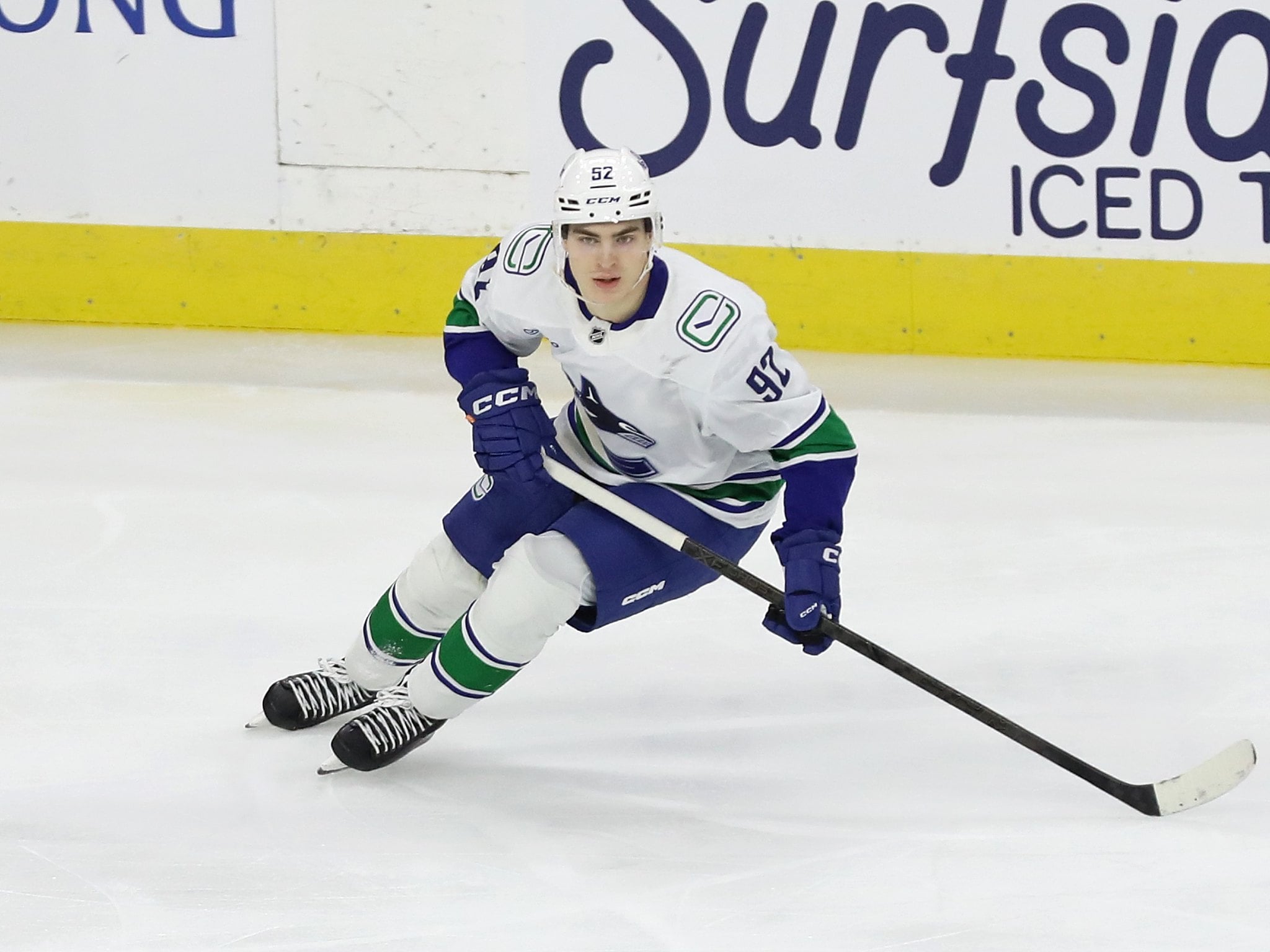
The 2025-26 Vancouver Canucks season will primarily be remembered as the year the core finally fractured. The blockbuster December trade that sent captain Quinn Hughes to the Minnesota Wild signaled the official start of a painful, necessary teardown. While the loss of a generational defenceman was a bitter pill for the fan base to swallow, the return package offered a glimpse into the next iteration of this roster. Among the new arrivals was Swedish winger Liam Öhgren, a player whose first half-season in blue and green provided both encouragement and a reminder of the steep learning curve for young pros in this league.
2025-26 Performance
Öhgren’s arrival in Vancouver was a study in increased opportunity. Before the trade, he was buried in a Minnesota system that struggled to find him consistent minutes, often relegated to a peripheral role where his offensive instincts were stifled. Upon joining the Canucks, the 22-year-old was immediately thrust into a more prominent position.
In 51 games for the Canucks, Öhgren managed to find the back of the net eight times and added ten assists. While 18 points in over half a season doesn’t jump off the page, it’s important to look at the context of his deployment. He didn’t see much time on the top power-play unit, which was largely reserved for the remaining established veterans. Instead, Öhgren did his heavy lifting at even strength.
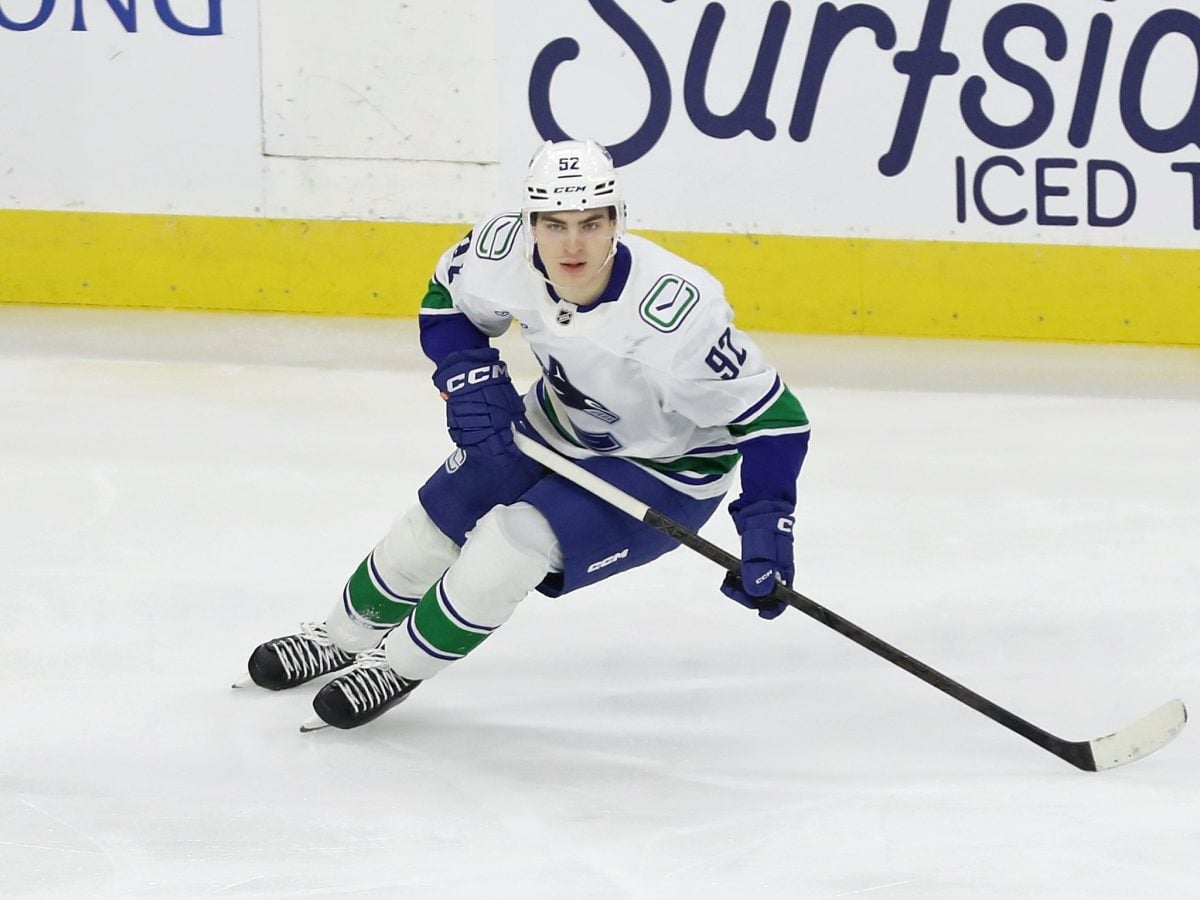
His game is defined by a high hockey IQ and a heavy shot that he isn’t afraid to use. He averaged nearly 1.5 shots per game during his time in Vancouver, showing a willingness to test goaltenders from high-danger areas. However, like many young players on a struggling team, his defensive metrics suffered. He finished with a significant negative rating in the plus/minus category, though much of that can be attributed to the team’s overall defensive struggles and the fact that the Canucks were often playing from behind.
Impact for the Canucks
The most immediate impact Öhgren had was providing a much-needed infusion of youth and energy into a middle-six that had grown stale. Standing 6-foot-1 and weighing nearly 190 pounds, he possesses the frame to survive the physical rigours of the Western Conference, even if his game is more about finesse than intimidation.
The turning point for Öhgren’s season came when he was paired with fellow newcomer Marco Rossi and veteran sniper Brock Boeser. Quickly dubbed the “BRO Line” by the local media and fans, this trio became the Canucks’ most consistent offensive threat in the latter half of the season. According to tracking data, they were the team’s most frequent line combination following the Olympic break, and for good reason.
In this trio, Öhgren served as the essential “digger.” While Rossi acted as the cerebral playmaker and Boeser provided the elite finishing, Öhgren’s relentless work rate and speed allowed the line to recover pucks and sustain pressure in the offensive zone. His ability to win board battles and quickly transition the puck to Rossi gave the line a dimension of puck pursuit that Vancouver had lacked. This chemistry was the primary reason the Canucks’ offence didn’t completely flatline following the trade deadline, proving that Öhgren can elevate his game when placed alongside high-end skill.
Future With the Team
Looking ahead, Öhgren is a surprise foundational piece of the rebuild. Unlike some of the lottery ticket prospects the Canucks have gambled on in the past, Öhgren feels like a high-floor player. Even if he never develops into a 30-goal scorer, his intelligence and versatility suggest he will be a fixture in the lineup for years to come.
The 2026-27 season will be the real litmus test. With a full training camp under the Canucks’ coaching staff and a clearer understanding of the systems, the expectation will be for him to bridge the gap between a secondary contributor and a legitimate top-six threat. There is a vacancy on the second power-play unit that he is tailor-made to fill, particularly as a bumper or a flank shooter.
His chemistry with Rossi and Boeser will be the story to watch. If they can maintain the rapport shown on the BRO Line, the Canucks may have solved their middle-six scoring depth issues for the next five years. For Öhgren, the next step is consistency; he had stretches this season where he went six or seven games without making a meaningful impact on the scoresheet. Eliminating those quiet nights will be the difference between a role player and a core piece.
Overall Grade
A “B-” might feel conservative, but it reflects a player who did exactly what was asked of him without quite exceeding expectations yet. Öhgren proved he belongs in the NHL and that he can handle top-nine minutes on a nightly basis. He didn’t set the world on fire, but he didn’t look out of place either — a feat in itself given the chaotic state of the Canucks’ season.
He provided a glimmer of offensive hope during a very dark winter in Vancouver. He wins battles along the boards, possesses a professional-grade shot, and plays the game with a maturity that belies his 22 years. The defensive lapses and the dry spells in scoring are to be expected from a player in his first real year of NHL duty. If he can turn some of those “almost” plays into goals next season, that grade will climb quickly. For now, he is a solid, promising addition to a team that desperately needs more players of his pedigree.
AI tools were used to support the creation or distribution of this content, however, it has been carefully edited and fact-checked by a member of The Hockey Writers editorial team. For more information on our use of AI, please visit our Editorial Standards page.
Free Newsletter
Get Vancouver Canucks coverage delivered to your inbox
In-depth analysis, breaking news, and insider takes – free.
Subscribe Free →