This past week, the Vancouver Canucks made a couple of quiet depth signings. They might not move the needle in July, but they tend to matter more in November when injuries start stacking up. At the same time, there’s a bigger Canucks problem evident in the top five scorers on last season’s team.
The real question is what last season’s numbers are actually saying about the team’s structure. In this post, I’ll take a look at what’s sitting underneath the numbers—because they tell a more interesting story than they first appear.
Jack Thompson Signs One-Year Deal After Switch to Abbotsford
The Canucks have added some organizational depth on the blue line, signing Jack Thompson to a one-year, two-way contract. Thompson split last season between the San Jose Sharks’ American Hockey League (AHL) affiliate and the Abbotsford Canucks after being acquired in a March deal for Jett Woo.
Offensively, Thompson posted six goals and 25 points in 56 AHL games last season. It’s not a huge production, but it is steady. He’s a depth defender who wasn’t dominant in any one area, but he also didn’t drift through games either. He played, contributed, and stayed in the mix enough to warrant a contract.
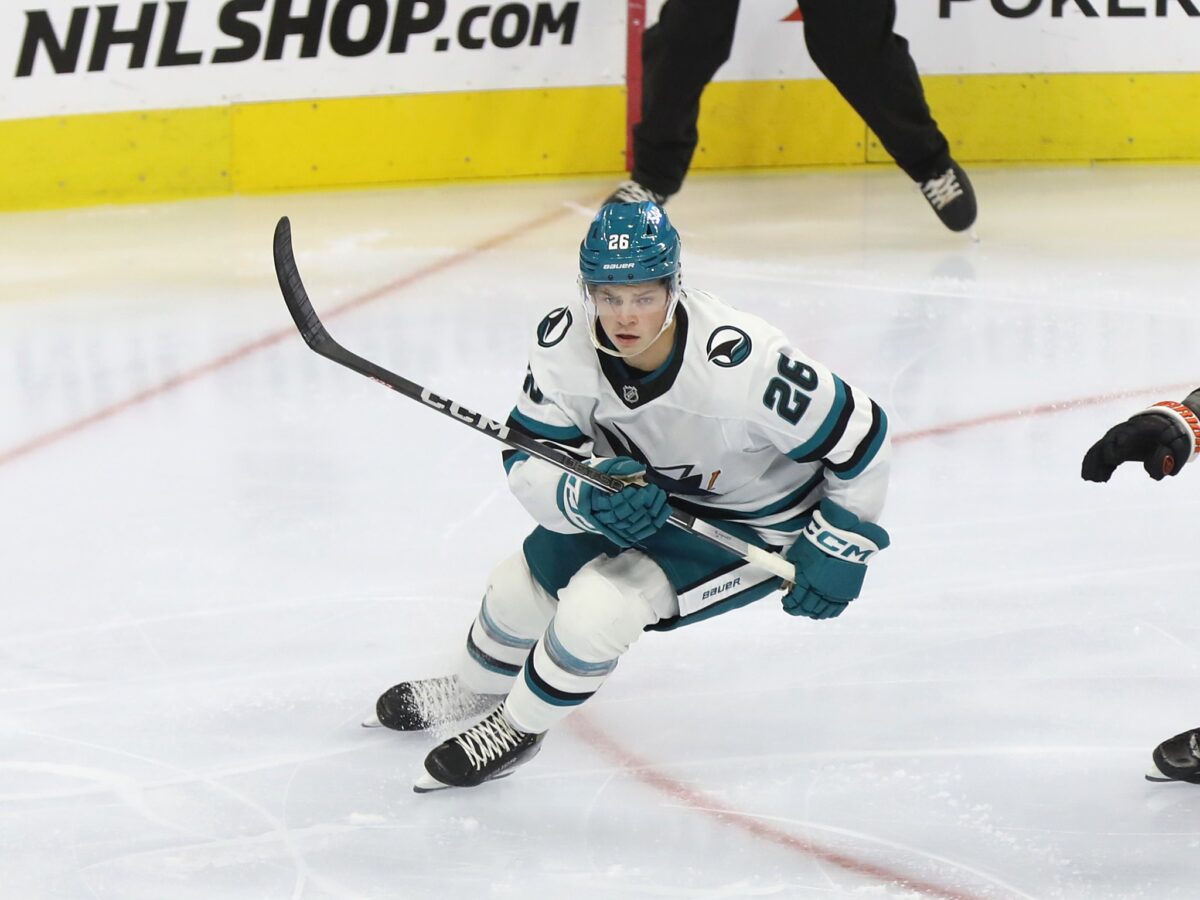
He also isn’t new to the NHL environment. Thompson has 34 career games at the top level, with four goals and 10 points, though he didn’t appear for Vancouver last season. That experience alone gives him a bit of a different profile than a typical depth signing. For the Canucks, he’s the kind of low-risk move that keeps an organization stable. Thompson likely starts in Abbotsford, but if injuries hit the NHL roster, he’s already on the internal radar.
Ilya Safonov Brings KHL Experience Into the Mix
The Canucks also brought in forward Ilya Safonov on a one-year, two-way deal worth $950,000 at the NHL level. Safonov arrives without a North American track record but has more Kontinental Hockey League (KHL) experience with Ak Bars Kazan. Originally drafted by the Chicago Blackhawks in 2021, Safonov has spent the past four seasons developing in Russia, including a 16-goal, 33-point campaign last season over 68 games. That’s solid production in a league that doesn’t always hand out easy offence.
Still, he doesn’t project as a top-line scorer at the NHL level. He looks more like a depth evaluation signing than anything else. Expect Safonov to get a good look in training camp, and the Canucks will get a chance to see how his game translates to North American ice. There’s size, experience, and enough offensive touch to keep things interesting, but the expectation is more bottom-six utility than anything higher.

From a roster-building perspective, it’s another no-risk, low-cost option that increases competition heading into camp.
Canucks’ Scoring Leaders Point to a Structural Issue Beneath the Surface
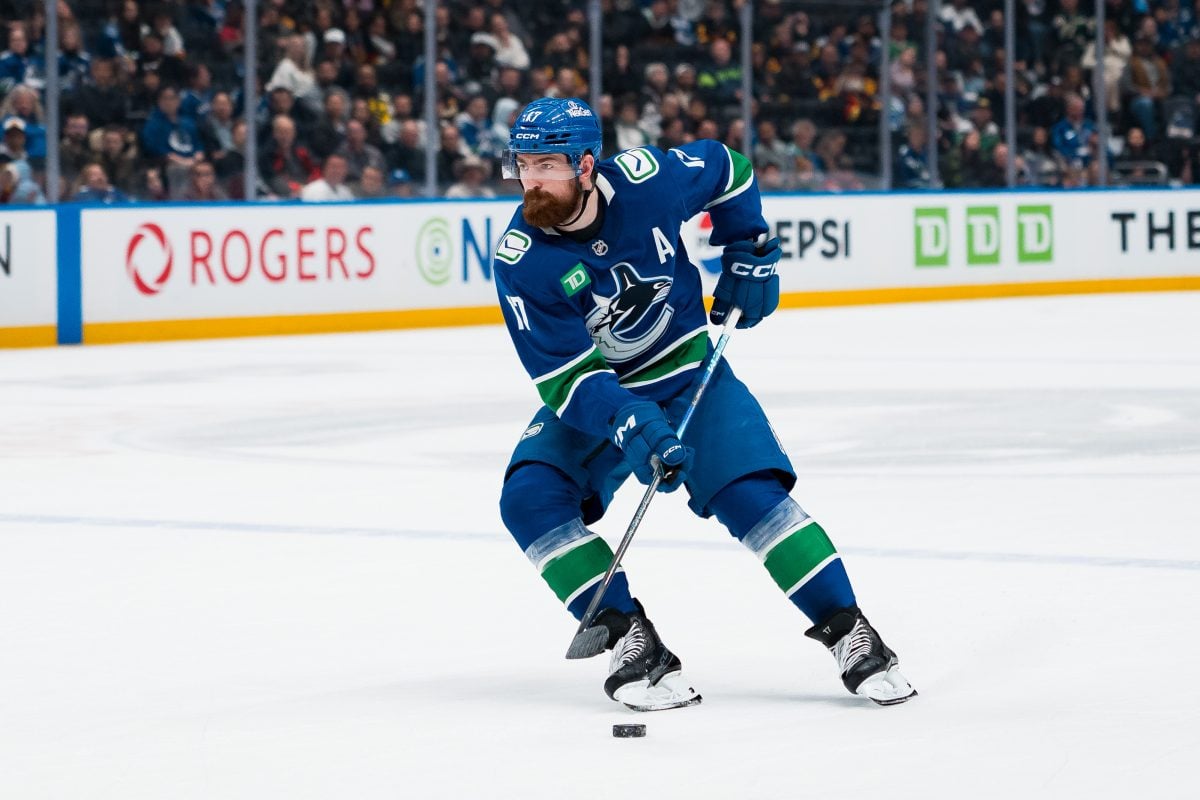
This is where things get more interesting than the new signings. Vancouver’s top offensive producers last season — Elias Pettersson, Filip Hronek, Brock Boeser, Jake DeBrusk, and Linus Karlsson — all put up middling numbers. Pettersson still reached 51 points in what most would call a down season. Hronek nearly hit 50 from the blue line while playing heavy minutes. Boeser and DeBrusk combined for over 40 goals. That’s production.
But then you look at the other side of the ledger. Every single one of them finished deep in the minus: Pettersson (minus-30), Hronek (minus-23), Boeser (minus-48), DeBrusk (minus-31), Karlsson (minus-28). That’s not a good pattern.
What it suggests is not a lack of offensive talent but a team environment where scoring chances and defensive structure aren’t aligning. The Canucks could produce enough offence to stay competitive, but they’re spending too much time in situations where they’re defending.
When that happens across your entire top group, it stops being about individual performance and starts pointing to system-level issues. These include zone exits, transition defence, and how often shifts start under pressure rather than in control.
The encouraging part is that none of these players looks broken. Pettersson still could be the top-line centre he’s shown. Boeser still scores goals. Hronek is a heavy-minutes defenceman. DeBrusk and Karlsson both look like they can be useful in the right structure. The question for next season is whether the team can create that structure.
What’s Next for the Canucks?
For Vancouver, the offseason story isn’t really about adding depth pieces like Thompson and Safonov. Both are supporting moves. The real focus is whether the coaching staff and management believe last season’s results were a personnel issue or a systems issue.
If it’s the latter, the path forward might not require dramatic roster changes. It might just require a cleaner structure, better defensive support, and more consistent puck management in transition. The core probably isn’t going anywhere. Pettersson, Boeser, and Hronek are foundational pieces. There are rumours that DeBrusk might be gone. Now, head coach Manny Malhotra’s job is to try to optimize the system around whoever is left.
If that’s the case, then the real hope for Vancouver isn’t that new names suddenly transform the lineup. It’s that the same names already on the sheet start playing in a game that finally works with them instead of against them.
Free Newsletter
Get Vancouver Canucks coverage delivered to your inbox
In-depth analysis, breaking news, and insider takes – free.
Subscribe Free →