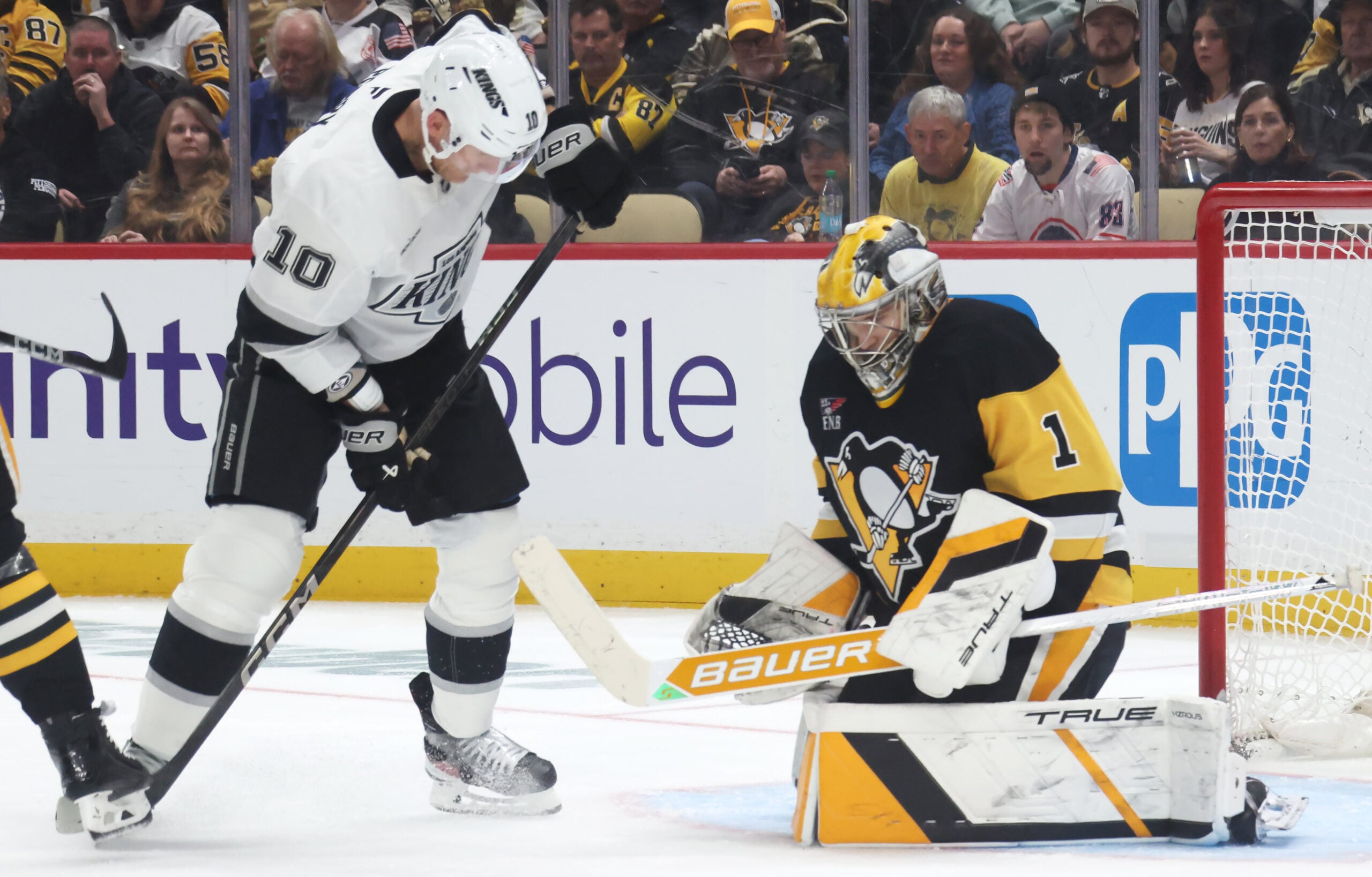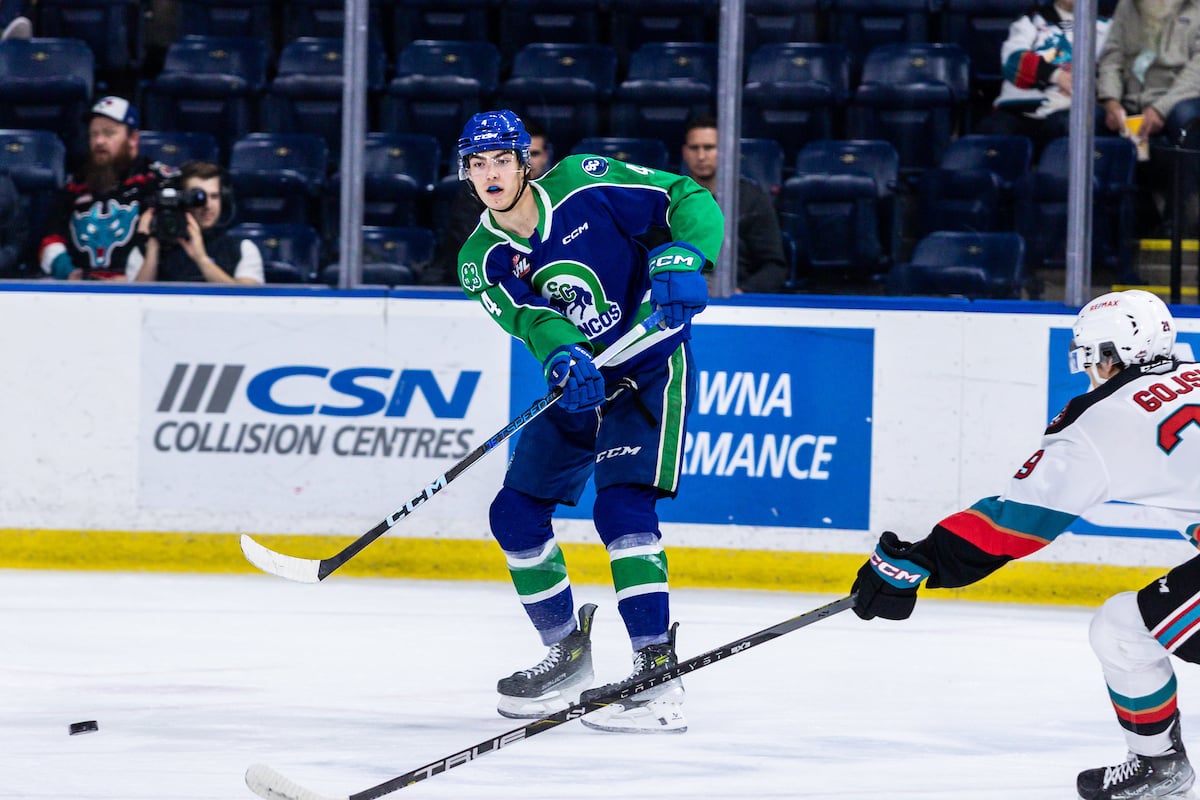
Peyton Kettles entered 2025-26 with an opportunity to take on greater responsibility following his draft year. Instead, a recurring right shoulder issue limited him to five games split between the Swift Current Broncos and Kelowna Rockets, during which he recorded one goal and two assists.
Kelowna announced in November that Kettles would undergo surgery in Pittsburgh after the Rockets and Penguins worked together throughout the evaluation process. The official injury update placed him out indefinitely, while Pittsburgh later announced an expected recovery period of six to seven months.
The procedure effectively removed one of the most important seasons in a young player’s development. Teams normally use the season immediately following the draft to evaluate whether prospects can increase their production, take on larger roles, and apply lessons from NHL development camp. Kettles spent that time rebuilding his shoulder rather than proving he could become one of the Western Hockey League’s (WHL) better defensive players.
That lost opportunity explains his fall in prospect rankings more than any major change in his underlying ability. Kettles did not struggle throughout a full season or show that his defensive tools were no longer effective. He simply lacked enough games to provide new evidence while players around him continued moving forward.
His late return offered an encouraging first step. Kettles rejoined Kelowna for the 2026 Memorial Cup and appeared in his first meaningful game in more than six months against the Kitchener Rangers. The WHL’s Memorial Cup report confirmed that he returned to the lineup after missing nearly the entire season.
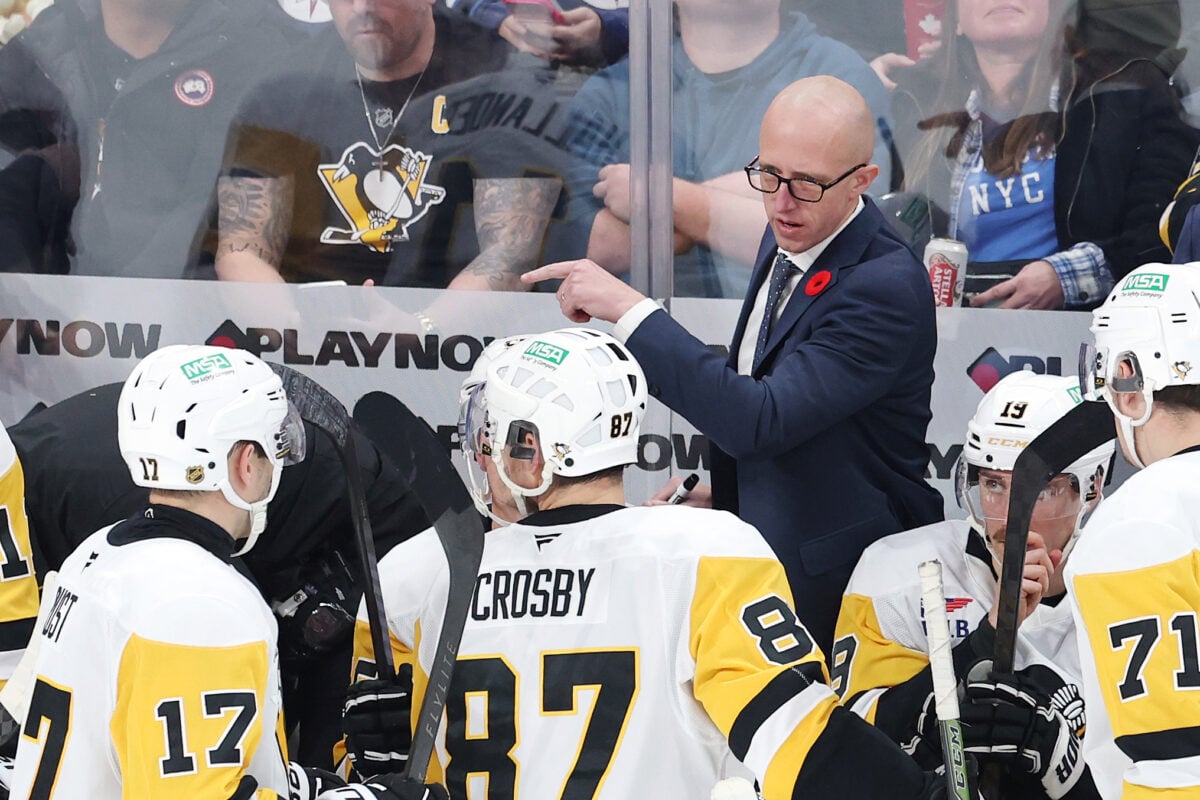
Playing in the tournament did not erase the lost season, but it allowed Kettles to test the shoulder under game conditions before beginning a full offseason. His next challenge is proving that the recovery can hold up across an entire WHL schedule.
Penguins Still Value Kettles’ Defensive Profile
The Penguins did not draft Kettles because they expected him to become a high-scoring defenseman. They selected him because his physical profile and defensive habits are difficult to find.
Pittsburgh’s official 2025 draft evaluation emphasized Kettles’ defensive stick, competitiveness, and toughness. His 6-foot-6 frame allows him to cover significant space, disrupt passing lanes, and keep attacking forwards away from dangerous areas when his positioning is sound.
The Kettles original draft profile also described a defenseman whose value comes from reach, gap control, and physical potential rather than offensive production. He can end plays with his stick, defend entries, and guide attackers toward less dangerous areas without constantly chasing hits.
That distinction matters. Large defensemen sometimes become too dependent on size at the junior level, but Kettles’ better defensive sequences begin with positioning. His reach becomes most effective when he maintains the correct distance from the puck carrier and forces a difficult decision before contact is necessary.
Kettles also possesses enough mobility and puck skill to avoid an overly narrow projection. He can make a clean first pass, move the puck out of pressure and support possession without needing to carry the offense. Improving those areas would give him a stronger chance of becoming more than a specialized penalty killer.
The Penguins already have different types of defensemen developing around him. Harrison Brunicke offers more skating and offensive upside, while Owen Pickering has already begun adjusting his size and puck-moving ability to professional hockey.
Kettles does not have to copy either player. His path depends on becoming the dependable, physical right-shot defender Pittsburgh believed it was acquiring.
Added Strength Must Become a Priority
Kettles’ size is already his most noticeable physical advantage, but his frame remains unfinished.
At around 196 pounds, he is relatively lean for a 6-foot-6 defenseman expected to handle physical assignments. His reach can compensate against junior competition, but professional forwards will be stronger along the boards, more difficult to move from the crease and better at protecting the puck through contact.
A healthy offseason gives Kettles a chance to add functional strength without sacrificing his mobility. The goal should not be gaining weight as quickly as possible. He needs to become stronger through his legs, core and repaired shoulder so his size consistently influences battles instead of remaining mostly a visual advantage.
Pittsburgh’s official Kettles contract announcement listed him at 6-foot-6 and 196 pounds while confirming that he had appeared in 121 WHL games before surgery. That experience should help him take on major minutes when he returns, but his body must be prepared for the workload.
Strength will also affect his confidence. A player can be medically cleared after shoulder surgery without immediately feeling comfortable absorbing contact, initiating battles or extending through opponents with the same force. Kettles must show that he trusts the repaired shoulder enough to play aggressively rather than protecting himself through difficult areas.
The Penguins should not expect perfection immediately. A healthy opening month followed by steady progress would be more encouraging than a brief burst of physical play followed by another setback.
Healthy WHL Season Can Restore His Standing
Kettles should return to Kelowna with a clear objective: stay healthy and become one of the Rockets’ most dependable defensemen.
He does not need a dramatic offensive breakout to rebuild his prospect value. Consistent top-four minutes, penalty-killing responsibility, and difficult defensive assignments would carry more weight than an inflated point total. Pittsburgh drafted him for his ability to defend, so his progress should be judged primarily through that role.
Some offensive growth would still strengthen his projection. Kettles recorded eight goals and 30 points through his first 121 WHL regular-season appearances. Improving his first pass, making quicker decisions under pressure, and placing more shots through traffic would help him contribute without requiring a major change in identity.
The Penguins’ 2025 draft class included several prospects with greater offensive ceilings, but Kettles filled a different organizational need. Pittsburgh deliberately targeted a defenseman who could eventually provide size, penalty killing and defensive reliability.
The investment was also more significant than simply using an existing selection. Pittsburgh acquired the 39th pick and Connor Clifton from the Buffalo Sabres in exchange for Conor Timmins and Isaac Belliveau. The official draft-day trade announcement showed that the organization made a specific move to obtain the selection eventually used on Kettles.
That does not create an immediate NHL expectation, but it raises the importance of his rebound. The Penguins need their higher draft selections to continue developing into legitimate professional options as they rebuild the system around the aging NHL core.
World Junior Push Could Accelerate Rebound
A place on Canada’s roster for the 2027 World Junior Championship would provide Kettles with one of the clearest ways to restore his national profile.
He already has international experience after winning gold with Canada at the 2024 Hlinka Gretzky Cup. His size, right-handed shot, and defensive identity could fit a tournament lineup that needs someone capable of killing penalties and handling difficult matchups.
Kettles is not guaranteed a serious opportunity. The injury removed nearly an entire evaluation season, and Canada will have several highly drafted defensemen competing for limited roster spots. He must reestablish himself through the first half of the WHL schedule before a World Junior case becomes realistic.
A strong start could change the conversation quickly. Kettles does not need to become one of Canada’s leading offensive defensemen. He needs to demonstrate that he is healthy, stronger, and capable of defending against the WHL’s best forwards without being overwhelmed by pace.
Even entering the selection discussion would represent progress. Making the team would give Pittsburgh another useful evaluation point and expose Kettles to elite competition before he transitions toward professional hockey.
Kettles Needs Progress More Than Perfection
Kettles is expected to spend 2026-27 in the WHL before potentially joining the American Hockey League’s (AHL) Wilkes-Barre/Scranton Penguins after his junior season ends. That timeline gives him an opportunity to rebuild in a familiar environment instead of recovering while immediately adjusting to professional competition.
The eventual AHL transition will test every part of his game. Professional forwards will attack faster, protect the puck more effectively, and force Kettles to make quicker decisions. His reach and positioning will remain valuable, but they will need to be supported by greater strength and more efficient puck movement.
A recent look at prospects who could climb did not include Kettles because his situation is different. Those prospects are attempting to build on recent momentum, while he is trying to recover the development time his injury removed.
That does not make his outlook negative. He remains an 18-year-old defenseman with uncommon size, a right-handed shot and a clear defensive identity. Pittsburgh also demonstrated its commitment by signing him during his rehabilitation and overseeing the surgery process.
A successful season would include sustained health, increased strength, significant defensive responsibility and cleaner puck movement. A World Junior appearance or late-season AHL opportunity would add to the rebound, but neither is required for the year to count as meaningful progress.
Another injury-shortened season would create more serious questions. Kettles needs games, repetition and evidence that his physical tools can keep developing against stronger competition.
The shoulder surgery did not end his opportunity. It simply removed the margin for another lost year.
Free Newsletter
Get Pittsburgh Penguins coverage delivered to your inbox
In-depth analysis, breaking news, and insider takes – free.
Subscribe Free →