The Edmonton Oilers did not spend the offseason searching for another superstar. Their most important additions were instead designed to address specific weaknesses around a veteran core that remains capable of competing for the Stanley Cup.
Edmonton added Mathieu Joseph to its bottom-six competition, acquired Devon Levi as a young goaltending option and brought in Shakir Mukhamadullin as part of the Darnell Nurse trade. Ryan Shea received the largest long-term commitment among the newcomers, while Frederik Andersen arrives immediately after helping the Carolina Hurricanes win the Stanley Cup. Edmonton’s offseason tracker shows just how extensively the supporting cast changed in a matter of days.
All five could contribute, but their importance is not equal. Ranking them from the smaller expected role to the newcomer whose performance could have the greatest effect on Edmonton’s championship chances provides another way to evaluate the Oilers’ offseason.
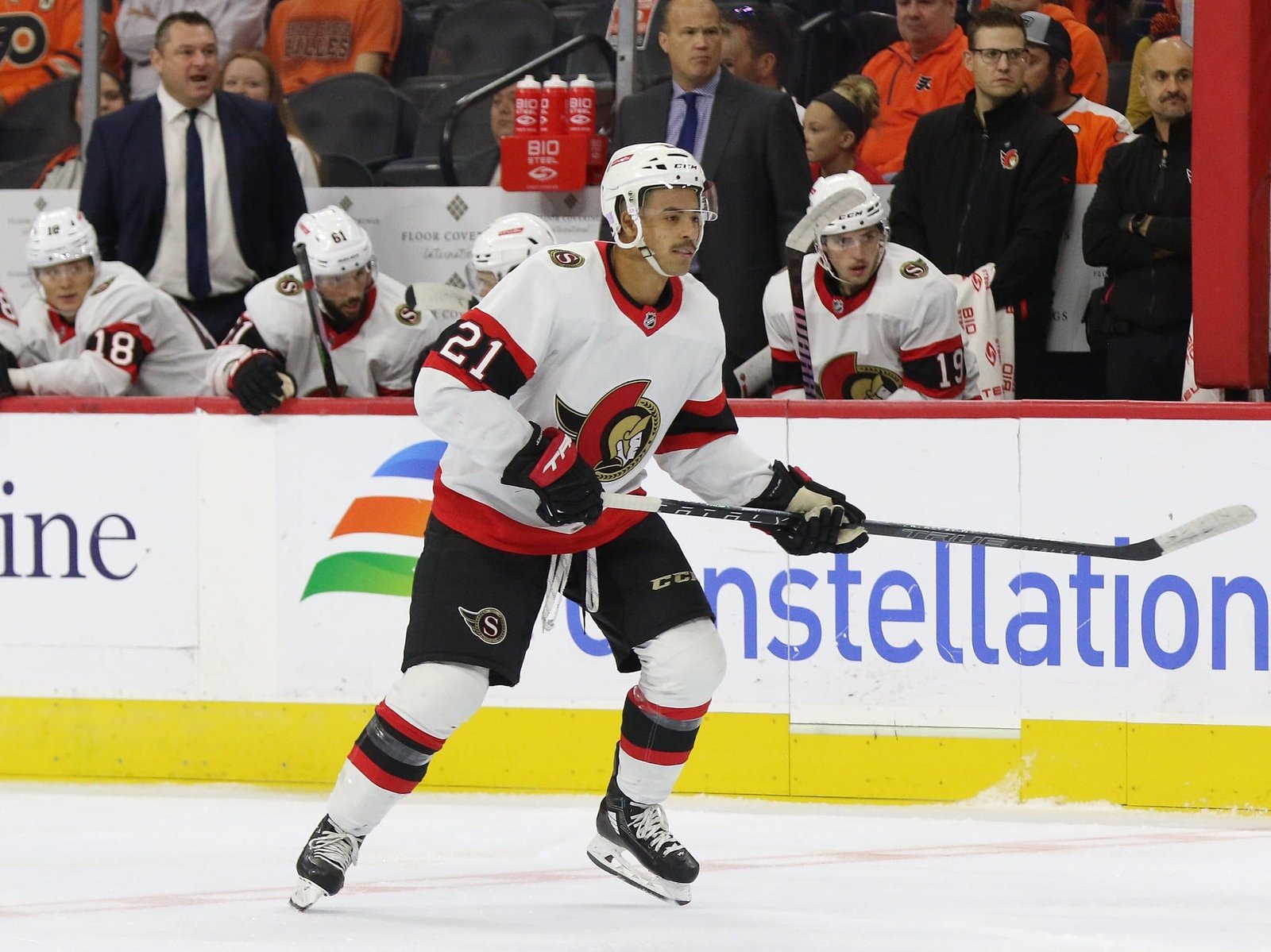
1. Mathieu Joseph Gives Oilers Needed Forward Depth
Mathieu Joseph enters with the smallest expectations of the five, which could make him one of Edmonton’s easier offseason additions to justify. The Oilers signed him to a one-year, $1 million contract after he produced two goals and 11 points in 51 games split between the St. Louis Blues and Los Angeles Kings.
Those numbers were disappointing, but Edmonton does not need Joseph to become an offensive difference-maker. His one-year deal gives the club a 29-year-old forward with 471 games of NHL experience who can compete for bottom-six minutes without creating a significant salary-cap commitment.
His speed should be his clearest path into the lineup. Edmonton has several bigger and more physical forwards competing for depth positions, including Colton Dach, Trent Frederic and Max Jones, while Joseph provides a different element through his skating and ability to pressure opponents.
The competition will be significant. THW’s early roster projection identified Joseph, Dach, Jones and Mattias Janmark among the forwards battling for fourth-line work, meaning Joseph is not guaranteed a permanent position simply because he was signed in free agency.
That is part of what makes the addition useful. Edmonton does not need Joseph to carry a line; it needs him to push the existing depth and provide head coach Mike Babcock with another experienced option when injuries or performance force changes.
If Joseph returns to the more productive form he showed earlier in his career, Edmonton will have found inexpensive bottom-six value. If he settles into an extra-forward role, the financial investment is small enough that the Oilers can adjust without creating another roster problem.
2. Devon Levi Could Become Oilers’ Long-Term Answer
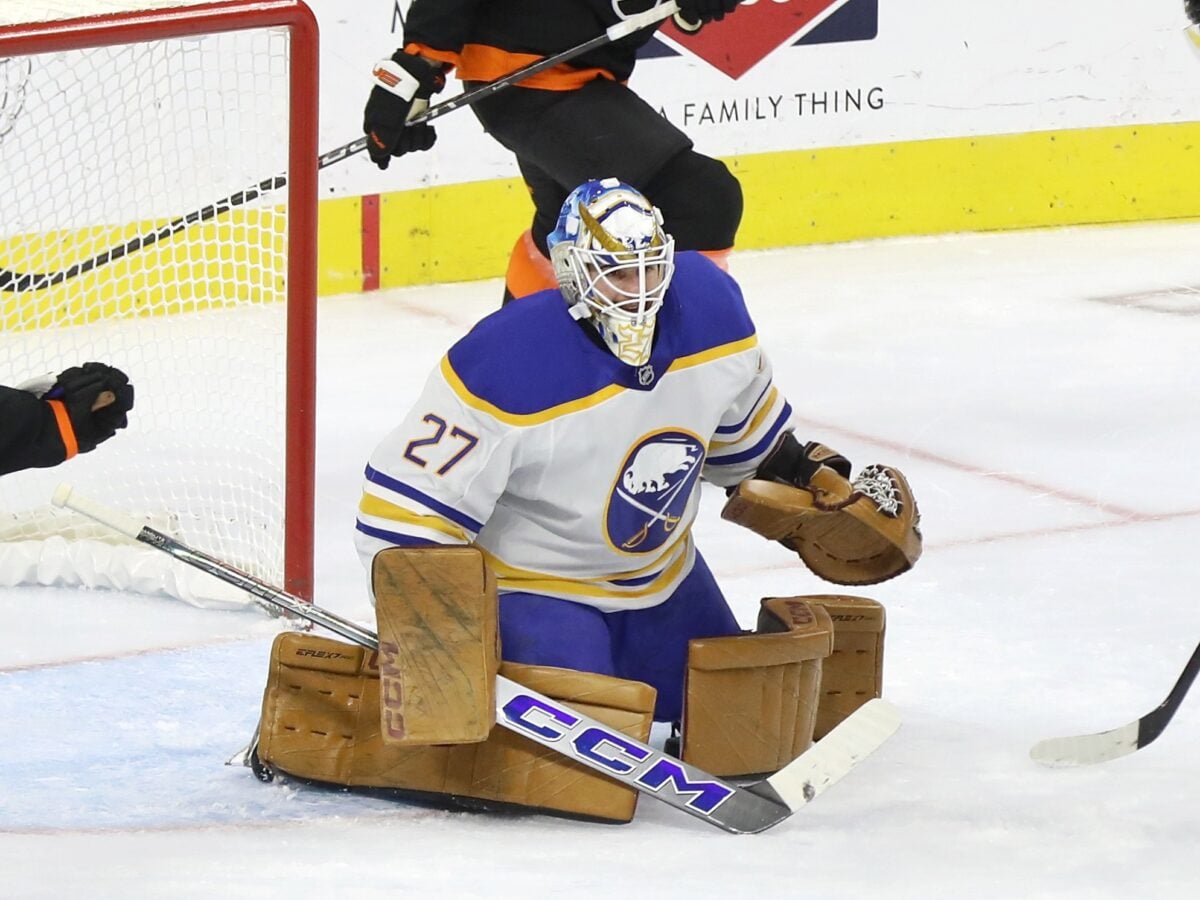
Devon Levi may eventually become the most important player on this list, but his immediate role remains less certain. Edmonton acquired the 24-year-old and a 2028 seventh-round pick from the Buffalo Sabres for a 2028 third-round selection, adding a young goalie to a position that had become one of the organization’s largest concerns.
Levi spent all of last season with the Rochester Americans of the American Hockey League (AHL), going 23-20-9 with a 2.83 goals-against average (GAA) and .904 save percentage (SV%). His larger AHL résumé is considerably stronger, as Edmonton’s trade release lists a .914 SV% across 120 career appearances.
His NHL results have been less convincing. Levi owns 17 victories with an .894 SV% through 36 career starts for Buffalo, leaving Edmonton to determine whether continued development has prepared him for a larger role.
Stan Bowman clearly believes there is more there. When discussing Edmonton’s goaltending changes, he identified Levi as a young goalie who has repeatedly demonstrated his ability at the AHL level and is ready for a greater NHL opportunity.
That opportunity will have to be earned. Tristan Jarry remains under contract, and Andersen brings substantially more experience, creating the possibility of the three-goalie system Edmonton has already been linked to entering camp.
Levi’s importance therefore extends beyond 2026-27. Andersen is 36 and signed for only one season, while Jarry has two years remaining on his contract. If Levi establishes himself as a dependable NHL goaltender, Edmonton could finally have a younger option capable of becoming part of its long-term plans.
The Oilers do not need that transition to happen immediately. A season in which Levi earns meaningful starts and shows he belongs at the NHL level would make the trade worthwhile while giving Edmonton more flexibility beyond this season.
3. Shakir Mukhamadullin Has Opportunity After Nurse Trade
Shakir Mukhamadullin carries more immediate importance because of the player Edmonton traded to acquire him. The Oilers sent Nurse to the San Jose Sharks on July 1 and received Mukhamadullin and prospect Zack Sharp in return, removing a defenseman who had handled major minutes for more than a decade.
Mukhamadullin is not expected to replace Nurse by himself. The 24-year-old played 50 games for San Jose last season, recording five goals and 12 points while averaging slightly more than 17 minutes per game, and he remains early in his NHL development.
Edmonton nevertheless needs the Nurse return to provide meaningful value. Mukhamadullin was the NHL-ready component of the package and brings a 6-foot-4 frame, long reach and experience playing both sides of the blue line.
His penalty killing could become particularly valuable. Mukhamadullin logged more than 70 shorthanded minutes last season, giving Edmonton another option for a unit that became a major weakness during its first-round playoff loss.
Bowman also highlighted Mukhamadullin’s shot and ability to play the right side despite being left-handed. That versatility should give Babcock more flexibility when constructing pairings on a defense that looks significantly different without Nurse.
The biggest question is how quickly Mukhamadullin can earn a regular position. THW’s early projection suggested he and Spencer Stastney could compete for a spot, although the Oilers would benefit greatly if Mukhamadullin establishes himself as more than a seventh defenseman.
His two-year contract at a $1.75 million average annual value creates significant upside if he does. Edmonton does not need Mukhamadullin to immediately become a top-pair defenseman, but becoming a dependable everyday option would make the Nurse trade considerably easier to evaluate positively.
4. Ryan Shea Must Validate Oilers’ Long-Term Bet
Ryan Shea ranks ahead of Mukhamadullin because Edmonton made a much larger commitment to him. The Oilers signed the former Pittsburgh Penguins defenseman to a five-year, $20 million contract after the best season of his NHL career.
Shea recorded six goals and 35 points in 80 games for Pittsburgh while finishing with a plus-30 rating. Edmonton’s signing announcement confirmed career highs across his offensive production after he had totaled only six points in his first two NHL seasons combined.

That sudden improvement makes Shea one of Edmonton’s most interesting offseason bets. His contract suggests the Oilers believe the breakout represented sustainable development rather than one unusually productive season.
There are reasons for optimism beyond the points. Bowman praised Shea’s penalty killing after the signing and identified him as one of the defensive additions capable of helping Edmonton compensate for the minutes lost in the Nurse trade.
Shea also averaged 18:53 per game for Pittsburgh and spent significant time alongside Kris Letang. That experience gives him a stronger foundation for handling top-four minutes if injuries or performance force Edmonton to move him higher than an expected third-pair role.
The contract increases the stakes. Joseph can struggle without creating a long-term problem, and Mukhamadullin remains young enough to develop gradually. Shea will carry a $4 million cap hit through 2030-31, making Edmonton dependent on his 2025-26 improvement becoming his new standard.
He does not need another 35-point season to justify the signing. If Shea becomes a stable middle-pairing defenseman who moves the puck efficiently and strengthens the penalty kill, the Oilers will have filled an important role at a manageable price.
Another significant step backward would make the five-year term much more concerning. That makes Shea one of the newcomers Edmonton most needs to get right.
5. Frederik Andersen Could Determine Oilers’ Ceiling
Frederik Andersen is the most important newcomer because Edmonton’s championship chances could depend directly on what he provides in goal. The Oilers signed the 36-year-old to a one-year, $2.8 million contract immediately after he helped Carolina win the Stanley Cup.
Andersen went 13-2 during the Hurricanes’ championship run while posting a 1.89 GAA, .913 SV% and three shutouts. Edmonton’s official release also lists 59 career playoff victories and a .913 postseason SV% through 101 appearances.
That experience separates him from Edmonton’s other goaltenders. Jarry enters the season trying to recover from an .858 SV% after joining the Oilers, while Levi remains an intriguing but unproven NHL option.
Andersen knows what postseason stability looks like. He has appeared in more than 550 regular-season games and now arrives in Edmonton after going through an entire championship run with the type of structured defensive team Babcock wants to create.
His age and injury history prevent the Oilers from treating him like a traditional 60-game starter. Andersen should instead give Edmonton a reliable option capable of taking over important games without requiring the organization to force Jarry or Levi into a role based on contract or potential.
That is why his signing carries greater immediate importance than Levi’s acquisition. Levi could become Edmonton’s future, but Andersen may be the goaltender the Oilers trust in a playoff game this spring.
He has also been clear about what attracted him to Edmonton. After joining the Oilers, Andersen discussed trying to help another team get over the final hurdle after experiencing a championship with Carolina, giving Edmonton another veteran who understands exactly what will be required during a deep postseason run.
The Oilers have repeatedly entered the playoffs with questions in goal. Their elite forwards can overcome many weaknesses, but unstable goaltending remains capable of ending a season regardless of how well McDavid and Draisaitl perform.
Andersen does not have to carry Edmonton by himself. If he stays healthy, provides consistent regular-season starts and gives Babcock a trustworthy playoff option, he could address the single weakness most capable of determining whether the Oilers’ season lasts into June.
Oilers Need Newcomers to Strengthen Supporting Cast
Edmonton’s offseason additions were not designed to replace the players at the top of the roster. McDavid, Draisaitl, Evan Bouchard and the rest of the core will continue determining the team’s overall ceiling, but the Oilers needed a stronger group around them after another disappointing postseason.
Joseph provides inexpensive competition, Levi offers long-term upside and Mukhamadullin gives Edmonton a young defenseman with room to develop. Shea represents a larger commitment to stabilizing the blue line, while Andersen brings the most proven answer to the position that creates the greatest uncertainty.
Not every addition needs to become a major success for Edmonton’s offseason to work. The Oilers do need enough of them to make the lineup deeper, more dependable and less reliant on the same stars every night.
Andersen has the greatest ability to change Edmonton’s immediate outlook, which makes him the most important newcomer entering 2026-27. If the four players ahead of him in this ranking also settle comfortably into their expected roles, Bowman’s offseason overhaul could give the Oilers the supporting cast they need for another serious championship run.
Free Newsletter
Get Edmonton Oilers coverage delivered to your inbox
In-depth analysis, breaking news, and insider takes – free.
Subscribe Free →