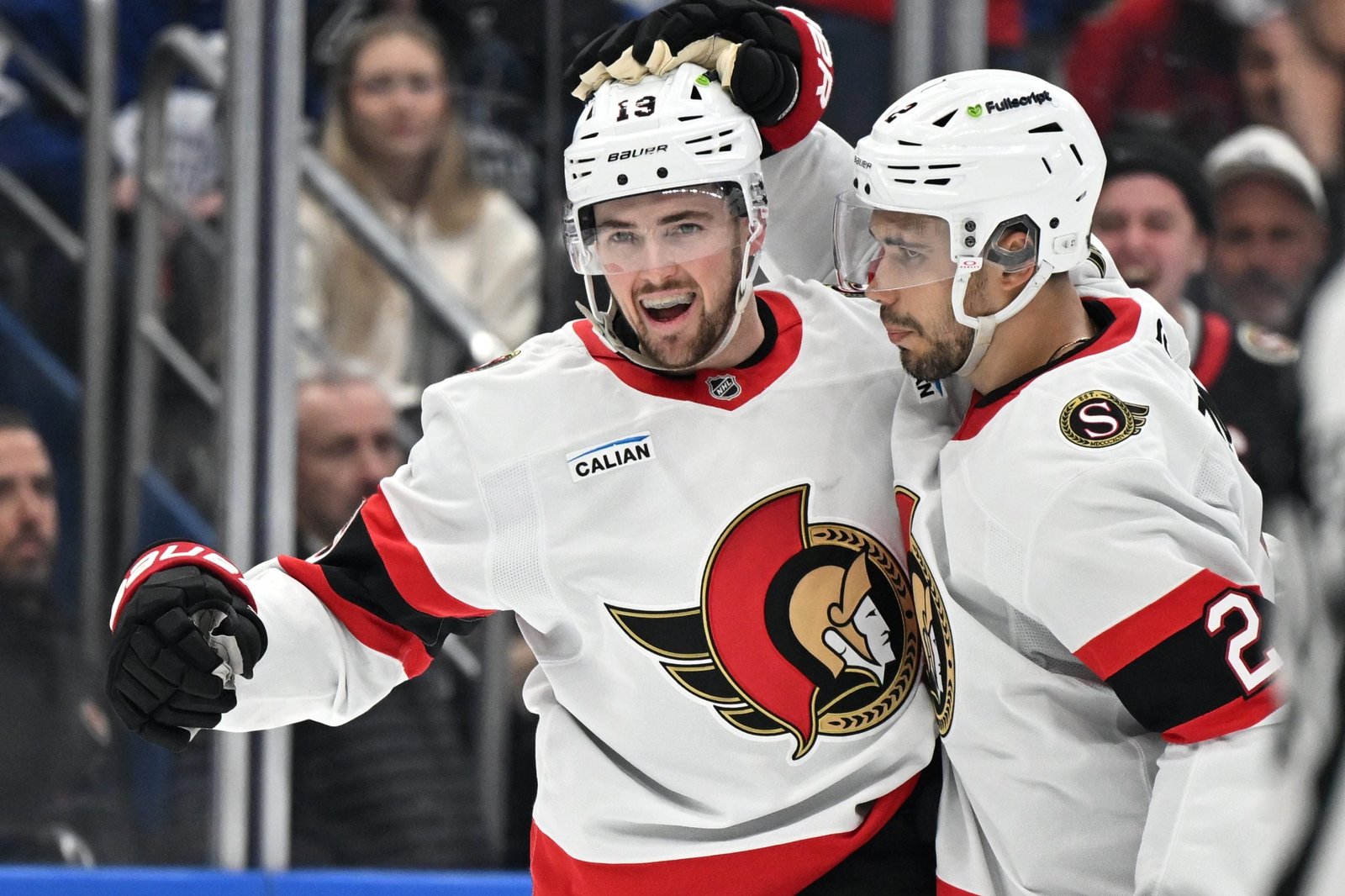
The Edmonton Oilers made several significant changes during the 2026 offseason, but none could have a greater long-term impact than the acquisition of Devon Levi. Edmonton acquired the 24-year-old goaltender and a 2028 seventh-round pick from the Buffalo Sabres for a 2028 third-round selection, buying low on someone who was once considered one of the NHL’s top goaltending prospects.
Levi is unlikely to begin the 2026–27 season as Edmonton’s unquestioned starter. The Oilers also have Tristan Jarry and signed veteran Frederik Andersen, giving them three goaltenders with NHL experience. However, Andersen is 36 and Jarry is attempting to rebuild his value after an inconsistent season. Levi is the only member of the group who could realistically become Edmonton’s long-term answer.
That makes his development one of the organization’s most important storylines. The Oilers know Connor McDavid and Leon Draisaitl can drive a championship-calibre offence. Their greatest uncertainty continues to be whether they can find a goaltender capable of providing consistent, above-average results.
Levi’s Development Has Not Followed a Straight Line
Levi’s reputation was built on dominant performances before he reached professional hockey. He posted a .952 save percentage and 10 shutouts during his first season at Northeastern University. His performance earned him the Mike Richter Award as the top goaltender in NCAA men’s hockey.
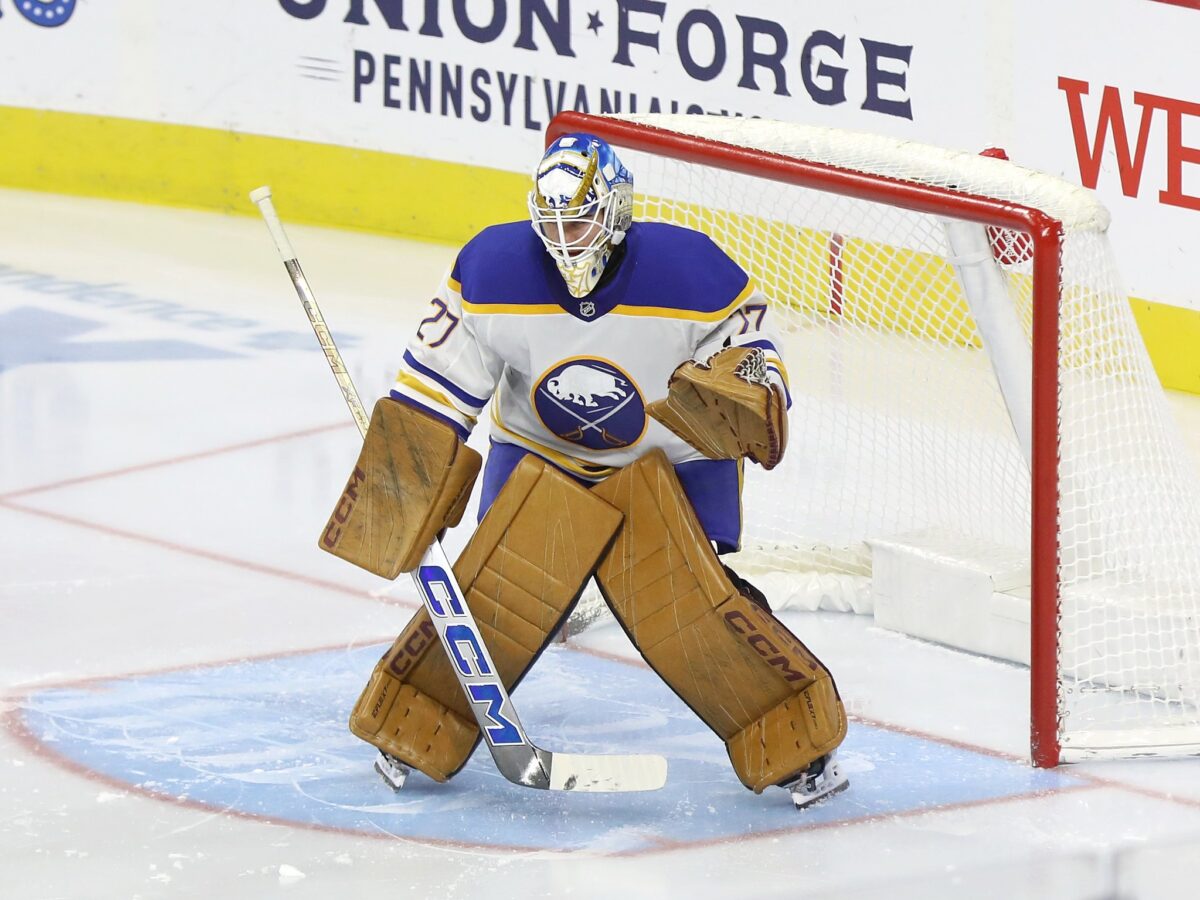
Despite being selected 212th overall in the 2020 NHL Draft, Levi’s dominant college production transformed him into one of the sport’s premier goaltending prospects. He followed his remarkable first season with another strong campaign, posting a .933 save percentage and six shutouts in 34 appearances during 2022–23.
Buffalo may have asked too much of him too soon. Levi went directly from college hockey to the NHL and appeared in 23 games during the 2023–24 season. He posted a 10-8-2 record, a 3.10 goals-against average and an .899 save percentage. Those results were not disastrous for a 22-year-old, but they demonstrated that he needed more development time.
His results became even more concerning the following season. Levi recorded an .872 save percentage and a 4.12 GAA in nine games with Buffalo. Meanwhile, he was excellent with Rochester, finishing 25-13-4 with a 2.20 GAA, .919 save percentage and seven shutouts. His sharp statistical differences between the NHL and AHL demonstrated that the ability was still present, even if he was not yet prepared for a permanent NHL role.
The 2025–26 campaign was far more complicated. Levi received a heavy workload with Rochester, appearing in 52 games, but experienced significant inconsistency. That frustration became public in November 2025.
Levi Was Publicly Challenged by His AHL Coach
Levi allowed 14 goals over a three-game stretch early in the season, despite facing no more than 29 shots in any of those appearances. After he surrendered five goals on 23 shots in a 6-4 loss to the Belleville Senators, Rochester head coach Michael Leone did not attempt to protect his goaltender from criticism. “He’s got to be better,” Leone said. “I know he’s a really good goalie, but it’s not about him. It’s about the team.”
Leone emphasized that Rochester needed Levi to make a save at a critical moment. After Belleville’s fifth goal, Leone said that the shot “can’t go in” and removed Levi from the game. At the time, Levi had a 6-2-0 record through eight appearances, but his 2.96 GAA and .892 save percentage did not reflect the quality expected from him. His record looked encouraging, but Rochester’s offence was doing more to drive those victories than its goaltending. For a highly regarded prospect, it was an important moment. Leone treated Levi like every other player instead of allowing his reputation to protect him from accountability. The comments could have damaged the relationship, but they also challenged Levi to respond.
His final numbers were not spectacular, but they were respectable considering his difficult start. Levi finished 23-20-9 with a 2.83 GAA, .904 save percentage and three shutouts. Based on his early-season and final totals, he stopped approximately .906 of the shots he faced over his remaining appearances. He also posted a .919 save percentage in three playoff games, according to his official AHL statistics.
That does not represent a dramatic breakout, but it shows that Levi stabilized his season while carrying a starting goaltender’s workload. His 52 appearances were especially valuable after he had never played more than 42 games in a professional season.
Other Young Goalies Have Recovered From Similar Struggles
Levi’s uneven development does not mean he has reached his ceiling. Goaltenders frequently require more time than skaters, and several current NHL starters endured similar periods of uncertainty. Ukko-Pekka Luukkonen is an especially relevant comparison because he also developed in Buffalo’s system. Luukkonen posted an .892 save percentage in 33 NHL appearances during 2022–23, leaving questions about whether he could become Buffalo’s long-term starter.
One season later, Luukkonen established career highs with 27 wins, a 2.57 GAA, a .910 save percentage and five shutouts in 54 appearances. The adversity he experienced in Rochester helped him improve his positioning, patience and ability to recover after allowing a poor goal. Levi is now entering the same age range in which Luukkonen began turning his potential into consistency.
Joey Daccord followed an even longer route. He played only 19 NHL games before his 27th birthday and spent portions of four seasons in the AHL. Across 98 career AHL appearances, Daccord posted a 60-27-7 record, a 2.46 GAA and a .918 save percentage. After receiving a larger opportunity with the Seattle Kraken in 2023–24, Daccord recorded a 2.46 GAA and .916 save percentage in 50 appearances. His performance eventually earned him a five-year, $25 million contract extension. Daccord’s path demonstrates why Edmonton should not label Levi a failed prospect at 24. Levi has already played 39 NHL games and produced strong results during two of his three AHL seasons. His professional résumé is considerably more developed than Daccord’s was at the same age.
Thatcher Demko offers another useful comparison. After an outstanding NCAA career, he spent two primary seasons developing with the AHL’s Utica Comets. Demko recorded a .907 save percentage during his first full professional season before improving to a 2.44 GAA and .922 save percentage in 2017–18. Demko did not become the Vancouver Canucks’ primary starter immediately. The organization allowed him to develop in the AHL and then spend time as an NHL backup before handing him a larger workload.
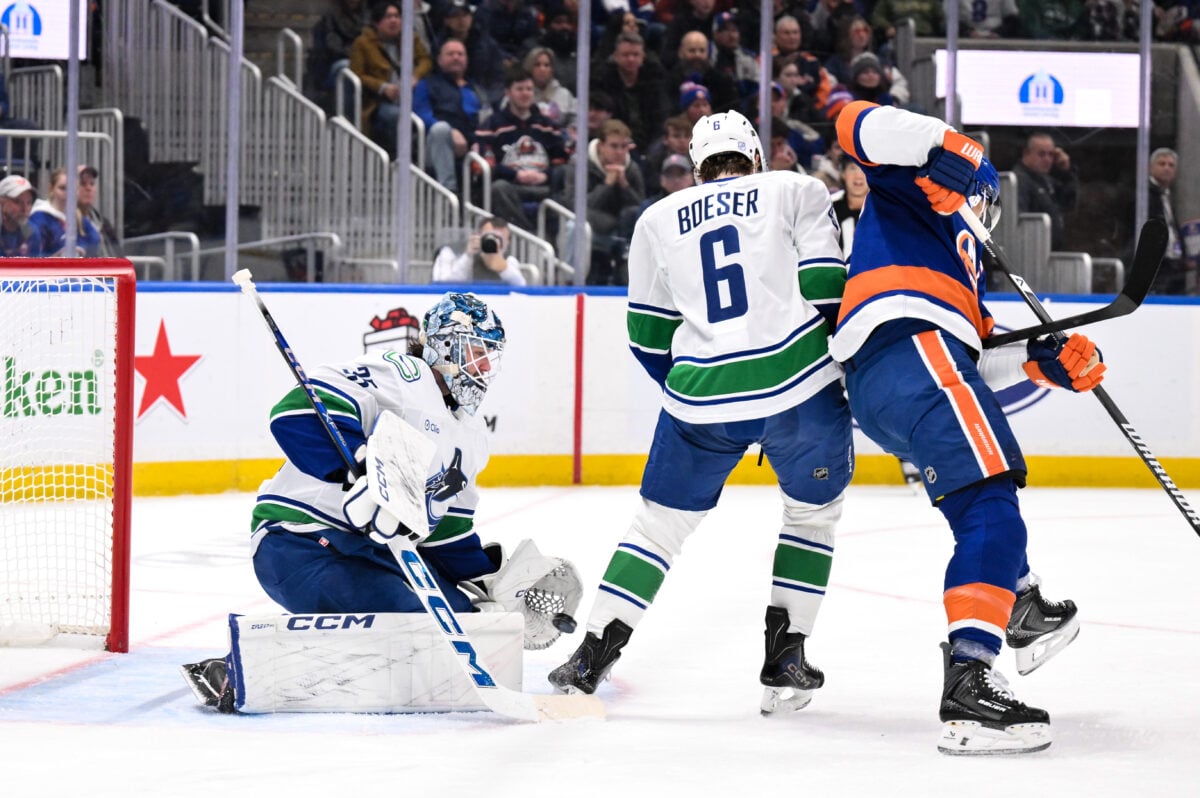
Like Demko, Levi relies heavily on athleticism and anticipation. At 6-foot, Levi is smaller than the modern NHL prototype, meaning his positioning and rebound control must be precise. He cannot consistently overcome poor reads by simply filling the net with his frame. Edmonton’s task will be helping him use his quickness without becoming overly aggressive or inefficient.
Oilers Must Develop Levi at the NHL Level
Edmonton does not have the luxury of returning Levi to the AHL if he struggles. Beginning in 2026–27, he must clear waivers before he can be assigned to Bakersfield. Considering his age, affordable $812,500 cap hit and remaining upside, another team would likely claim him. That makes the Oilers’ three-goalie situation more complicated. Levi, Jarry and Andersen cannot all receive consistent playing time, but Edmonton risks losing Levi for nothing if it attempts to send him down. Unless Jarry is traded, the Oilers may have to carry three goaltenders and carefully manage their starts.
The ideal outcome would be for Levi to gradually separate himself from the group. Edmonton does not need to immediately make him its starter, but it must provide him with enough NHL opportunities to continue his development. Playing once every few weeks would not accomplish that. Andersen could be an ideal mentor and short-term partner for Levi. The 36-year-old has more than 500 games of NHL experience and would allow Edmonton to protect Levi from an excessive workload. A tandem arrangement could give Levi regular starts without forcing him to immediately carry a Stanley Cup contender.
Jarry’s presence makes that plan more difficult. If Edmonton enters the season with all three goaltenders, management may eventually have to trade one of its veterans. Levi is younger, cheaper and carries more long-term value than either alternative. The Oilers did not pay a premium to acquire him, but the potential reward is substantial. A third-round pick is a reasonable gamble on a goaltender with Levi’s college dominance, AHL success and remaining upside. However, his waiver status means this cannot be treated as a long-term development project in Bakersfield.
Edmonton must determine whether Levi can become an NHL goaltender while he is on its active roster. That may require patience after difficult starts and a willingness to live with the mistakes that accompany a young netminder. Andersen may offer a short-term solution and Jarry could rebound, but Levi represents something more valuable: the possibility of a sustainable answer beyond this season.
If he follows the development paths of Luukkonen, Daccord or Demko, the Oilers may have acquired their future starter for a modest price. The difference is that Levi must now take his next developmental step in the NHL. That combination of upside, uncertainty and waiver pressure is why Levi could become the Oilers’ most important player in 2026–27.
Free Newsletter
Get Edmonton Oilers coverage delivered to your inbox
In-depth analysis, breaking news, and insider takes – free.
Subscribe Free →