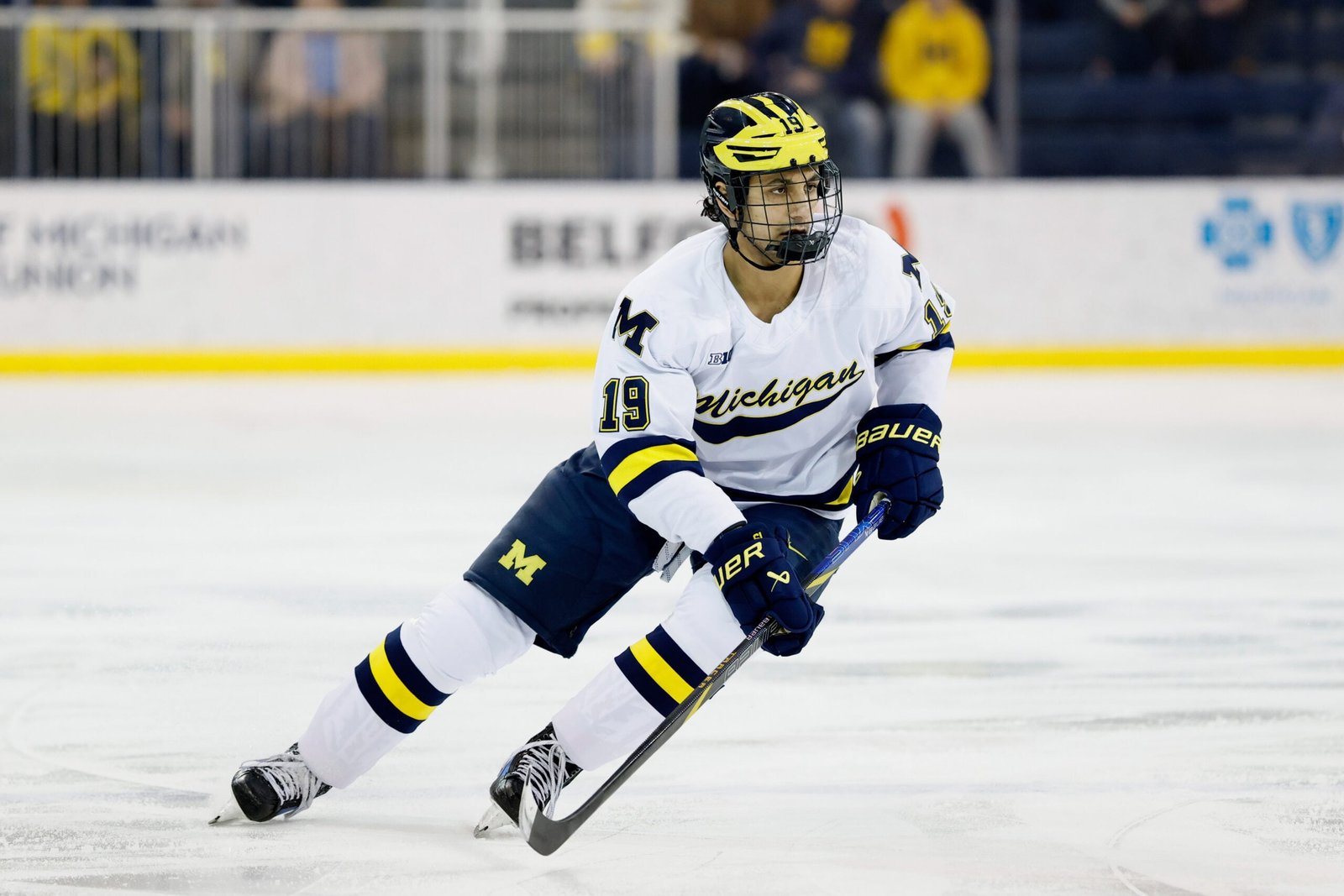
The Montreal Canadiens have not been afraid to be aggressive under general manager Kent Hughes. Whether through trades for established NHL players or moves at the draft, Hughes has shown a willingness to sacrifice multiple assets when he believes there is a significant opportunity to improve the organization.
The 2024 NHL Entry Draft provided one of the best examples. Montreal moved up five spots in the first round to select Michael Hage, giving the Los Angeles Kings three draft picks to make it happen. Two years later, Hage has emerged as one of the Canadiens’ top prospects, but the package Montreal surrendered is developing quite well, too. So, was Hage worth giving up three opportunities at the draft?
The Canadiens Paid a Significant Price to Move Up
The Canadiens entered the 2024 draft holding the 26th overall selection. Rather than waiting and hoping the Ontario-born centre would fall to them, Montreal made its move. The Canadiens sent the 26th overall pick, the 57th selection in the second round and a seventh-round pick to the Kings in exchange for No. 21.
Montreal used the selection on Hage. Los Angeles, meanwhile, turned those three picks into winger Liam Greentree at 26, goaltender Carter George at 57 and forward James Reeder in the seventh round.

At the time, it was difficult to evaluate the deal. Montreal essentially sacrificed two additional picks simply to move five spots. The Canadiens weren’t acquiring an established player, they were betting that the difference between Hage and the prospects available later in the draft would eventually justify the additional cost. So far, both organizations have reasons to be happy.
Both Sides Have Seen Their Prospects Develop
Hage’s development has done plenty to justify Montreal’s confidence in him.
After recording 86 points in 72 games over his first two seasons at the University of Michigan, Hage is set to dominate next season. He recorded 13 goals and 52 points in 39 games in 2025-26, establishing himself as one of the Canadiens’ premier prospects.
His combination of skating, offensive creativity and playmaking has made him a potential future top-six centre for Montreal. With the Canadiens already possessing several young offensive weapons, Hage could eventually become another important piece of their core.
However, the Kings haven’t exactly been left empty-handed. Greentree has continued to produce at an impressive rate. The 6-foot-3, 206-pound winger exploded for 119 points with the Windsor Spitfires in 2024-25 before adding another 74 points in 52 games during the 2025-26 season. He possesses an intriguing combination of size and offensive skill and has developed into a very good prospect in his own right. The Kings have also used Greentree to acquire Artemi Panarin last season.
Then there is George. The second-round goaltender has developed into one of the most interesting young netminders in hockey. George has been among junior hockey’s better goaltenders and represented Canada at each of the past two World Junior Championships. Goaltenders are notoriously difficult to project, but getting a prospect of his caliber with the additional second-round selection makes the package significantly more interesting.
Even Reeder has provided some encouraging signs. Seventh-round picks are always long-term projects, and expectations should remain reasonable, but Reeder recorded 33 points in 42 games with the University of Denver in 2025-26. For a player selected that late, that type of production is certainly worth keeping an eye on. Suddenly, the package Montreal surrendered doesn’t look insignificant.
Quality Over Quantity
This trade ultimately comes down to one of the biggest debates in prospect management: quality versus quantity. It is still far too early to declare a winner. Hage hasn’t established himself in the NHL yet, and neither have the three prospects Los Angeles selected with Montreal’s picks. Development isn’t linear, and the way these four players perform at the NHL level will ultimately determine how the deal is remembered.
But the Canadiens knew what they were doing. Montreal already had a deep prospect pool. Hughes didn’t necessarily need three more prospects. If his scouting department believed Hage had significantly more upside than the players likely to be available at 26, sacrificing additional picks made sense.
Would Montreal rather have Greentree, George and Reeder today? It’s a legitimate question, especially considering how well Greentree and George have developed. But if Hage eventually becomes a legitimate top-six NHL centre, the Canadiens probably won’t regret the price.
Sometimes having the best player in a trade matters more than having the most players. For now, Hage looks like the best prospect of the four. Whether he becomes good enough to outweigh all three Kings prospects combined is what will ultimately determine if Hughes’ quality-over-quantity gamble was the right one.
Free Newsletter
Get Montreal Canadiens coverage delivered to your inbox
In-depth analysis, breaking news, and insider takes – free.
Subscribe Free →