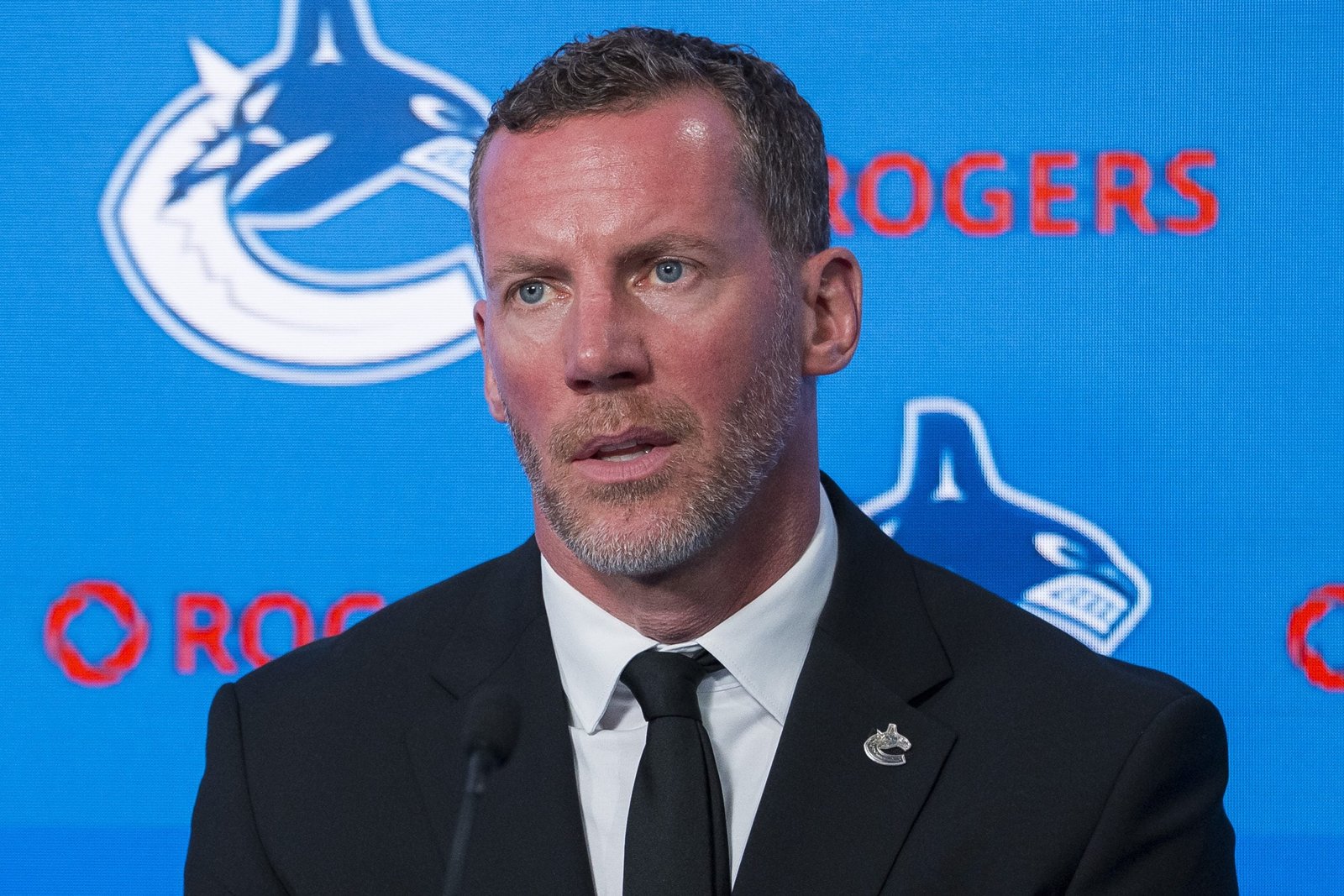
When Troy Stecher was asked what he was looking for on the open market, his answer was wonderfully simple. “A job.” There was a smile attached to it, so there was obviously some humour involved. But there was also a fair bit of truth.
Stecher had spent much of his NHL career in that uncomfortable space occupied by depth players. Good enough to stay in the league. Experienced enough to be trusted. But never quite secure enough to assume that the next opportunity would be there.
The Maple Leafs Signed Stecher to a Two-Year Contract
The Toronto Maple Leafs eventually gave him that opportunity. After being claimed off waivers from the Edmonton Oilers last season, Stecher became a useful part of the Toronto defence and earned himself a two-year contract extension worth $1.35 million a season. He played 58 games for the Leafs and finished with 14 points.

The numbers are fine. But they aren’t really the story. The interesting part is what Stecher said about wanting to stay. “I never took the city for granted.” That sentence has stayed with me.
It would be easy to hear it as the usual hockey-player language: gratitude, appreciation, happy to be back, happy to have a contract. Players say these things all the time. But Stecher’s situation gives those words a little more weight.
Stecher Knows Exactly What His NHL Life Has Become
He isn’t Auston Matthews. He isn’t William Nylander. He isn’t somebody whose place in the lineup is assumed every night. He’s a depth defenceman, and depth players live with a very different kind of NHL reality.
They can be in the lineup tonight and watching from the press box tomorrow. They can play 20 minutes one night and eight the next. They can be waived, traded, sent down or replaced by somebody the organization thinks might be a little better.
Their NHL careers are built around uncertainty. That makes Stecher’s other comment particularly interesting. “I know I had my good days and my bad days.” There is something very honest about that.
He isn’t trying to rewrite his season. He isn’t pretending he suddenly became an indispensable player. He knows exactly what kind of player he is, and he seems comfortable with it. That may be one of the most underrated qualities a professional athlete can have.
Not Every Hockey Player Gets to Be the Star
Some players have to find a way to make themselves useful. They have to be ready when the opportunity arrives, accept the nights when it doesn’t, and understand that their value may not show up very clearly on a stat sheet. Then there is the human part of it.
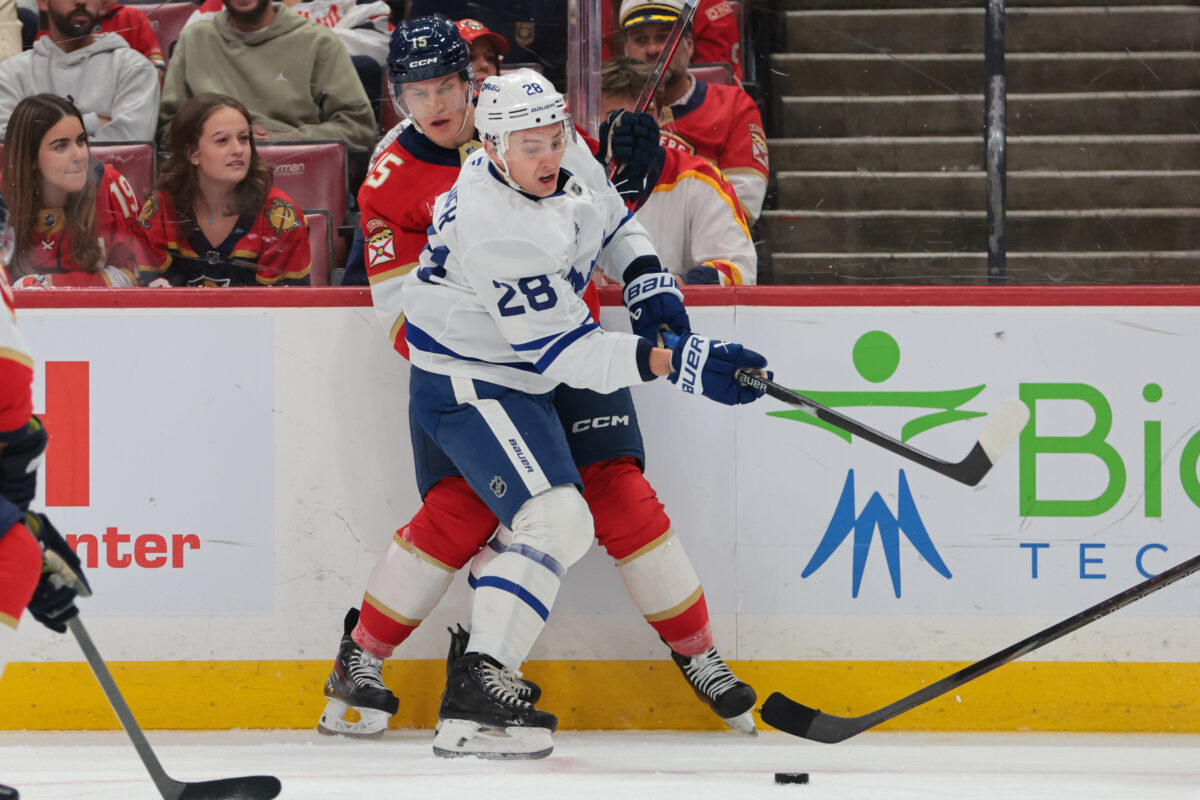
Stecher said that when he got the news, he was excited. It was what he wanted. What he had hoped for. He couldn’t have been happier to get it across the finish line. That’s more than a contract announcement.
For a player in his position, it’s stability. It’s knowing where you’re going to live. Knowing where you’ll report in September. Knowing that the organization wants you around. Knowing that, for at least another couple of years, you don’t have to start over somewhere else and prove yourself all over again.
Sometimes, as Maple Leafs Fans, We Forget How Tenuous an NHL Job Can Be
We sometimes forget how much of professional sports is about that. We see the million-dollar contracts, the sold-out arenas and the television cameras. We see the stars.
But there are also hundreds of players whose careers are built around simply staying in the room. Stecher is one of those players. Maybe that’s why his comments struck me differently this time around. There is a particular kind of gratitude that comes from knowing something could have gone another way.
Toronto is an especially interesting place for that. The attention is enormous, the expectations are high and the competition for roster spots never really stops. A depth player doesn’t get to assume that yesterday’s performance guarantees tomorrow’s opportunity. You have to keep earning your place.
Stecher Seems to Understand the Reality of His Situation
Maybe that’s the real reason his “I never took the city for granted” comment is worth remembering. It isn’t really about Toronto’s skyline, the fans or the size of the hockey market.
It’s about knowing that you belong somewhere—and knowing that belonging in professional hockey is never completely guaranteed. For a player like Stecher, getting another two years isn’t just about money. It’s about being wanted.
Sometimes, when you strip away all the salary-cap talk, lineup projections and arguments about who should be playing on the third pairing, that’s what hockey is really about. A player gets told, “We want you back.”
For somebody who has spent a career wondering where the next job might come from, that probably means an awful lot.
Free Newsletter
Get Toronto Maple Leafs coverage delivered to your inbox
In-depth analysis, breaking news, and insider takes – free.
Subscribe Free →