The NHL landscape is changing with a new collective bargaining agreement now in effect for the next four years. One of the biggest shifts in the new CBA is in contract terms. Teams can now hand out only six- and seven-year deals rather than seven- and eight-year deals. Signing bonuses will also be capped at 60 percent of a deal’s overall value.
That led to a rush of teams signing long-term extensions with current RFAs and/or players set for free agency (RFA or UFA) next summer. Which of these deals look the best, and which ones raise some red flags?
Ryan Leonard
The most expensive of these eight-year contracts was Ryan Leonard, who signed at an AAV of $10.5 million. He’s coming off a solid season with the Washington Capitals, at least production-wise, totaling 20 goals and 45 points in 75 games.
Leonard has played only 84 NHL games since turning pro at the end of the 2024-25 season, but his peripherals aren’t great. He finished last season with an expected goals share (xG%) of 45.36 percent and overperformed most of his expected numbers.
Still, Leonard is young. He’s 21 and doesn’t turn 22 until January. There’s runway for development, but there aren’t signs of a player who’s due to break out and become a $10.5 million AAV player. At least not yet. He needs to figure out his game off the puck. Once he does, he could be worth this deal. But for now, this looks like a risky bet by the Capitals.
Justin Sourdif
On the other hand, the Capitals seem to have made a great bet with Justin Sourdif, who signed an eight-year extension at an AAV of $6.35 million. He finished with 15 goals and 35 points in 78 games last season and posted terrific underlying numbers, finishing with a 52.29 xG% and a +19 goal differential.
Sourdif played higher up the lineup at times due to Pierre-Luc Dubois’ injury and handled himself quite well. Like Leonard, his sample size is just one NHL season, but his underlying metrics are much more encouraging than Leonard’s.
Granted, Sourdif is older than Leonard. He’s 24 and played multiple seasons in the AHL before the Capitals acquired him from the Florida Panthers. But I’m more optimistic about this deal working out for the Capitals than I am about Leonard’s. A $6.35 million AAV will be the going rate for third-line centers as the salary cap rises, and Sourdif looks like he’ll be well worth it.
Drake Batherson
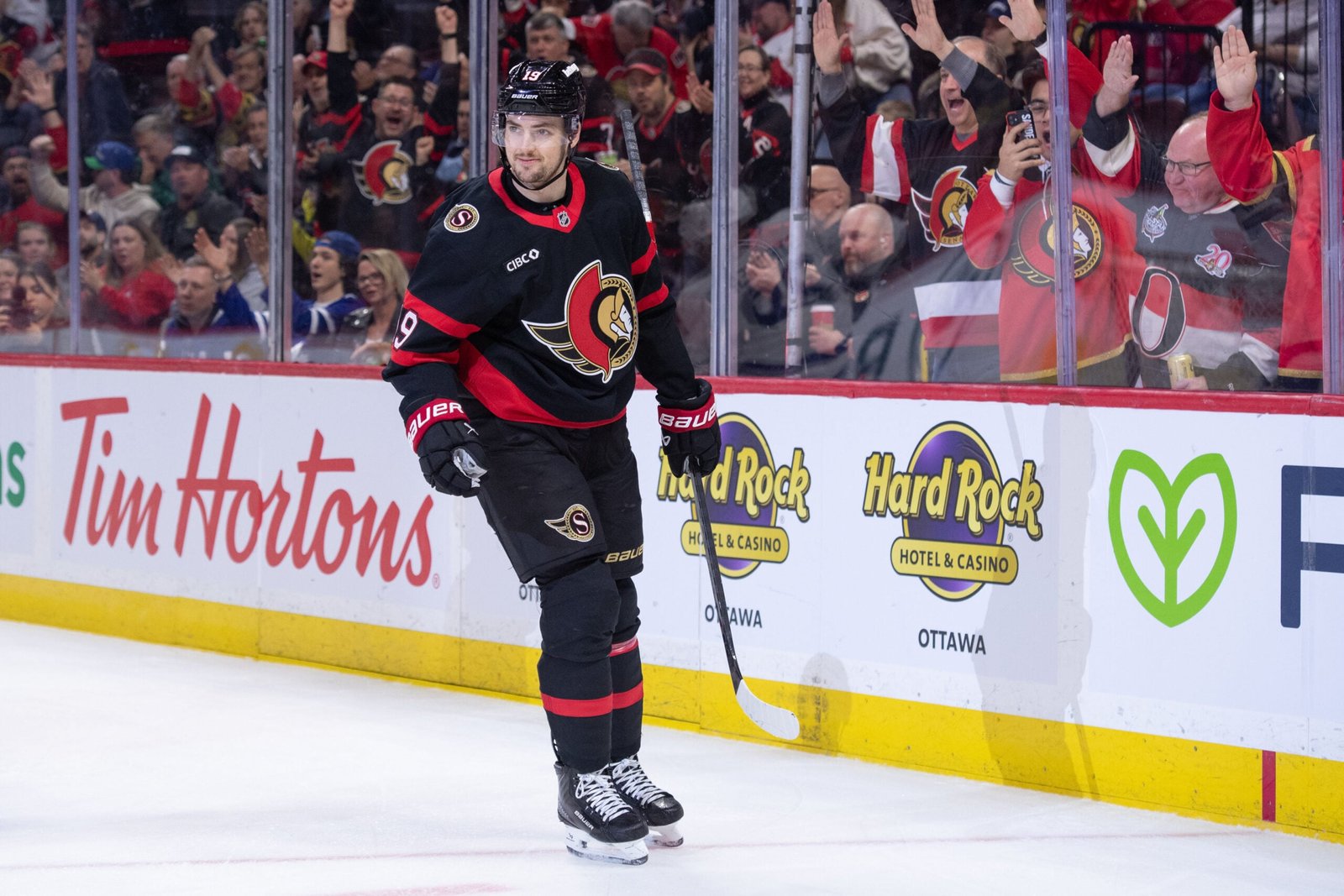
Drake Batherson would have been one of the top UFAs in the 2027 class had he opted to test the free-agent waters. Instead, he and the Ottawa Senators agreed to an eight-year, $10.75 million AAV contract extension. He’s coming off one of the best seasons of his career, totaling 33 goals and 71 points in 79 games.
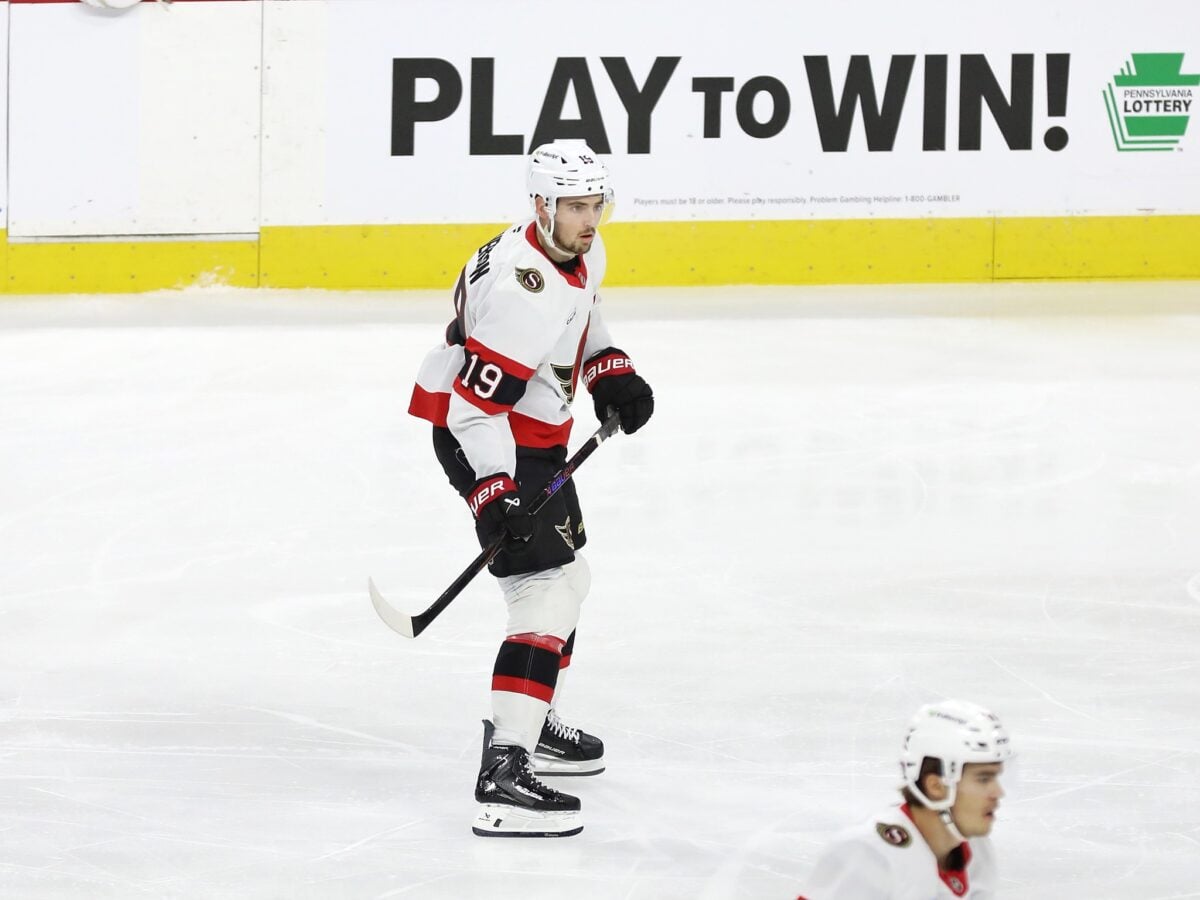
Batherson has been one of the more underrated scorers in the NHL over the last three seasons, averaging 69 points per 82 games. His five-on-five numbers are fine, but he’s not much of a play driver. He’s a good complement for someone like Tim Stützle and is a force on the power play, but this deal might be a touch pricey.
Batherson seems closer to a $9 million player based on his production over the last three seasons, but I get why the Senators did it. After losing Brady Tkachuk this offseason, they couldn’t afford to lose Batherson next summer. If they had to overpay a touch to keep him, so be it. Even though he’s not a play driver, this deal shouldn’t age too poorly, especially for the first four to five years.
Fraser Minten
The Boston Bruins had a relatively quiet offseason. They acquired JJ Peterka from the Utah Mammoth, but their biggest splash may have been signing Fraser Minten to a seven-year, $7.2 million AAV extension. He would have been an RFA next summer.
Minten had a solid rookie season, totaling 17 goals and 35 points in 82 games. The Bruins were not a good five-on-five team, but he was one of their better five-on-five players, finishing with a 48.41 xG%. He may not be a $7.2 million player now, but the Bruins are betting that he will develop into one.
Minten turned 22 in July, so there’s still some runway to develop, and head coach Marco Sturm seems to know how to get the most out of his players. This is a pricey contract for now, but it could age quite well if Minten reaches his potential.
Zeev Buium
Zeev Buium was the centerpiece of the return the Vancouver Canucks received for trading Quinn Hughes last season. He appeared in 45 games for the Canucks, totaling three goals and 12 points, but they still made a pricey bet, signing him to an eight-year extension at an AAV of $9.38 million.
Buium’s underlying metrics were poor, to say the least, but context is important. The Canucks were one of the least structured teams in the NHL under former head coach Adam Foote. Their five-on-five numbers were abysmal, and I’m sure it impacted most of the roster. Even though Buium has a ways to go defensively, better coaching should help for a young player who’s still developing.
Manny Malhotra, who was the Abbotsford Canucks’ head coach, is taking over for Foote in Vancouver. The Canucks are unlikely to be in the playoff race, but he should be an upgrade over Foote, and someone like Buium should benefit. This may be quite the overpay for now, but Buium has No. 1 defenseman potential. The Canucks have to get this right.
Cutter Gauthier
The Anaheim Ducks have had a whirlwind of an offseason, though much of it was their own doing. First, it started with the Philadelphia Flyers offer-sheeting Leo Carlsson. The Ducks matched the five-year, $18 million AAV offer sheet, but it instantly changed their cap structure and ultimately affected Cutter Gauthier.
Gauthier didn’t sign for eight years, as some of these other 11th-hour deals, but the two sides still agreed to a six-year, $13 million AAV extension. He had a terrific rookie season, totaling 41 goals and 69 points in 78 games.
Gauthier’s underlying profile looks excellent, too. He was one of the most lethal shooting threats in the NHL last season, and he thrived at creating offense off the rush:
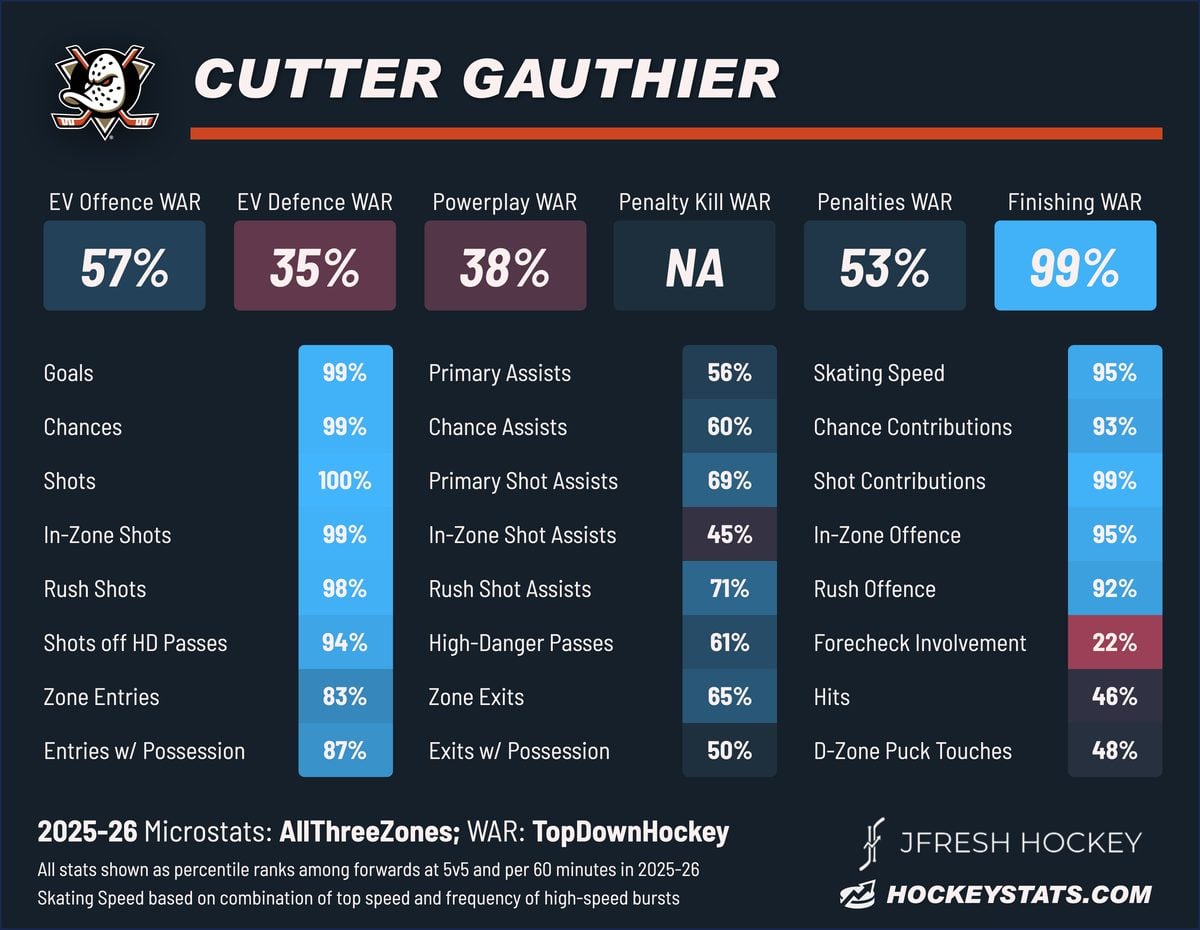
A $13 million AAV is a touch lower than I thought Gauthier would sign for after the Carlsson offer sheet, but he still got his payday. This deal should age exceptionally well for the Ducks, and it works for Gauthier since he’s set himself up for another payday in free agency somewhere down the road.
Noah Ostlund
The Buffalo Sabres lost a couple of key pieces this offseason, but they have enough young talent internally to make up for it. One of those players is Noah Ostlund, who totaled 11 goals and 27 points in 60 games last season. While he has a limited NHL sample as well, the Sabres still inked him to an eight-year, $6.6 million AAV extension.
The counting totals don’t pop off the page, and his peripherals are a mixed bag. Ostlund finished last season with a 51.47 xG% and +13 goal differential at five-on-five, but he struggled to create offense off the rush and was not great in transition.
Ultimately, this deal should age fine enough since it is one of the cheaper ones signed before the CBA deadline. Even if Ostlund tops out as a 40- to 50-point player, a $6.6 million AAV would be close to in line with his market value with the rising salary cap.
Luke Evangelista
The New Jersey Devils didn’t take advantage of the eight-year term available to them with Luke Evangelista. But they still made use of the previous CBA’s signing bonus structure in signing him to a five-year, $7.25 million AAV extension.
Evangelista emerged as a legit top-six forward for the Nashville Predators last season, totaling 12 goals and 56 points in 81 games. He’s not much of a shooting threat, but he’s a high-end playmaker and excels in transition. He’s also a strong play-driver at five-on-five and posted terrific underlying metrics in his previous three seasons with the Predators:
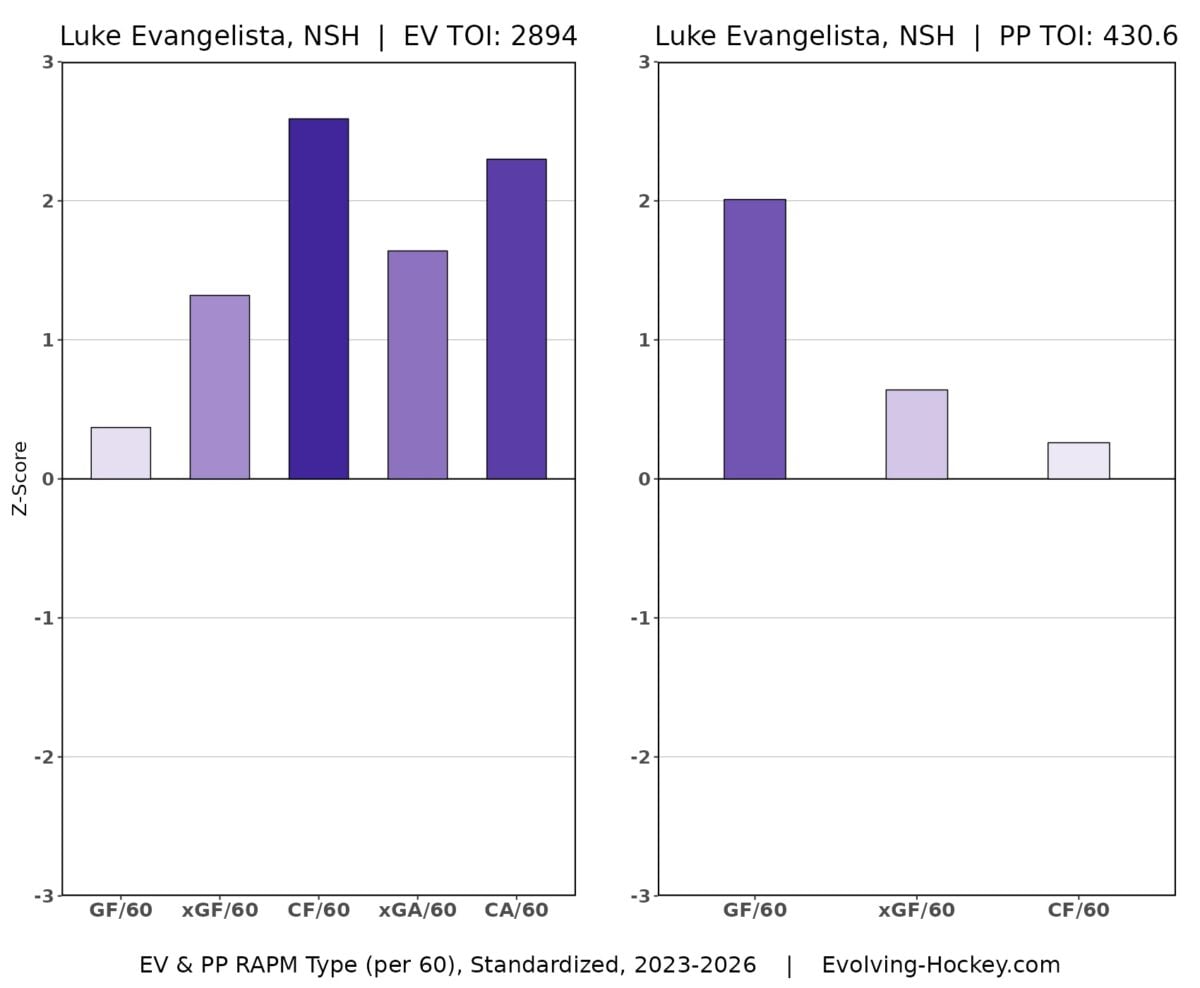
The Devils should get their money’s worth with this deal, especially if Evangelista thrives with players like Jack Hughes or Nico Hischier. This looks like a perfectly fair contract for both sides.
Who Will Age the Best?
Some of these contracts have their risks, such as Leonard or Buium. They’re bets on upside, even though they haven’t shown much in their young NHL careers, at least so far. You could say the jury is out on Ostlund and Minten, too. Time will tell how they age.
Others, such as Evangelista, Sourdif, and Gauthier, look like they will age quite well, especially as the salary cap rises. They either have established NHL resumés or have encouraging underlying metrics that suggest good days are ahead. Their teams are likely to extract plenty of value from them.
Advanced stats from Natural Stat Trick
Free Newsletter
Get Commentary coverage delivered to your inbox
In-depth analysis, breaking news, and insider takes – free.
Subscribe Free →