It finally happened: the Calgary Flames have that little ‘e’ next to their name, officially eliminating them from the Stanley Cup Playoffs, following a loss to the Dallas Stars on Tuesday night. We knew this day was coming after a horrendous 4-13-3 start to the season.
However, despite the losses and trading away several longtime fan favourites as they transition into a new era of Flames hockey, there is still plenty to be optimistic about. Calgary has a loaded prospect pool, which was recently ranked third in the NHL by Scott Wheeler of The Athletic (from ‘Calgary Flames are No. 3 in Scott Wheeler’s 2026 NHL prospect pool rankings’, The Athletic, April 7, 2026) and will be armed with nine draft picks in the top 100 in the 2026 NHL Entry Draft.
If the Flames use all of these selections, it will be the most picks they have had in the top 100 since 1997 (per Ryan Pike). Between the prospects who are starting to make an impact and those who are getting closer to cracking the NHL, and these picks, the Flames could be in a position to draft needs instead of opting for the best player available – a strategy that has treated them well since general manager Craig Conroy took over.
Flames Have Put Timeline on Rebuild
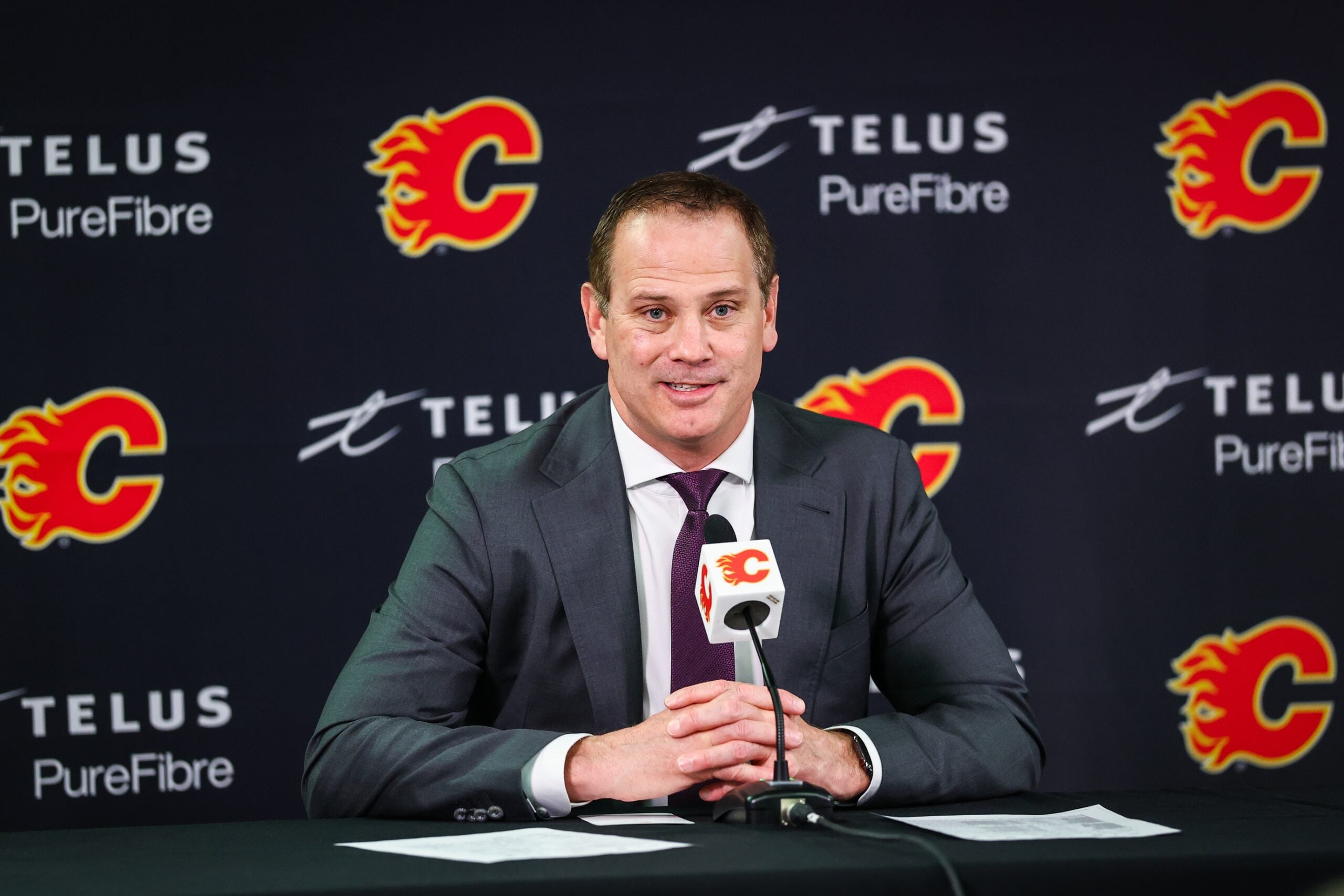
In a recent interview, Conroy stated, “When I was over in the new building the other day, thinking it won’t be next year, but the year after, we’re gonna be there, I want to be on that upswing going where we’re pushing to make the playoffs.”

With Scotia Place set to open in the fall of 2027, the Flames will need to fill a bunch of holes quickly if they want to make Conroy’s dream a reality. With the prospects already in the organization and those who will be added over the next two seasons, they should have plenty of young talent to achieve this goal if their development plays out perfectly. However, the group is in desperate need of a franchise-changing offensive talent who can drive a contending team.
Depth of the Flames’ Prospect Pool
On the back end, the Flames’ prospects are headlined by Zayne Parekh, who, despite his underwhelming rookie stats, has the potential to become a reliable top-pairing defenseman. They also have Hunter Brzustewicz, who has basically been a full-time NHLer since the trade deadline.
This group also includes Etienne Morin, Gavin White, Artyom Grushnikov, Abram Wiebe, Henry Mews and Axel Hurtig, who could all challenge for roster spots over the next couple of seasons. Not included are Kevin Bahl and Yan Kuznetsov, both 25 or younger, who could play big minutes on the left side for years to come.
Up front, Matthew Coronato is still the top talent at 23 years old, having back-to-back 20-goal seasons, while Matvei Gridin has shown he will be a feature of the Flames’ rebuild, with 12 points in his last 18 games.

Outside of that, the Flames are still waiting for Connor Zary to reach his full potential and are hoping Samuel Honzek will continue to develop next season once he returns from injury after missing most of this season. Then there is Brennan Othmann, Cullen Potter, Cole Reschny, Rory Kerins, Aydar Suniev, Andrew Basha, Jonathan Castagna, Tyson Gross, William Stromgren and Ethan Wyttenbach, who all look like promising players.
That’s 14 forwards and eight defencemen with potential to crack the NHL by the time the new rink opens. That is basically a full roster, and it doesn’t include Bahl, Kuznetzov, Olli Maatta, Zach Whitecloud, Martin Pospisil, Mikael Backlund, Yegor Sharangovich and Joel Farabee, who the Flames have under contract through the 2027-28 season.
Flames Prospect Depth Could Create Tough Draft Decisions
The Flames already have a great foundation to build on. Their goaltending is covered by Dustin Wolf and Devin Cooley. If development goes according to plan, their top four and potentially the entire blue line are already covered. Then the forward group will be loaded with reliable middle-six options, with a couple of players who could be top-tier NHLers.
I wouldn’t normally suggest this, but if Conroy is planning for his roster to contend for the playoffs in the first season the new building is open, the Flames may need to start prioritizing positional needs rather than drafting the best player available.
In the 2026 Draft class, the consensus split between forwards and defensemen in the top 10 is about 50/50. Say the Flames miss out on the lottery and on drafting Gavin McKenna and Ivar Stenberg, the two best forward prospects in this draft, the next best players available would be Keaton Verhoeff and Chase Reid, both right-handed defensemen who any GM would love to have in their organization. But, if the Flames are looking to compete in 2027-28, some could argue that they already have Parekh and Brzustewicz and maybe shouldn’t use that pick on another blueliner.
Related: Calgary Flames’ Next 3 Drafts Could Define the Franchise
Instead, the Flames could opt for need over talent on draft day and reach down for forwards like Viggo Björck or Caleb Malhotra to ensure they will get a top offensive prospect, which would be more beneficial to their rebuild.
The other big decision is whether the Flames will use all nine of their picks or will they try to bundle some to acquire one higher-value pick. They might want to prioritize top-tier talent over prospect depth, which they already have, and this would make sense.
However, the flip side is that the Flames have done an excellent job of finding gems in the late rounds, such as Wolf and Wyttenbach, who led the NCAA in points as freshmen after being drafted in the fifth round. So, they could easily justify using all these picks and throw a bunch of darts at the board and see what lands.
The Flames are in a great position with a strong pipeline of prospects and a plethora of early-round picks over the next two drafts. They have the assets to speed-run a rebuild and fulfill Conroy’s goal. However, it will take near-perfect drafting to find high-end players that fill specific holes on the Flames’ roster. They will have many tough choices on draft night, and it will be worth watching.