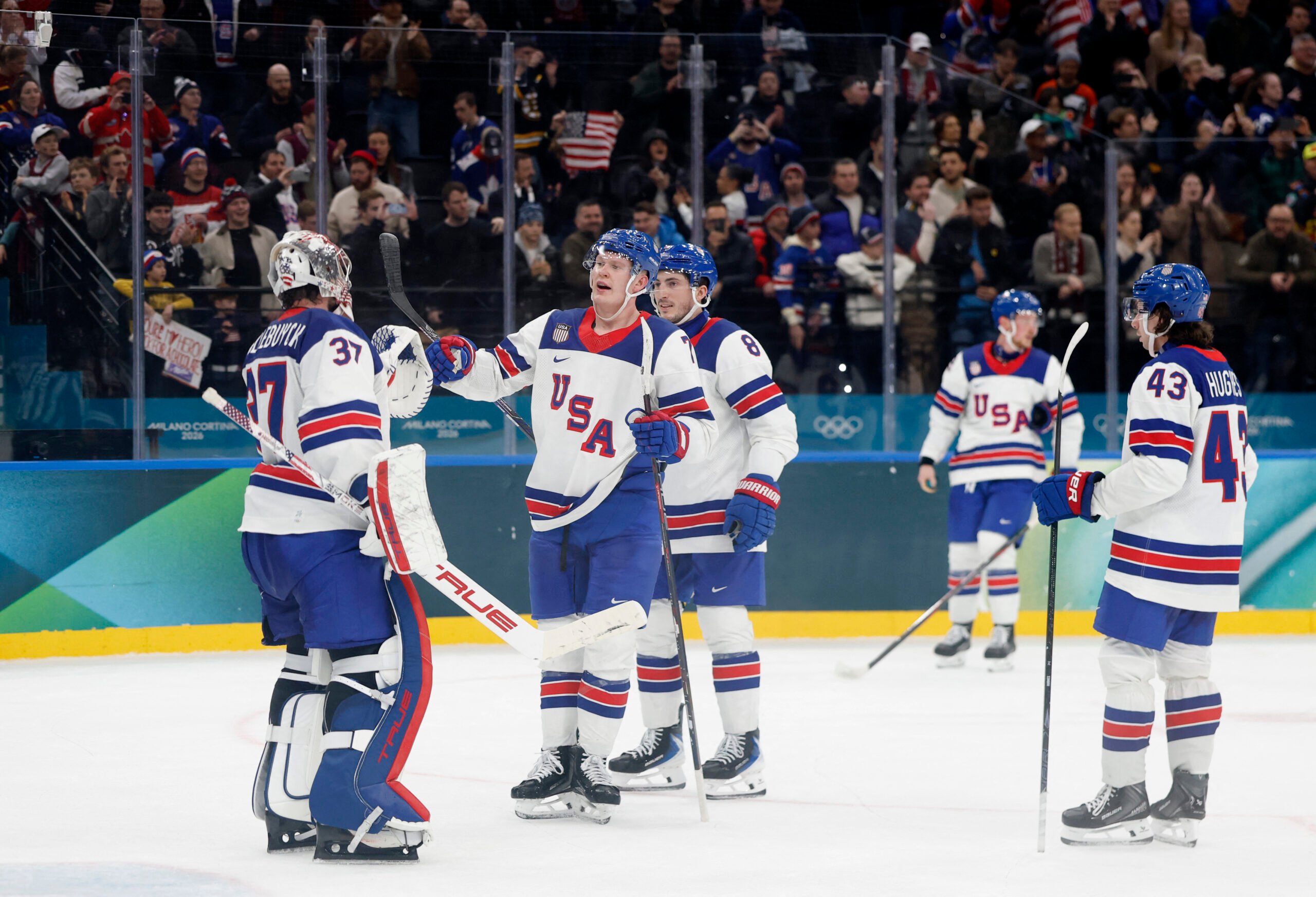
Team USA skated away with a convincing 5–1 win over Latvia on Thursday, but the story of the game was the performance in net. Connor Hellebuyck delivered a composed, technically sharp outing that anchored the Americans from start to finish. While the team’s offense eventually broke the game open, it was Hellebuyck’s steady presence that allowed the United States to dictate pace and weather early pressure from Latvia.
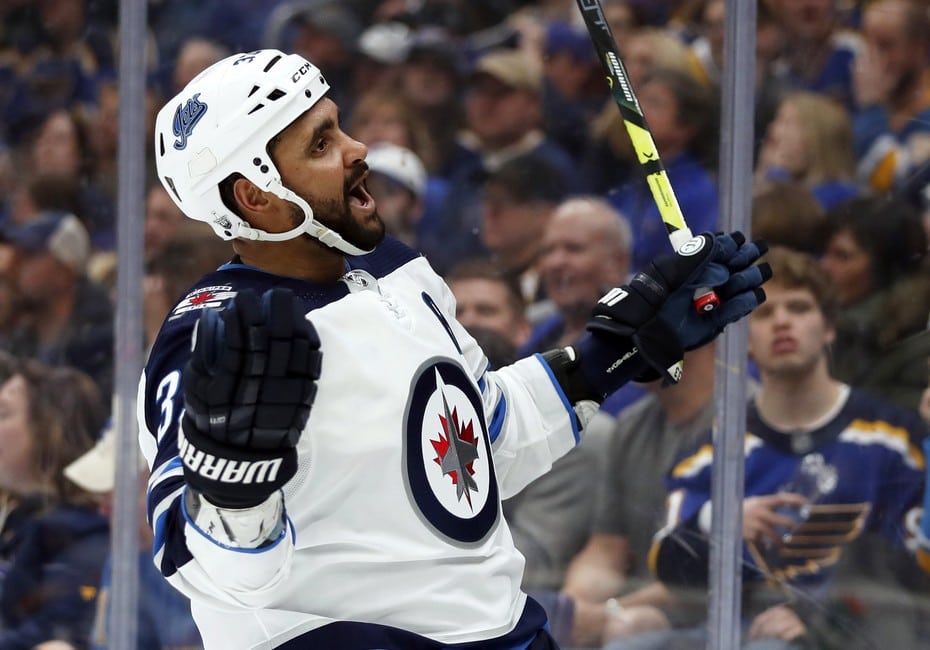
On the other side of the spotlight, Kyle Connor — usually one of the team’s most dynamic offensive threats — had an unusually quiet night. The contrast between Hellebuyck’s dominance and Connor’s muted impact became one of the more interesting subplots of the game.
Hellebuyck’s Calm Sets the Tone
Latvia didn’t fold early. In fact, they pushed hard in the opening period and forced Hellebuyck into several sharp saves. Latvia landed 18 shots on goal across the game, and while the final number doesn’t scream chaos, the timing of those chances mattered. Many of them came during moments when momentum could have shifted.
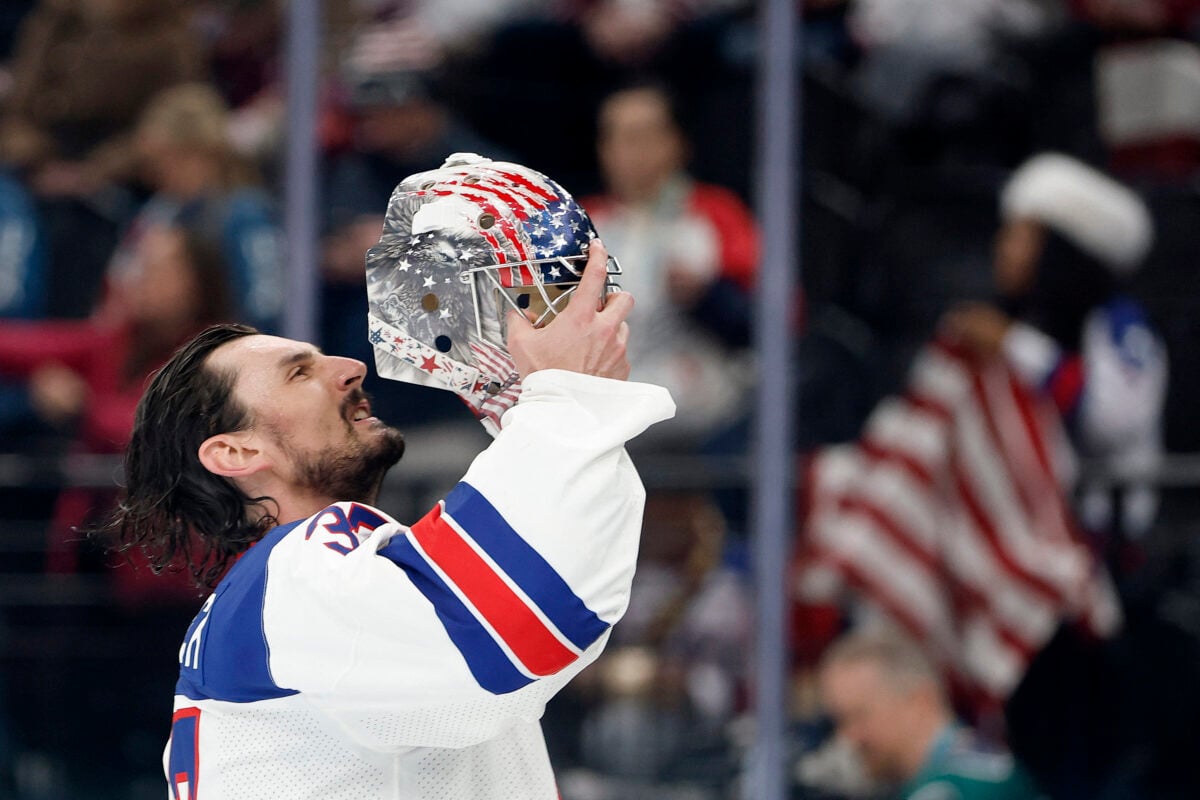
Hellebuyck finished with 17 saves on 18 shots, good for a .944 save percentage, and he looked in complete control. His positioning was clean, his rebound control was strong, and he tracked the puck exceptionally well through traffic. Latvia’s lone goal came off a well-executed play in the first period, but it never rattled him. If anything, it sharpened his focus.
What stood out most was how little second-chance danger he allowed. Latvia tried to crash the crease, but Hellebuyck swallowed rebounds and smothered loose pucks before scrambles could develop. His economy of movement — a hallmark of his game — made difficult saves look routine. For a team loaded with offensive firepower, having that kind of stability in net takes pressure off every skater in front of him.
The Americans eventually tilted the ice heavily in their favor, outshooting Latvia 38–18. That kind of dominance is easier to build when your goaltender eliminates early doubt. Hellebuyck’s performance didn’t just protect a lead — it enabled the United States to play aggressively without fear of a breakdown behind them.
Team USA Power Play Execution Opens the Game
Once Team USA found its rhythm, the special teams took over. The Americans scored twice on the power play, and both goals felt like backbreakers for Latvia. The puck movement was crisp, the spacing was disciplined, and the finishing touch was clinical.
Related: Guide to the 2026 Winter Olympics Men’s Hockey Tournament
Brock Nelson led the offensive charge with two goals, showcasing his knack for arriving in scoring areas at the perfect time. Auston Matthews added a power-play marker, hammering home a chance that highlighted the depth of elite shooters in the lineup. Tage Thompson also contributed a power-play goal, continuing a trend of secondary scoring that makes the American attack difficult to contain.
The power-play efficiency underscored a major difference between the teams. Latvia had eight minutes of power-play time and couldn’t convert. The United States had the same advantage and made it count, scoring on two of four opportunities. That gap helped stretch a competitive game into a comfortable win.
A Quiet Night for Kyle Connor
While several American forwards filled the scoresheet, Kyle Connor’s name was notably absent. Known for his speed, finishing ability, and knack for driving offense off the rush, Connor struggled to impose himself. He registered no points and had limited shot production, a rare occurrence for a player who typically generates chances in bunches.
It wasn’t for lack of effort. Connor skated his usual routes and tried to create space, but Latvia did a solid job collapsing around him and denying clean shooting lanes. At even strength, he found himself pushed to the perimeter more often than usual, forced into low-danger looks rather than the high-quality chances he thrives on.
For a player of Connor’s caliber, quiet games are statistical outliers rather than trends. Still, they’re notable in a short tournament where every game is crucial. The encouraging sign for Team USA is that they didn’t need Connor to carry the offense on this night. The lineup’s depth absorbed the slack seamlessly.
Team USA’s Defensive Structure Supports the Goaltender
Hellebuyck was excellent, but he wasn’t left to fend for himself. Team USA’s defensive structure limited cross-ice passes and kept Latvia mostly to the outside. When breakdowns did occur, sticks were active in lanes, and back pressure from forwards disrupted shooting angles.
Quinn Hughes and Charlie McAvoy, in particular, helped drive clean exits and neutral-zone control. Their ability to transition play quickly fed directly into the American shot advantage. Latvia spent long stretches defending, and fatigue eventually showed in their coverage.
The defensive discipline also showed in the penalty kill. Despite equal penalty minutes on the scoresheet, the Americans neutralized Latvia’s power play completely. That efficiency further reinforced the sense that the game was under control long before the final horn.
A Statement Performance from Team USA
International tournaments often hinge on goaltending, and performances like this elevate confidence across the bench. Hellebuyck didn’t just win a game — he sent a message about reliability. In a setting where pressure ramps up quickly and margins shrink, knowing your goaltender can deliver calm excellence is invaluable.
For Connor, the quiet outing is unlikely to linger. Elite scorers tend to rebound quickly, and his track record suggests a bounce-back performance is coming. If anything, the win demonstrates the Americans’ greatest strength: they don’t rely on a single star to succeed.
Team USA Looking Ahead
The 5–1 result reflects a team capable of winning in multiple ways. They can overpower opponents with skill, execute on special teams, and lean on elite goaltending when needed. Against Latvia, all three elements surfaced — but it was Hellebuyck who provided the foundation.
If Team USA continues to receive that level of netminding, they’ll remain one of the most difficult teams to beat. And if Connor finds his scoring touch to match the rest of the lineup, the ceiling climbs even higher. For one night, though, the spotlight belonged to the goaltender. Hellebuyck didn’t just guard the crease — he owned the game.