Let’s jump straight to the point: the Los Angeles Kings winning a third Stanley Cup feels like one of those debates that splits the passionate fanbase right down the middle. Half the crowd says the window is closing, the other half says the window’s just been rebuilt. The truth is somewhere in between. The Kings aren’t in their 2012–2014 prime era anymore, but they’re also not some mediocre franchise pretending to contend. They’re in that tricky middle lane where they’re good enough to draw attention, but are they actually built to go all the way?
The Kings’ Structure Made Them Champions
To start with the big picture: this organization still has something a lot of teams can dream of—a loyal fanbase and stability. They know who they are. The Kings play structured, responsible hockey. The team doesn’t usually get blown out, they don’t chase offense recklessly, and when they’re on, they drag games right into their comfort zone: tight, controlled, and sometimes downright suffocating.
That blueprint translates in the playoffs. Two Cups aren’t won by accident, and the culture from those runs never totally left the building. The question now is whether that same DNA, updated for a faster, more skilled league, is enough for one more deep playoff run.
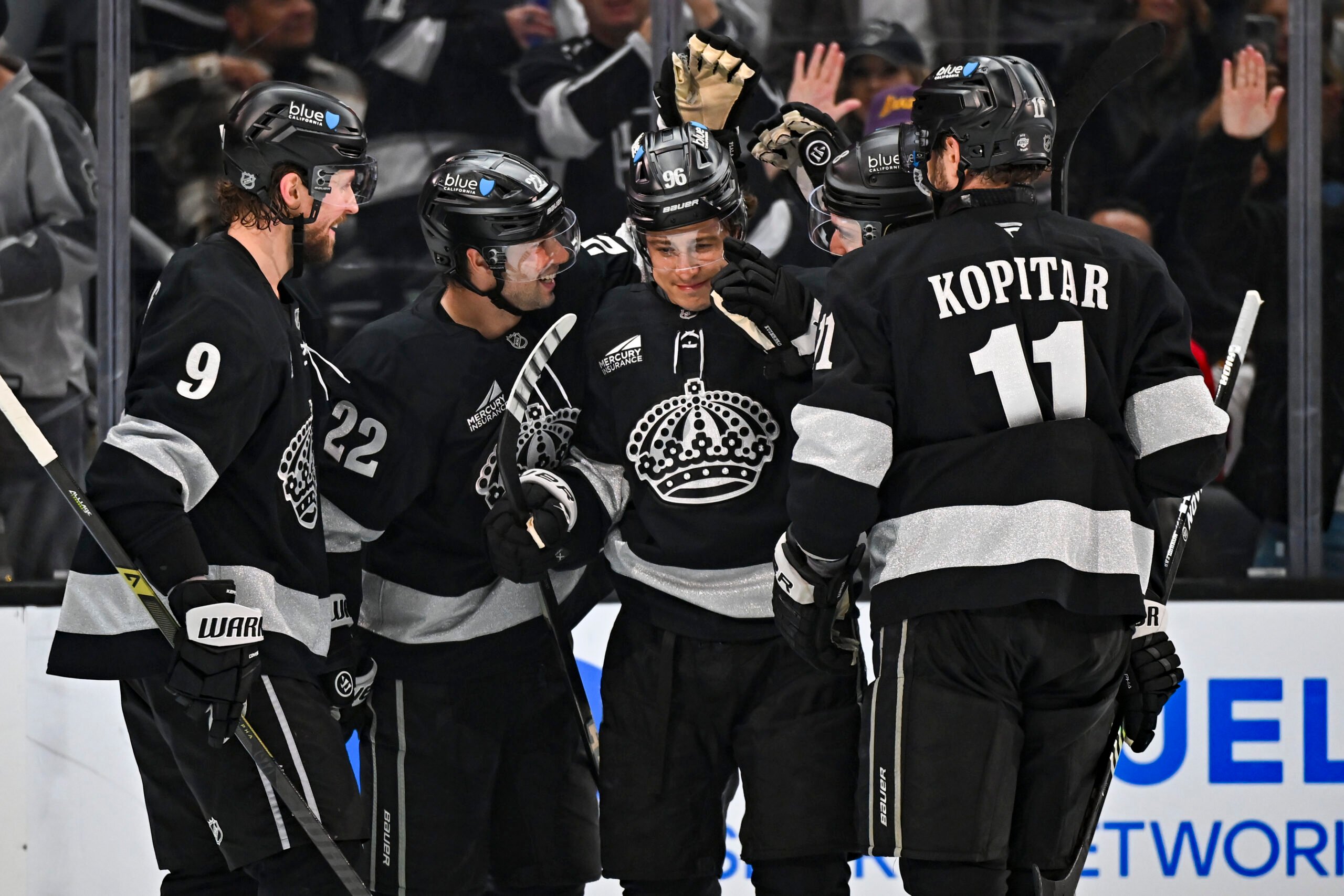
Everything still orbits around Anže Kopitar and Drew Doughty. The Kings’ veterans are the tangible proof that pressure has never intimidated this organization. Kopitar is still one of the smartest two‑way centers in the game. Maybe he’s not erasing entire top lines like he did 10 years ago, but give him a seven‑game series and he’s still the guy you trust to take the defensive-zone draw down one with a minute left.
Doughty, meanwhile, has settled back into that high-usage role. When he’s healthy, he’s out there in every situation: power play, penalty kill, last minute of periods. He’s not turning heads like his Norris Trophy-winning peak, but he doesn’t have to. What the Kings need from him now is control, especially clean exits and a little edge when games become rough. However, if the Kings were to win their third Cup, it wouldn’t be due to the last two remaining 2012 and 2014 champions. It would be due to the younger up-and-coming generation, pushing this team forward.

Kevin Fiala being out of the lineup for the season and the recent acquisition of Artemi Panarin have changed the Kings’ narrative overnight. Fiala was the Kings’ primary engine for zone entries and the creative pulse of a power play that had finally found its rhythm. Without Fiala, the Kings lose that mismatch advantage. Before his leg surgery, he sat second on the team with 40 points and 18 goals. While the team have historically relied on a “balanced scoring attack” approach, the playoffs are often decided by elite talent that can produce a goal out of nothing.
Related: NHL Rumours: Fiala Injury Fallout, Wallstedt to Senators & Kane Deal Coming
To win it all, Panarin must lead the offensive charge, especially with one of their leading stars sidelined. If Panarin can ignite the power play, which struggled at a dismal 17.9% last season and provide a consistent scoring threat alongside Adrian Kempe, the Kings will finally have the offensive strength to match up against the Western Conference’s relentless offenses.
Could Kuemper Be the Solution?
The Kings’ identity remains firmly rooted in their defense. They consistently rank among the league leaders in limiting shots and expected goals against. However, defensive structure only goes as far as the man in the crease.
Darcy Kuemper had an impeccable 2024–25 season, and he remains the backbone of the team’s championship aspirations. In the postseason, Kuemper must be more than just “solid.” He needs to provide the kind of elite goaltending that Jonathan Quick delivered during the 2012 run. With veteran backups like Anton Forsberg and a blue line bolstered by the reliable Doughty and Mikey Anderson, the Kings have the roster to shut down opponents. If they can keep their goals-against average under 2.50 through four rounds, they become nearly impossible to beat.
Kings Must Overcome the Edmonton Oilers First
The biggest psychological hurdle for this group is the Edmonton Oilers. After four consecutive first-round exits at the hands of Connor McDavid and his teammates, the Kings must prove they can neutralize the world’s best players in a seven-game series. The strategy for success involves using their depth lineup, specifically veterans like Corey Perry and Joel Armia, to contain the Oilers’ talent. Winning a third Cup likely requires going through Edmonton or the Vegas Golden Knights, both powerhouse contenders built on depth and difference-makers.
The Coming Transition That Will Define L.A.’s Future
The emotional weight of Kopitar’s final season is more than just a headline; it is the pulse of the Kings’ locker room. As the 2026 postseason nears, that same “win-it-for-the-captain” energy is palpable in Los Angeles. With Doughty still logging elite minutes on the top pair and the next generation, led by Quinton Byfield and Brandt Clarke, the roster possesses a rare and strong synergy. The path to the Cup requires this exact blend of veteran poise and youthful intensity. If the “kids” can provide the necessary secondary scoring while the veterans navigate the high-pressure moments, the Kings transform from mere playoff participants into legitimate title threats.
The championship window is certainly narrowing, but it hasn’t slammed shut just yet. If the front office can lean on their defining defensive identity with Panarin’s offensive technique and Kuemper’s stability in net, the crown will return to the coast for the third time in franchise history.