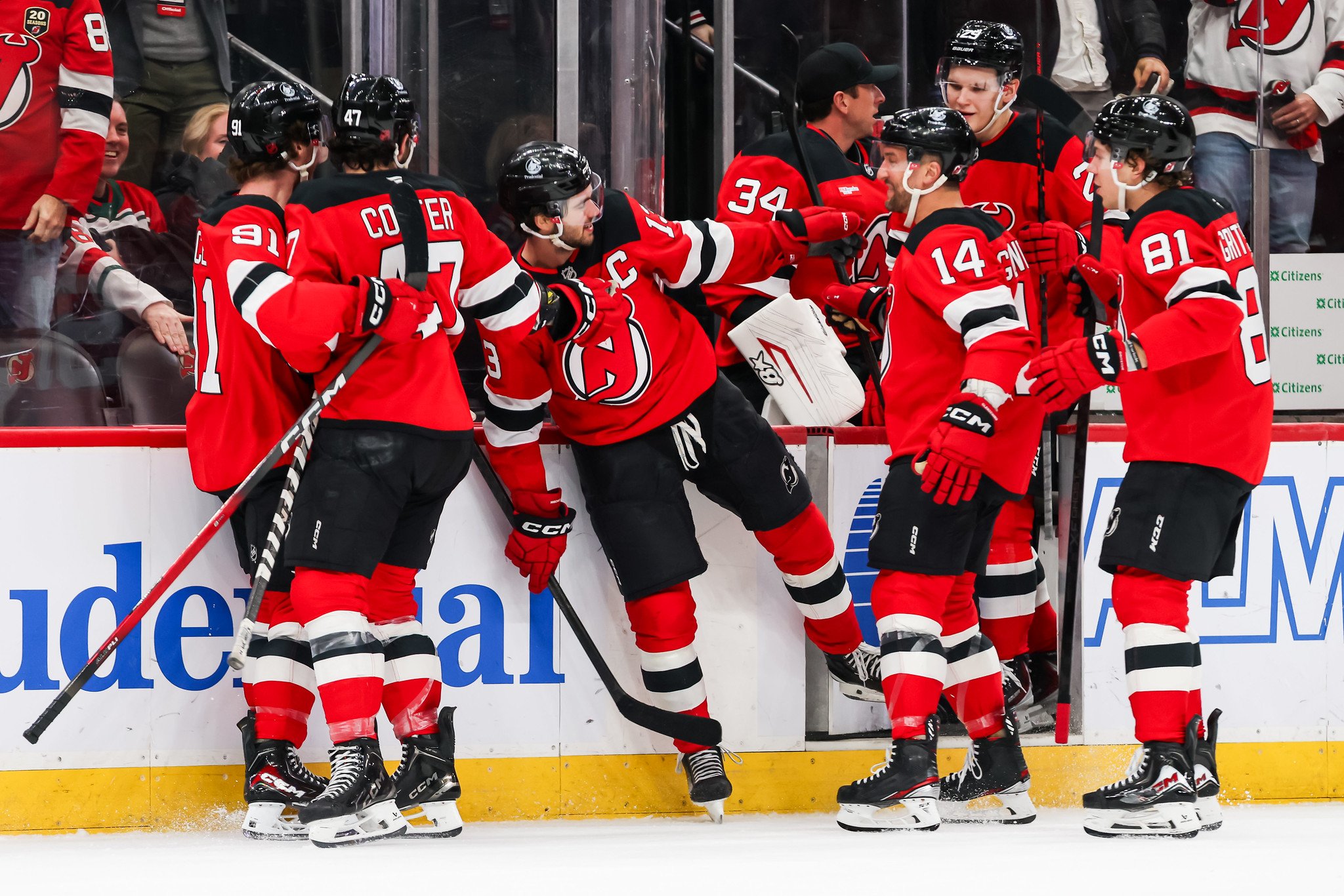
The New Jersey Devils entered the 2025-26 season with high expectations, and early on, they appeared ready to meet them. With one of the most talented young cores in the NHL, the belief around the league was that the Devils were primed to take another step forward and establish themselves as a consistent contender in the Eastern Conference. Their start in October seemed to confirm that optimism. The team suffered just three losses during the opening stretch and quickly climbed into the top three in the NHL standings. Their play was structured and confident, the offense was producing at a high level, special-teams units were clicking, and the roster finally looked like it was finding the chemistry many had been anticipating.
However, that early momentum did not last. What followed was a prolonged slump that placed the Devils back into a frustratingly familiar storyline—one that has lingered around the franchise in recent seasons. Inconsistency began to creep into their game, momentum became difficult to sustain, and the offense that once looked so dangerous stopped producing. As losses mounted, the Devils steadily slid down the standings. They now find themselves sitting seventh in the Metropolitan Division and 25th league wide, a sharp contrast to the promise they showed just weeks earlier.
There is little doubt about the level of talent on the roster, but talent alone is rarely enough to produce sustained success in the NHL. Teams that consistently compete season after season build their identity around structure, accountability, and reliable depth throughout the lineup. If the Devils hope to evolve from a team that occasionally flashes its potential into one that reliably competes for playoff positions—and ultimately for the Stanley Cup—they will need to address several key areas. Those improvements must begin now and continue shaping the organization in the seasons ahead.
Establishing a Consistent Identity
At their best, the Devils are one of the fastest and most dynamic teams in the league. Their roster is filled with elite skaters capable of pushing the pace and generating offense off the rush. Players such as Jack Hughes, Nico Hischier, and Jesper Bratt thrive in an up-tempo system that forces opponents to defend at high speeds.
Earlier in the season, that identity was evident. The Devils were regularly outshooting opponents, winning puck battles, and controlling possession through aggressive forechecking and quick puck movement.
However, that style has not been consistently present throughout the season. In recent months, the Devils have struggled to maintain their pace and structure, often appearing disjointed in all three zones. The lack of a clear identity has allowed opposing teams to dictate the tempo of games.
For the Devils to finally be a serious contender, they must recommit to their strengths. Their speed and skill should remain the foundation of their system, but it has to be supported by disciplined defensive play, depth scoring, steady goaltending and a serious commitment to winning battles along the boards and in front of the net.
Defensive Structure Must Improve
Although the Devils possess a capable defensive core on paper, stability along the blue line has remained a recurring concern throughout the season. Too often, the team has allowed an excess of high-danger scoring opportunities and struggled to hold onto leads late in games—issues that have repeatedly swung momentum in the wrong direction.
A large part of the problem has come from lapses in defensive zone coverage. When the Devils are playing at their best, their defensemen move the puck efficiently out of danger, and the forwards collapse low in the zone to provide support, allowing the team to transition quickly up the ice. That structure fuels the speed-based style that makes New Jersey dangerous. But when those habits break down, the Devils become susceptible to prolonged offensive pressure and costly turnovers in their own end.

Turnovers, in particular, have been a major factor. Luke Hughes and Dougie Hamilton have recorded more than 80 giveaways each this season, several of which have led directly to goals against or momentum-shifting scoring chances. While both players bring valuable offensive upside from the back end, limiting those high-risk mistakes will be critical if the Devils want to stabilize defensively.
Additionally, improving communication across the defensive unit is essential moving forward. Stronger net-front coverage, clearer assignments in the defensive zone, and smarter puck management can go a long way in reducing the odd-man rushes and scramble situations that have plagued the team this season. The Devils also need their forwards to consistently support the defense—tracking back quickly, winning battles along the boards, and helping relieve pressure when the puck remains in their zone.
Depth Production and Goal Scoring are Essential
Another key element that separates good teams from truly great ones is scoring depth. The Devils have several players capable of producing at an elite level, but successful teams receive steady contributions from all four lines. Offense cannot be concentrated solely among the top players if a team hopes to sustain success over the course of a long NHL season.
When the Devils become overly reliant on their top line to drive offense, opposing teams can easily adjust their game plans. Defensive matchups tighten, top defenders are deployed against the same stars every shift, and scoring chances become far more difficult to generate. Without additional threats throughout the lineup, the Devils’ offense can quickly become predictable and easier to contain.
That is why secondary scoring from the middle and bottom-six forwards must become more consistent. Depth players do not need to produce highlight-reel goals or massive numbers, but timely goals and steady offensive pressure can dramatically shift the momentum of a game. A goal from a third- or fourth-line player can energize the bench, relieve pressure from the team’s top scorers, and force opponents to defend the entire lineup rather than focusing on one or two stars.
Related: Devils News & Rumors: Nemec Agent Switch, Dougie Hamilton, Third Jersey
Arguably even more concerning than the lack of depth scoring, however, is the Devils’ overall offensive production. This season has been one of the lowest-scoring campaigns the team has seen in recent years. Hischier currently leads the team with just 20 goals, while top offensive talents Jack Hughes and Bratt sit at 12 and 13 goals, respectively. For a roster built around speed and offensive skill, those numbers fall far below expectations.
Contending teams typically have multiple players pushing well beyond the 20-goal mark by this stage of the season, with several threatening 30 or even 40 goals. When the Devils’ top players are not producing at that level, the entire offense struggles to generate consistent pressure.
At the end of the day, the formula is simple: teams that want to win must score goals. Offensive talent is already present on the Devils’ roster, but it needs to translate into consistent production on the scoreboard.
Goaltending Stability
No NHL team can sustain long-term success without dependable goaltending. Strong play between the pipes often serves as the backbone of a winning team. A reliable goaltender can cover for defensive lapses, give teammates the confidence to play aggressively, and steal valuable points in tight games that ultimately shape the standings.
For the Devils this season, consistency in net has been difficult to establish. The team has frequently rotated between veteran goaltenders Jacob Markstrom and Jake Allen, searching for stability during stretches where the club has struggled to find momentum. While both netminders have had solid performances at times, neither has fully taken control of the starting role or delivered the kind of elite numbers typically associated with top contenders.
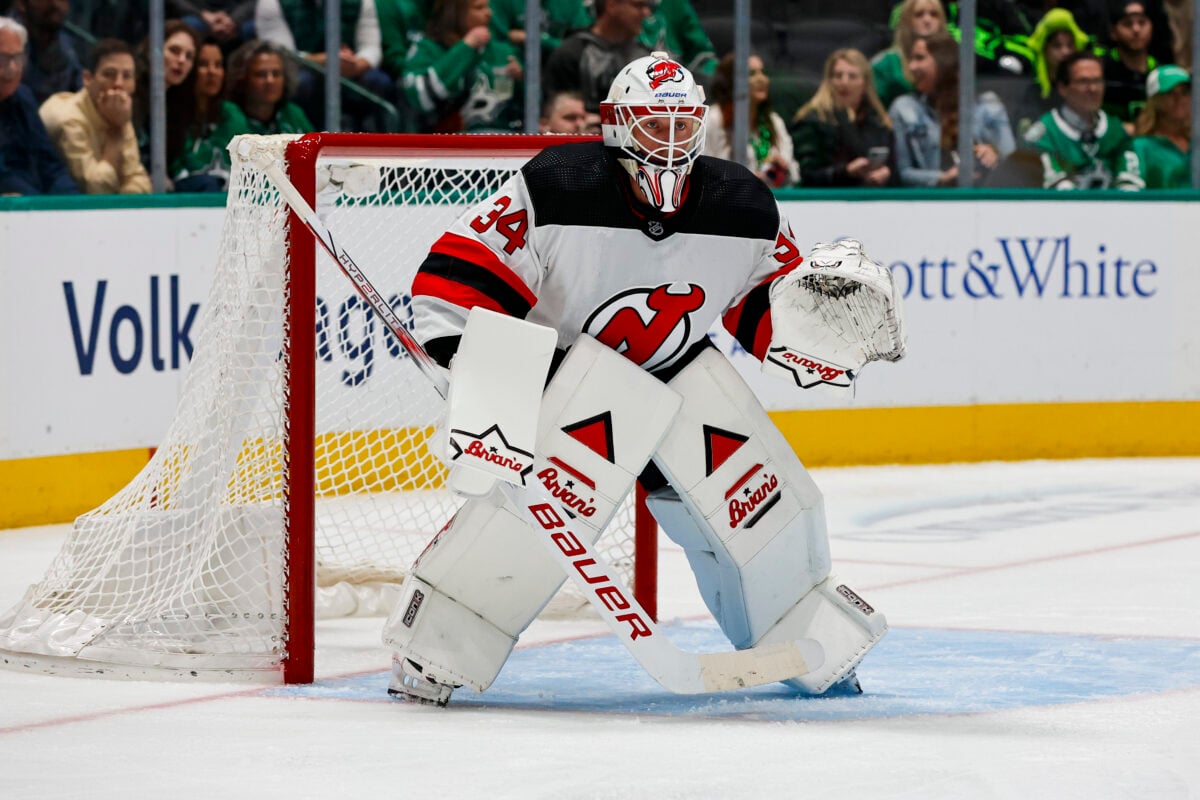
Markstrom currently holds a .888 save percentage (SV%) along with a 3.05 goals-against average (GAA), while Allen has posted a .907 SV% and a 2.64 GAA. Those statistics are respectable on the surface, but they fall short of the level usually required from teams with championship aspirations. Most playoff-bound teams rely on goaltenders consistently posting save percentages well above the .910 mark while limiting high-scoring nights from opponents.
Beyond the raw numbers, the Devils need timely saves in critical moments—particularly late in games when protecting leads or during extended stretches of defensive-zone pressure. Momentum-changing saves can energize a bench and keep a struggling team competitive even when its offense stalls.
That does not mean the struggles fall solely on the goaltenders. Defensive breakdowns and turnovers in front of the net have put both Markstrom and Allen in difficult positions throughout the season. Still, elite teams often receive game-stealing performances from their goaltenders when things are not going perfectly elsewhere on the ice.
Turning Potential Into Results
Few teams in the NHL possess as much young talent as the Devils. Their core players are entering the prime years of their careers, and the foundation for long-term success is clearly in place.
However, we are past the point of potential alone.
To see a real change in this team, the Devils must establish a clear identity and strengthen their overall structure. If those elements can finally come together, the Devils have all the tools necessary to evolve from a team defined by flashes of brilliance into one that competes for the Stanley Cup.