The NHL makes its mighty return to the Winter Olympics next February. NHL players have produced some of the most memorable Olympic hockey games, such as the 2006 gold medal game between Sweden and Finland, or the 2014 quarter-final shootout between the USA and Russia.
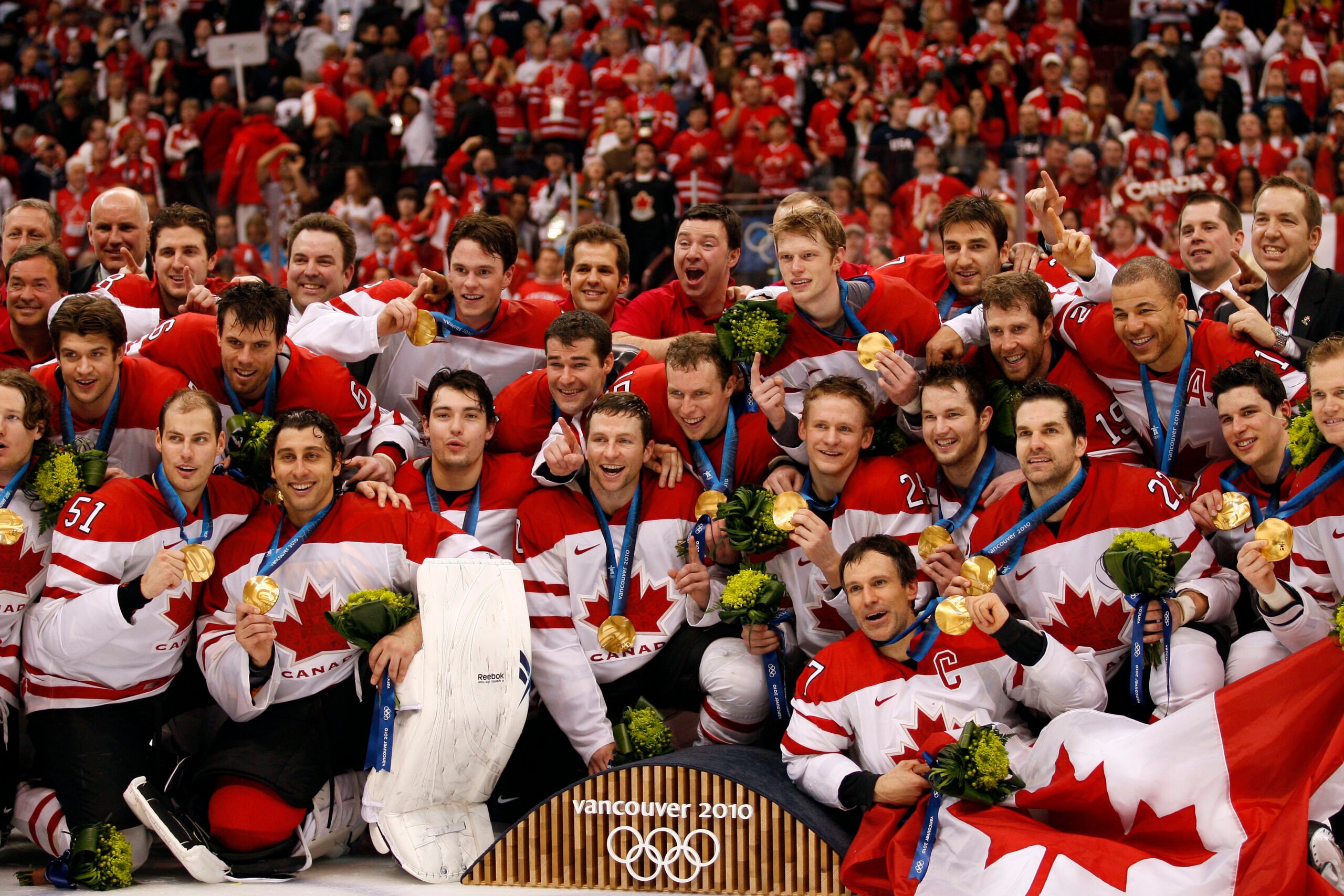
But the game that stands out to all Canadians is the 2010 gold medal game in Vancouver between Canada and the USA, which saw Sidney Crosby score “The Golden Goal.” That win brought a country together and filled Canadians with pride. But winning gold took a full team effort, and every player on that roster played a key role in that victory. Here’s a look at where they are now.
Roberto Luongo, Goaltender (Vancouver Canucks)
Who better to start this list than Canada’s starting goaltender for the gold medal game? Heading into these Olympics, Luongo was not projected to be the starter as head coach Mike Babcock intended on relying on Martin Brodeur as his main option. After Brodeur faltered during Canada’s 5-3 round robin loss to the USA, Canada’s coach turned to Luongo.
Luongo was spectacular, as he went undefeated in five games and posted a .927 save percentage. He was exactly the type of steady presence Canada needed between the pipes. He made critical saves when it counted, including a pad save in the semi-final game against Slovakia that helped Canada advance to the gold medal game.

After winning gold, Luongo returned to Vancouver, where he helped the team during one of the most successful eras of its history. In the 2010 Playoffs, the Canucks made it to the second round, where they were eliminated by the Chicago Blackhawks in six games. In 2011, they famously made it to the Stanley Cup Final against the Boston Bruins and lost in seven games. That loss marked the beginning of the end for Luongo in Vancouver.
He played with the Canucks for two more seasons and even won another gold medal with Canada at the 2014 Olympics in Sochi as Carey Price’s backup. But he was traded to the Florida Panthers that March. He spent the final five seasons of his career in Florida before retiring at the end of the 2018-19 season. He is now the Special Assistant to Panthers GM Bill Zito. Luongo is also helping youth hockey in Florida as the assistant coach for the Florida Jr. Panthers 16U AA.
Martin Brodeur, Goaltender (New Jersey Devils)
Brodeur was considered the clear starter, as he had played for Canada at the Olympics in both 2002 and 2006. With his incredible track record and Stanley Cup-winning history, he looked poised for another great performance. But a bad game against the Americans, where he allowed four goals and mishandled a puck that led directly to a goal, caused a shake-up in net. Brodeur ended the tournament having played only two games with a save percentage of .867. He remained the team’s backup and helped support Luongo throughout the rest of the tournament.
After the gold medal game, he returned to New Jersey, where he played out the rest of his Hall-of-Fame career. The Devils made the Stanley Cup Final in 2012, before he retired. New Jersey faced the red-hot Los Angeles Kings, and lost the series 4-2 as the Kings won their first championship. Brodeur wouldn’t return to the playoffs again in his career and played his last NHL season in 2014-15 with the St. Louis Blues, where he played seven games.
After his playing career, he became Assistant General Manager for the Blues in 2015-16 and held that position until 2018. Broduer eventually went back to New Jersey, where he became the Executive Vice-President of Business Development. The following season, he became the Executive Vice-President of Hockey Operations, and he still holds that title today.
Marc-Andre Fleury, Goaltender (Pittsburgh Penguins)
Marc-Andre Fleury, fresh off winning the Stanley Cup with the Pittsburgh Penguins in 2009, was named to Canada’s roster as their third goaltender. Sadly, Fleury was unable to get into a game because neither Brodeur nor Luongo got injured, and that was the only way he was going to play.
Fleury started his career in Pittsburgh and stayed with the club for seven more seasons after the 2010 Winter Olympics. In 2016, an injury took him out of the playoffs, where he was replaced by young goaltender Matt Murray, who excelled and went on to win the Stanley Cup against the San Jose Sharks.
The following season, the script was flipped. Before their first playoff game against the Columbus Blue Jackets, Murray injured himself in warmups. Fleury was thrust back into the starter’s net and helped Pittsburgh win both their first and second round series. In the Conference Final against the Ottawa Senators, Fleury faltered, which brought a healthy Murray back into the net, and he helped lead the team to another Stanley Cup, this time against the Nashville Predators.
With the 2017 Expansion Draft looming, the Penguins could only protect one goaltender, and they chose Murray. This decision left Fleury exposed, and he was chosen by the Vegas Golden Knights, making him the first starting goaltender in Golden Knights history. During his first season in Vegas, he and the Golden Knights shocked the sports world, as the expansion team made it to the Stanley Cup Final for the first time in NHL history.
Fleury faced a familiar foe in the Washington Capitals, which he knew very well from his days in Pittsburgh. Sadly, Fleury and the Golden Knights were unable to stop the Capitals’ determination, and Washington captured the Stanley Cup in five games.
Fleury spent three more seasons in Vegas. In his final season with the Golden Knights in 2020-21, he and goaltender Robin Lehner split the Jennings Trophy as the best goaltending duo, and Fleury won his first and only Vezina. But Vegas decided to move on from Fleury in favor of the younger goaltender. Fleury was traded to Chicago in the summer of 2021, a team on its way down.
He played 45 games for Chicago the following season and posted a .908 save percentage. Near the trade deadline, he was traded again to the Minnesota Wild and became one of their tandem options. He played 11 regular-season games and five playoff games for the Wild and had a save percentage above .900. That offseason, he re-signed with Minnesota and played with the Wild for three more seasons until he retired in 2024-25.
Dan Boyle, Defence (San Jose Sharks)
One of the greatest undrafted players of the 2000s, Dan Boyle, made the Team Canada roster as one of the club’s oldest players. He was fresh off back-to-back 50-point seasons with the Sharks and on his way to another when he made the team along with three of his teammates, Patrick Marleau, Joe Thornton, and Dany Heatley. At the Olympics, Boyle played a big role. He scored six points in seven games, along with logging big and important minutes en route to gold.
Boyle played four more seasons with the Sharks after winning the gold medal and came close to winning a Cup with the organization. They advanced to the Conference Final in 2011 and lost to Luongo’s Canucks in five games. They also suffered an infamous 3-0 collapse to the Kings in the first round of the 2014 Playoffs. After that 2014 season, Boyle signed with the New York Rangers and helped bring the team to the Eastern Conference Final, only to lose in Game 7 to the Tampa Bay Lightning. Boyle played one final season in 2015-16 with New York before retiring.
Drew Doughty, Defence (Los Angeles Kings)
At 20 years old, a baby-faced Drew Doughty was selected to Team Canada and was an integral part of their elite defensive core. He was coming off his rookie season with the Kings, where he scored 27 points in 81 games. In 2009-10, heading into the Olympics, he became one of the Kings’ best players and earned a spot on the team.
At the Olympics, he did not look out of place and thrived in Canada’s defensive system. He also got to play consistently with captain Scott Neidermyer. He was not a point producer in the tournament, but was able to help shut down opposing teams’ offences. Doughty told the Spittin’ Chiclets podcast that he was late to the gold medal game due to travel issues, but became one of the first players to hug Sidney Crosby after his famous goal.
After his first Olympic experience in 2010, Doughty turned into one of the best defencemen of that decade. He has played 18 seasons with the Kings and has won two Stanley Cups in 2012 and 2014. He won a Norris Trophy as the league’s best defenseman in 2016 and has been nominated for the trophy three other times.
On the international side, Doughty won another gold for Canada in 2014 at the Winter Olympics in Sochi and won the World Cup of Hockey in 2016. He most recently won the Four Nations Face-off last season and has been selected to play for Team Canada at the 2026 Winter Olympics in Milano-Cortina.
Duncan Keith, Defenceman (Chicago Blackhawks)
The first of many Blackhawks players on this roster, Keith was just hitting his prime before the 2010 Olympics. He had played four seasons in Chicago and was in the middle of his fifth before the opening ceremonies began. In seven games, Keith was paired with his Blackhawks teammate, Brent Seabrook, and put up six assists while being a steady force for Canada.
Chicago entered their dynasty years after the Olympics and won their first Stanley Cup in 49 years in the 2010 Playoffs with an overtime goal from Patrick Kane against the Philadelphia Flyers. Keith remained with the team during their half-decade of dominance and won two more Stanley Cups in 2013 and 2015.
Keith also won the Conn Smyth Trophy as playoff MVP after the 2015 Stanley Cup victory. He was also given the Norris Trophy for best defenceman in 2010 and 2014. This wasn’t the last time Keith played for Canada’s national team, as he was also on the Olympic team in Sochi and the 2016 World Cup of Hockey team.
Scott Niedermayer, Defence (Anaheim Ducks)
Niedermayer, Canada’s captain, played his final Olympic games in Vancouver, which brought him back to his roots with the Kamloops Blazers of the WHL (Western Hockey League) during his junior hockey days. Not only was this his final Olympic Games, but the 2009-10 season was his final in the NHL. Before these games, Niedermayer already had a well-established resume with four Stanley Cups, a Conn Smyth, a Norris Trophy, and a gold medal from the 2002 Olympics in Salt Lake City.
His age forced him into a far more defensive role in this tournament. He scored three points, including a nice breakaway goal against Germany. But during the gold medal game, tragedy nearly struck for Niedermayer. Shortly before Crosby’s goal, Niedermayer turned the puck over to Joe Pavelski for a great USA chance, but Luongo made the save. Niedermayer re-grouped and sent the puck to Crosby, who went on to score his iconic goal.
The Canadian captain retired from professional hockey at the end of that season as a Stanley Cup Champion and a member of the Triple Gold Club that included World Junior gold, World Championship gold, and Olympic gold. He is currently Senior Advisor for the Anaheim Ducks.
Chris Pronger, Defence (Philadelphia Flyers)
The second of two elder players on the roster, Chris Pronger, played a big role. Like Niedermayer, Pronger already had a huge resume before this tournament as a Stanley Cup Champion with the Ducks, a three-time Olympian and gold medalist in 2002, and a Norris Trophy winner. The future Hall-of-Famer had one more crack at a gold medal, and he got it during the 2010 Olympics.
Pronger was paired with Boyle for the majority of the tournament, and the pair worked well together. Pronger used his booming slapshot on multiple occasions and scored five assists. He was also a member of the Triple Gold Club before these games.
In the 2010 Playoffs, Pronger helped lead the Philadelphia Flyers to the Stanley Cup Final, where they lost to the Blackhawks in six games. He retired after the 2011-12 season and was inducted into the Hockey Hall of Fame in 2016. He is now a broadcaster with the St. Louis Blues.
Brent Seabrook, Defence (Chicago Blackhawks)
The other half of Chicago’s top defensive pair during their dynasty, Seabrook, was heavily relied upon to help Canada win the gold medal. As the more defensively responsible member of the duo, he was tasked with shutting down the other team’s top units during the Olympic tournament and did a great job. He only scored one point, but finished with a plus-2 rating.
Seabrook helped the Blackhawks during their half-decade of dominance in the 2010s. He was on the roster for all three of their Stanley Cup-winning teams and logged heavy minutes during excruciating playoff runs. He was the definition of a warrior in those glory years, but over time, his body began to give out, and injuries ultimately ended his career in the 2019-20 season.
Although he had essentially called it quits, he still had several years left on his contract. So the Blackhawks sent his contract to the Tampa Bay Lightning, where he was on their payroll for three seasons but never played a game for them. He now serves as a development coach for the Calgary Flames.
Shea Webber, Defence (Nashville Predators)
One of the hardest slapshots ever recorded, Shea Weber was both an offensive and defensive force at the 2010 Olympic Games. Weber used his large frame and booming slapshot on several different occasions and recorded two goals and six points, including a shot against Germany that was so hard that the puck went through the net, and no one knew he had scored until a stoppage in play.
Webber went on to have a Hall of Fame career after the Olympics. He was nominated three times for the Norris Trophy. He played 11 seasons with the Nashville Predators and was captain of the team for six, until he was traded to the Montreal Canadiens for former Norris Trophy winner P.K. Subban in 2016. The trade sent shockwaves through the NHL.
Weber had a great career with the Canadiens, playing five seasons with the club and captaining the team for four of them. He even helped the Canadiens reach the Stanley Cup Final in 2021. After that Stanley Cup Final run, the hard miles finally took their toll, and he did not play again. Like Seabrook, Weber had multiple years left on his contract but knew he was never going to play again. His contract has been traded to several different teams over the years and is now with the Blackhawks, where it will expire at the end of this season.
Patrice Bergeron, Centre (Boston Bruins)
One of the greatest Boston Bruins of all time, Patrice Bergeron, was one of several youthful figures on this Canadian Olympic team. While in the middle of his fifth season in the NHL, Bergeron was chosen to be a utility forward who was relied upon to play fourth-line centre minutes and win important face-offs. Even at the young age of 24, he was up to the task and did what was asked of him. He finished the Olympics with one point, but he was a very important player for Canada.
Related: Bruins’ Bergeron a Lock for Hockey Hall of Fame
Bergeron and the Bruins took off after those games. He was the assistant captain for most of his career and was their number one centre during their Stanley Cup win over the Vancouver Canucks in 2011, where he scored the winning goal in Game 7. Boston had several amazing runs after that and returned to the Final in 2013 and 2019, but lost in both years.
Bergeron represented Canada two more times at the 2014 Olympics and the 2016 World Cup of Hockey. He retired after the 2022-23 season as a Stanley Cup Champion, six-time Selke Trophy Winner for best defensive forward, two-time Olympic gold medalist, a member of the Triple Gold Club, and one of the most respected hockey players of his generation.
Ryan Getzlaf, Centre (Anaheim Ducks)
Getzlaf was a staple of Canada’s forward core throughout the tournament, playing beside his Ducks teammate Corey Perry. The duo, along with Brendan Morrow of the Dallas Stars were a great energy line that could cause damage in the offensive zone. Getzlaf’s biggest moment was his game-winning goal against Slovakia, a 3-2 Canada win in the semi-finals. He finished the Olympics with three goals and seven points.
He had already climbed the mountain to a Stanley Cup in 2007 with Anaheim as a young player. He became the captain of the Ducks in 2010 and led the team on several deep playoff runs, but they were never able to make it back to the Stanley Cup Final. Getzlaf won another gold medal in Sochi and gold at the 2016 World Cup of Hockey.
Dany Heatley, Left Winger (San Jose Sharks)
In his first season in San Jose after forcing his way out of Ottawa, Heatley became one of four Sharks to be named to Canada’s roster for the 2010 Olympics. Teammates Heatley, Patrick Marleau, and Joe Thornton played on a line together, and they benefited greatly from their familiarity with each other. Heatley recorded seven points in seven games.

Heatley entered the twilight of his career after the 2010 Winter Games. He helped lead San Jose to two long playoff runs, but they did not win a Stanley Cup. In the 2011 offseason, he was traded to the Minnesota Wild for Martin Havlat, and he spent three seasons with the organization. In 2013-14, he helped the Wild defeat the top-seeded St. Louis Blues in the first round of the playoffs, only to lose to the Blackhawks in the semi-finals.
The next season, he signed with the Ducks but only played six games with the team and eventually left the NHL. He played the following season in the top German hockey league (DEL) and then retired in 2016. He is currently a pro scout with the Philadelphia Flyers.
Jarome Iginla, Right Wing (Calgary Flames)
Jarome Iginla was a monster at this tournament with five goals and two assists. He was on the team’s top line with Crosby, and the duo had amazing chemistry during the early stages of the tournament. Iginla scored a hat-trick in Canada’s first game against Norway and continued to produce important points as the games went on. His most memorable moment was his assist on Crosby’s golden goal. While falling to the ice, Iginla slid the puck to Crosby, who scored.
Iginla was nearing the end of his career once the Winter Games ended. His Stanley Cup aspirations still lingered after he came close in 2004, when he and the Calgary Flames lost in Game 7 to the Tampa Bay Lightning. After two more seasons in Calgary, Iginla sought a trade and was dealt to the Pittsburgh Penguins to team up with Crosby one more time.
Pittsburgh wasn’t able to help Iginla win a Cup, so he signed with Boston in the offseason and played there for one season. He was once again unable to win the championship and went on to join the Colorado Avalanche for three seasons, where he played alongside the young Nathan MacKinnon. Colorado never made the playoffs during Iginla’s time there, and he was eventually traded to the L.A. Kings, who were also unable to make the playoffs. Iginla never won a Stanley Cup before he retired after the 2016-17 season.
Iginla finished his career with two Maurice Richard Trophies, an Art Ross, a Lester B. Pearson Award (now the Ted Lindsey Award), a King Clancy Memorial Trophy, and a Mark Messier Leadership Award. He also won two Olympic gold medals in 2002 and 2010, and the World Cup of Hockey in 2004. He is currently the franchise owner of the Kamloops Blazers of the WHL and Special Assistant to Craig Conroy in Calgary.
Patrick Marleau, Left Wing (San Jose Sharks)
The second member of the San Jose Sharks trifecta, Patrick Marleau, played a big role in the forward unit alongside Heatley and Thornton. This was a big deal for Marleau, who was not selected for either the 2002 or 2006 Olympic rosters. He finished the tournament with five points and had a big goal for Canada in the semi-finals against Slovakia, where he tipped in the opening goal of the game in a 3-2 win.
After the 2010 Olympics, Marleau continued his career with the Sharks. He got close to a Cup victory in 2011 when they lost in the Conference Final to the Canucks. In 2015-16, he and Thornton went on one last big run, reaching the Stanley Cup Final, but the club could not beat Crosby and the Penguins and lost in six games. Marleau spent one more season in San Jose before he left the Sharks, signing a three-year contract with the Toronto Maple Leafs as a free agent.
His time in Toronto was shorter than expected, as he only played there for two seasons; however, he mentored players like Auston Matthews and Mitch Marner during his tenure. During both seasons in Toronto, Marleau and the Maple Leafs lost in back-to-back Game 7s to the Bruins in the quarterfinals.
In 2019, he was traded to the Hurricanes, who eventually bought him out. After becoming a free agent again, Marleau went back to San Jose, which was in the depths of a rebuild and played there for the majority of the 2019-20 season until he was dealt to Pittsburgh at the trade deadline.
After the bubble playoffs ended, Marleau went back to his stomping grounds again and signed with the Sharks for his final season in 2020-21. He is currently a Team Consultant with the Sharks. He didn’t win a Cup, but he captured Olympic gold medals in Vancouver and Sochi and currently holds the Iron Man streak for most consecutive games played by one player at 910.
Brenden Morrow, Centre (Dallas Stars)
Brenden Morrow is the most underrated player on this roster. Morrow became a key piece of Canada’s success once they found a role for him, playing on a line with both Corey Perry and Ryan Getzlaf in the middle-six of Canada’s forward group. Morrow made his presence felt in Canada’s semi-final game against Slovakia, where he tipped in a Pronger shot passed Jaroslav Halak to give Canada a 2-0 lead.
Morrow was nearing the end of his career after the 2010 Olympics, after 10 seasons in the NHL with the Dallas Stars and serving as their captain for four of them. He played three more seasons in Dallas before being traded to the Penguins mid-season, and played in 14 playoff games, but the team was eliminated in the conference finals.
The following season, he signed with the St. Louis Blues, where he played in 71 games but only two playoff games. He played his final season in 2014-15 with the Lightning and went all the way to the Stanley Cup Final before losing to the Blackhawks. Morrow is currently not involved in professional hockey.
Rick Nash, Left Winger (Columbus Blue Jackets)
Nash was a slam dunk to make the team, but his role changed after the tournament started. Nash originally skated on the top line with Crosby and Iginla as the power forward option on that line. After the round robin game against the USA, where Canada lost, Babcock made a change and put Nash on a line with Jonathan Toews and Mike Richards.
He gave Nash a new role as a defensive specialist, and he thrived, turning his line into the shutdown option for Canada, and they played a big role in securing the gold medal. Nash recorded five points in the tournament, with his biggest moment being a goal against Russia in the quarter-finals.
As Columbus’s first star, Nash never experienced a deep playoff run with the Blue Jackets, and shortly after these games, he was looking for a more competitive team. In the 2012 offseason, he was traded to the New York Rangers in a massive transaction that saw beloved Rangers Brandon Dubinsky and Artem Anisimov head to the Blue Jackets, along with Tim Erixon and a 2013 first-round pick.
Nash spent six seasons in New York, but he and the Rangers never won a Stanley Cup despite deep playoff runs and reaching the Final in 2014. He was acquired by the Bruins at the 2018 trade deadline but could not get past the second round. He is currently serving as the Blue Jackets Director of Hockey Operations.
Corey Perry, Right Wing (Anaheim Ducks)
After winning the Stanley Cup with Anaheim in 2007, Corey Perry was selected for Team Canada and contributed in a big way. He and Getzlaf created a great energy line with Brenden Morrow. Although only in his early 20s, Perry was incredibly effective and scored four key goals in this tournament. His biggest moment was scoring the 2-0 goal in the gold medal game against the USA, with an assist going to Getzlaf.
Perry joined the Triple Gold Club shortly after the Olympics with a gold medal at the World Championships. He helped earn Canada another gold at the 2014 Olympics in Sochi and was on the championship-winning Canadian World Cup of Hockey team.
Perry played nine more seasons with the Ducks until injuries and a large cap hit caused them to buy him out in 2019. He returned the following season and began the new chapter of his career as a third-line player. He signed in Dallas and helped bring the team to a Cup final, until sadly losing to the Lightning.
In 2021, he signed with the Canadiens and lost to the Lightning again in the Cup Final. Then, that offseason, he joined the Lightning only to lose another Final, this time to the Avalanche, making it a hat-trick of Stanley Cup final losses for Perry. He played one more season for the Lightning, where they lost in the first round to the Maple Leafs.
He signed with the Blackhawks, but midway through the season, his contract was terminated for reasons the public still does not know. However, he signed in Edmonton for the remainder of the 2023-24 season and stayed there the following season. Perry and the Oilers made the Cup Final only to lose to the Florida Panthers in both seasons. That’s five Stanley Cup Final losses in six seasons for Perry and a 1-5 record in the Final. This past offseason, he signed with the Los Angeles Kings, where he is currently playing today.
Mike Richards, Centre (Philadelphia Flyers)
Richards played a pivotal role at the 2010 Winter Games, as he was in charge of helping contain some of the other teams’ best players. His line had great success. Richards’ biggest moment came in the gold medal game, where he forced a turnover in the offensive zone and fired the puck on net, creating a rebound that Jonathan Toews scored on.
Things got interesting for Richards after the Winter Olympics. Once he returned, he helped lead his Flyers to the Stanley Cup Final. A scrappy underdog team that was near the bottom of the playoff standings was able to get into the playoffs and made it to the final round before losing to the Blackhawks in six games.
During the next offseason, in 2011, he was traded to the Kings and helped them win a Stanley Cup in both 2012 and 2014. But in the summer of 2015, Richards’ career came to a standstill after an incident at the Canadian border. He was charged with possession of a controlled substance, with court documents listing the substance as oxycodone. Los Angeles terminated his contract, although he was later cleared by the NHL and signed a pro-rated contract with the Washington Capitals. He played 39 games with Washington and 12 playoff games with the team. After that season, he never played in the NHL again.
Eric Staal, Centre (Carolina Hurricanes)
Staal was given a well-earned chance to play for the team. He had a great resume, including a Stanley Cup championship in 2006. He started in the team’s middle-six, but was eventually brought up to the top line to play with Crosby and Iginla, while Nash dropped to the shutdown line. Staal finished the tournament with one goal and five assists. His biggest play of the tournament was an amazing assist on an Iginla goal in Canada’s 8-2 win over Germany.
That season was Staal’s first as captain of the Hurricanes, a title he would hold for six seasons. During the 2015-16 season, he was traded to the Rangers, joining his brother Mark after previously playing with his other brother Jordan in Carolina. The Rangers were eliminated early by the Penguins, so that offseason, he signed with the Wild.
Staal spent four seasons in Minnesota, but was unable to get past the first round of the playoffs in each season. During the 2020 offseason, he signed in Buffalo on a one-year contract and was traded to the Canadiens at the deadline. Staal played a big role in Montreal and helped them go on a run to the Stanley Cup Final in 2021.
The following season, he didn’t play, but returned to the Olympics in Beijing and captained Team Canada’s group of non-NHL players. Staal recorded four points in five games, but Canada was eliminated by Sweden in the quarter-finals. In 2023, Staal played his final season in the NHL with the Panthers and scored 29 points in 72 games. The Panthers snuck in as the eighth-seeded team and beat the odds by going all the way to the Stanley Cup Final, where they lost to the Golden Knights in five games. Staal finished his career with a Stanley Cup and is also a member of the Triple Gold Club.
Joe Thornton, Centre (San Jose Sharks)
The final member of the Sharks trio, a beardless Joe Thornton, joined Team Canada on their quest for gold. The former Art Ross Trophy winner provided grit and an offensive touch to Canada’s bottom six. San Jose’s line played a great tournament. Thornton’s biggest moment was a goal against Germany to open the scoring in an 8-2 Canada win. He was also a member of Team Canada’s roster at the 2016 World Cup of Hockey.
Thornton had a prolific career with the Sharks, which included several deep playoff runs. The team was never able to win that coveted Stanley Cup after many kicks at the can, and 2016 was the closest they got. He tried to win a championship with the Maple Leafs in 2020-21 and the Panthers in 2021-22, but retired after his season with the Panthers without winning the Cup. He is currently a Team Consultant with the Sharks.
Jonathan Toews, Centre (Chicago Blackhawks)
Canada’s leading scorer at these games had only one goal. He was the leader of the shutdown line at the ripe age of just 22. Toews was Canada’s most complete forward at the Winter Games and was a monster on both sides of the ice. He was named the tournament’s best forward, and his biggest moment was his first goal of the tournament against the USA in the gold medal game. A gold medal in 2010 also made him a member of the Triple Gold Club.
Toews was part of the Blackhawks’ dynasty years after the 2010 Winter Games. As captain of the team, he led them to three Stanley Cups in six years, along with multiple Western Conference Final appearances. He won the Conn Smyth Trophy as playoff MVP in 2010, along with the Frank J. Selke Trophy in 2013.
He was part of Canada’s Olympic gold-winning team in 2014 and the World Cup of Hockey-winning team in 2016. He remained the captain of the Blackhawks until 2023, when his contract expired, and multiple injuries made people believe he would never play again. He didn’t play hockey for two seasons, during which he found alternative methods to treat his ailments. This past summer, he announced his return to hockey and re-signed with his boyhood team, the Winnipeg Jets, and has recorded 19 points in 52 games this season.
Sidney Crosby, Centre (Pittsburgh Penguins)
The country’s golden boy. At the time, Crosby was quickly becoming the face of the NHL. He had just won the Stanley Cup with the Penguins in 2009 as the youngest captain in NHL history to do so, and was primed to be a major member of Team Canada. Before the knockout games, Crosby had several memorable moments, including a game-winning shootout goal against Team Switzerland.
But in the elimination games, Crosby started to cool off. He scored one goal in Canada’s 8-2 win over Germany, but was held off the scoresheet against both Russia and Slovakia. Some began to wonder if Crosby had been playing up to his potential since he had only scored one point in three knockout games.
Then the famous game happened, Canada played the USA. The Canadians went up 2-0, but squandered the lead to the Americans with a goal by Ryan Kesler and a late goal by Zach Parise to tie the game. As an eight-year-old, I had never felt stress and anxiety like that. My biggest fear of seeing Canada lose the gold medal was one goal away from coming true.
The game went to overtime, and we all know what happened. Canada almost lost the game when Niedermayer turned the puck over to Pavelski, but Luongo made a great save to keep the game tied. Once Niedermayer got the puck and sent it to Crosby, history was made.
I still remember the iconic call from Chris Cuthbert on the television broadcast. “Crosby, over the line, Sidney Crosby can’t bust in. Up with it again, he’s on the ice with Iginla. Iginla to Crosby SCORES. SIDNEY CROSBY. THE GOLDEN GOAL. AND CANADA HAS ONCE IN A LIFETIME OLYMPIC GOLD.”
The entire country leapt to its feet as Crosby scored one of the biggest goals in Canadian hockey history. A goal that competes with Paul Henderson’s goal at the 1972 Summit Series and Mario Lemieux’s goal at the 1987 Canada Cup. It was a goal that didn’t just win Canada the gold medal, but it also earned Canada its 14th gold medal at that Olympics, which broke a record for most gold medals at one Winter Olympic Games.
The Winter Games were just the start of Crosby’s Hall-of-Fame career. He ran into concussion problems shortly after these games and nearly missed two years. Some wondered if he would retire. But he bounced back to become the face of the league. As captain of the Penguins, he helped lead them to the playoffs from 2012 to 2022 and won two more Stanley Cups in 2016 and 2017. He also earned the Conn Smyth Trophy in both years as well.
He has won two Hart Trophies, two Art Ross Trophies, three Ted Lindsey Awards, two Rocket Richard Trophies, and one Mark Messier Leadership Award. He also captained Canada to a gold medal in Sochi, a championship at the 2016 World Cup of Hockey, and a Championship at the 4-Nations Face-Off. He is set to captain Canada again at the 2026 Olympics and is a Triple Gold Club member.
This team brings back many good memories for Canadians. They brought a country together. Crosby’s goal has lived on in history, but it took a team effort to win the gold medal. Not many teams can say they won an Olympic gold medal on home soil, but this team can, and they will be remembered forever for their incredible accomplishment.