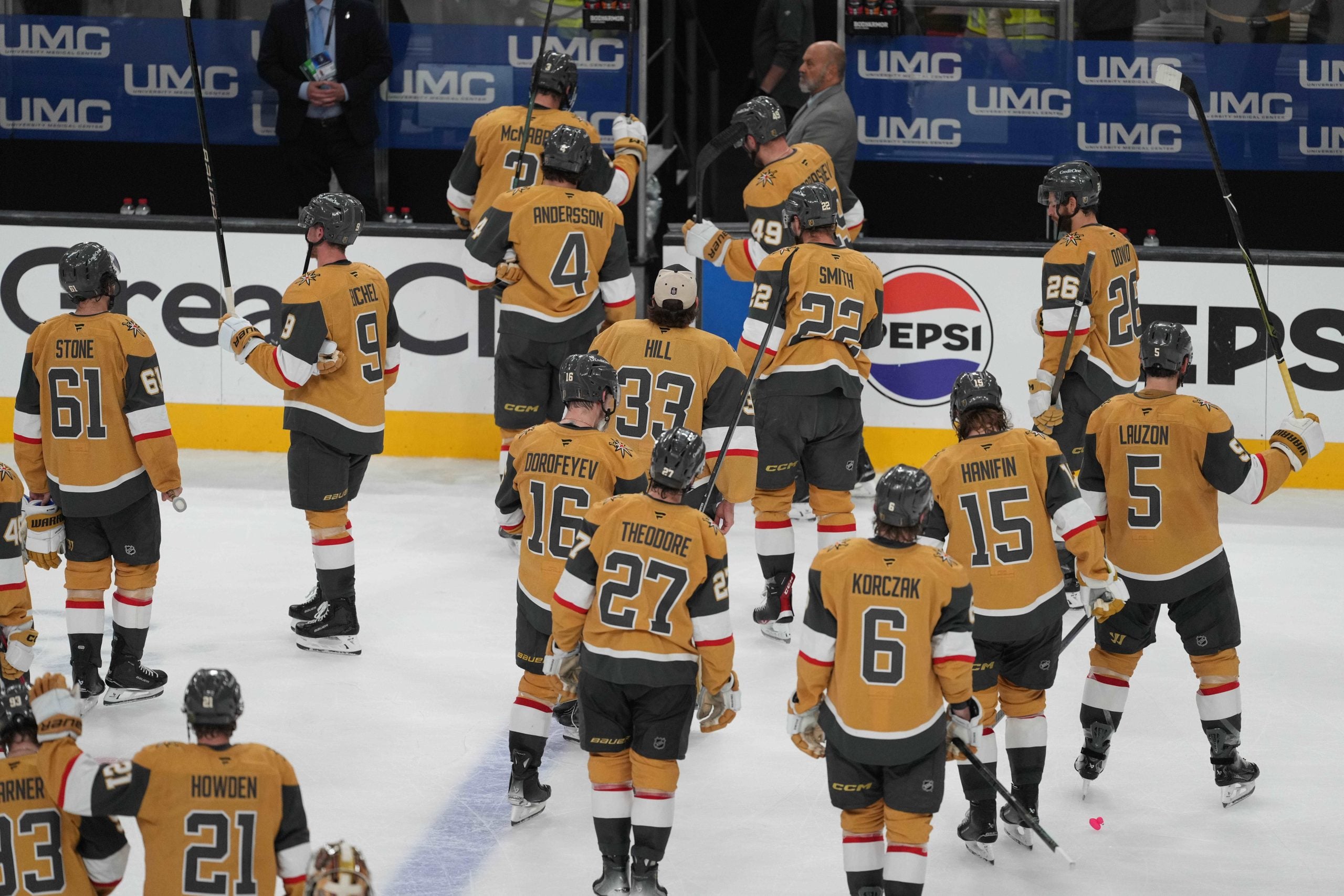
The Vegas Golden Knights entered the 2026 Stanley Cup Playoffs with high expectations. After a rough start to the season turned into a Pacific Division title, the organization once again found itself among the league’s legitimate championship contenders. While the deep run ultimately ended short of a second Stanley Cup, it offered several important lessons about where the Golden Knights stand and what could define their future moving forward.
Looking back at each round reveals a different takeaway that helped shape the playoff story.
First Round: Vegas’ Depth
For years, the Golden Knights have built their identity around their depth. While most contenders rely heavily on one superstar line, Vegas has consistently put four lines on the ice that are capable of contributing offensively while maintaining defensive responsibility. This depth was on full display during the first round.
The Golden Knights had contributions throughout the whole lineup, making them difficult to match up against over a six-game series against the Utah Mammoth. Opposing coach André Tourigny could focus on slowing down players like Jack Eichel and Mark Stone, but that often opened opportunities elsewhere in the lineup.
This has become a defining characteristic of the franchise. General manager Kelly McCrimmon and the front office have repeatedly prioritized roster balance over star power alone. As a result, Vegas entered the playoffs with multiple players that were capable of stepping into larger roles whenever necessary.
The first round served as a reminder that the Golden Knights remain one of the NHL’s most well-constructed teams. Even when individual stars experienced quieter stretches, the team as a whole continued generating offense and maintaining pressure.
Second Round: Adversity Doesn’t Rattle This Group
Every playoff run eventually reaches a moment where things stop going to plan. For Vegas, that moment came during the second round. Whether the team was facing injuries, strong swings in momentum or stretches where offense became difficult to generate, the Golden Knights consistently demonstrated the resilience that has become synonymous with the organization.
This is one of the biggest differences between Vegas and many other contenders. They rarely appear overwhelmed by circumstances. They don’t panic after a bad period, a bad game, or a bad loss. They just go back to the structure that the organization as a whole believes in. John Tortorella’s system emphasized puck management, patience and defensive responsibility. That approach allowed Vegas to remain composed when games tightened up late in a series.
The second round reinforced that culture; the Golden Knights rarely looked like a team that was searching for answers, instead looking like a team that trusted the process their coach laid out for them and waited for opportunities to come to them. This level of confidence is something that the team has honed in on over years of playoff experience.
Western Conference Final: A Team That Knows How to Rise to the Moment
If there were any doubts about whether the Golden Knights belonged among the NHL’s top teams, the Western Conference Final erased them. Facing a Colorado Avalanche team loaded with star power and playoff experience, Vegas delivered arguably its most complete series of the playoff run, sending the Avalanche to the offseason in just four games. It wasn’t just that Vegas won the series, but how they won it.
It seemed as if they were able to unlock a new gear during the Western Conference Final. They had strong contributions throughout the lineup, their defensive corps was suffocating and the team’s veteran leadership shone throughout the series. It also highlighted one of the greatest strengths under Tortorella: adaptability. The Golden Knights can play a high-tempo, offensive game when necessary, but they can also lock down the opponents and turn a game into a defensive battle. Against Colorado, it seemed as if they had an answer for every scenario.
Sweeping a team as talented as the Avalanche is not something that happens by accident. It takes a level of buy-in and trust in teammates from every player, elite execution and complete trust in the system.
Stanley Cup Final: Margin for Error Is Razor Thin
The Stanley Cup Final served as a reminder of just how difficult it is to win hockey’s biggest prize. Throughout the playoffs, the Golden Knights relied on their depth, structure and experience to reach the Final. But against the Carolina Hurricanes, every mistake was magnified, and every scoring chance carried extra weight.
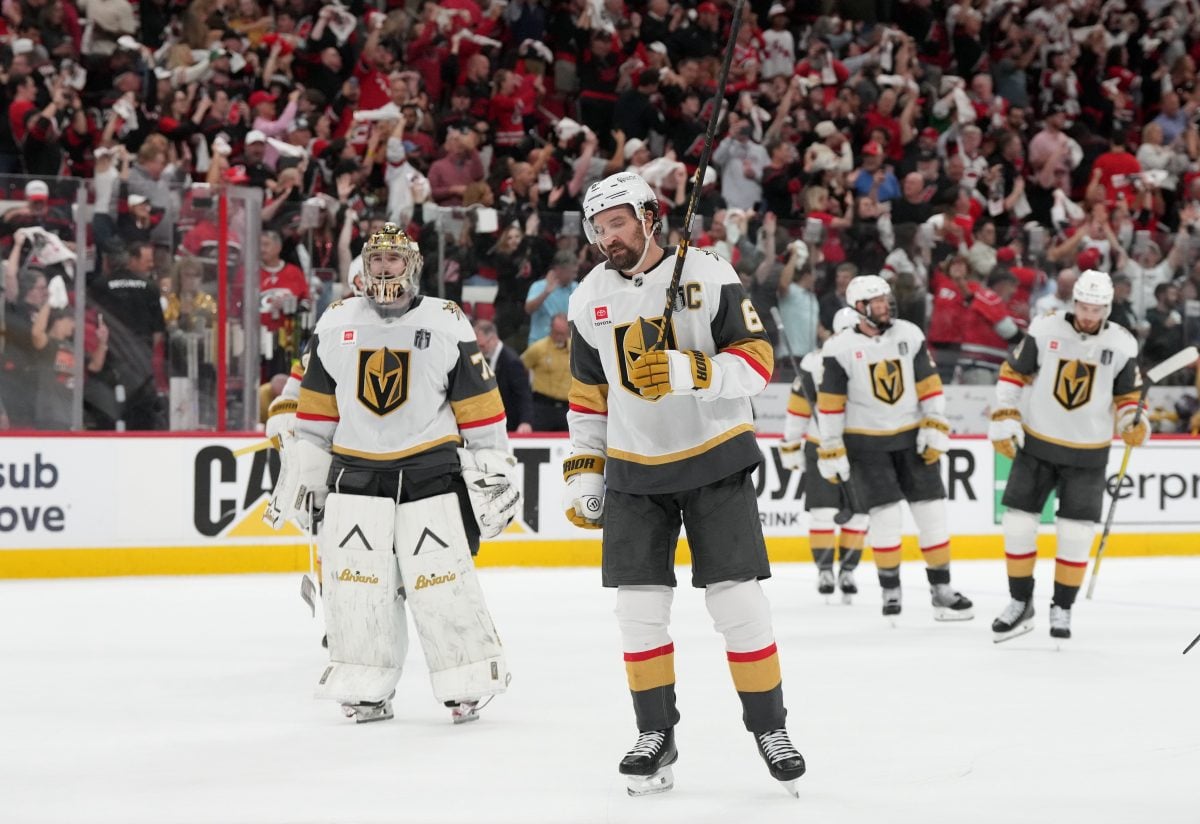
The Hurricanes’ top players consistently found ways to impact games, whether through timely scoring, controlling possession or capitalizing on Vegas’ mistakes. Meanwhile, the Golden Knights’ stars had stretches where they were unable to completely take a game in the same fashion. That’s not to say that Eichel, Stone, or the rest of the Golden Knights’ core didn’t perform well. It just highlights how difficult it is to win the Stanley Cup when the opposing team’s best players are leading the series. The Final also showed that while depth remains incredibly important, there are moments when a team needs its superstars to be the difference makers.
The Golden Knights didn’t lose the series because their system suddenly stopped working, but because the smallest details matter most on the NHL’s biggest stage. Whether that’s a well-timed goal, special teams, or a missed opportunity, all of those things could have swung the series back in their favor.
At the same time, the series, and the loss, should reinforce something positive for the organization moving forward. The Golden Knights weren’t exposed as a flawed team or one that doesn’t belong amongst the best in the league. They reached the Final because they remain one of the league’s most complete, well rounded rosters.
Biggest Overall Takeaway: Championship Window Is Still Open
The most important lesson from this playoff run is also one of the simplest — the Golden Knights are still built to win. Every season eventually ends in disappointment for 31 teams. Falling short of a Stanley Cup does not automatically mean that a team’s window has closed, and in Vegas’ case, the opposite may be true. The core of the team remains intact with Eichel playing at an elite level, Stone remaining one of the most impactful two-way forwards, and Mitch Marner expected to settle into his role even more heading into his second season with the Golden Knights.
Something equally as important as the product on the ice is the aggressiveness that Golden Knights management has shown. They are not a franchise content with simply making the playoffs. Since entering the league, they have continually pursued upgrades and searched for ways to maintain and maximize their chances of winning.
While the 2025-26 season didn’t end in a Stanley Cup parade on the strip, it did reinforce that the team should remain in the NHL’s contender conversations. The path back to the Stanley Cup Final won’t be easy, but the team still possesses the foundation to compete for the Stanley Cup in the coming years.
Free Newsletter
Get Vegas Golden Knights coverage delivered to your inbox
In-depth analysis, breaking news, and insider takes – free.
Subscribe Free →