The Edmonton Oilers do not need an analytics department to explain why last season was disappointing. A first-round playoff exit supplied all the evidence anyone needed. The more interesting numbers are the ones suggesting they were not nearly as broken as the ending made it appear.
The Oilers still spent more time attacking than most teams, continued controlling five-on-five shot attempts at a strong rate and remained one of the fastest groups in hockey. NHL EDGE’s latest breakdown paints the picture of a team whose underlying identity remained intact even as its results slipped. Then there is the number that helps connect everything: .879. That was Edmonton’s team save percentage last season, tied for fifth-worst in the NHL.
The Oilers certainly have problems to address under new head coach Mike Babcock, but the statistical case for a 2026-27 rebound begins with an encouraging premise. They do not need to reinvent how they play. They simply need the parts that failed last season to stop wasting the advantages the rest of the roster continued creating.
1. Oilers Still Controlled 41.8% of Offensive-Zone Time
Start with where the puck spent its time. Edmonton finished seventh in the NHL with a 41.8% offensive-zone time percentage, according to NHL EDGE, which measures how much of the running game clock is spent with the puck in the offensive zone, and the Oilers remained comfortably among the league’s better teams despite their overall step backward.
The more convincing part is that 2025-26 was not an isolated result. Edmonton has ranked inside the NHL’s top 10 in offensive-zone time during every season of the puck-tracking era, beginning in 2021-22. That consistency matters when trying to separate a flawed season from a deteriorating team.
Poor teams generally spend large portions of games defending because they struggle to advance possession, sustain pressure or recover pucks after initial chances. Edmonton continued spending more time than most clubs at the other end of the rink, forcing opponents to defend for significant stretches.
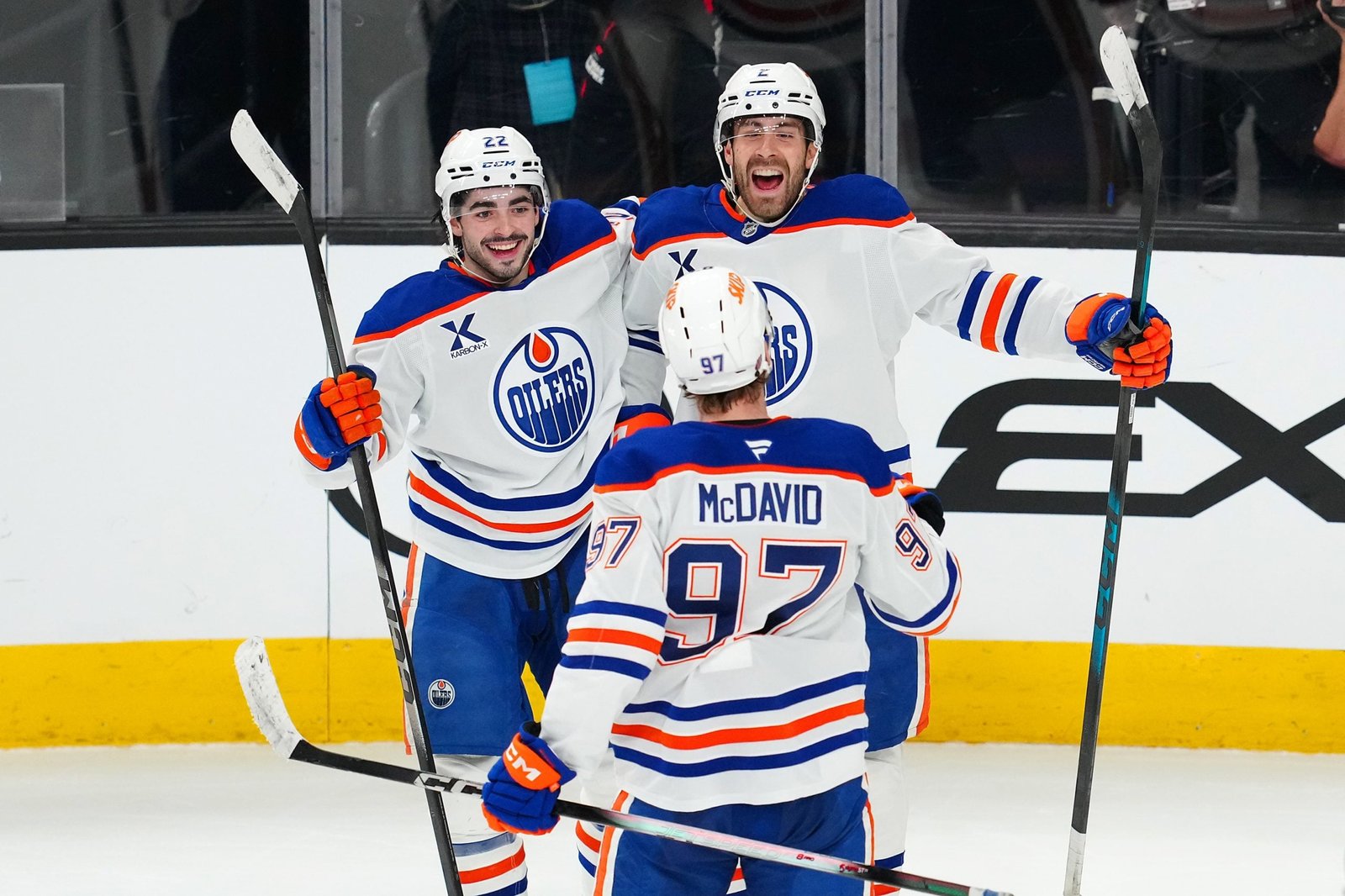
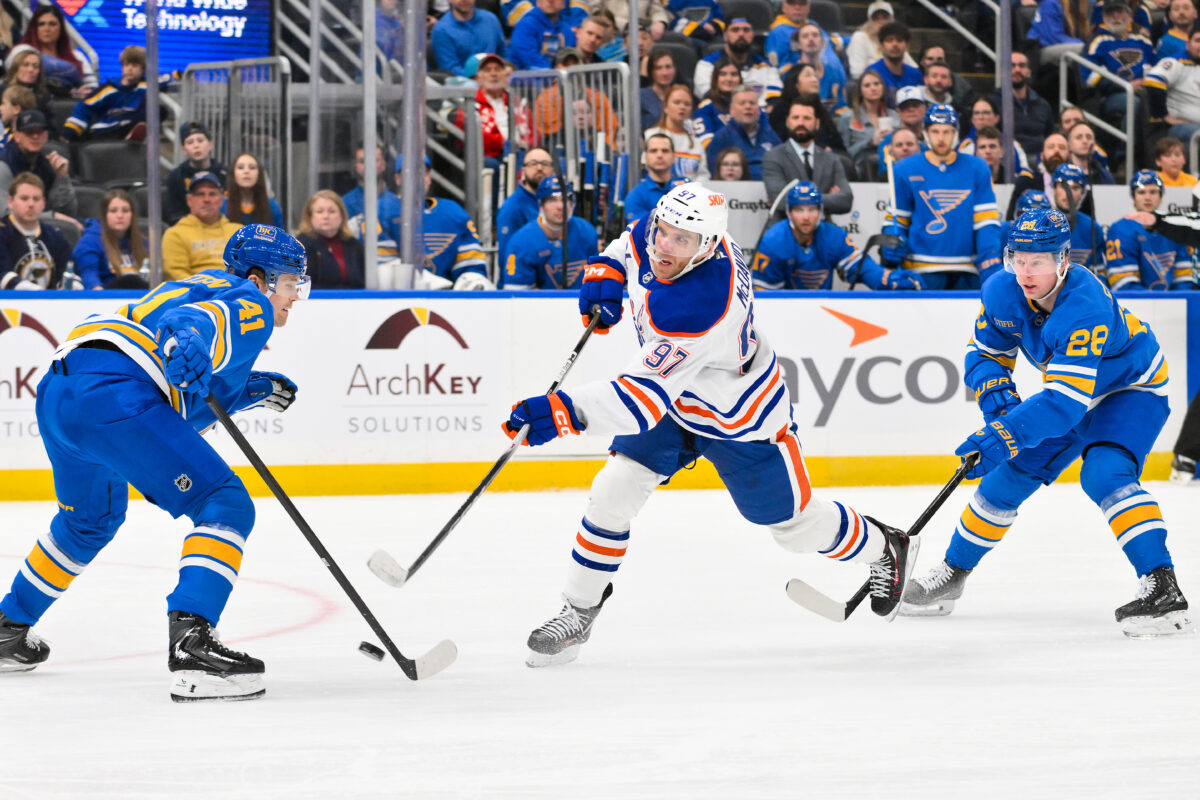
The stars drove those results, but not exclusively through points. Connor McDavid ranked in the 98th percentile among NHL forwards with a 47.7% offensive-zone time percentage. Leon Draisaitl was in the 96th percentile at 46.7%, while Evan Bouchard’s 47.6% ranked third among defensemen. Zach Hyman actually led the team at 48.5%, which ranked fourth among all NHL players despite injuries limiting his season.
Those numbers suggest Edmonton’s most important offensive pieces were still consistently tilting the rink. The Oilers did not spend last season watching McDavid and Draisaitl become less capable of creating possession. Their best players were still forcing opponents backward at elite rates. That gives Babcock something much easier to work with than a roster that has stopped generating pressure altogether. His job is to make Edmonton more structured without eliminating the aggressive possession game that remains one of its clearest advantages.
2. 52.8% Shot Share Shows Edmonton’s Process Has Staying Power
One season of offensive-zone time can be influenced by injuries, schedule and lineup changes. Five seasons of shot-attempt control are considerably harder to dismiss. Edmonton has controlled 52.8% of five-on-five shot attempts over the past five seasons combined, tied for sixth in the NHL. That figure from the EDGE preview provides perhaps the strongest argument against treating last season’s playoff exit as evidence that their competitive window is suddenly collapsing.
Shot-attempt percentage is not a perfect measurement of team quality. A harmless point shot counts the same as a far more dangerous opportunity, and playoff games are not decided by territorial victories on a spreadsheet. Over a large enough sample, however, consistently owning more attempts than the opposition reveals something important. Edmonton has spent years pushing play in the correct direction.
That remains the foundation of most successful hockey teams. The more often a club possesses the puck and directs play toward the opposing net, the fewer opportunities it leaves for opponents to do the same. Edmonton’s challenge has been converting that territorial advantage into more consistent defensive results. THW’s recent five questions highlighted goaltending and the penalty kill among the major uncertainties entering the season, and both weaknesses can erase otherwise strong five-on-five stretches quickly.
That distinction is important when discussing a bounce-back. The Oilers would have a much larger problem if they finished last season unable to generate possession, unable to create shots and completely dependent on McDavid’s offence off the rush. Instead, one of the larger underlying samples available still places them among hockey’s stronger five-on-five possession teams.
There are adjustments required around that process. Babcock and associate coach D.J. Smith should demand better defensive-zone detail, depth players need to contribute more consistently, and the revamped blue line must replace the minutes lost now that Darnell Nurse has been traded.
The core process does not need to be built again from the ground up. Edmonton enters the season with evidence that it can still control play often enough to compete with good teams. That is a much easier starting point for improvement.
3. Edmonton Led the NHL With 258 Elite Speed Bursts
Age is going to become an increasingly common discussion in Edmonton. Hyman is entering his mid-30s, Mattias Ekholm is one of the league’s older defensemen, and several prominent players have accumulated enormous workloads through repeated postseason runs. Last season’s tracking data does not describe a slow team. The Oilers led the NHL with 258 skating bursts of at least 22 mph and ranked second with 2,431 bursts of at least 20 mph. Only the Colorado Avalanche produced more in the latter category.
McDavid was responsible for a ridiculous portion of the total. He recorded 151 bursts above 22 mph, 90 more than second-place Owen Tippett and 34 more than any player had previously produced in one season during the puck-and-player tracking era. His 681 bursts at 20-plus mph also led the NHL. McDavid covered 330.27 total miles during the season, the highest skating distance recorded by any player during the tracking era.
Those numbers obviously say more about McDavid than Edmonton’s overall roster, but the team rankings still matter. One generational skater can push a total upward; he cannot single-handedly make an otherwise stationary roster rank first and second in two league-wide speed categories.
Edmonton has continued adding players capable of supporting a faster game. Matt Savoie brings pace to the top six, Vasily Podkolzin has become increasingly effective attacking off the forecheck, and Kasperi Kapanen remains useful because his straight-line speed can stretch defences. Speed by itself does not guarantee offensive success. A team can skate quickly into bad decisions just as easily as it can generate controlled entries, and Edmonton needs more than raw velocity to become a better defensive club.
The data does push back against another concern, though. The Oilers are not yet an aging contender whose entire identity has become slow and dependent on veteran skill. Their best player remains the fastest offensive force in hockey, and the team surrounding him still possesses enough pace to rank near the top of the NHL.
The .879 Save Percentage Changes the Entire Picture
The first three statistics describe a team that spent substantial time attacking, controlled a majority of five-on-five shot attempts over a large sample and possessed elite skating speed. The fourth number explains why those advantages did not always produce the expected results.
Edmonton’s .879 team save percentage was tied for 29th last season – the league average was still around .897 late in the regular season despite league-wide save percentage continuing to decline. That gap does not mean every problem belonged to the goaltenders. Defensive coverage, rebound control by skaters and penalty killing all affect how difficult the shots become, and the Oilers frequently made life harder than necessary for whoever was in net.
It does create substantial room for improvement without requiring Vezina Trophy-calibre goaltending. The Oilers responded by changing the options. Frederik Andersen signed a one-year contract after helping the Carolina Hurricanes win the Stanley Cup, finishing the postseason 13-2 with a 1.89 goals-against average and .913 save percentage. Signing Andersen gives the team an experienced alternative rather than forcing one struggling goalie to keep the crease indefinitely.
Devon Levi provides the younger bet. Levi was acquired from the Buffalo Sabres as a 24-year-old who owns a .914 save percentage through 120 career American Hockey League (AHL) games, although his .894 mark in 36 NHL starts shows he still has something to prove at this level.
Tristan Jarry remains the wild card. His Oilers tenure began terribly, but having Andersen and Levi available means the team is no longer dependent on a Jarry rebound as their only possible solution. The target does not have to be elite goaltending. It just cannot be bottom-five goaltending again.
If Edmonton continues controlling territory and possession while receiving more consistent saves, the improvement can compound quickly. One additional save prevents a goal, but it can also prevent the Oilers from chasing the game, abandoning structure and forcing their stars into increasingly aggressive situations. That is why the .879 may ultimately be the most encouraging statistic of all. It was awful, but it is also an obvious area where Edmonton has room to move upward.
Oilers Don’t Need a Complete Reinvention
Advanced statistics cannot promise Edmonton a rebound. They certainly cannot guarantee the Oilers will return to the Stanley Cup Final after last season ended in the first round. They can identify whether the ingredients for improvement still exist.
Edmonton continued spending significant time in the offensive zone, maintained strong long-term five-on-five possession numbers and produced more elite speed bursts than any team in hockey. Those are not the statistical fingerprints of a roster that suddenly forgot how to drive play. Their biggest weakness was also impossible to miss. A .879 save percentage turned too many otherwise competitive nights into uphill climbs and left them with little margin for error when their defensive structure failed.
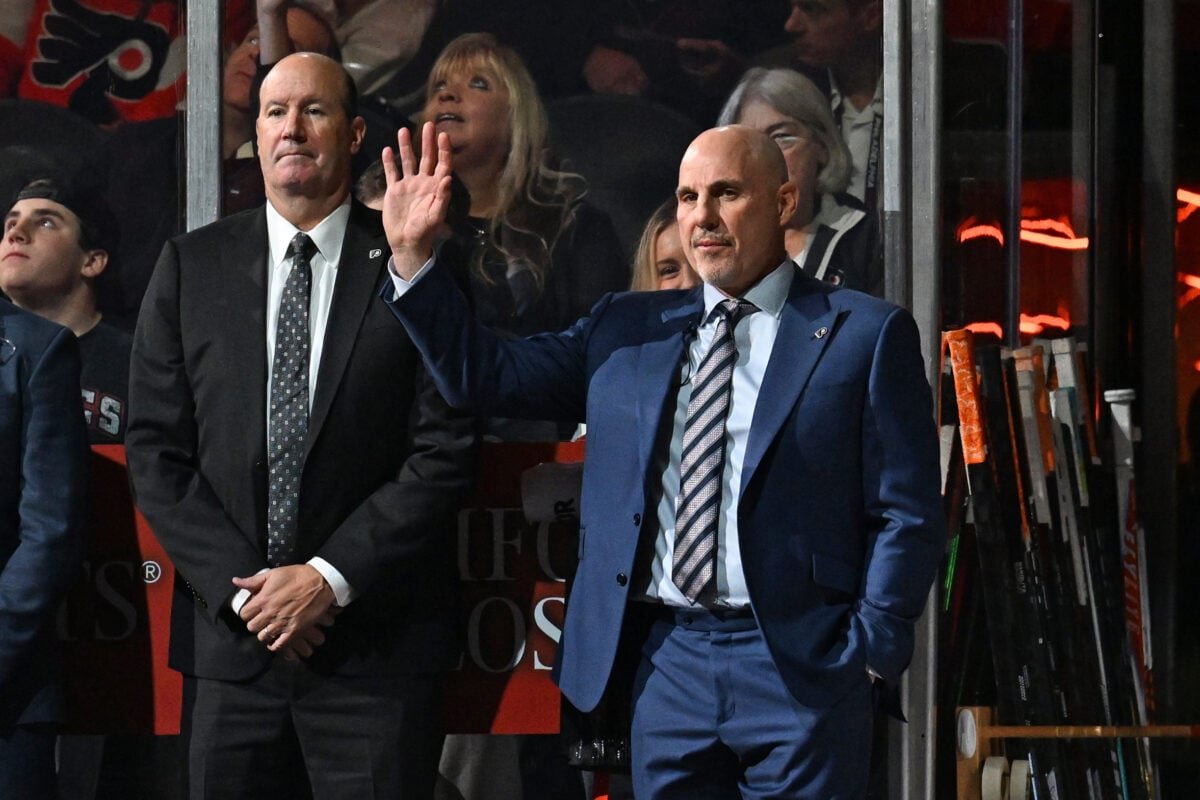
General manager Stan Bowman spent the offseason trying to raise that floor rather than replacing the offensive engine. Andersen and Levi give Edmonton new options in net, while Babcock and Smith have been tasked with creating a more disciplined team in front of them.
The bounce-back case does not require everything to work perfectly. The team has already demonstrated that much of the process remained intact. If the Oilers preserve those strengths and turn one of the NHL’s worst goaltending results into something merely dependable, last season could look much more like a detour than the beginning of a decline.
Free Newsletter
Get Edmonton Oilers coverage delivered to your inbox
In-depth analysis, breaking news, and insider takes – free.
Subscribe Free →