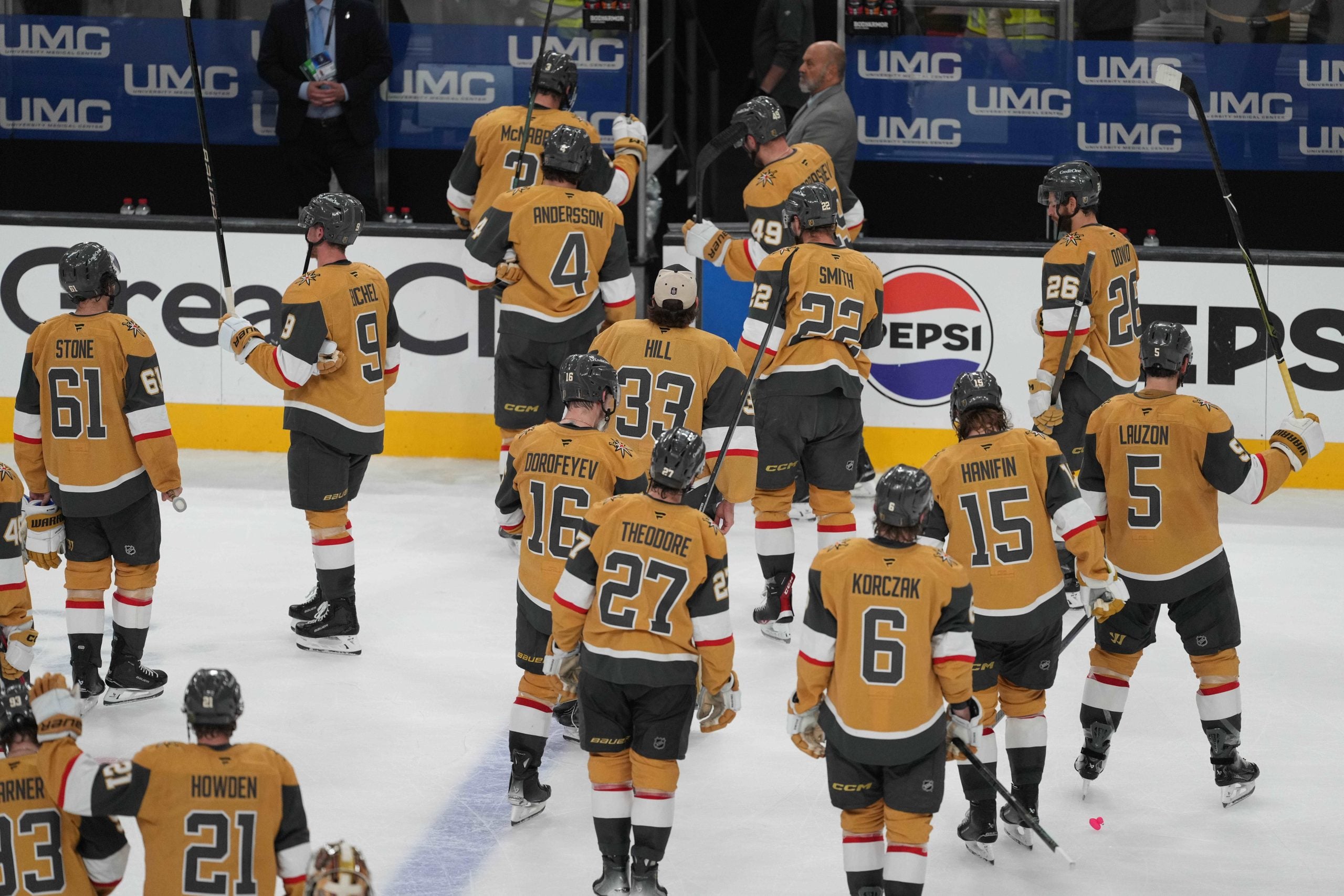
The Vegas Golden Knights’ season is over. The team battled from the first game of the season to the last game of the Stanley Cup Final. They won the Pacific Division and reached the Stanley Cup Final. Yet anyone associated with the organization feels empty at the moment. They got so close, yet came up with nothing. What went wrong? What caused the Golden Knights to fall to the Carolina Hurricanes?
Vegas Ran Out of Gas
Heading into the Stanley Cup Final, the Golden Knights had played in 16 games. They played great hockey, including an 11-2 run after Game 3 of Round 1, which included a sweep of the Presidents’ Trophy-winning Colorado Avalanche in the Western Conference Final. The Hurricanes, meanwhile, only had to play 13 games. They swept the first two rounds before winning the Eastern Conference Final in five games.
Those three extra games may not seem like a big difference at first, but when you consider the wear and tear the Golden Knights were already playing with, it did make a difference. The Hurricanes were simply the more rested team, not to mention healthier. Some may argue that extra rest in the postseason hurts a team, but in this case, it helped the Hurricanes. The Golden Knights simply could not keep up with the Hurricanes’ style of hockey.
A major example of Vegas’ fatigue was evident in Game 6. The Hurricanes played their suffocating style of defense, and the Golden Knights could not penetrate it. They even had a roughly 30-minute stretch with only two shots on goal, in an elimination game that they were losing. That is not a lack of effort. That team is gassed.
Hart Fell Apart
I will give Carter Hart credit. In my Game 6 preview, I suggested that Adin Hill needed to play. Hart did play very well in Game 6, stopping 20 of 22 shots and keeping the Golden Knights in the game. It could have easily been 5-0 headed into the third period, but Hart gave his team a chance to win.
The problem is, aside from Game 6, Hart was not good in the Final. He became the first goaltender in NHL history to allow at least four goals in each of the first five games. He headed in with a .922 save percentage (SV%) and posted an .826 SV% against the Hurricanes.
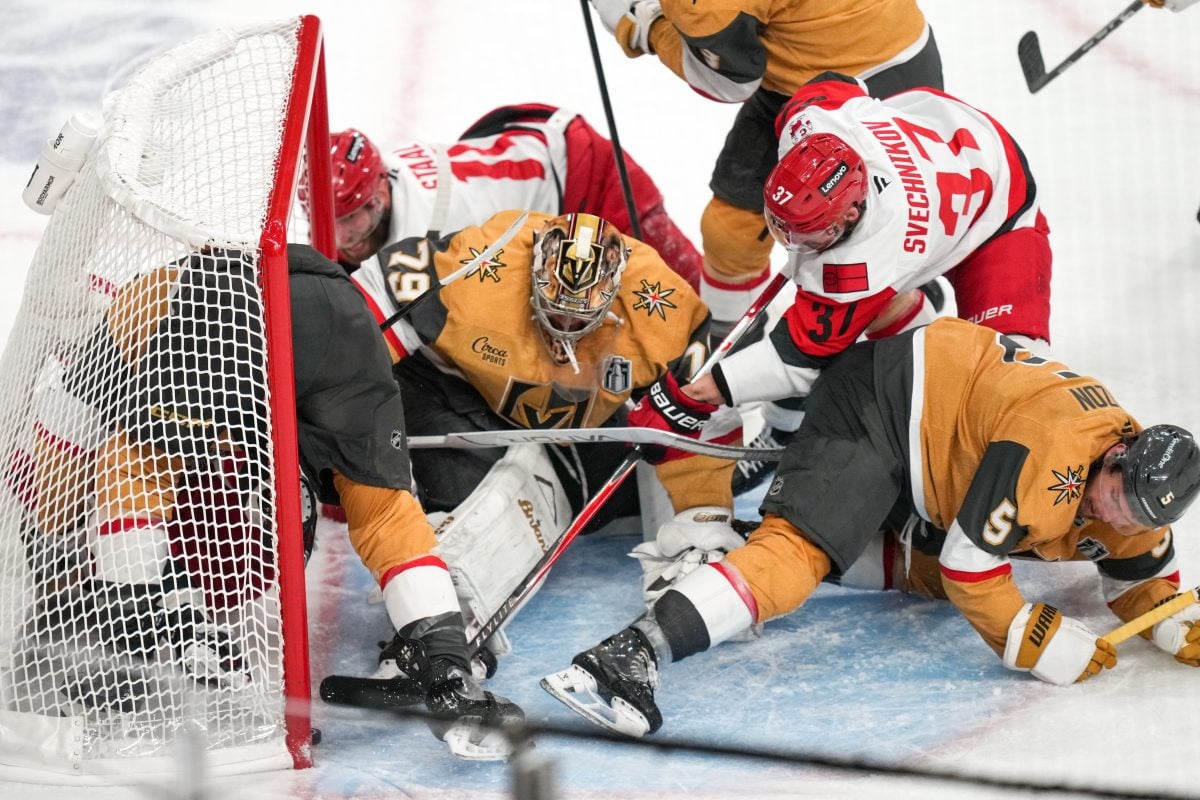
In Round 1, Hart was good enough. There were holes in his game, but he did enough to win. In the next two rounds, he was outstanding. After helping to shut down the high-powered Avalanche in Round 3, no one was expecting him to struggle as he did.
Hockey is a cruel game sometimes. We went into the series wondering if Hart was going to be the unsung hero to bring the Stanley Cup back to Vegas. Well, we did get an unsung goaltending hero, but it was Brandon Bussi of the Hurricanes.
Game 2’s Controversial Challenge
John Tortorella deserves a lot of credit for what he did in a short time with this Vegas team. He helped the team end the season on a 7-0-1 run. He brought the best out of Hart. He got them to the Final.
Then Game 2 happened. Tortorella’s decision to challenge the goaltender interference call late in Game 2 will be discussed all summer. As soon as he challenged, everyone had the same thought: there was no way this would be reversed. It was not reversed. The failed challenge put the Hurricanes on the power play, and they scored on it. While the Golden Knights tied the game and forced overtime, the failed challenge just seemed like a poor risk to take. Up until that point, the Golden Knights were still playing well and creating chances, but the momentum flipped after the failed challenge.
We do not know what would have happened if Tortorella had not challenged that play. Had he let the team just continue playing, would things have been different? Maybe. Maybe not. But one thing seems clear: the risk was not worth it.
Game 3’s Collapse
The Golden Knights managed to win Game 3 in double overtime despite blowing a 4-0 lead in the third period. Yet, that third-period collapse created the greatest moment of the series.
Trailing 4-0 heading into the third, Bussi entered the game in relief of Frederik Andersen. This seemed like an opportunity to give Andersen some rest and look ahead to Game 4. Then the comeback happened, and Bussi stood his ground in the net. He stopped Mitch Marner on a penalty shot early in the third period, keeping Vegas at bay, and made several saves through the overtime periods before Shea Theodore got a lucky bounce on his game-winning goal.
Imagine if the Golden Knights had not coughed up the lead. Would Bussi have gotten the start in Game 4? He certainly would not have had the additional audition that he got in overtime. Instead of just 20 minutes of ice time, Bussi played 45:26 of Game 3, making 18 saves and earning the Game 4 start. The rest is history, with Bussi only allowing five goals the rest of the series.

Hockey history will remember how the Golden Knights avoided disaster in Game 3 but inadvertently set in motion their eventual demise. Again, hockey is cruel.
Final Thoughts
The Golden Knights franchise has had an outstanding nine seasons. They have gotten to the Final three times, including winning it all in 2023. They are one of the most, if not the most, successful expansion teams in professional sports history.
They fell two wins short this season. It will sting. It should sting. But this can also motivate them to build up and make another run next year. If there is one thing we can say about the Golden Knights, it is that they never go away for long.
Free Newsletter
Get Vegas Golden Knights coverage delivered to your inbox
In-depth analysis, breaking news, and insider takes – free.
Subscribe Free →