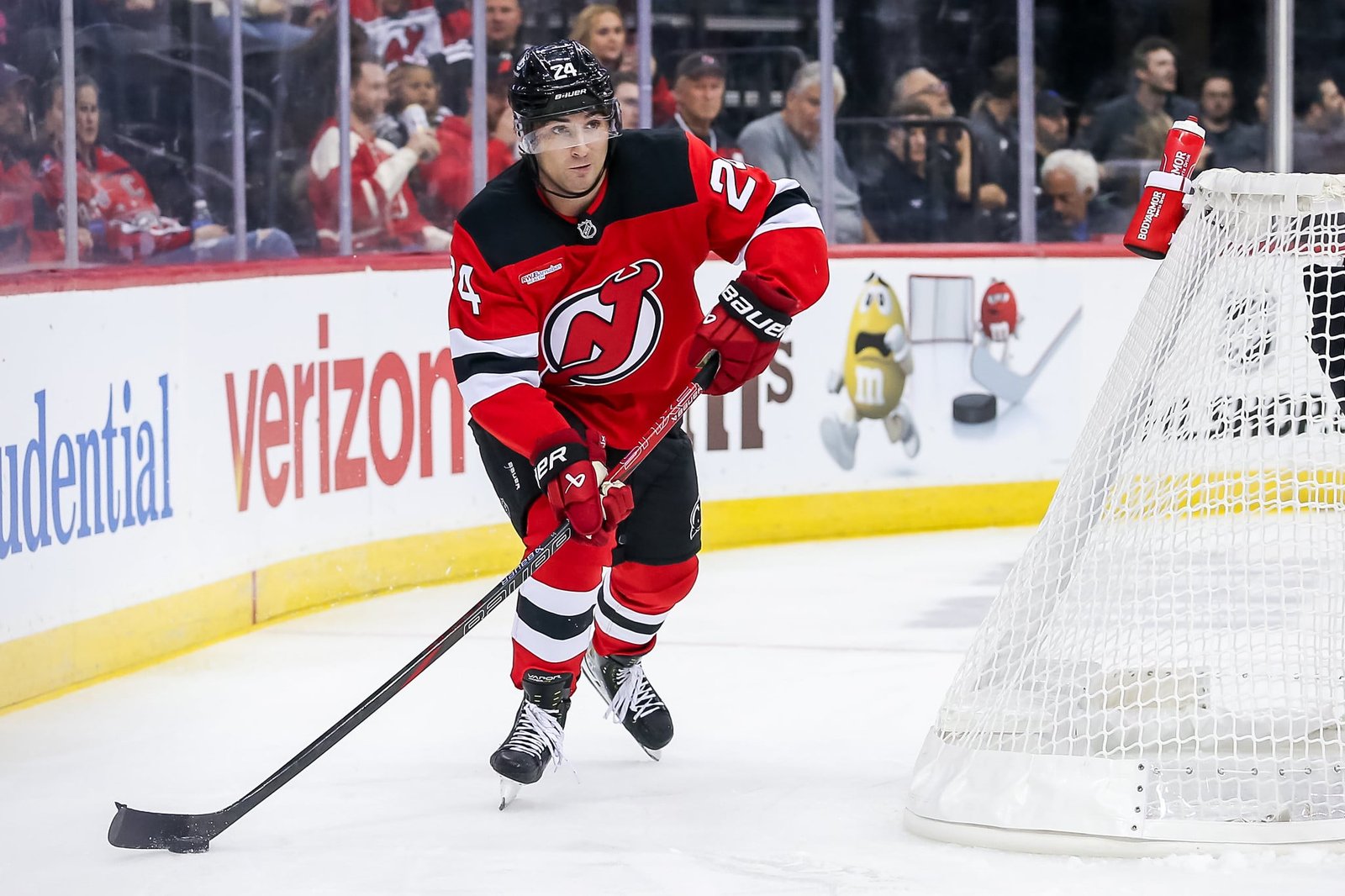
Sidney Crosby will turn 39 on Aug. 7 with another historic NHL scoring record within reach.
The Pittsburgh Penguins captain recorded 29 goals, 45 assists and 74 points in only 68 games last season. His 1.09 points-per-game pace extended his NHL record to 21-consecutive seasons averaging at least one point and would have produced approximately 91 points across the league’s new 84-game schedule.
That projection would comfortably surpass the current record for points by a 39-year-old player. Gordie Howe established the standard with 82 points during the 1967-68 season, followed by Johnny Bucyk with 81, Adam Oates with 78, Ray Whitney with 77, and Jean Béliveau with 76.
Crosby needs 83 points to move ahead of Howe. Maintaining last season’s production rate would put him on pace to reach that total in approximately 77 games. The NHL’s expanded schedule provides more opportunity, but Crosby must also remain healthy after missing 14 games last season.
The challenge is significant. Every player on the list was a Hall of Fame talent or one of the most accomplished forwards of his generation. Crosby’s recent production gives him a realistic opportunity to pass all five.
1. Gordie Howe Recorded 82 Points in 1967-68
Gordie Howe owns the record Crosby will pursue.
Howe recorded 39 goals, 43 assists and 82 points in 74 games for the Detroit Red Wings during the 1967-68 season. His 1.11 points-per-game rate remains the best among the five highest-scoring age-39 seasons in NHL history.
The comparison with Crosby is remarkably close. Crosby averaged 1.09 points last season, trailing Howe’s pace by approximately 0.02 points per game. Crosby would produce around 91 points if he maintained that rate across all 84 games, but he would finish near 81 points if limited to the 74 appearances Howe made.
Availability will therefore be more important than a dramatic offensive improvement. Crosby does not need to become a more productive player at 39. He needs to preserve his existing level while playing enough games to accumulate 83 points.
Howe also demonstrated that the age-39 season did not have to represent the end of elite production. He followed his 82-point campaign by recording 44 goals and 103 points in 1968-69. That remains the highest-scoring season by a player of at least 40 years old.
Crosby’s future beyond this season is uncertain, but his game continues to provide reasons to believe his decline could remain gradual. His puck protection, awareness and ability to create offense around the net do not depend exclusively on speed.
2. Johnny Bucyk Recorded 81 Points in 1974-75
Johnny Bucyk came within one point of matching Howe’s record during the 1974-75 season.
The Boston Bruins legend produced 29 goals, 52 assists, and 81 points in 78 games. He converted 17.4% of his 167 shots while remaining a major scoring presence on a team that also featured Bobby Orr and Phil Esposito.
Bucyk’s 1.04 points-per-game rate was slightly below Crosby’s pace from last season. Crosby could surpass his 81-point total by playing approximately 76 games at a similar level, although reaching Howe’s record would still require one additional point.
Bucyk’s season provides an important reminder that older players can benefit from strong offensive surroundings. He did not have to generate every scoring opportunity himself because Boston possessed several other elite creators.
The Penguins must provide Crosby with similar support. Bryan Rust and Rickard Rakell remain reliable linemates, but Pittsburgh cannot expect its captain to carry every transition, retrieval, and scoring sequence. A recent examination of the Penguins’ uncertain top-six ceiling showed how strongly the offense still depends on Crosby and Evgeni Malkin.
Reducing Crosby’s workload without reducing his scoring opportunities would give him a better chance of remaining productive across the longer schedule.
3. Adam Oates Recorded 78 Points in 2001-02
Adam Oates produced one of the greatest late-career playmaking seasons in NHL history.
Oates recorded 14 goals, 64 assists, and 78 points in 80 games during the 2001-02 season. He played 66 games for the Washington Capitals before finishing the season by playing 14 games for the Philadelphia Flyers. His 64 assists led the NHL.
The season demonstrated how vision and anticipation can remain effective after physical skills begin to decline. Oates did not need to create offense through explosive skating. He controlled the puck, recognized passing lanes, and placed teammates in positions to finish.
Those qualities also define Crosby. He remains strong enough to win battles and skilled enough to beat defenders individually, but much of his offense comes from processing plays faster than his opponents. He can extend possessions below the goal line, draw multiple defenders, and find a teammate before the defensive structure recovers.
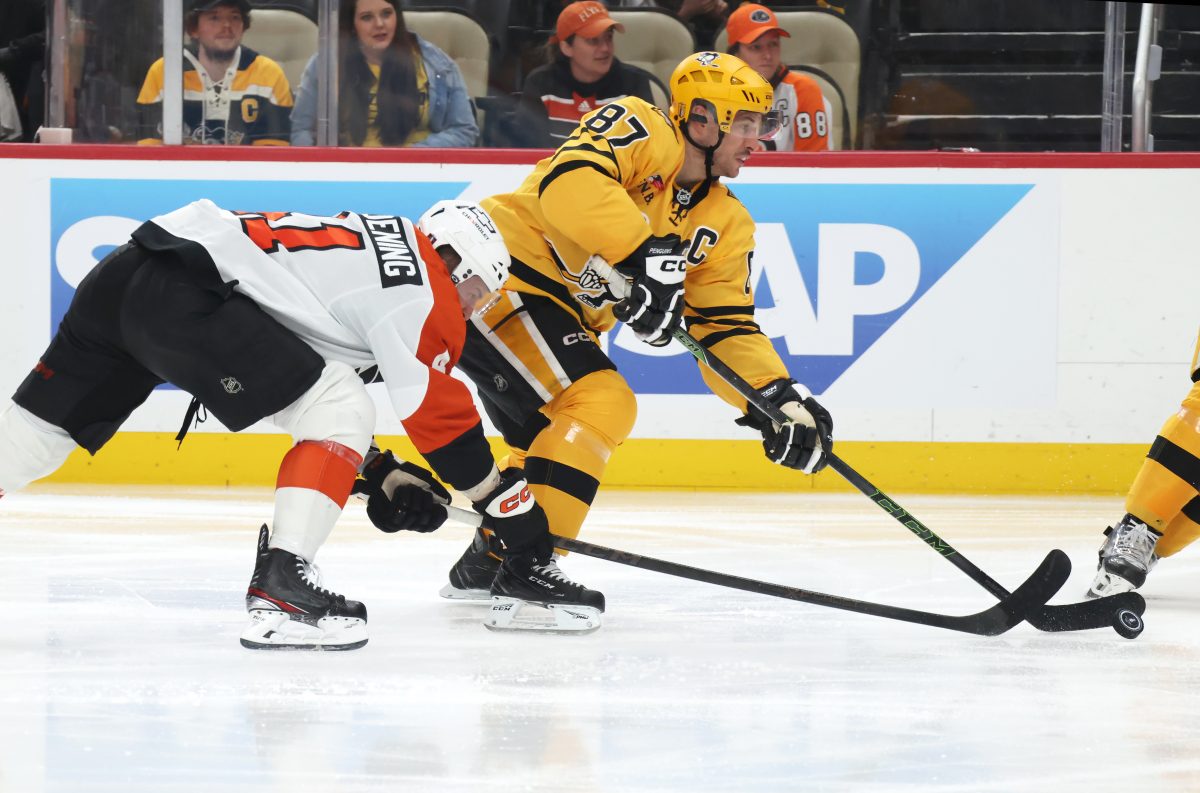
Crosby needs only five more points than he recorded last season to move ahead of Oates. He could surpass the 78-point mark without playing all 84 games, provided his scoring rate remains near its current level.
Oates’ 80 appearances also show the value of durability. His 0.98 points-per-game rate was lower than Crosby’s 2025-26 production, but playing nearly the complete schedule allowed him to reach a total that remains one of the best ever at 39.
4. Ray Whitney Recorded 77 Points in 2011-12
Ray Whitney produced 24 goals, 53 assists, and 77 points while appearing in all 82 games for the Phoenix Coyotes during the 2011-12 season.
Whitney led the Coyotes in scoring and finished with a team-best plus-26 rating. His performance earned Second-Team NHL All-Star honors and helped Phoenix reach the Western Conference Final, their deepest-ever postseason run.
Whitney’s 0.94 points-per-game pace was comfortably below Crosby’s rate last season. Crosby would need to play approximately 72 games at his 2025-26 pace to move ahead of Whitney’s point total.
The more difficult comparison involves their availability. Whitney did not miss a game. Crosby has appeared in at least 80 games only three times during his career, and Pittsburgh has little reason to prioritize a regular-season record over keeping him healthy for another playoff run.
The Penguins returned to the postseason last season, but they still need Crosby operating near his highest level during the most important games. Occasional rest could reduce his chances of catching Howe while improving Pittsburgh’s broader outlook.
Crosby’s pursuit of the record should therefore remain a product of team success rather than an organizational objective. If the Penguins remain competitive and Crosby stays healthy, the points should accumulate naturally.
5. Jean Béliveau Recorded 76 Points in 1970-71
Jean Béliveau’s 1970-71 season ranks fifth by total points, but it may be the most impressive championship-ending season on the list.
Béliveau recorded 25 goals, 51 assists, and 76 points in 70 games for the Montreal Canadiens. His 1.09 points-per-game rate was almost identical to Crosby’s production last season.
He then helped Montreal win the Stanley Cup before retiring. The championship was Béliveau’s 10th as a player and his fifth as Canadiens captain. His final season ended with Montreal defeating the Chicago Black Hawks in Game 7 of the Stanley Cup Final.
Béliveau’s season presents the comparison Crosby would value most. Individual production mattered, but it supported a championship rather than becoming the defining achievement.
Crosby has already won three Stanley Cups and established himself as the most accomplished player in Penguins history. Another deep postseason run would mean more than moving one position higher on an age-based scoring list.
His production will still determine whether Pittsburgh can remain competitive. The Penguins’ reasons for optimism entering 2026-27 begin with Crosby’s ability to remain an elite offensive player well beyond the age when most forwards decline.
Béliveau showed that a 39-year-old captain could remain productive enough to lead a championship team. Crosby will attempt to create his own version of that final chapter.
Crosby Has a Realistic Chance to Break Howe’s Record
Crosby does not need to produce an unprecedented scoring rate to establish the greatest age-39 point total in NHL history.
He needs to stay close to the level he maintained last season and appear in approximately nine more games. His 74 points in 68 appearances already placed him within eight points of tying Howe and nine points of setting a new record.
The expanded schedule gives Crosby two additional opportunities compared with the NHL’s previous 82-game format. Every team will play 84 games for the first time in 33 years, creating a possible advantage that Howe and the other players on the list did not receive.
The additional games also create more physical strain. Crosby will have to manage an 84-game schedule at 39 while continuing to handle first-line minutes, power-play responsibilities, and difficult matchups.
Pittsburgh should not alter its plans to chase the record. The organization must prioritize Crosby’s health and another postseason appearance. His pursuit of Howe will remain compelling because it measures whether one of hockey’s most consistent stars can resist another year of natural decline.
Crosby already has five major milestones within reach during the upcoming season. The age-39 scoring record may be the most direct test of his continued offensive excellence.
Howe set the record with 82 points. Bucyk finished one point behind him. Oates and Whitney used near-complete seasons to remain among the NHL’s leading creators, while Béliveau completed his career with a point-per-game season and another championship.
Crosby enters the season with a legitimate chance to pass all five.
Free Newsletter
Get Pittsburgh Penguins coverage delivered to your inbox
In-depth analysis, breaking news, and insider takes – free.
Subscribe Free →