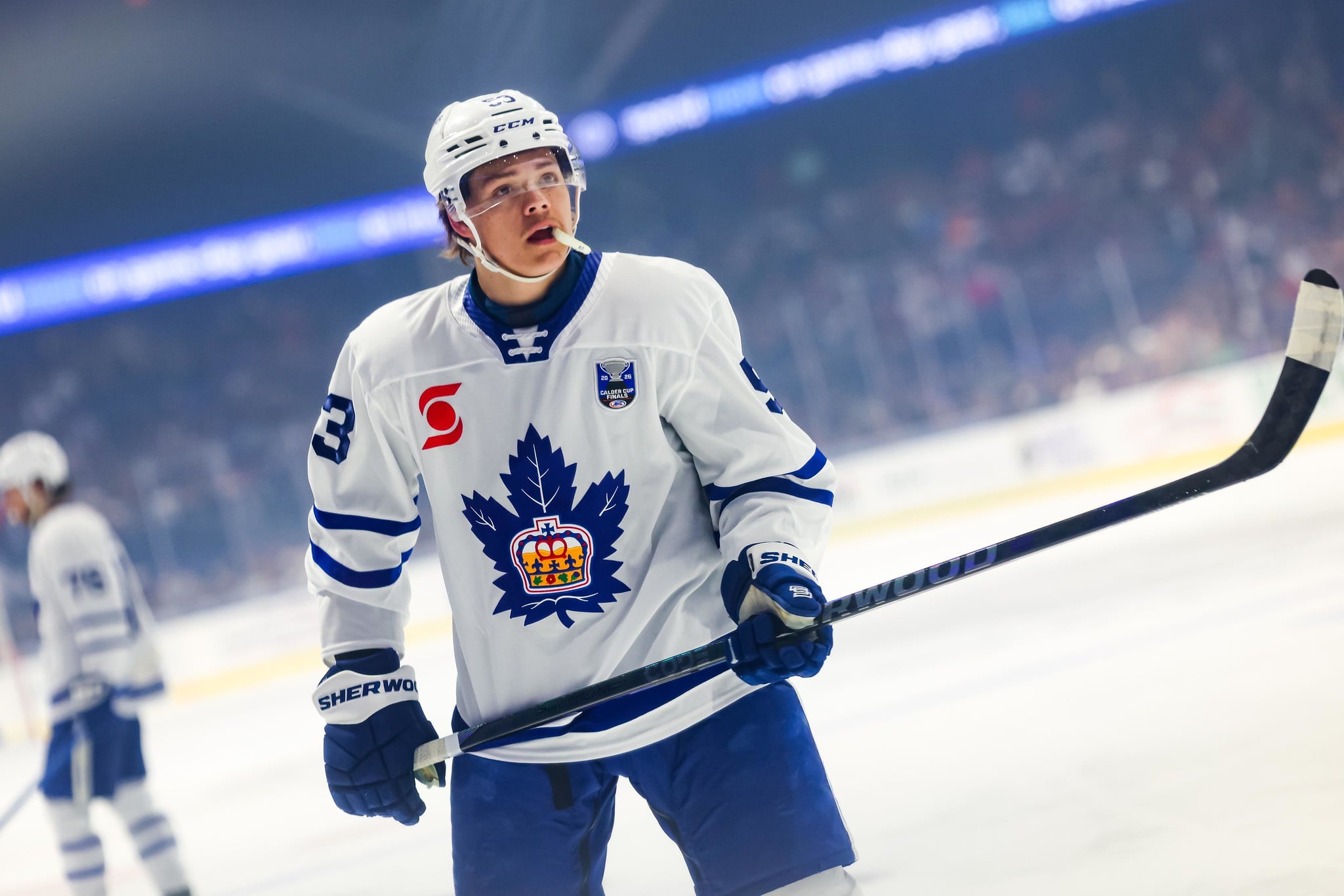
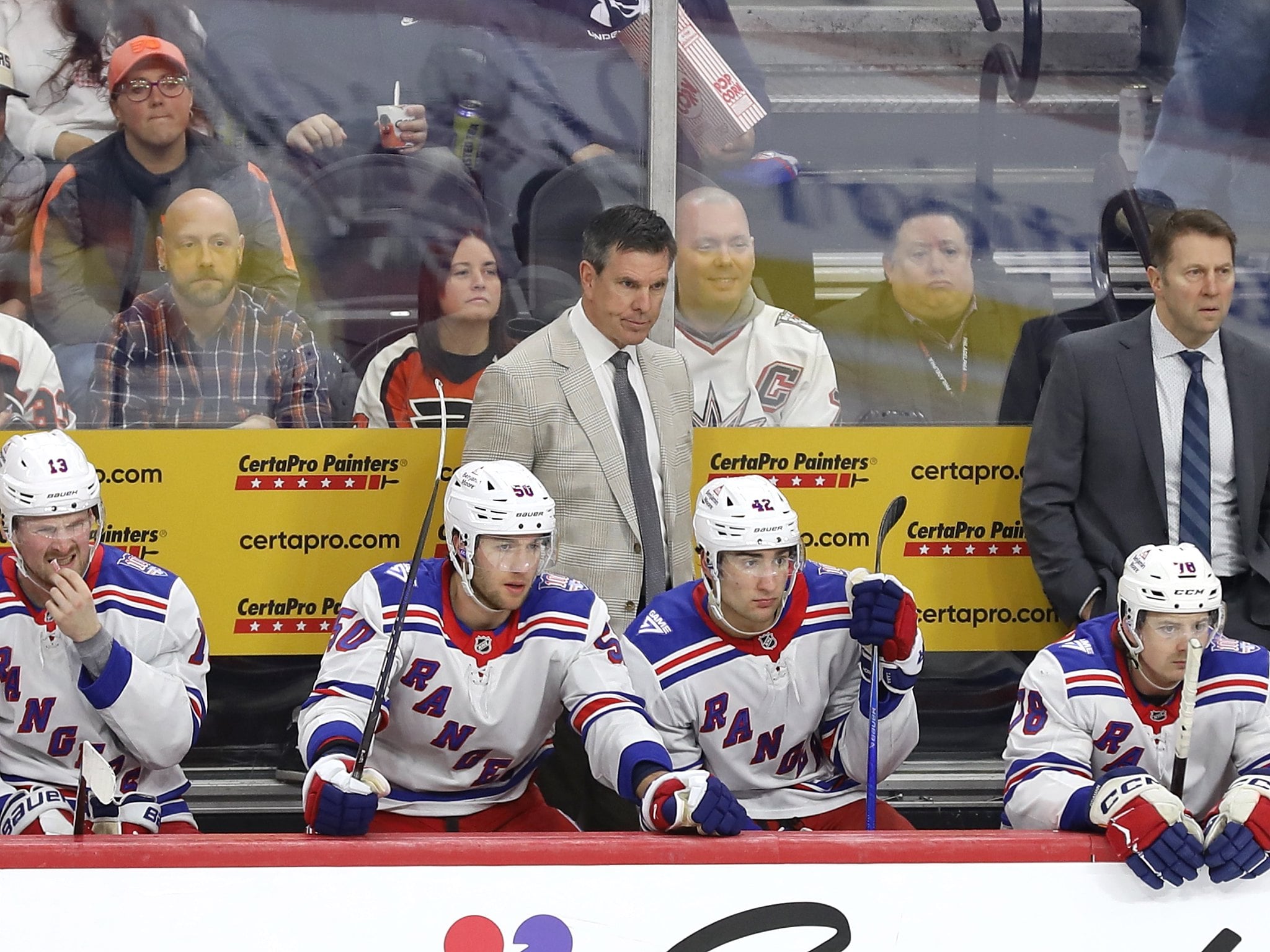
The Kitchener Memorial Auditorium was rocking on Friday night as the Kitchener Rangers opened up their first-round series of the 2026 Ontario Hockey League (OHL) Playoffs against the Saginaw Spirit.
When the final buzzer rang, the East Avenue Blue came out on top with a 6-4 victory, despite falling behind three separate times throughout the game after opening the scoring in the first period.
The Blueshirts’ performance was carried by Christian Humphreys (Colorado Avalanche), who had two goals and two assists; Jack Pridham (Chicago Blackhawks), who had three primary assists; Sam O’Reilly (Tampa Bay Lightning) with two goals and an assist; and Christian Kirsch (San Jose Sharks), who made 21 timely saves to keep the Rangers in the game.
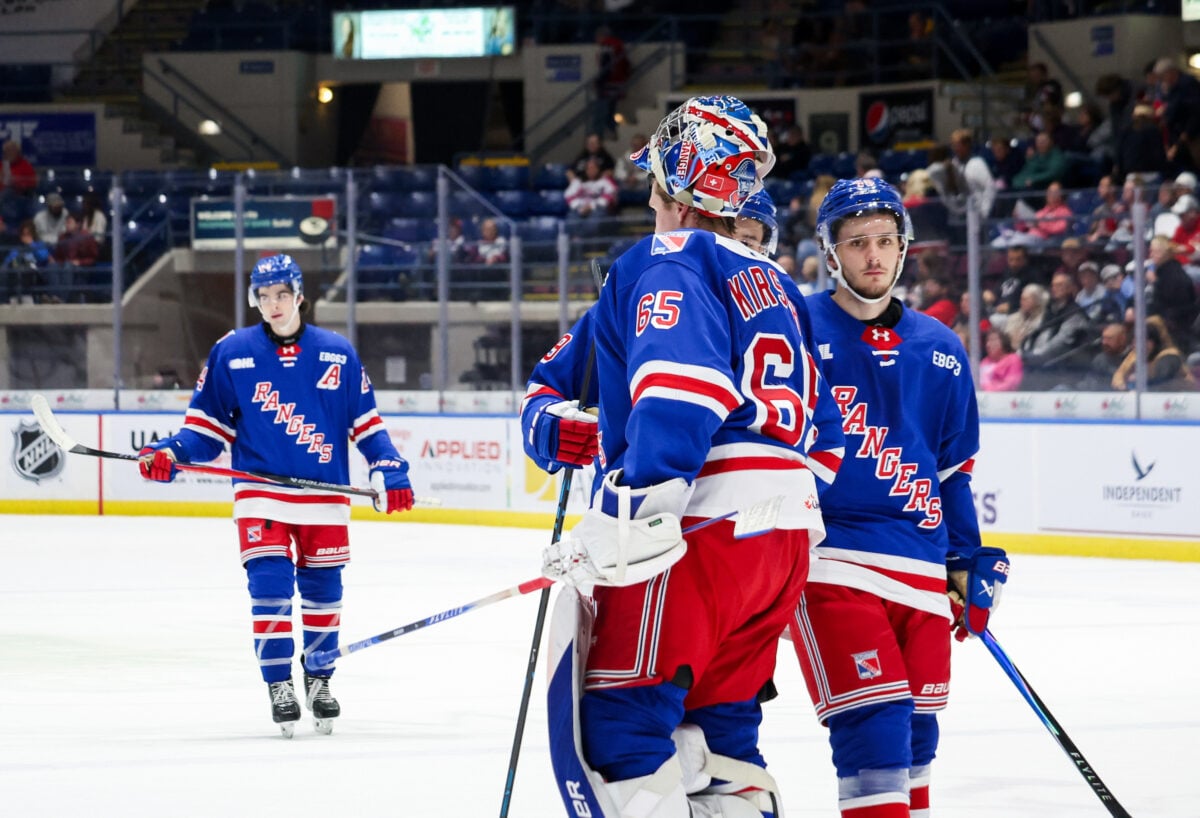
It wasn’t as clean a victory as many would have expected from the number-one seed in the Western Conference, which means there is a lot to talk about from this one. Let’s get into what we can take away from Game 1.
Rangers Gave Spirit’s Top Line Too Many Chances
Following the game on Rangers Talk with Mike Farwell and Josh Piercey, opinions were mixed on the Blueshirts’ defensive play in this one; some looked for a better effort in game two, while others chalked a couple of goals up to bad bounces.
However, head coach Jussi Ahokas wasn’t too impressed with his team’s play in their own end, saying, “I didn’t like our defence.”
All season, the Rangers have been tough to criticize defensively. They never get shelled; heck, they rarely ever get outshot. Again, on Friday, it wasn’t the volume of chances allowed that was the issue; rather, it was the number of Grade-A chances.
Most of the Spirit’s damage was done by their top line of Egor Barabanov, Dimian Zhilkin, and Nikita Klepov, who led the league in points and are expected to be first-round draft picks in the NHL’s Entry Draft in June. These guys combined for seven points, and it just felt like the Rangers gave this group a little too much credit, playing too passively and trying to contain them, rather than attacking with pressure and physicality at times throughout this game.
As coach Ahokas put it post-game, “We gave them too much time and space,” and continued, “If you give good players like that time and space, they’ll score.”
The Rangers defended well for most of the game; it was just a few major defensive lapses that players with the talent of the Spirit’s top line will take advantage of every time. It’s certainly something the Rangers will be highlighting heading into Game 2 and something I criticized earlier in the season when they were struggling in November, but I’ll chalk this one up as a one-off, as they’ve been tremendous defensively outside of that one rough stretch.
A Short Bench on Both Sides
Coming into this game, the biggest thing I was wondering about was the matchups. Not so much what they would be knowing the Spirit’s loaded top line would see a heavy dose of O’Reilly’s line and the Matthew Andonovski (Ottawa Senators) and Jared Woolley (Los Angeles Kings) pairing.
I was more curious about how that would dictate everyone else’s ice time. It didn’t take long to get the answer as the Spirit’s top group took a quick shift to open the game, got off, and then hopped right back over the boards on the very next line change and double-shifted the rest of the night, or at least it felt that way.
It allowed the Spirit to draw some favourable matchups early in the game, but as the game went on, the Rangers’ bench thinned, creating more opportunities for the likes of O’Reilly, Pridham, Humphreys, and other Rangers’ stars.
It’s interesting, because yes, the Rangers are by far the deeper team, and Spirit’s head coach, Chris Lazary, will want to live or die by throwing his best players over the boards as often as possible. However, the Rangers showed they have no issues shortening the lineup with them, and I would argue that doing anything to have the Rangers’ top six on the ice more than they already are isn’t necessarily helping your chances of winning.
It will be interesting to see if more guys get more ice time on both sides in this series, since these matchups aren’t changing. They’ll be going at it all series long.
Spirit Came Out Playing to Survive
After a couple of good early shifts generating offensive pressure, getting three of the first four shots of the game, the Rangers started to gain momentum, as the Spirit backed off the pressure, playing a 1-1-3 formation through the neutral zone, giving the Rangers free zone exits and too much speed through the neutral zone.
It resulted in the Rangers finishing the first frame with an 11-3 shot advantage and down one goal. But again, off the drop of the puck to start the second period, they played with some pace and caught the Rangers off guard, tying the game at one, 59 seconds into the second.
This helped them find their legs, and they played with much more pressure for the remainder of the game. But the early attempt at structure was somewhat shocking from the Spirit, considering they were one of two teams in the league with more than 500 total goals across their 68-game schedule.
I can’t say I’ve watched enough Spirit hockey to say for a fact, but if you’ve scored and allowed as many goals as they did this season, you won’t convince me their best game plan was to try and play low-event trap hockey against arguably the best trapping team in the league in the Rangers.
As much as the Rangers didn’t play their best game on defence, I think the Spirit started the game like they knew they were overmatched, and that was part of what led them to let the Rangers even the score and ultimately collapse in the third period.
They gave the Rangers trouble by using their speed to take their time. I think you’ll see a lot more of that as this series goes on, and you’ll see them go back to living and dying by trying to outscore their opponent.
Rangers’ Power Play Carries the Offensive Load
The Rangers certainly had plenty of chances; they finished the night with 35 shots. But the thing the Spirit did best all night was clogging the middle of the ice and collapsing to the front of the net, forcing the Rangers to operate on the perimeter at even strength.
But when one Spirit player was removed from the equation, and the Rangers went to the power play, they were able to take advantage of one less player clogging lanes, scoring on all three man-advantages.
Credit to the Spirit: they were battling hard in the defensive zone, and despite giving up a high volume of shots, they were preventing many of the high-danger looks. But the goals they gave up shorthanded gave the Rangers all the momentum and got the Aud rocking, which likely played a part in Cameron Reid’s (Nashville Predators) game-winning goal, a shot the Spirit’s goaltender would likely want back.
Game 2 Preview
These two teams will square off again on Sunday night in Kitchener before the series shifts south of the border. I have this series as a four-game sweep in favour of the Rangers, and I still feel comfortable with it.
Related: Reviewing Kitchener Rangers’ 2025-26 Season Predictions
Both teams have things they will be looking to clean up and adjust before this matchup, but I expect a much cleaner game from the Rangers defensively, which should make it a less stressful contest for Ranger Nation.