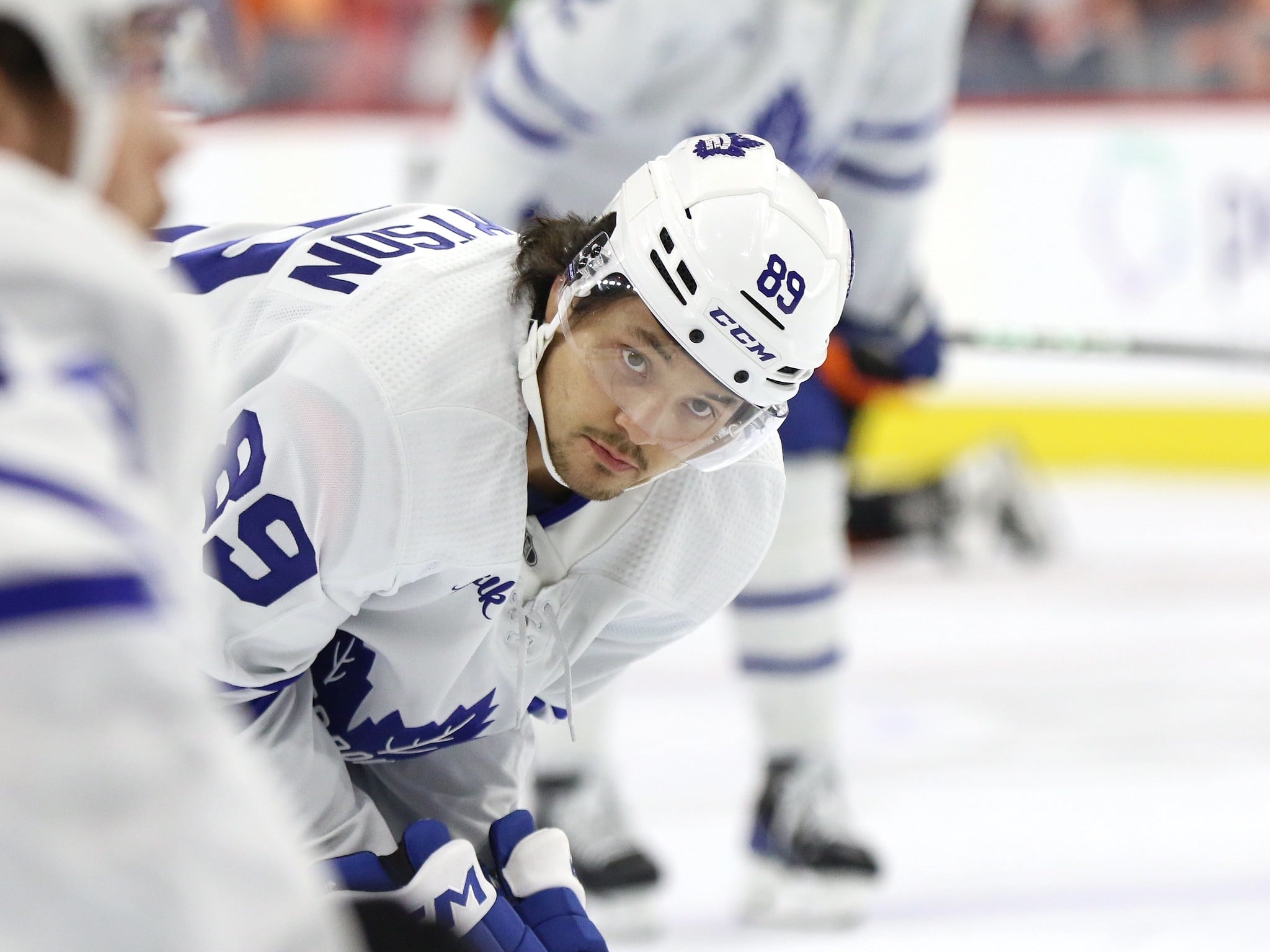
The Pittsburgh Penguins have settled the contract question with Nicholas Robertson, announcing a two-year deal with an annual average value of $3.25 million on Tuesday. Now they have to answer the more important one.
Robertson’s new deal removes the uncertainty of an arbitration hearing that was scheduled for July 28 and lets Pittsburgh know what he will cost over the next two seasons. That matters, but it does not define what he will be. A contract settles the salary. It does not settle the role.
That is where this gets interesting. President of hockey operations and general manager Kyle Dubas did not acquire Robertson from the Toronto Maple Leafs to add another name to an already crowded forward group. Pittsburgh needed young scoring upside, and he gives them a player with that ability. The challenge is making sure he becomes more than another interesting bet.
Penguins Now Have a Real Robertson Commitment
Robertson is no longer a restricted free agent waiting on an arbitration date. His new two-year contract offers Pittsburgh cost certainty and Robertson the fresh start he needed after several uneven years with the Maple Leafs.
The $3.25 million average annual value is not overwhelming, but it is not a throwaway number either. His updated contract page gives the Penguins two seasons to find out whether his offense can translate into a larger role, and the deal keeps him under team control as a restricted free agent after 2027-28.
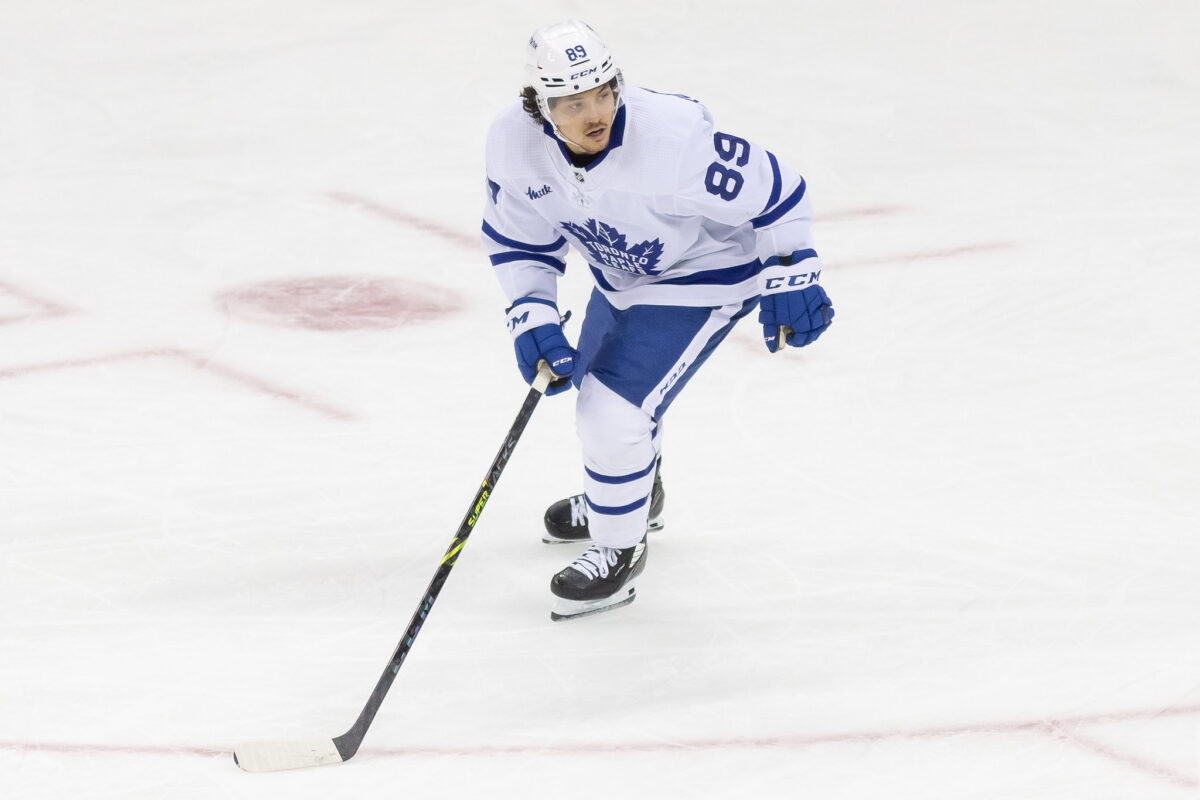
The deal makes sense for both sides. Pittsburgh avoids a one-year arbitration award that could have kept the relationship feeling temporary, while Robertson gets more security and a real chance to prove he can be part of something bigger than a bottom-six scoring experiment.
The deal also gives Dubas a clear runway. If Robertson takes off, the Penguins have a young winger on a manageable deal for two seasons. If he does not, the contract is short enough that it should not become a major problem.
Robertson Still Has to Earn a Real Role
The Penguins did not pay Robertson to be a star, but they paid him enough that he should not be treated like a spare forward. That is the line they have to walk.
He is coming off the most productive season of his NHL career. His 16 goals and 32 points in 78 games showed that he can score at the NHL level, even if his overall game still needs to become more consistent. For a Penguins team that has spent the offseason searching for younger offensive pieces, his profile was worth betting on.
The problem is that he needs the right opportunity. He is not at his best when buried in a limited fourth-line role with little offensive-zone time. His value comes from his shot, his finishing ability, and the chance that a bigger role can unlock more production than Toronto was able to get from him.
That does not mean Pittsburgh should hand him top-six minutes. It does mean they should enter training camp with a clear plan for how he can win those minutes. Robertson has to prove he can handle more responsibility, but the team has to put him in a position where his strengths actually matter.
Penguins’ Forward Group Is Getting Crowded
Robertson’s deal makes sense in isolation. The harder part is fitting it into the rest of the forward group. The team’s forward depth chart already has more names than clear roles, with Sidney Crosby, Evgeni Malkin, Bryan Rust, Rickard Rakell, Andrei Kuzmenko, Egor Chinakhov, Tommy Novak, Blake Lizotte, Hendrix Lapierre and several younger players pushing for NHL opportunities.
That is why Robertson cannot be viewed only as a contract win. He is now part of a larger roster squeeze. Rutger McGroarty’s crowded path is already one example of how difficult it can be for young forwards to break through, and Ville Koivunen’s uncertain role shows the same problem from a different angle.
Robertson is ahead of many players because he has already produced in the NHL, but that does not guarantee anything. If Kuzmenko gets offensive minutes, Chinakhov keeps a top-nine role, and the veteran wingers remain in place, Robertson will still have to fight for space. That makes his contract only the beginning of the story.
Deal Gives Dubas Another Manageable Bet
The Penguins’ cap space allows them to absorb Robertson’s deal without much short-term stress. That is important because they are still in the middle of a roster transition, and the organization needs more players who can outperform their contracts.
Robertson fits that idea. At $3.25 million, he just has to become a reliable scoring winger who can help the top nine and give Pittsburgh another young forward with upside. If he scores 20-plus goals and holds his own in a larger role, the contract will quickly become good business.
The risk is that the Penguins now have several players who fall into the same general category. Robertson, Kuzmenko, Chinakhov, Lapierre, McGroarty and Koivunen all need some level of opportunity. The roster has become more interesting, but interesting only matters if players separate themselves. That is the part Dubas still has to manage. The Penguins have added options. Now they have to make decisions.
Robertson Can Change the Penguins’ Forward Picture
Robertson has a chance to make this simple. If he scores, the role will follow. That is usually how these things work for players with clear offensive tools. The Penguins need more finishers, and Robertson gives them one. He does not need to become a complete player overnight, but he does have to become reliable enough that head coach Dan Muse can trust him beyond protected offensive situations.
That is the next step. Robertson has already shown he can produce in pieces. Pittsburgh needs to find out whether he can do it with more responsibility and more consistency.
There is a reason the Robertson trade made sense from the start. The acquisition cost was reasonable (a fourth-round pick in 2028), he is young (24), and the skill set is obvious. The contract now makes the bet more defined. Pittsburgh is no longer just taking a flyer. They are giving him a two-year window to prove he belongs. That should raise expectations.
Penguins Settled the Easy Part
The Penguins avoided arbitration. That is good business because it removes a distraction before training camp and gives both sides clarity. Still, the harder part is what comes next.
Robertson’s deal gives Pittsburgh a manageable cap hit, two seasons of control and a young winger with real scoring upside. Those are all positives. But the contract will only matter if the Penguins give him a role that makes sense and Robertson does enough to keep it.
That is the real question. The team doesn’t need another forward who looks useful on paper but gets lost in a crowded lineup. They need players who can become part of the next version of the team. Robertson has a shot to do that, and the contract to get a fair chance. Now the Penguins have to find out whether he has the game to make the deal matter.
Free Newsletter
Get Pittsburgh Penguins coverage delivered to your inbox
In-depth analysis, breaking news, and insider takes – free.
Subscribe Free →