The Kitchener Rangers are the 2025-26 Ontario Hockey League champions. Everyone in the organization deserves to celebrate, but it isn’t exactly a surprise that they finished the season on top.
This tweet was not based on the Rangers’ talent alone; it was just the cherry on top. Planting my flag with the East Avenue Blue in February had everything to do with their approach, commitment, and willingness to grow throughout the season. Here’s a breakdown of my thoughts on why I saw the J. Ross Robertson Cup coming back to Kitchener.
Rangers Bought in From Day One
Coaches often don’t get enough credit in these moments, and even when they do, many will deflect the praise and shine the light back on their players. It’s just the professional thing to do – highlight the players who were on the frontline of the battle. But no war is won without incredible planning and preparation.
For the Rangers, this started day one. The first piece I wrote about the team in the fall highlighted their structure. In September, you could see the framework of a team building towards a structure that many professional teams struggle to execute.
The game plan, on the surface, was fairly simple. Systematically, they play a fairly aggressive 1-2-2 game, defending the rush and emphasizing trapping in the neutral zone. Offensively, they are very fluid; all five skaters are in positions to activate and create numerical advantages over teams trying to defend.
While it sounds simple, the whole system hinged on the team’s commitment to defend all 200 feet of the ice and their awareness of where they needed to be to support their teammates. The Rangers gave teams no room to breathe. It didn’t matter if it was Sam O’Reilly, the Wayne Gretzky 99 Award winner, or the several Rangers prospects who found themselves getting thrown into games here and there; the Rangers approached every single game the same way.
The Rangers Never Wavered
Throughout the playoffs, the Saginaw Spirit, Sault Ste. Marie Greyhounds, Windsor Spitfires and Barrie Colts tried different ways to defend the Rangers. Teams tried to emulate their neutral zone trap. The Rangers picked it apart with patience and poise. After realizing they weren’t beating the Rangers at their own game, every playoff opponent tried to up the pressure and speed up the Rangers. It didn’t work.
There was too much support. Nobody was better at drawing in the pressure and reversing the puck to create space on the weak side of the ice, allowing time and space on breakouts, which let them attack the offensive zone with speed. There were many little details in their game that few will waste their time talking about, but the focus and execution of these less-discussed areas were the difference-maker.
By no means were they perfect all season. In fact, after a hot start, the Rangers struggled through November playing around .500 hockey, which prompted some criticism of their execution in areas that made them so dominant.
When the Rangers struggled, it wasn’t that they looked like a completely different team; it was just a matter of execution. At the time, I noted on The Hockey Writers, “Most of the goals they’re giving up come from a lack of physicality in the slot and in tight to the goalie, and relying too heavily on their stick to win battles rather than their legs. It’s rebounds, it’s tap-ins, and it’s shots with too much traffic in front that’s hurting them.”
The physicality of adding Matthew Andonovski and Jared Woolley was a big part of this improvement, along with the intensity that Sam O’Reilly, Dylan Edwards and Gabriel Chiarot brought when they came to Kitchener at the trade deadline.
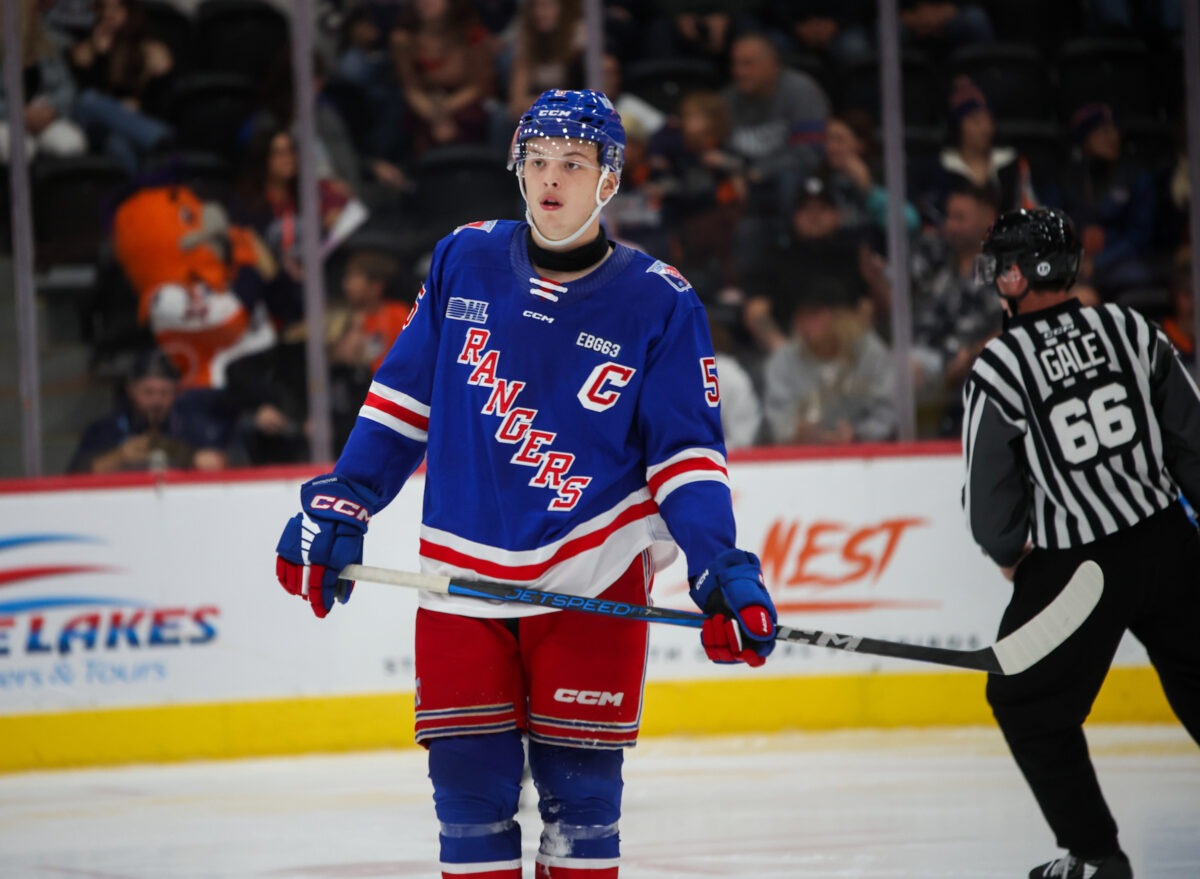
But it wasn’t just personnel improvements. During the 68-game regular season, we saw every player on the team take massive strides in their game. The coaching staff wasn’t just focused on skill development, but on awareness.
The players got so much better at recognizing when support was needed, when to push the pace, when to make the smart play, and when to just live to fight another day. Along with the attention to detail on the defensive side, the coaches’ impact throughout the season was easily noticeable in these improvements.
Rangers Believed They Were the Best & Played Like it
All of this got the Rangers to a point where, for the lack of a better analogy, they could tip their pitch, tell their opponent exactly what’s coming and knowing they can’t stop it, especially in the playoffs. The team had so much belief in themselves and their structure that they never changed; they only made minor adjustments to counter what the other team was doing.
That’s what made them so hard to beat. Since September, they have worked to perfect their craft and never tried to overthink the process. There was no confusion about how they wanted to play certain opponents or different situations. Every player knew what was being asked of them, and every one was committed to doing their job.
It was special to watch these players commit and execute towards a common goal night in and night out, especially since many players who are paid millions of dollars to play this sport can’t or don’t do it. The Rangers are a talented group, which is what you need to win championships, but it was all the little details that often get swept under the rug that made them seem like contenders early on.
You could argue that the Brantford Bulldogs had more talent. But no team in the OHL was smarter or better prepared than the Rangers. That was the difference, and that is why I give them a great chance to bring the Memorial Cup back to Kitchener for the first time since 2003.
Free Newsletter
Get OHL coverage delivered to your inbox
In-depth analysis, breaking news, and insider takes – free.
Subscribe Free →