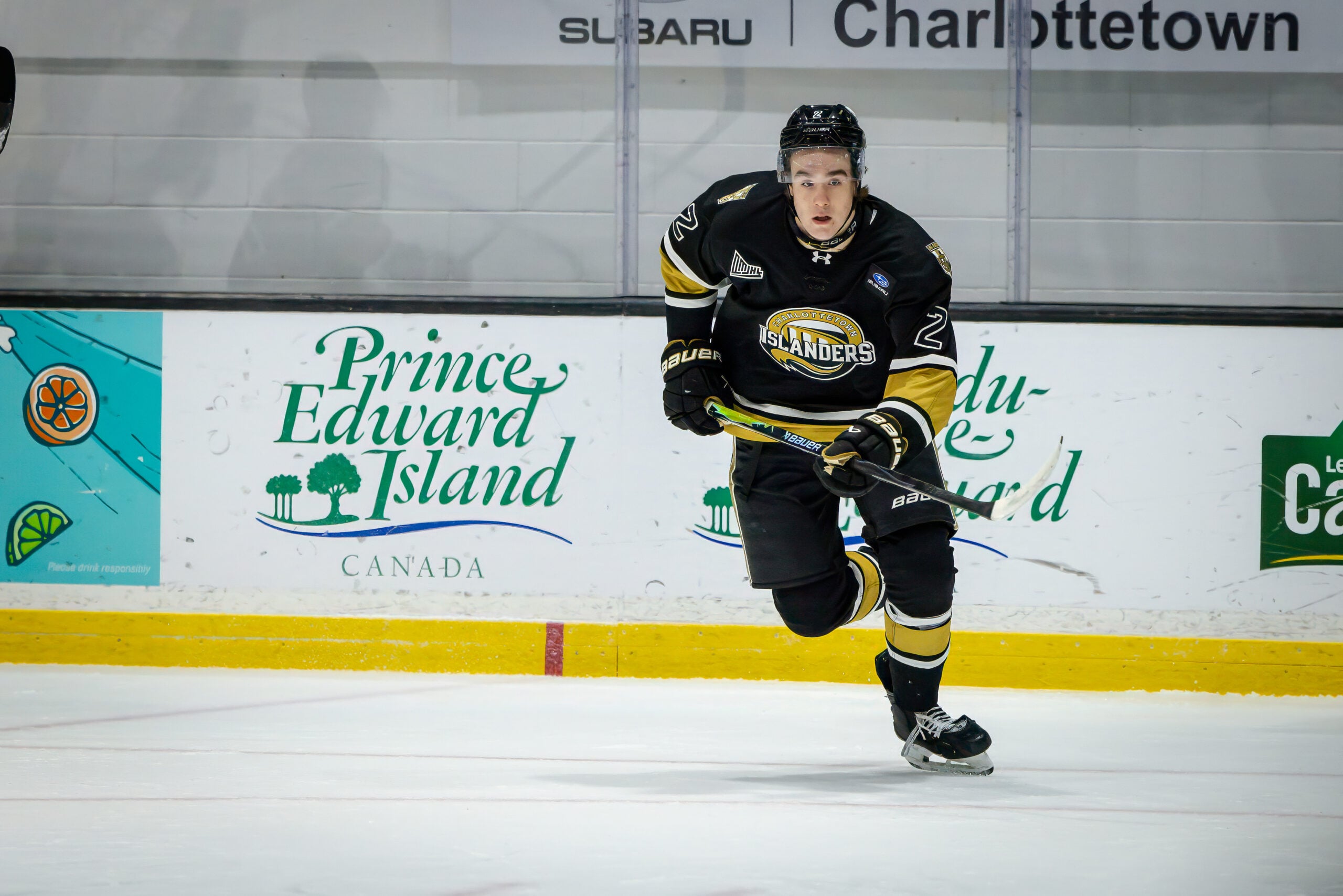
Brady Peddle was temporarily overlooked in PensBurgh’s annual Top 25 Under 25 rankings. His place within the Pittsburgh Penguins’ prospect system may be easy to overlook for similar reasons.
PensBurgh added Peddle as a bonus tie at No. 21 on Aug. 2 after realizing he had been omitted from the original list. The correction created an appropriate description for a 2025 third-round pick who does not produce the offensive numbers or highlight-reel plays that normally attract attention to young defensemen.
Peddle recorded three goals and 19 points in 62 games for the Charlottetown Islanders of the Quebec Maritimes Junior Hockey League (QMJHL) last season. Those totals do not immediately separate him within Pittsburgh’s improving defensive pipeline, but his size, mobility, physicality and left-handed shot give him a combination worth following.
His freshman season with the Michigan State Spartans of the NCAA should provide a clearer indication of whether Peddle remains a long-term project or begins developing into a legitimate professional option.
Peddle’s Ranking Reflects a Quiet Development Path
Peddle’s bonus placement in the latest PensBurgh prospect ranking was not necessarily a negative evaluation. It reflected how easily his development can become hidden behind more recognizable prospects.
The Penguins selected Peddle 91st overall in the 2025 NHL Draft after he spent one season with the Waterloo Black Hawks of the United States Hockey League (USHL). He recorded 10 points in 62 regular-season games before adding 10 more in 15 playoff appearances as Waterloo reached the Clark Cup Final.
Peddle then moved to Charlottetown and produced 19 points with a plus-3 rating and 48 penalty minutes. The Islanders’ official 2025-26 player statistics showed that he finished second among their defensemen in scoring, behind only Owen Conrad.
The production represented progress without changing Peddle’s identity. He remained a defense-first player who used his size and mobility to close space, engage physically and move the puck out of pressure rather than functioning as the primary offensive driver.
After Charlottetown’s season ended, Peddle signed an amateur tryout agreement with the Wilkes-Barre/Scranton Penguins of the American Hockey League (AHL). He did not appear in a game, but an amateur tryout gave him an opportunity to observe the preparation, pace and daily standards required at the professional level.
That experience should give Peddle a better understanding of what he must eventually become, even though his professional transition remains several years away.
Defensive Utility Gives Peddle a Foundation
Pittsburgh did not draft Peddle because it expected him to run a power play or become a major offensive producer.
Penguins director of amateur scouting Wes Clark described Peddle as a large, left-shot defenseman capable of providing significant defensive utility. The organization’s official 2025 draft-class review also highlighted his physical, simple and intelligent approach.
At 6-foot-3 and approximately 210 pounds, Peddle already has enough size to compete physically without needing several years to fill out an underdeveloped frame. His mobility makes that size more useful because he can close on attackers instead of waiting around the crease for the play to reach him.
His defensive stick and willingness to finish plays physically provide the clearest professional foundation. Peddle can disrupt entries, pressure forwards along the boards and transition the puck once possession changes. He does not need to produce offense on every shift to affect the game.
The Hockey Writers‘ 2025 Draft profile identified similar strengths while noting that his puck movement and decision-making still required development. That evaluation remains relevant after his season in Charlottetown.
Peddle showed signs of improvement during Pittsburgh’s 2026 development camp. Director of player development Tom Kostopoulos praised the growth in his defensive closing, stick detail, physicality and puck play. Peddle also demonstrated more confidence during the three-on-three tournament, including a breakaway goal created by a stretch pass from Zam Plante.
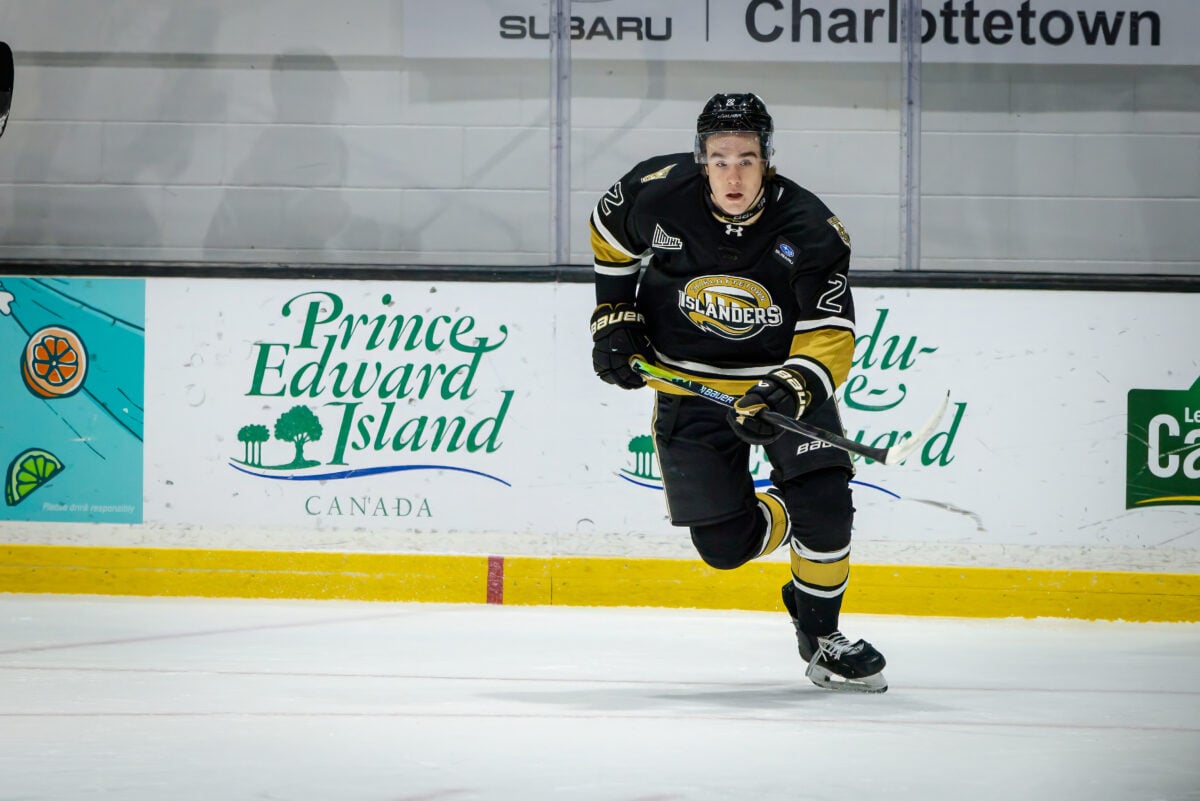
Those flashes do not suddenly turn him into an offensive prospect. They suggest his game may contain enough puck skill to complement the defensive qualities Pittsburgh already values.
Michigan State Is the Right Next Test
Peddle will enter a Michigan State program containing several players with professional potential and legitimate competition for ice time.
The Spartans’ official 2026-27 roster lists Peddle as a 6-foot-3, 210-pound freshman. Michigan State also has experienced defensemen and other highly regarded young players, meaning Peddle will have to earn responsibility rather than receive a major role based only on his draft status.
That environment should benefit him. Peddle no longer needs to prove that his physical tools work against junior players. He needs to show that he can process the game quickly enough to handle older, stronger and more structured college competition.
The NCAA schedule will reduce his time with the puck and expose mistakes more aggressively. Opposing forwards will be better at protecting possession, creating traffic and forcing defensemen to make decisions under pressure. Peddle’s mobility should help, but his positioning and puck management must remain reliable when the pace increases.
His freshman year does not need to include a major scoring breakout. Establishing himself as a regular, earning penalty-killing minutes and handling difficult defensive assignments would represent meaningful progress. Playing within a strong program should also allow him to develop without being asked to carry more responsibility than he is ready to handle.
The Penguins can afford patience because Peddle’s projection has always been long-term. His time with Wilkes-Barre/Scranton provided an introduction to professional hockey, but Michigan State is where he must build the habits required to return as a player rather than an observer.
Peddle’s Offensive Growth Will Determine His Ceiling
Peddle’s defensive profile gives him a possible path toward professional hockey. His ability to improve with the puck will determine how far that path extends.
Modern NHL defensemen do not have to produce large point totals, but they must help their teams exit the defensive zone and prevent forechecking pressure from becoming extended possession. A player who only defends eventually becomes difficult to keep in the lineup, particularly if he cannot make a reliable first pass.
Peddle showed progress by increasing his regular-season production from 10 points with Waterloo to 19 with Charlottetown. His three goals also indicate that he remains more of a facilitator than a shooting threat, which is acceptable if he continues making quick and accurate outlet passes.
Michigan State should challenge him to simplify without becoming passive. Peddle must recognize when to move the puck immediately, when to skate away from pressure and when to support the offense without exposing his defensive position.
Pittsburgh’s system already includes young defensemen with more established offensive projections. Harrison Brunicke possesses the skating and transition ability to develop into a top-four option, while Owen Pickering has already received NHL experience as a large, mobile left-shot defenseman.
Peddle does not need to surpass either player immediately. He must establish a role that distinguishes him from the other defensemen competing beneath them.
The Penguins’ 2025 draft class included Peyton Kettles, Charlie Trethewey, Quinn Beauchesne and Peddle among its defensive additions. Each brings a different combination of size, handedness, skating and offensive ability, creating internal competition that should prevent Pittsburgh from depending on one prospect.
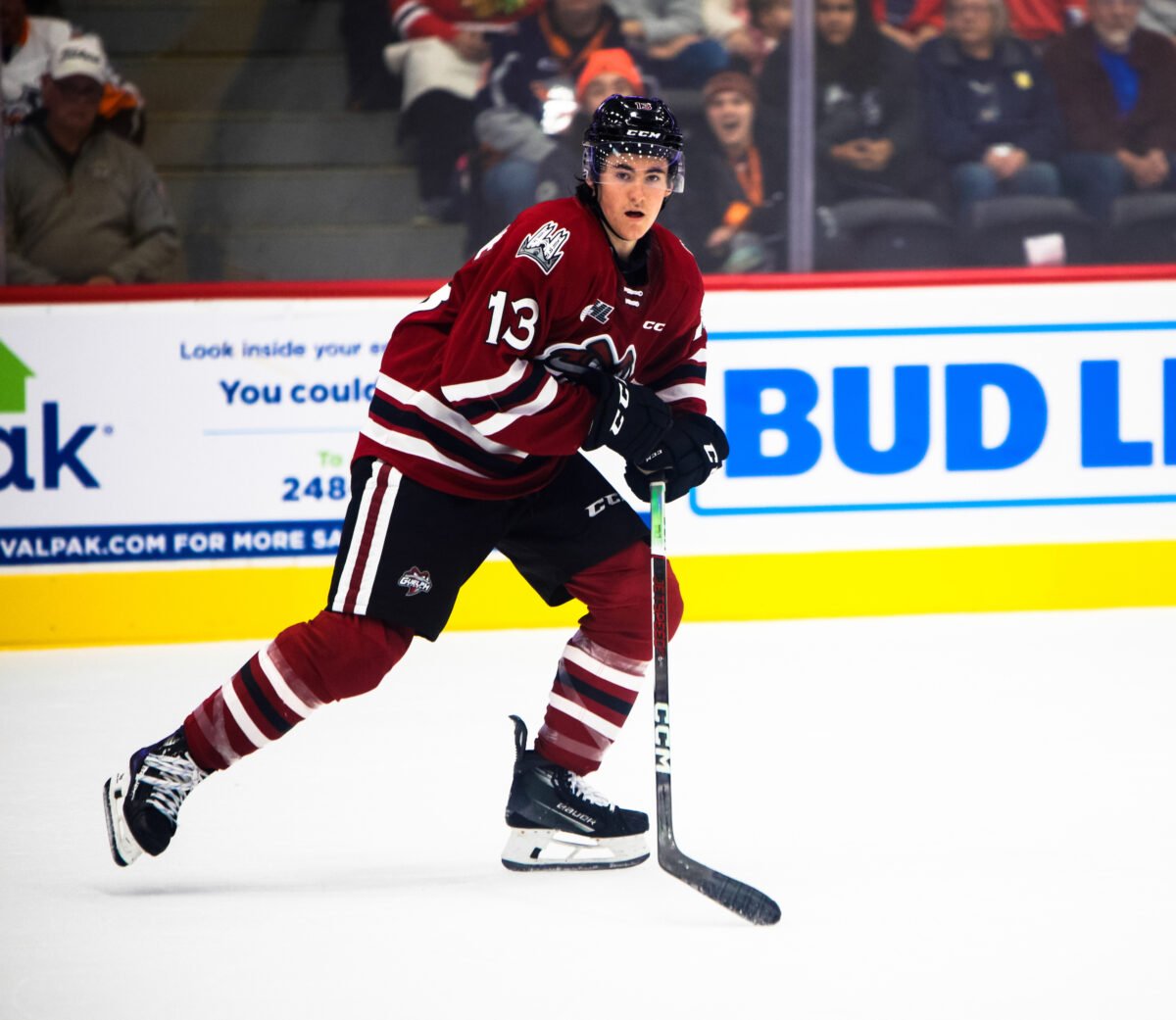
Peddle’s combination of mobility and physicality gives him a chance to separate as a dependable shutdown option. Adding cleaner puck movement would make that projection significantly more valuable.
Peddle Deserves Patient Attention
Peddle is unlikely to become one of Pittsburgh’s most discussed prospects during his freshman season. Michigan State has a talented roster, and defensive defensemen rarely gain attention as quickly as high-scoring forwards or puck-moving blueliners.
The Penguins do not need immediate recognition from him. They need continued evidence that the tools they identified in the third round are developing into a complete player.
A successful freshman year would include consistent lineup placement, defensive responsibility, improved puck decisions and enough physical confidence to handle older opponents. Increased production would be encouraging, but his overall effectiveness will matter more than reaching a specific point total.
The recent look at five prospects who could climb focused on players with more immediate momentum or clearer opportunities to raise their organizational standing. Peddle enters a different situation because his college transition creates a longer evaluation period. That should not make him irrelevant.
Peddle has NHL size, moves well for his frame and plays a position where Pittsburgh continues searching for dependable long-term options. His left-handed shot also gives him a different path from Brunicke, Kettles and several of the organization’s right-side prospects.
The accidental omission from the Top 25 Under 25 rankings became a fitting hook, but Peddle’s next step will depend on ensuring his game cannot be overlooked as easily.
Michigan State will provide the competition, structure and development time necessary to test that possibility. Peddle does not need to emerge as a future NHL defenseman immediately. He needs to begin making that projection easier to see.
Free Newsletter
Get Pittsburgh Penguins coverage delivered to your inbox
In-depth analysis, breaking news, and insider takes – free.
Subscribe Free →