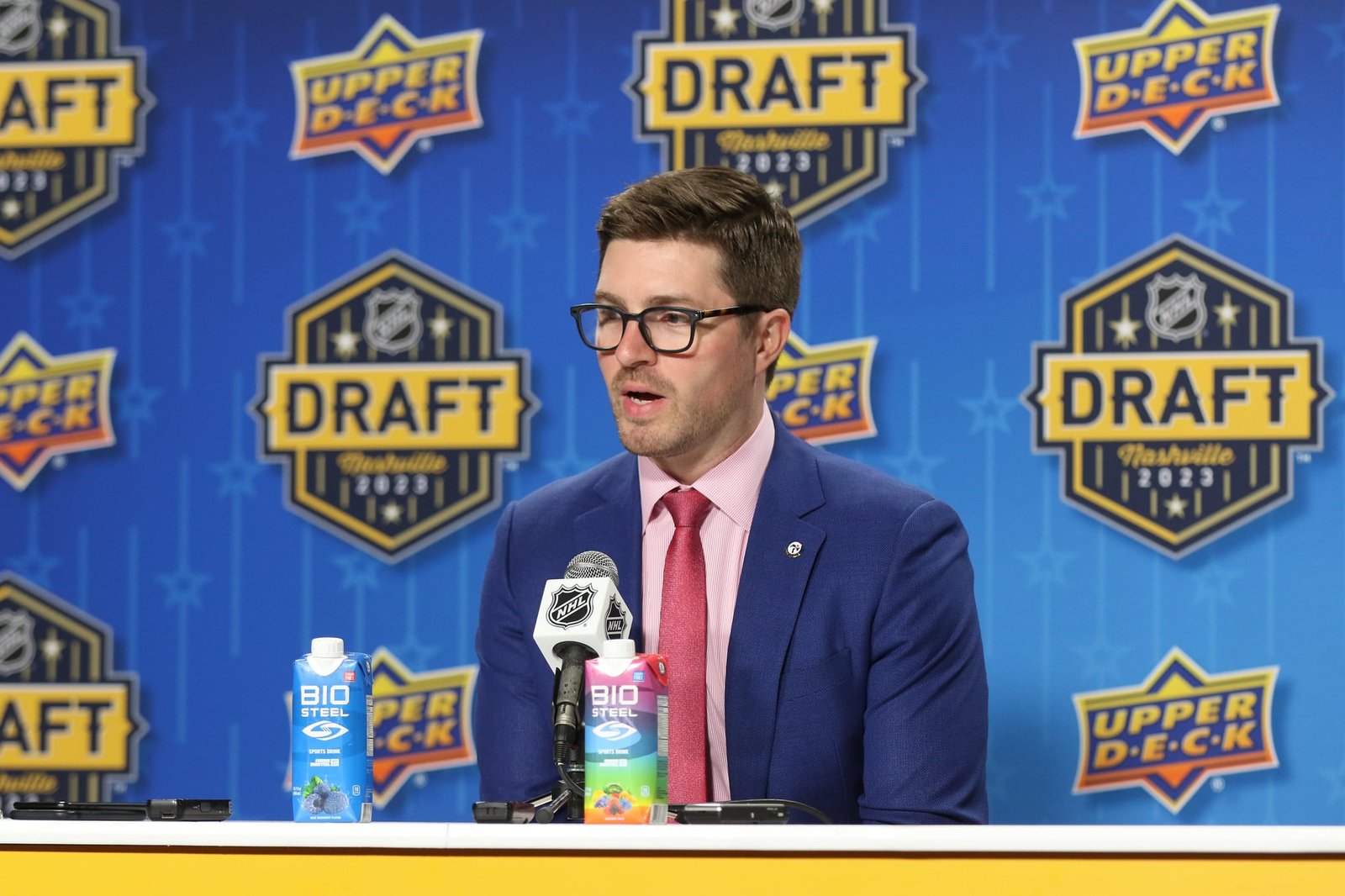
Most failed NHL trade proposals disappear into phone history. One involving the Pittsburgh Penguins accidentally made it onto camera. Behind-the-scenes footage released by the Ottawa Senators on Aug. 12 revealed that Pittsburgh tried to acquire the No. 25 pick in the 2026 NHL Draft for an unidentified roster player.
Senators president of hockey operations and general manager (GM) Steve Staios described Pittsburgh’s proposal as “interesting” while weighing whether to move the selection. Ottawa ultimately kept the pick and selected Swedish winger Jonas Lagerberg-Hoen.
The footage does not identify Pittsburgh’s player or establish whether draft capital was included in the proposal, which makes the guessing game far less useful than examining what the offer says about Penguins president of hockey operations and GM Kyle Dubas. Ottawa’s official draft-room episode captured the negotiations, while Pensburgh highlighted Pittsburgh’s involvement.
Pittsburgh did not merely ask about moving a couple of picks. Dubas was apparently willing to subtract a roster player for another first-round prospect. That is a revealing distinction for a team that returned to the playoffs in 2025-26 but is still trying to build a team capable of competing after Sidney Crosby, Evgeni Malkin and the rest of its veteran core move on or retire.
Dubas Was Willing to Trade the Present for Pick No. 25
The exact value of Pittsburgh’s offer is impossible to determine without knowing the player involved. What’s important is the type of asset Dubas was willing to include in the conversation. The Senators had already received a pick-heavy proposal from the Vancouver Canucks involving selections No. 33 and 41 for a pick in return. Staios was not convinced by the draft capital alone, but Pittsburgh’s inclusion of a roster player caught his attention.
That suggests Dubas was not treating another first-round selection as a luxury. The Penguins had just selected Liam Ruck 22nd overall. They eventually took his twin brother Markus Ruck at No. 39, then used No. 54 on defenseman Tomas Galvas. Markus remained available when the second round arrived, allowing Dubas to keep the roster player and still land both twins.
Whether Markus was actually the target at No. 25 remains unknown. The timing makes the possibility logical, but Pittsburgh could have been chasing another player. What is known is more interesting. Dubas valued a player still on the board enough to discuss turning an NHL asset into a premium future asset.
The Mystery Player Matters Less Than the Tier He Occupied
There is a temptation to turn the story into detective work. Was it Justin Brazeau? Tommy Novak? A younger player? Somebody more established?
There is no reliable evidence identifying anyone. PensBurgh floated several possibilities based on roster value and trade protection, but correctly acknowledged that the public may never learn who was actually involved. The better exercise is identifying what type of player makes sense strategically.
Dubas almost certainly was not offering one of Pittsburgh’s untouchable veteran pillars for pick No. 25. Players carrying significant trade protection create another obstacle, while a premium player such as Bryan Rust or Rickard Rakell would likely require greater value than one late first-round selection. At the other end, an insignificant depth player probably would not have made Staios describe the proposal as interesting.
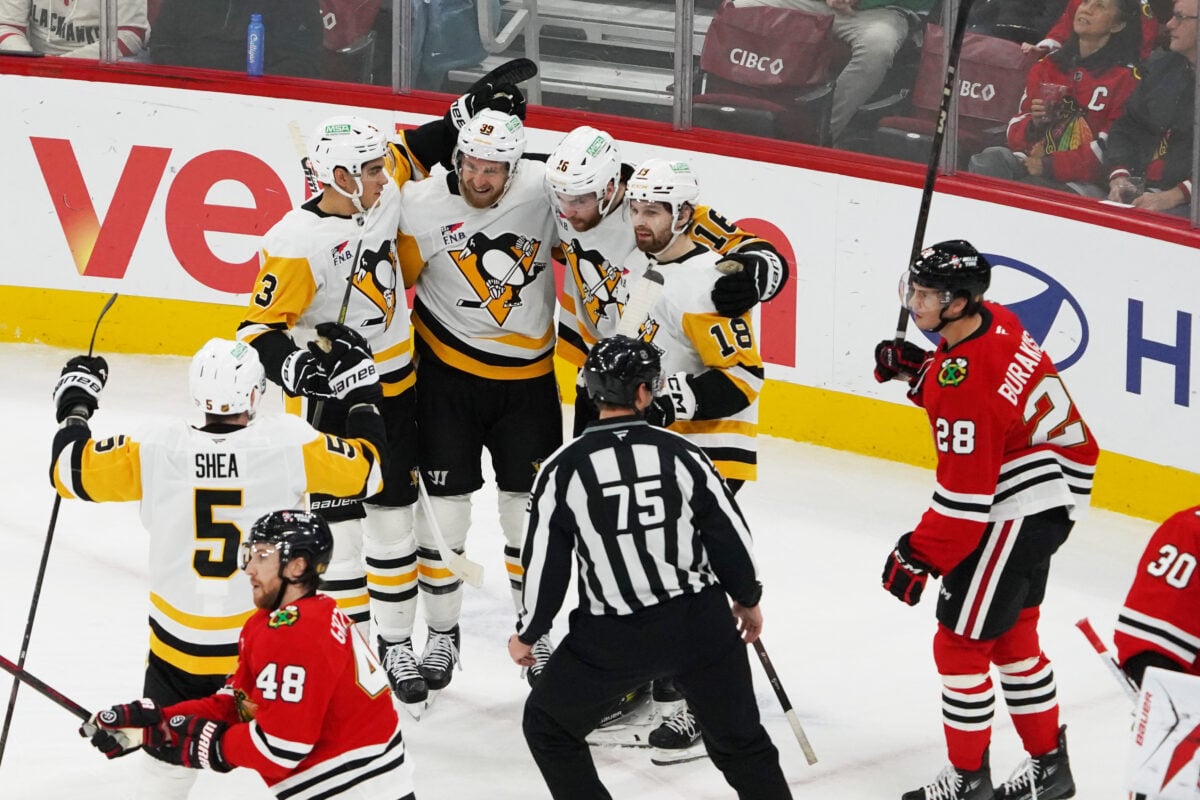
That leaves the middle of a roster, which is exactly where Pittsburgh has accumulated enviable depth. Players in that tier can be productive, inexpensive and useful without being essential to the organization’s long-term direction. Justin Brazeau reflects the type of useful NHL forward Pittsburgh has throughout its depth chart, while Rickard Rakell represents a considerably more established level of roster value. They illustrate the broad spectrum Dubas would have been working within as he tried to find a player valuable enough for the Senators to consider.
Pittsburgh’s Quiet Summer Was Not Passive
The failed Ottawa trade adds useful context to what otherwise looked like a fairly restrained offseason. Pittsburgh added Andrei Kuzmenko, Nicholas Robertson, Hendrix Lapierre, Trevor van Riemsdyk and Declan Carlile without making the type of blockbuster move that would redefine its immediate ceiling.
Dubas described the organization’s approach as building “brick by boring brick,” and the organization carried that philosophy into free agency rather than spending aggressively simply because cap space was available. Quiet does not mean inactive.
Pittsburgh also explored moving up in the first round before settling at No. 22. Dubas acknowledged after the draft that cost prevented them from getting high enough to secure one of the premium players they coveted, which is why Pittsburgh’s current season remains a bridge.
The Ottawa footage provided another piece of the picture. Dubas was not merely calling teams and asking what draft picks cost. He had a proposal. That is a more aggressive posture than Pittsburgh’s completed transaction list suggests.
Another First-Round Pick Fits Pittsburgh’s Larger Timeline
Pittsburgh already has plenty of NHL players. What it lacks is certainty about who will become its next high-end core. Liam Ruck scored 45 goals and 104 points in 68 games with the Medicine Hat Tigers before Pittsburgh selected him 22nd overall. Markus led the Western Hockey League with 108 points and went 39th. Selecting Liam Ruck and reuniting the twins adds two more legitimate offensive prospects to a system Dubas has spent several seasons rebuilding.
The prospect pool is deeper now, but depth is not the same as star power. I recently examined how the Penguins’ prospect pool still lacks a future star, which explains why another first-round swing would have been attractive even after they had already made their first selection.
One more pick in the 20s would have meant another chance to find a player whose prime arrives after Pittsburgh’s current veteran era ends. A useful NHL player can help the Penguins win games in October. A successful first-round selection could help determine what the franchise looks like five or six seasons from now. Dubas appears willing to make that exchange when the value makes sense.
Pittsburgh’s Forward Surplus Makes the Strategy Easier to Revisit
The concept is even more relevant entering training camp. Pittsburgh has accumulated enough forwards that legitimate NHL players could end up fighting for fourth-line minutes, extra-forward roles or no job at all. Brazeau, Elmer Söderblom, Lapierre, Ville Koivunen and Rutger McGroarty are among a much larger collection competing for opportunity, while Robertson and Kuzmenko added even more options this offseason.
That congestion is why I have argued that the organization eventually has to turn some of its quantity into quality. Keeping 15 useful forwards does not provide the same value as converting one expendable piece into a player or asset that fills a larger organizational need. The Ottawa revelation suggests Dubas already understands that equation.
His willingness to include a roster player in a trade proposal indicates that Pittsburgh’s depth chart is not sacred. A player can be useful and still become expendable if the return matches where the franchise is headed. That distinction could become especially important as training camp and the early portion of the season expose which forwards lack meaningful roles.
Failed Trade Offers Can Still Reveal a Plan
Pittsburgh did not acquire pick No. 25. Ottawa kept it, Markus Ruck remained available at No. 39, and the unidentified Penguin remained with the organization. From a transaction standpoint, nothing happened. From a roster-building standpoint, the phone call revealed plenty.
Dubas was willing to discuss removing an NHL player to add another premium prospect. He was willing to do it even after Pittsburgh had already made a first-round selection. That fits an organization trying to remain competitive around Crosby while refusing to sacrifice every future decision to the current roster.
The Penguins’ offseason may have looked conservative because the biggest conversations never produced transactions. Ottawa’s cameras provided evidence that at least one of those conversations went much further than anyone outside the draft room knew.
Pittsburgh kept the mystery player and ultimately kept its picks. The more important takeaway is that Dubas was willing to choose differently. If the right young player or draft asset becomes available again, Pittsburgh’s current roster may be considerably more negotiable than it appears.
Free Newsletter
Get Pittsburgh Penguins coverage delivered to your inbox
In-depth analysis, breaking news, and insider takes – free.
Subscribe Free →