The Pittsburgh Penguins no longer have one of the NHL’s emptiest prospect systems. Whether they have found the talent required to build their next championship core is a different question.
The Hockey News’ latest 2026-27 organizational evaluation praised Pittsburgh’s depth at right wing, where Liam Ruck, Bill Zonnon, and Rutger McGroarty give the organization several potential NHL contributors. It also identified center as the system’s greatest weakness and concluded that the group still lacks an obvious future star.
That assessment captures the progress president of hockey operations and general manager Kyle Dubas has made without overstating it. Pittsburgh now has prospects at nearly every position who could earn NHL roles, and several are close enough to make the roster younger within the next two seasons.
The Penguins have built a legitimate pipeline. They have not yet found the player capable of becoming its next foundation.
Penguins Finally Have Real Prospect Depth
Pittsburgh’s prospect situation looked dramatically different when Dubas arrived in 2023. Years of trading draft picks to support Stanley Cup runs had left the system without enough young players or potential high-impact talent.
The organization has since used trades, larger draft classes and increased investment in development to create multiple layers. The Wilkes-Barre/Scranton Penguins were the youngest team in the American Hockey League (AHL) last season, finished with the league’s third-best record and advanced to the Eastern Conference Final.
Pittsburgh’s review of Wilkes-Barre/Scranton’s season identified McGroarty, Zonnon, Tristan Broz, Mikhail Ilyin, Sergei Murashov, Harrison Brunicke, and several others as players who gained valuable professional playoff experience. The success mattered because it involved prospects receiving major responsibilities rather than older AHL veterans carrying the team.
The Penguins also added six more players during the 2026 NHL Entry Draft, including Liam Ruck and Markus Ruck with their first two selections. That class followed a 13-player haul in 2025, giving Pittsburgh significantly more opportunities to develop useful NHL talent.
Depth creates value even when every prospect does not reach his ceiling. Some players can become inexpensive contributors, while others can eventually become trade assets for the larger addition Pittsburgh still needs.
The system’s improvement is real. The unresolved question is whether any player near the top can become more than a complementary piece.
Right Wing Has Pittsburgh’s Best Upside
The Hockey News identified right wing as Pittsburgh’s strongest prospect position, and the group includes three of the organization’s most recognizable young forwards.
Liam Ruck may have the highest pure scoring ceiling. The 22nd pick in the 2026 NHL Draft recorded 45 goals and 104 points in 68 games for the Medicine Hat Tigers of the Western Hockey League (WHL), finishing second in league scoring behind his twin brother, Markus.
Liam Ruck’s intelligence, positioning and finishing ability give him a legitimate top-six path. Pittsburgh’s profile of Liam’s development also identified explosiveness, strength, and physical development as areas he must improve before leaving junior hockey for the University of North Dakota Fighting Hawks of the National Collegiate Athletic Association (NCAA).
Zonnon offers a different package. The 2025 first-round pick produced 14 goals and 46 points in only 35 games for the Blainville-Boisbriand Armada of the Quebec Maritimes Junior Hockey League (QMJHL) after injuries delayed his season. His size, playmaking, forechecking and defensive awareness give him several ways to remain valuable when he is not scoring.
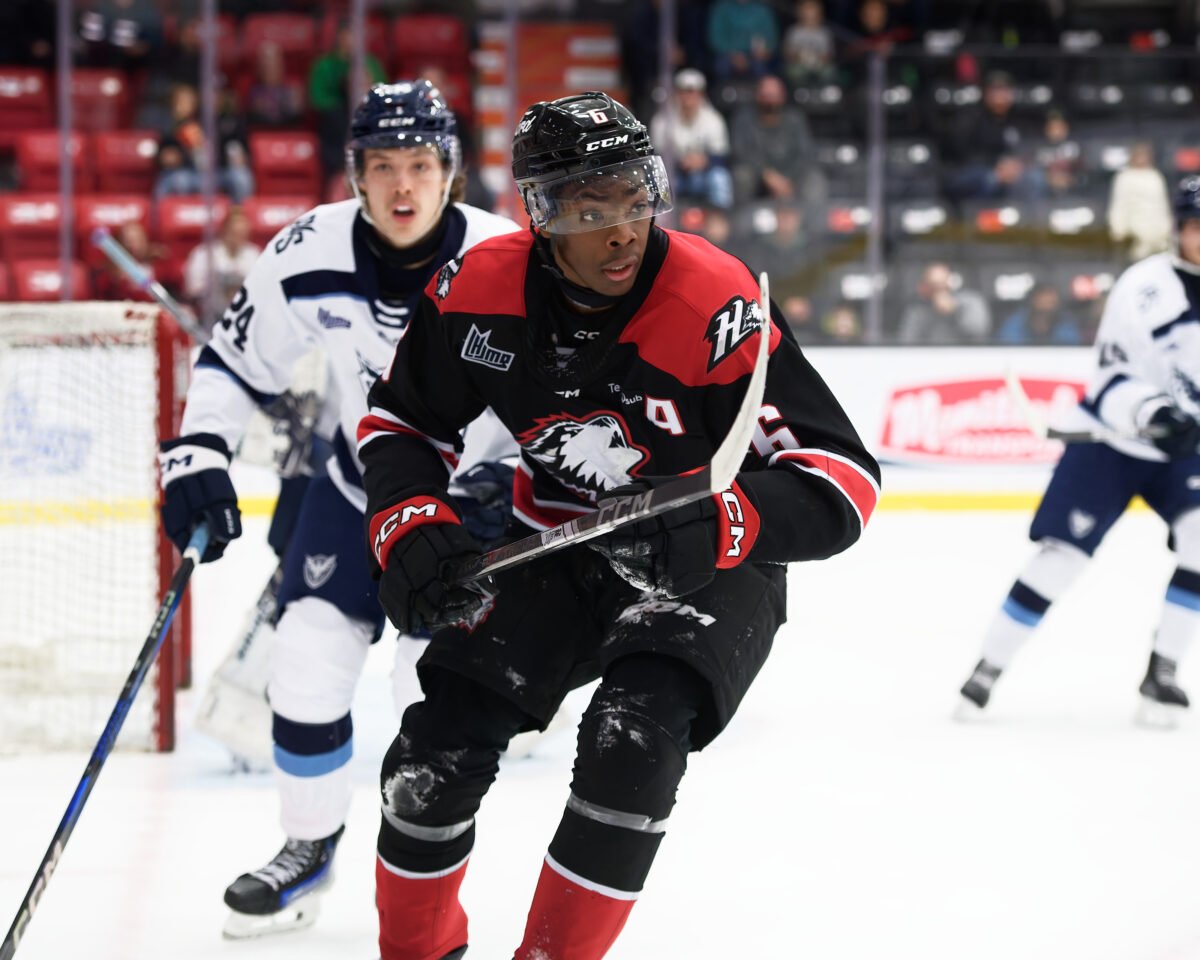
The Penguins signed Zonnon before he joined Wilkes-Barre/Scranton for its playoff run, where he immediately demonstrated that his game could function against professional competition. Pittsburgh’s evaluation of Zonnon’s development emphasized his preparation, ability to carry the puck, and commitment away from it.
McGroarty is closer to the NHL than either player. He recorded 10 goals and 34 points in 30 AHL games last season while also appearing in 24 games for Pittsburgh. His physicality, net-front work, and defensive utility give him a realistic chance to become a permanent top-nine forward.
Each could become a top-six winger. None currently projects as the type of elite offensive driver who can replace Sidney Crosby as the player around whom an entire line and franchise are constructed.
Penguins Have Several Strong Complementary Pieces
Calling Pittsburgh’s prospects complementary players should not be viewed as dismissive. Successful NHL teams need intelligent, affordable players capable of supporting their highest-paid stars.
Liam Ruck can become a finisher who finds space around a primary puck carrier. Zonnon could develop into a physical, two-way winger who plays in several situations. McGroarty may become a net-front power forward who contributes on both special-teams units.
The organization also has Mikhail Ilyin, Ville Koivunen, Tanner Howe, and Melvin Fernstrom competing to become skilled supporting forwards. The Penguins’ preseason top 15 prospects reflects the range of potential outcomes, with several forwards carrying middle-six or secondary-scoring projections.
That quantity increases the possibility that two or three become useful NHL players. It does not guarantee one develops into a first-line offensive star.
Pittsburgh spent most of the Crosby and Evgeni Malkin era finding players who could complement elite centers. Bryan Rust, Jake Guentzel, Chris Kunitz, and Pascal Dupuis became highly productive because they possessed useful skills and played alongside franchise talent.
The next era presents the reverse problem. The Penguins may have several future supporting players but no clear centerpiece to elevate them.
Brunicke May Be the Closest High-Impact Skater
The Hockey News identified Harrison Brunicke as the next Penguins prospect likely to receive an NHL opportunity, and his development gives Pittsburgh one potential high-impact player outside the forward group.
Brunicke made Pittsburgh’s opening-night roster at 19 and appeared in nine NHL games before moving through the AHL, the World Junior Championship, and the Kamloops Blazers of the WHL. He later returned to Wilkes-Barre/Scranton and handled major playoff minutes during its run to the Eastern Conference Finals.
Brunicke’s size, skating, and right-handed shot create a legitimate top-four projection. His ability to move the puck and defend the rush also gives him more upside than a traditional defensive prospect.
Pittsburgh’s development review of Brunicke showed that his unusual season exposed him to nearly every level he needed to experience. He now enters 2026-27 with a clearer understanding of the NHL’s pace and the consistency required to remain there.

Brunicke could become an important defenseman. That does not necessarily mean he will develop into a true top-pairing talent who controls games in every situation. His most realistic successful outcome may be a reliable second-pair option who can move higher when needed.
Owen Pickering provides another potential top-four defenseman, while Murashov may possess the highest ceiling anywhere in the system. Murashov’s athleticism and continued AHL success give him a chance to become Pittsburgh’s long-term starting goaltender.
Goaltenders remain particularly difficult to project, however. Murashov becoming a legitimate starter would solve a major problem, but Pittsburgh still needs a skater capable of driving its next core.
Center Remains the Most Serious Weakness
The center problem becomes more important when Pittsburgh’s current roster is considered.
Crosby and Malkin have defined the middle of the Penguins’ lineup for two decades. Ben Kindel has already reached the NHL and could remain at center, but he is now part of the current roster rather than the prospect pool.
The players behind him offer possibilities without providing a clear first-line projection.
Markus Ruck led the WHL with 108 points last season and gives Pittsburgh a skilled playmaking center with natural chemistry alongside Liam. His production is encouraging, but his size, skating, and defensive development leave questions about whether he remains in the middle professionally.
Will Horcoff provides size and two-way potential, although his offensive ceiling remains uncertain and he may eventually fit better on the wing. Broz is closer to the NHL but projects more safely as a bottom-six or secondary middle-six option.
Before the 2026 draft, an organizational pipeline assessment identified center as Pittsburgh’s most significant need. Selecting Markus Ruck helped increase the depth, but one second-round addition did not produce an obvious successor to Crosby.
The Penguins have spent years knowing that replacing Crosby and Malkin would be nearly impossible. They still need someone capable of becoming their next first-line center rather than several players competing for the lower positions behind him.
Dubas Still Needs a Franchise-Changing Addition
The absence of an obvious star does not mean Pittsburgh’s rebuilding work has failed.
Dubas inherited an organization lacking both depth and premium prospects. He has added enough players that the Penguins can reasonably expect several to become NHL contributors, while Wilkes-Barre/Scranton’s success showed the development process is producing results.
The next step is more difficult because franchise talent is rarely found through quantity alone. Pittsburgh may need a premium draft selection, an unexpected development leap or a major trade involving some of its accumulated assets. The Penguins reportedly explored moving higher in the 2026 draft but decided the cost was too great, showing they understand the need without being willing to damage the system merely to force a solution.
The possibility remains that Ruck, Zonnon, McGroarty, Brunicke, or Murashov exceeds current projections. Prospect development is not linear, and players selected outside the top 10 can become stars. Pittsburgh should not build its entire succession plan around that possibility.
The Penguins’ deeper pipeline gives Dubas more flexibility than he had several years ago. He can allow prospects to develop properly, use excess depth in trades, and target a premium player when the correct opportunity appears.
That opportunity eventually must appear. The Penguins have built the supporting cast of a promising future. They still need to find their leading man.
Free Newsletter
Get Pittsburgh Penguins coverage delivered to your inbox
In-depth analysis, breaking news, and insider takes – free.
Subscribe Free →