The Pittsburgh Penguins’ prospect pool is not fixed yet. That would be too generous, especially for an organization that spent years chasing Stanley Cups while trading picks, moving young players, and thinning out the pipeline behind the NHL roster.
It is, however, starting to look like a real system again.
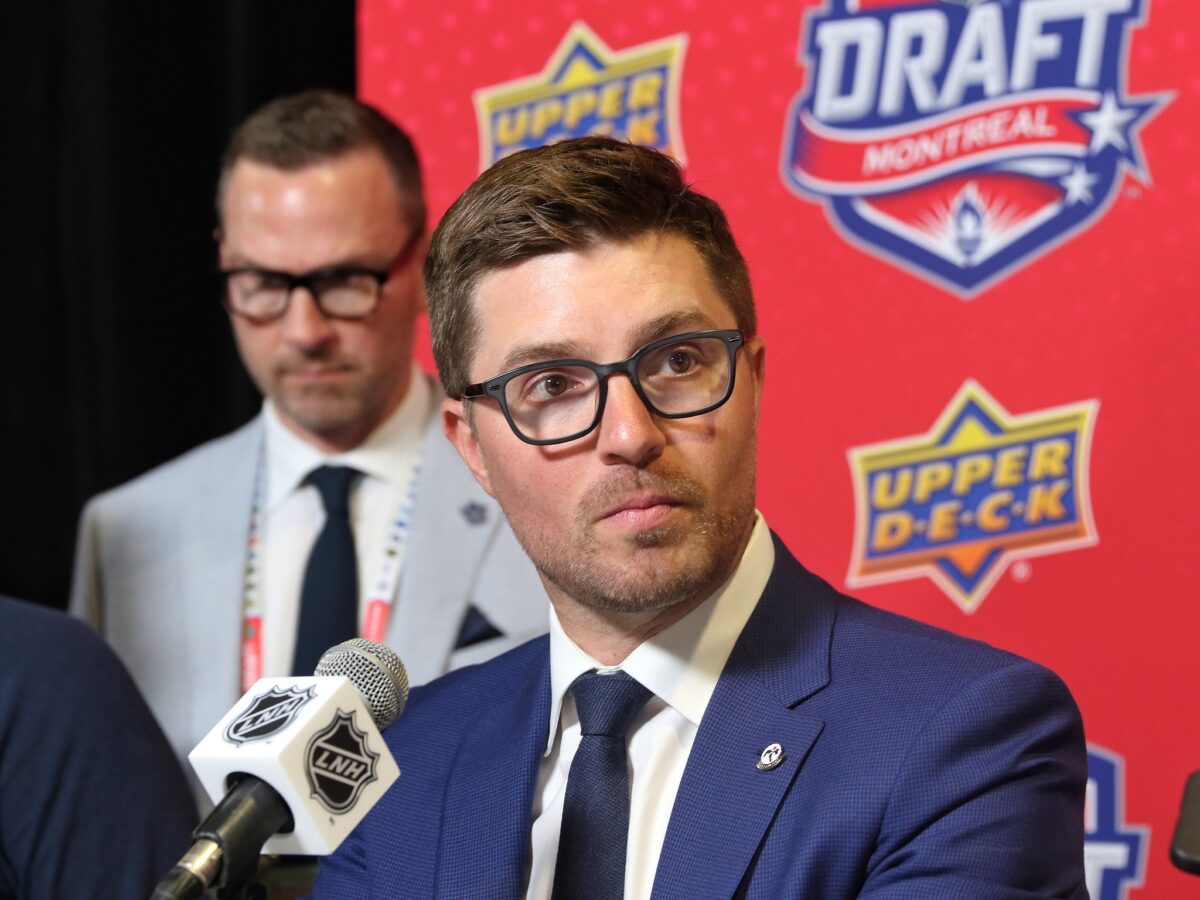
That is the important shift. President of hockey operations and general manager Kyle Dubas did not inherit a deep prospect group when he arrived in Pittsburgh. He inherited an older NHL roster, a thin pool, and a difficult timeline built around Sidney Crosby, Evgeni Malkin, and Kris Letang. Rebuilding that system while keeping the Penguins competitive was always going to be complicated.
The early signs now look more encouraging. The Penguins’ Top 25 Under 25 reset shows a pipeline that is still being restocked, but no longer feels empty. Pittsburgh Hockey Now’s recent prospect work also pointed out that 17 of Pittsburgh’s top 20 prospects were acquired under Dubas during the last three years, which shows how much the system has changed in a short time.
The Penguins still need NHL answers. They also finally have more than one path to find them.
Penguins Finally Have Prospect Layers Again
The biggest difference in Pittsburgh’s system is not one player. It is the number of different categories the Penguins can now point to.
Ben Kindel gives Pittsburgh a young NHL forward already in the lineup. Rutger McGroarty and Ville Koivunen are near-ready forwards trying to force larger roles. Sergei Murashov and Joel Blomqvist give the goalie pipeline real depth. Owen Pickering remains one of the organization’s most important young defensemen. Tomas Galvas, Liam Ruck, Markus Ruck, Pierce Mbuyi, and Jake Livanavage add newer layers underneath them.
That is a much healthier picture than the Penguins have had in recent years. It does not guarantee star power, but it gives the organization more options at different points of development. The summer organizational depth outlook showed how many young players are now in the pipeline, either under NHL contract or on Pittsburgh’s reserve list.
The old issue was obvious. Pittsburgh had a few interesting names, but not enough depth to survive misses. A thin system puts too much pressure on every individual prospect. If the top name stalls, the entire pipeline looks weaker. A layered system gives a team more chances to hit.
That is what Dubas appears to be building. Kindel can help now. McGroarty and Koivunen are pushing. Murashov may change the goalie outlook. Pickering still has time to become a left-side answer. The newest draft picks do not need to be rushed because the system finally has players ahead of them.
Dubas Has Changed the Acquisition Pattern
The Penguins have not rebuilt the pipeline through one method. They have used trades, draft picks, reclamation swings, and signings to add younger players from different sources.
McGroarty is the clearest example. Pittsburgh acquired him from the Winnipeg Jets in exchange for Brayden Yager, a one-for-one prospect trade that showed Dubas was willing to reshape the system instead of simply hoarding familiar names. The McGroarty trade gave the Penguins a different type of forward: heavier, more direct, and closer to the professional level.
The Jake Guentzel trade also brought Koivunen into the organization, and his skill still makes him one of the more important offensive prospects in the system. His uncertain NHL path remains worth watching because Pittsburgh needs more young players with real playmaking ability.
There are draft additions too. Galvas signed his entry-level contract after being selected in the second round of the 2026 NHL Draft, and the Ruck twins gave Pittsburgh two more swings on high-upside forwards. A recent look at Dubas’ draft profile highlighted the organization’s focus on hockey sense and dynamic skill with its early 2026 selections.
That mix is important. The Penguins are not only waiting for draft picks to develop five years from now. They are also adding players closer to the NHL, taking chances on different development curves, and creating competition in the system. That is how a thin pipeline becomes functional again.
A prospect reset only means so much if the NHL team never benefits from it. That is why Kindel’s presence changes the conversation.
Kindel already gave Pittsburgh a real NHL season. His 17 goals and 35 points in 77 games as a teenager showed that he is not just a future idea. He is already part of the team’s present. His ability to play center or wing also gives head coach Dan Muse flexibility while Pittsburgh sorts through its center depth behind Crosby.
That type of internal win helps a roster trying to retool without bottoming out. The Penguins need young contributors on affordable contracts because the veteran core still takes up major responsibility. If Kindel becomes a top-nine staple, the organization gains both production and cap efficiency.
McGroarty is not as settled, but his case is just as important. His crowded NHL path shows the tension between having depth and creating opportunity. The Penguins want young players to push, but the forward group is already full of veterans, short-term additions, and reclamation bets.
That is where Dubas’ plan faces its first real test. Adding young players is the easier part. Turning them into NHLers is harder. Pittsburgh has to make sure its prospects are not blocked by the same roster congestion that made the system feel stale in the first place.
Murashov Gives Penguins a Different Kind of Upside
The goalie pipeline might be the most intriguing part of the reset.
Murashov gives Pittsburgh a prospect with legitimate upside at a premium position. He was named to the American Hockey League (AHL) Top Prospects Team after a strong season with the Wilkes-Barre/Scranton Penguins, and the league’s top prospect recognition showed how quickly his profile has grown.
His numbers back up the attention. Murashov was also named to the AHL All-Rookie Team after ranking near the top of the league with a 2.24 goals-against average and a .918 save percentage. His All-Rookie Team selection puts him in a different category than a normal organizational goalie prospect.
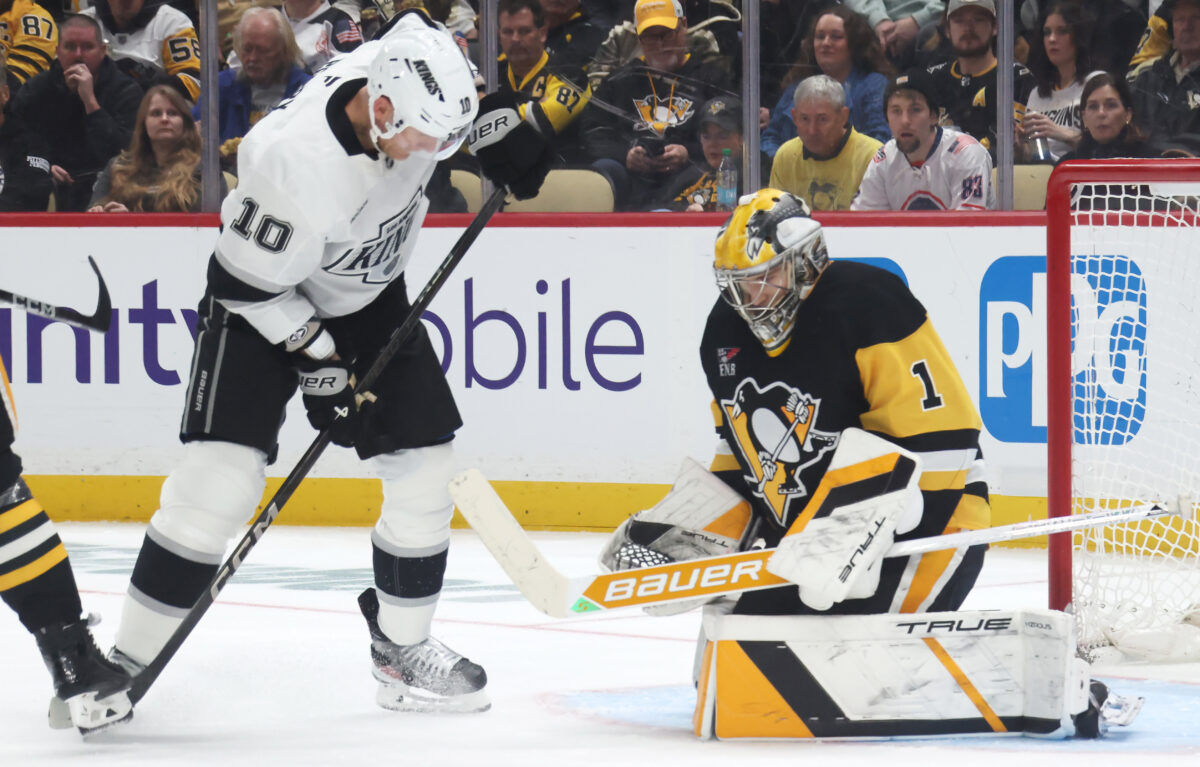
Pittsburgh’s biggest goalie questions begin with Artūrs Šilovs, but Murashov may be the name that changes the long-term picture. If he develops into a reliable NHL option, the Penguins could solve one of the hardest positions to fill without spending heavily in free agency or making a major trade.
Blomqvist adds another layer. He may not carry the same ceiling as Murashov, but his presence gives the Penguins more protection. Young goalie depth can disappear quickly when injuries, inconsistency, and roster movement hit. Having more than one internal option gives Pittsburgh a better chance to avoid panic decisions.
Defense Still Needs More Certainty
The defense pipeline is less clear than the forward and goalie groups, but it is not empty.
Pickering remains the most recognizable name. He has size, draft pedigree, and a potential path because Pittsburgh’s left side still feels unsettled. The Penguins’ left-side blue-line problem could create a chance for him if he is ready to take it.
The challenge is that Pickering still has to prove he can become more than a project. Young defensemen often need more time, and Pittsburgh cannot assume he will solve an NHL roster issue just because the opening exists. He has to defend cleaner, move pucks quicker, and show he can handle pace without being sheltered.
Galvas gives the system another left-shot prospect. The second-round pick is not an immediate NHL answer, but he adds a different type of upside to a group that needed more skill and long-term depth on the back end. Livanavage also gives Pittsburgh another puck-moving defenseman to track.
This is where the system still needs work. The Penguins have more forward options and a more exciting goalie picture, but the defense group needs more high-end certainty. Pickering, Galvas, Livanavage, and others can change that, although none has fully answered the question yet.
That is why the reset is still incomplete. It is improving, but not finished.
Prospect Depth Gives Penguins More Flexibility
A deeper system does more than create future NHL players. It gives a front office options.
The Penguins have already been tied to younger trade targets, including Shane Wright. Their reported Wright interest shows why prospect depth matters. If Pittsburgh wants to chase a younger center, add a defenseman, or take another calculated swing, it needs enough assets to make a trade without emptying the cupboard.
That was harder a few years ago. When a system is thin, every notable prospect becomes difficult to move because there are so few alternatives. A better pipeline allows Dubas to choose. Some players can be kept. Others can be used in trades. Draft picks can be moved more selectively because the organization has more incoming talent.
The Penguins still should not be careless. The system has improved, but it is not deep enough to spend aggressively without consequences. Pittsburgh cannot afford to undo the progress just to chase a short-term fix.
Still, the organization now has more flexibility than it did before. That is one of the clearest signs that Dubas’ longer plan is taking shape.
Penguins’ Reset Has to Reach the NHL
The next step is simple to describe and difficult to execute. The Penguins need prospects to become NHL players.
Kindel is already helping. McGroarty needs a role. Koivunen needs a plan. Murashov has to keep developing. Pickering has to close the gap between potential and reliability. Galvas, Livanavage, Mbuyi, and the Rucks need time to become more than draft-day optimism.
That is the difference between collecting prospects and building a pipeline. A real system does not only look better on rankings. It produces players who help the NHL team win, fill depth roles, create trade value, and keep the cap sheet manageable.
Pittsburgh is not there yet, but the direction is more convincing than it has been in years.
Dubas’ plan is not fully visible because player development takes time. Some of these players will miss. Others may become trade pieces before they ever become regulars in Pittsburgh. The organization does not need a perfect hit rate. It needs enough of them to create a younger foundation underneath Crosby, Malkin, and Letang.
The reset is working only if it eventually reaches the NHL roster. For the first time in a while, the Penguins have enough young pieces to make that feel realistic.
Free Newsletter
Get Pittsburgh Penguins coverage delivered to your inbox
In-depth analysis, breaking news, and insider takes – free.
Subscribe Free →