The Pittsburgh Penguins’ decision to extend Tommy Novak created longer-term stability in the middle of their lineup. It also made Hendrix Lapierre one of the players facing the most pressure when training camp begins.
Novak’s new three-year contract begins in 2027-28, runs through 2029-30 and carries a $4.65 million average annual value. He will play the final season of his current deal at $3.5 million after recording 16 goals and 42 points while appearing in all 82 games last season.
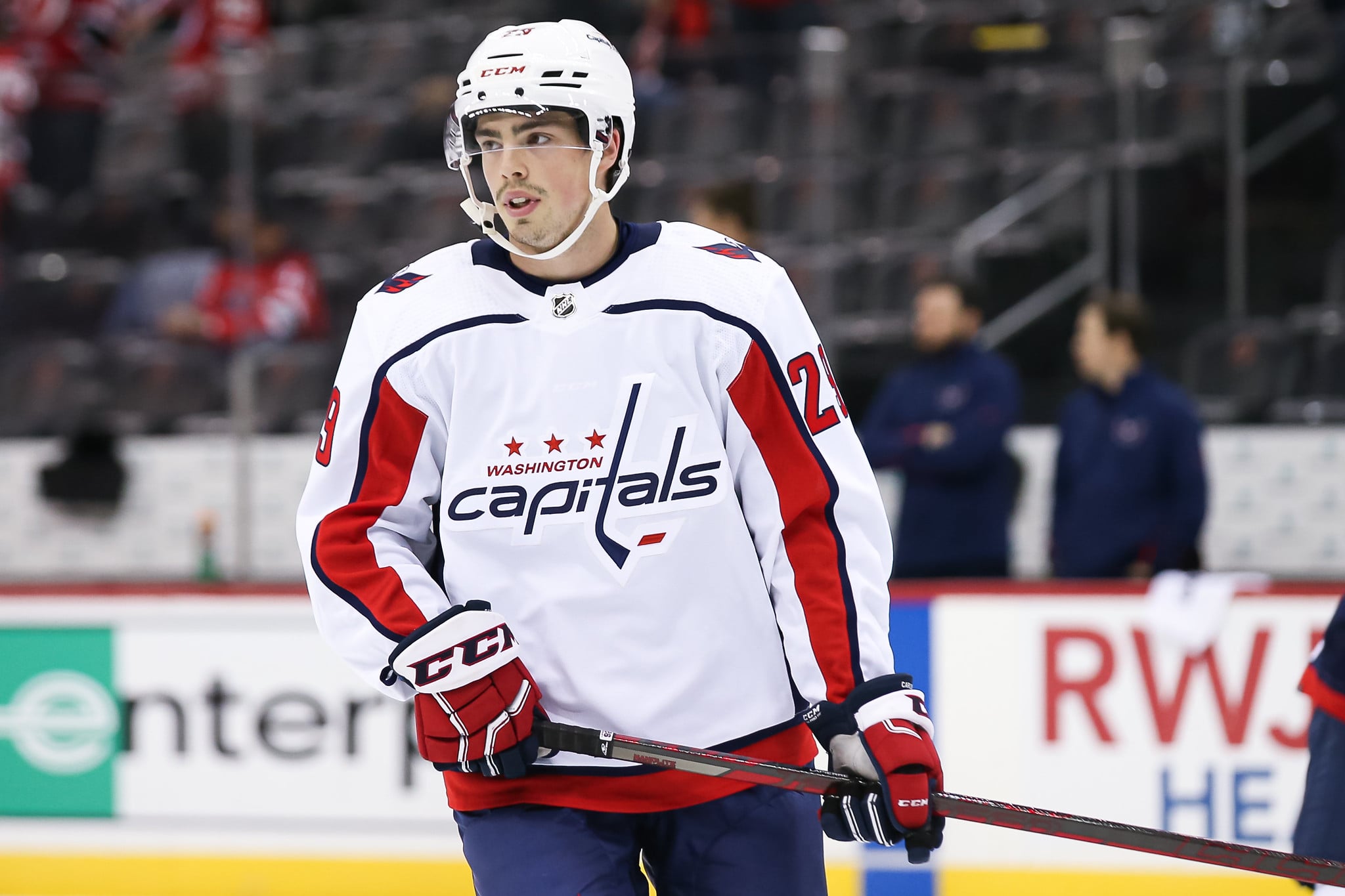
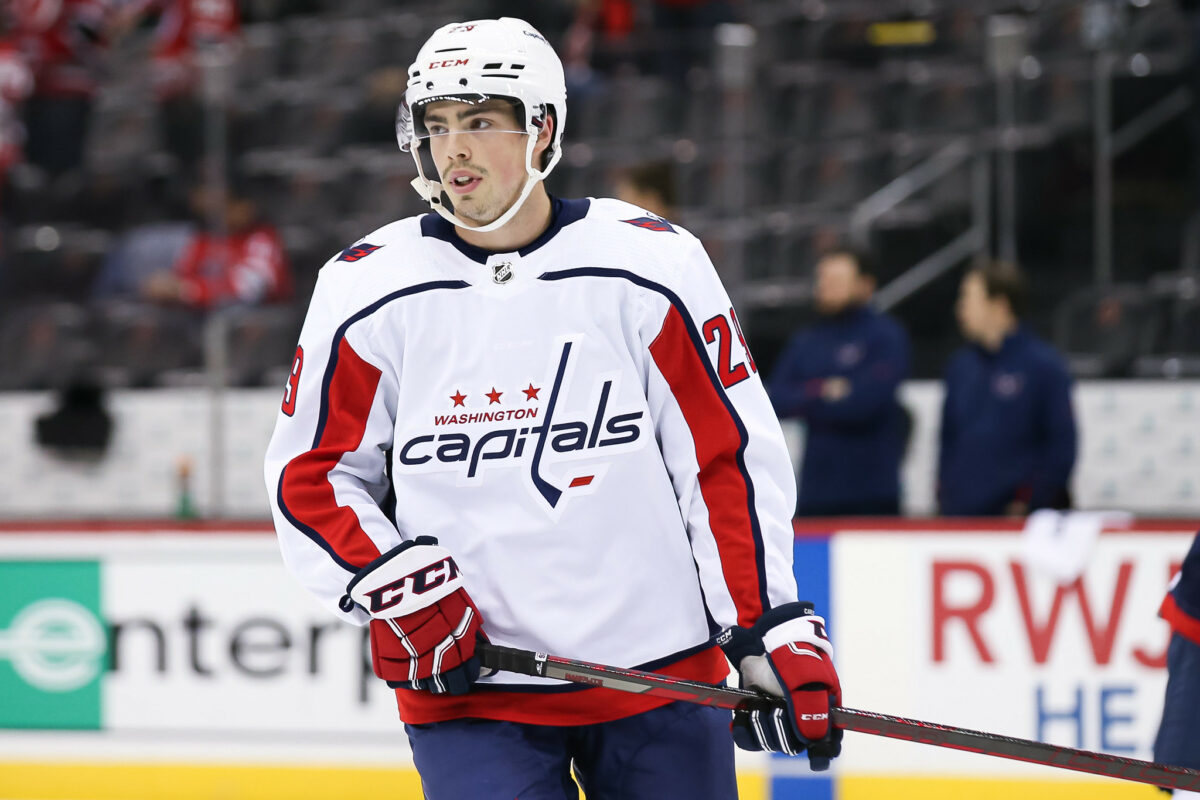
Lapierre arrives in a much different position. Pittsburgh acquired the 24-year-old forward from the Washington Capitals for a 2027 third-round pick and a 2028 fifth-round selection before signing him to a two-year contract worth $1.3 million annually.
The contract itself is inexpensive. The acquisition was not meaningless.
President of hockey operations and general manager Kyle Dubas surrendered two future assets for a first-round pick coming off four goals and 16 points in 74 games. Novak’s extension now makes it even more important for Lapierre to prove he can become a regular bottom-six forward instead of a low-cost extra without a defined role.
Novak Extension Creates More Center Certainty
The official Novak extension announcement confirmed that Pittsburgh views him as more than a temporary option during the remaining years of the veteran core.
Novak can play center or wing, carry the puck through the neutral zone and support skilled linemates. He spent significant time between Evgeni Malkin and Egor Chinakhov last season, giving the Penguins a dependable option who could move throughout the top nine without disrupting the lineup.
His production was useful rather than dominant. Novak finished seventh on the team in points and provided two assists in six Stanley Cup Playoff games, but his durability and versatility helped Pittsburgh navigate injuries and frequent line changes.
The $4.65 million extension raises the expectations attached to that role. Pittsburgh is paying Novak enough to remain a lineup fixture, whether he centers a scoring line, moves to the wing or handles third-line responsibility.
That reduces some of the uncertainty behind Sidney Crosby. Malkin can still play center when needed, but he spent more time on the wing last season. Ben Kindel should continue receiving opportunities through the middle, while Blake Lizotte has an established defensive and penalty-killing role.
Lapierre is attempting to enter that group without one obvious advantage over the players already there. He does not have Novak’s recent production, Kindel’s long-term upside or Lizotte’s clearly established defensive identity.
That makes camp less about whether Lapierre has NHL ability and more about what specific job the Penguins can trust him to perform.
Pittsburgh Paid Real Assets for Lapierre
The Penguins did not acquire Lapierre as a waiver claim or inexpensive free-agent experiment.
The official Lapierre trade announcement confirmed that Pittsburgh sent Washington two draft picks, including a third-round selection, for a player who had not established himself as a consistent scorer.
That price was not excessive for a 24-year-old center with professional experience and first-round pedigree. It was still meaningful for an organization that has spent several years collecting draft capital and rebuilding its prospect system.
Lapierre has shown more offensive ability in the American Hockey League (AHL) than his recent NHL production suggests. He recorded 79 points in 113 regular-season games with the Hershey Bears and added 31 points in 48 playoff appearances.
His strongest professional stretch came during Hershey’s 2024 Calder Cup championship run. Lapierre led the AHL postseason with 22 points and earned the Jack A. Butterfield Trophy as playoff MVP, demonstrating that he could create offense and handle pressure against professional competition.
The NHL results have been less convincing. Lapierre has 47 points in 158 career games, and his production dropped from 22 points in 51 games during 2023-24 to 16 points across 74 appearances last season.

Pittsburgh is betting that opportunity, familiarity with assistant coach Todd Nelson and a different lineup can help him recapture part of the offense he displayed with Hershey.
The official Lapierre contract announcement gives the Penguins two seasons to test that possibility. Novak’s extension makes the evaluation more urgent because fewer center minutes are likely to become available naturally.
Lapierre Needs More Than Modest Offense
Lapierre does not need to become a major scorer for the trade to succeed. He does need to provide more than occasional offense if he is going to remain in the lineup.
His four goals last season were especially concerning. Lapierre has always been more of a playmaker than a finisher, but a forward without a specialized defensive role must produce enough to justify regular minutes.
PensBurgh’s latest projection for Lapierre placed his over-under at only 10.5 points and suggested he may be no more than a fourth-line or extra forward because of Pittsburgh’s depth.
That outcome would represent poor value relative to the acquisition cost.
A $1.3 million extra forward does not create a meaningful salary-cap problem. Spending two draft picks on someone who cannot secure a role would raise a larger concern about how the Penguins are evaluating their young-player acquisitions.
Lapierre must therefore show that he can help when he is not scoring. He needs to forecheck with pace, support the defensive structure, protect possession and give head coach Dan Muse enough flexibility to use him in different situations.
The Penguins do not need another forward who only looks comfortable when placed with skilled linemates. Their roster already contains several players competing for offensive deployment. Lapierre’s clearest route may involve proving he can contribute on a lower line without becoming an offensive liability.
That was the central issue when he appeared among the Penguins players with most to prove. His contract gives him security, but the crowded lineup does not guarantee patience.
Moving to Wing May Offer a Path
Lapierre was drafted and developed primarily as a center, but remaining there may not provide his easiest route into Pittsburgh’s lineup.
Crosby will continue handling first-line responsibility, while Novak’s extension places him firmly in the organization’s plans. Kindel should receive meaningful center opportunities after an encouraging rookie season, and Lizotte provides a dependable fourth-line option. Malkin can also move back to center when the lineup requires it.
Lapierre could therefore benefit from becoming a more permanent wing option. The change would reduce his defensive responsibilities, allow him to use his speed more aggressively and create additional chances to play alongside a center capable of driving possession.
The problem is that Pittsburgh’s wing group is crowded as well. The Penguins added Andrei Kuzmenko and Nicholas Robertson, retained Chinakhov and still have established veterans such as Rickard Rakell and Bryan Rust. Rutger McGroarty, Ville Koivunen and other younger forwards are also attempting to earn roles.
Moving Lapierre outside would change his competition rather than eliminate it. His versatility must become a genuine strength rather than a description attached to a player without a permanent position. Lapierre could play wing during even-strength shifts, take faceoffs when needed and provide center depth if injuries affect the lineup.
That type of utility would make it easier to dress him consistently. It would also allow Pittsburgh to avoid forcing him into a center assignment simply because the organization spent two picks to acquire him.
Novak Can Help Lapierre Without Blocking Him Completely
Novak’s extension does not automatically eliminate Lapierre’s opportunity. Pittsburgh could use Novak on the wing, especially if Kindel earns a larger role or Malkin returns to center for certain combinations. Injuries will also create openings throughout an 84-game schedule.
Novak’s presence may even benefit Lapierre by reducing the pressure to become an immediate offensive center. Lapierre could begin lower in the lineup, concentrate on becoming reliable and move upward only after his play justifies it.
The concern is whether Pittsburgh has enough available minutes to conduct that evaluation properly. The Penguins already committed money and roster positions to several offseason additions. If Lapierre begins camp behind Novak, Kindel and Lizotte at center while also sitting outside the top group of wingers, he could struggle to receive enough consistent deployment to rebuild his confidence.
That would create another version of the problem he experienced in Washington. Lapierre would have NHL talent without a role substantial enough to develop it.
The previous argument that the Penguins needed more from Novak focused on whether he could become a consistent top-six contributor. Pittsburgh answered by giving him three additional seasons. Lapierre now needs the same type of clarity at a lower level of the lineup.
Lapierre Must Make the Trade Matter
Pittsburgh’s acquisition of Lapierre was a reasonable gamble. He is 24, affordable, experienced at center and only two years removed from becoming the AHL playoff MVP. His age fits Dubas’ strategy of targeting young players whose original organizations could not provide clear opportunities.
Novak’s extension makes the path narrower. Lapierre must establish that he can center a bottom-six line, contribute from the wing or become versatile enough to perform both roles. Finishing camp as an extra forward would not end his Penguins career, but spending most of the season there would make the two-pick acquisition increasingly difficult to defend.
The Penguins do not need Lapierre to become a top-six center. They need him to become useful enough that Muse wants him in the lineup every night.
Novak has already earned that type of trust. Lapierre’s next two seasons will determine whether he can do the same.
Free Newsletter
Get Pittsburgh Penguins coverage delivered to your inbox
In-depth analysis, breaking news, and insider takes – free.
Subscribe Free →