It’s that time of year again. The end of summer is closing in, marking the start of another NHL season next month. Predictions for many teams began just after free agency back in July, when moves were being made. But barring a crazy trade – say, surrounding Connor Hellebuyck – we’ve reached the point where teams are done making moves and want to take their current rosters into the new season.
So, why does that matter now? Simple. We’re looking at the Ottawa Senators’ blue line. Goaltending aside, defence hasn’t been this team’s issue in the last few years, not with the roster, scheme and culture that Steve Staios and Travis Green have built for regular season hockey. But how that will fare against other competition is the question – mainly in one of the hardest divisions in all of sports.
The offensive firepower, say, of the Montreal Canadiens, Tampa Bay Lightning, or Toronto Maple Leafs is absolutely going to be the main talking point when analyzing the intensity of the Atlantic Division in 2026-27. But today, we’re reviewing the opposite end of the spectrum and going through how the Sens’ defensive core might prove those who underestimate them wrong.
Potential Pairings
Because of how successful their defensive play has been for the past few seasons – mainly in limiting shots against every game – it’s safe to say coach Green won’t be shaking up his pairings anytime soon. Why change what you’re already familiar with when the Senators have some pieces that are the heart and soul of the team most nights?
For instance, the thought of separating Jake Sanderson and Artem Zub is preposterous. The perfect blend of offensive skill and a defensive mindset. An expected goals against per 60 minutes (xGA/60) of no more than 2.11 since becoming a full-time pair in 2023-24. Easily one of the best duos in the NHL that can go head-to-head with other teams’ top blueliners.
The second pairing will look rather interesting as Thomas Chabot gets set to play alongside his 12th partner in his nine seasons in Ottawa, that being Jordan Spence. However, they also had success in roughly half a season’s worth of games together, averaging a 64.4% expected goals percentage (xGoals %), which was second-best among the team’s pairings. With Spence set to get even more ice time after a full season in the Senators’ system, that can help supplement some offence with Chabot – if one or both of them handle defensive responsibilities all the same.
What Sens fans will also be looking forward to is the continued emergence of Carter Yakemchuk. It’s looking more likely that he’ll start on the third pair with Tyler Kleven, just like Spence did last season. It’s clear that Ottawa’s management prefers Yakemchuk to develop on the main roster over another season in the American Hockey League (AHL), as they should. But paired with Kleven, Yakemchuk will get the chance to grow into his own slowly rather than serving as an underling with someone like Chabot.
Along with Nikolas Matinpalo as the seventh d-man, the Sens will basically run it back with nearly the same steady blue line they entered last season with. But the question now becomes: how do they stack up against their Atlantic Division rivals in that position?
Boston Bruins
Aside from the addition of Will Borgen to finally replace Brandon Carlo’s spot, there isn’t a lot of change to the Boston Bruins defensive core that was middle of the pack, to say the least, in just about every category. None of their pairings from last season averaged an xGA/60 below 2.30.
To put it frankly, Charlie McAvoy is not just the only consistent performer on Boston’s blue line, but the only real game-changer also. He should only continue to put up points thanks to both his feisty play and the opportunities he’ll get with Boston’s lack of offence. Whenever these two face each other, McAvoy will easily be Sanderson’s counterpart.

So, what else is there? Bruins fans have waited for what seems like ages for Mason Lohrei to take the next step, but the point production is still low, and his puck movement is the only thing keeping him afloat. Hampus Lindholm has been solid at times, but who knows where his game goes with his lengthy injury history. Nikita Zadorov is great for the B’s physical game, but it’s hard to keep him out of the box. And Henri Jokiharju will only give you about 15 points a season as the third-pairing offensive d-man.
Is it fair to say that the Sens’ blue line clears Boston’s automatically? Not necessarily, since each side has workhorses who know their roles. But skill, puck movement and awareness-wise, Ottawa has to have the advantage.
Buffalo Sabres
It can be argued that the Buffalo Sabres might have depleted their blue line after getting out of the Bowen Byram dilemma, and once you look past Rasmus Dahlin, Olen Zellweger and Mattias Samuelsson, that becomes pretty apparent on the offensive front.
Outside of getting his first taste of playoff hockey, Dahlin has been one of the best defencemen for the last few years, averaging 60-plus points in three of his last four seasons, and his on-ice goal percentage was also well above 50% during that span – it was 61.9% last season. Samuelsson, who only had one less point than Byram last season, is not only a physical specimen with his 6-foot-4 frame, but he’s a shot-blocker and knows when and when not to get involved offensively – perfect to pair with a franchise defenceman.
Outside of those two as a stellar first pair – and maybe Zellweger, who can give them 25-30 points in replacing Byram – there’s an alright fifth-to-sixth guy in Conor Timmins, the continuous question mark of Owen Power, and they might not be sure what Louis Crevier can become. Power and Crevier are big boys – 6-foot-6 and 6-foot-8 – but guys like Spence and Zub have proven that you don’t need just size and physicality to be a defensive anchor anymore.
Whether Buffalo’s blue line, aside from their top pair, can hold the fort is an interesting question to ask. Yes, the club was a literal shot away from an Eastern Conference Final appearance last season, but that was when there were no expectations around them – now there are. For reference, Ottawa has had playoff expectations for the last several seasons.
Detroit Red Wings
The Dylan Larkin saga has been the story of the offseason for the Detroit Red Wings. Part of his trade request at the start of the summer came from their inability to stay consistent throughout the regular season. But do you want to know what part of that problem is? The inability to build a back end.
Since Steve Yzerman took over, drafting defencemen hasn’t necessarily been the problem. Just look at what Moritz Seider turned into: a sixth-overall pick coming off a career season of 60 points and a plus-15, and has turned into one of the club’s leaders. Simon Edvinsson and Axel Sandin-Pellikka could turn into great D-men too – if they are developed properly.
No, the problem with the Red Wings’ blue line has come in their free agency or trade decisions under ‘Stevie Y.’ Justin Holl? Jeff Petry? Ben Chariot? Ringing any bells? All of these veteran defencemen, who no longer had the stamina to keep up in today’s game, were only keeping some of the better blueliners, like Jake Walman and Filip Hronek, from getting more ice time to the point where they were shipped out.
And Yzerman kept going this past season with the acquisition of Justin Faulk, making Detroit’s vision for their blue line even less clear. They have a combination of youth and veteran leadership, but neither outside of Seider has proven they can stay consistent enough or get in the right rhythm like Ottawa’s when they had to. If something doesn’t happen, the same problem will only keep occurring for the Wings, leaving room for teams like the Sens to take advantage.
Florida Panthers
They are back-to-back Stanley Cup champs for a reason. The Florida Panthers’ ability to assemble a sturdy, physical, no-nonsense blue line since the turn of the decade has led to championship glory. Aaron Ekblad has been the cornerstone since going first overall in 2014, but surrounding him with the likes of Gustav Forsling, Niko Mikkola and Seth Jones over the years.
Unfortunately, as the saying goes: that was then; this is now. And last season was abysmal, to say the least, for Florida’s back end, not just with all the injuries but the performances that followed after them. Ekblad and Forsling, for example, weren’t blocking as many shots, and their individual on-ice goals against per 60 minutes (OIGA/60) jumped to over 3.40. The analytical numbers of their top-four pairings didn’t change a lot, but individually, they were nowhere near the same level as seasons past, and a lack of defensive depth didn’t help matters either.
The third pairing has been revamped with who they know in Dimitry Kulikov and the always intimidating Radko Gudas, but the logic for this team is simple. If they stay healthy, they are still a force to be reckoned with based on experience and roster construction, and could even outduel the Senators’ blue line. If not, the ‘wear and tear’ from those past playoff runs might only be part of the reason for their decline.
Montreal Canadiens
It might not seem like it, but the Habs have put together a sneaky good defensive back end. They are mostly known for offence – mainly with Lane Hutson’s 78-point season. He and Noah Dobson averaged the fourth-highest xGoals % at 58.6%.
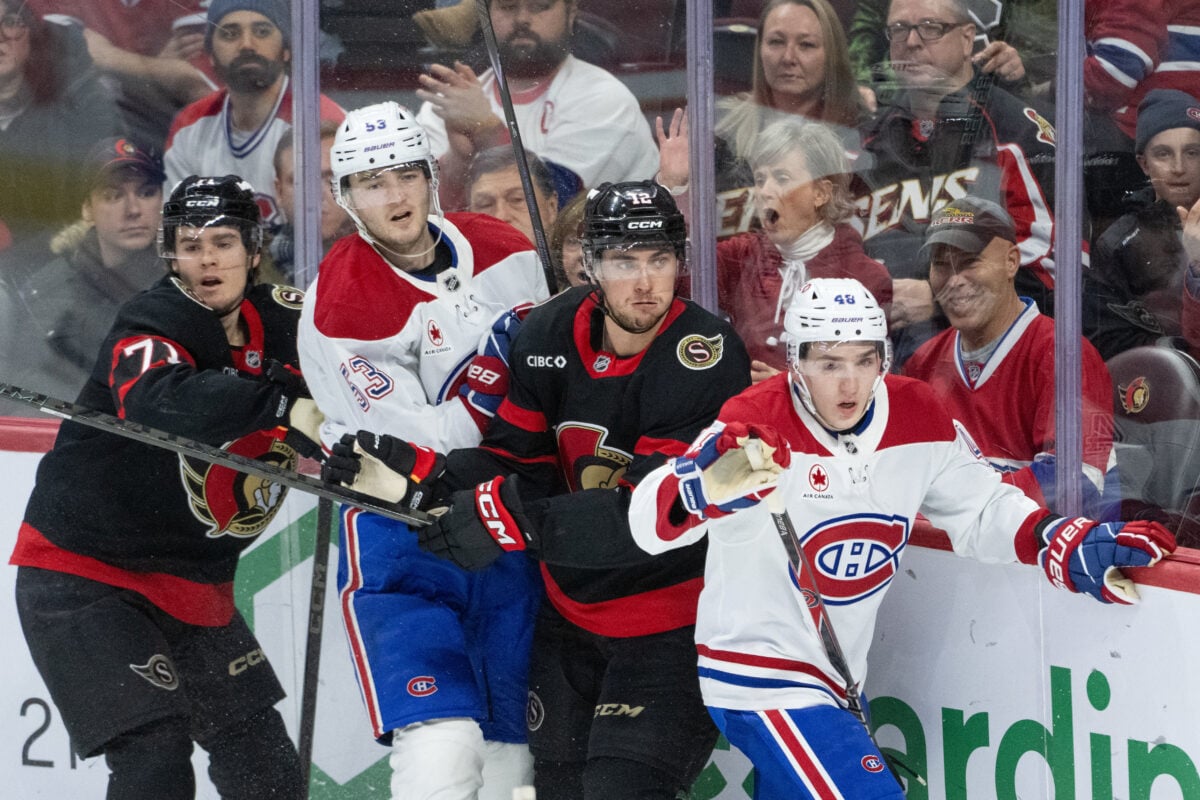
However, their defensive aspects don’t just come from Hutson’s awareness in his own zone, but from Alexandre Carrier and Mike Matheson, who each blocked 150-plus shots last season. Dobson was also second in that department with 188, proving that Montreal’s blue line is not afraid to get in the way of shots.
While Hutson might be considered more ‘elite’ than Sanderson in the offensive categories, their Corsi and Fenwick percentages are very similar. Their ability to move the puck also proves why they are two of the best up-and-coming blueliners in the game. You can guarantee these two will have many battles in the future as the number-one guy on their respective division rivals.
As for the rest, Carrier should match up well against Zub as ‘the shutdown guy,’ but Matheson was also dead last in OIGA/60 with a 4.08, and he doesn’t come close to the offensive abilities of Chabot to match him either. The same applies to the third pairs, where Jayden Struble and Kleven are pretty close analytically, but Yakemchuk has the offensive advantage over guys like Kaiden Guhle.
Tampa Bay Lightning
It’s safe to say that the Tampa Bay Lightning are suffering the biggest defensive loss of the offseason, losing out on last season’s standout Darren Raddysh in a sign-and-trade with the Toronto Maple Leafs. They are also uncertain about the status of Victor Hedman going into September’s training camps.
However, if there’s one thing the Lightning have become known for, it’s experience and the ‘next man up’ mentality. No matter how much depth people think they lack, they just keep finding guys that fit Jon Cooper’s system, and it always works out. Raddysh was one of them, but look at Emil Lilleberg and Charles-Édouard D’Astous as other examples of blueliners who earned key positions on the team.
Veterans like Ryan McDonagh and Erik Cernak are still here, and John Carlson was added in free agency to replace Raddysh. But J.J. Moser – who might be equally as sound defensively as guys like Zub and Kleven – will only get a bigger role with Hedman’s absence, especially after his career season of 29 points and a plus-41.
All in all, Tampa’s blue line might not seem like it matches well with Ottawa’s on paper, but they have an interesting combination of unproven finds and experienced winners that all get behind what their coach wants them to do: wear down the opponent.
Toronto Maple Leafs
Ottawa’s Western-Ontarian rivals have made the most change structure-wise to their blue line this offseason. Bringing in the top free-agent defenceman, Darren Raddysh, helps give them a new power-play quarterback, and Emil Andrae could also be a nice surprise for them – key word is could.
Other than these two replacing Brandon Carlo and Simon Benoit – who were both minus-3 or lower in goals above expected last season – the Maple Leafs still have most of last season’s core with them, including the likes of Jake McCabe, Chris Tanev, Oliver Ekman-Larsson, Troy Stetcher, and their biggest question mark, Morgan Rielly.
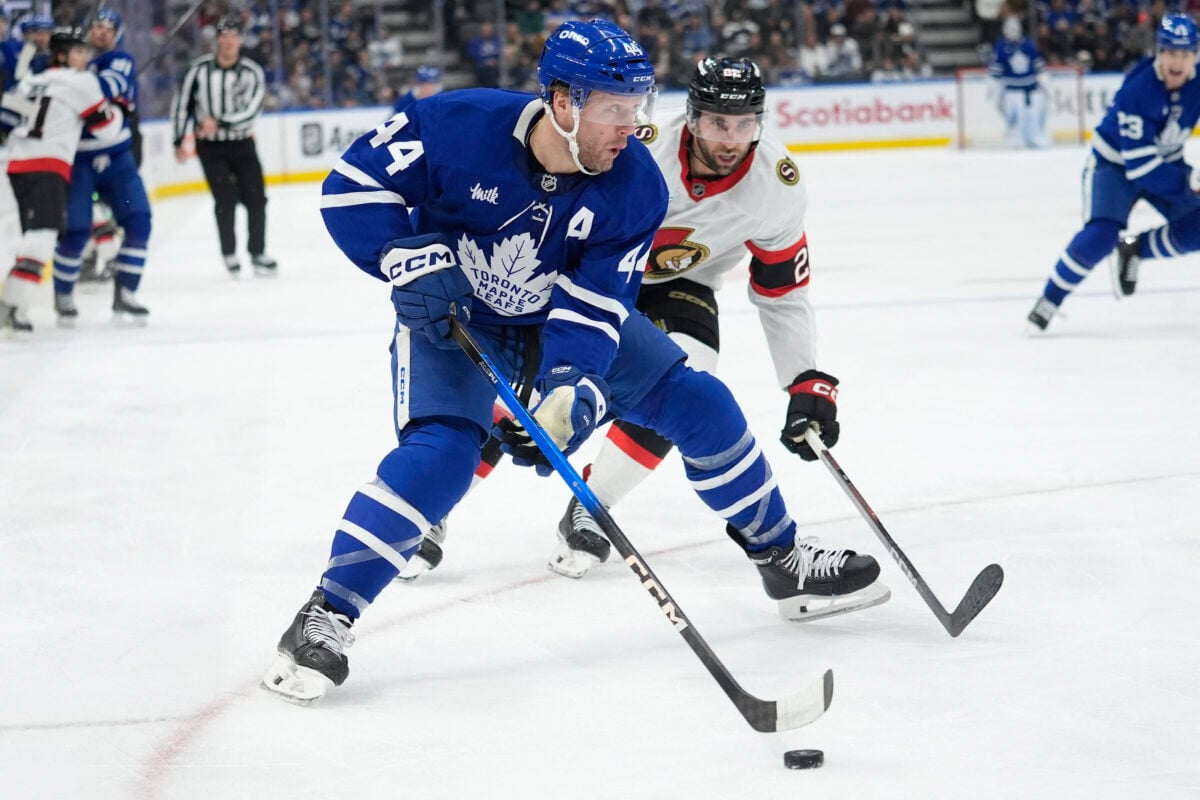
If Rielly does in fact adjust his game under a new coach, it would be much needed for Toronto to get some offence from their back end, where they only accounted for 28 goals last season and only 21 the season prior. However, would it be enough to bring Rielly and Raddysh to the level of Sanderson and Chabot in the top-four pairs? Not likely.
Overall Outlook
So, we’ve looked at all the defensive cores within the Atlantic Division and described how they’d match up against Ottawa’s based on the events solely from last season and changes made either this offseason or earlier.
Plenty of teams like Boston, Buffalo and Montreal have that legit number-one guy to go head-to-head with Sanderson and log premium time. Right now, Toronto – and unless Hedman comes back strong, Tampa Bay – don’t have those elite minute munchers to match that category. As well, there are plenty of questions that still need to be answered from each team’s perspective, mainly the Maple Leafs and which pairings they roll with going into the season.
The other benefit for Ottawa – analytically anyway – is that no one in the division comes close to matching Sanderson and Zub’s defensive numbers, as the two of them ranked third amongst all d-pairings in xGA/60 with 1.87 last season. That said, some of the second and third pairs get interesting – mainly with Montreal’s and Florida’s – when it comes to matching Chabot/Spence and Kleven/Yakemchuk.
It’s one thing to confirm that all teams have important individual components to their d-cores – take Seider with the Red Wings and Moser on Tampa as examples – but the Senators are one of the few teams in their own division to have the chemistry working for some of their pairings. That alone should be enough to be competing for a top-three spot in the Atlantic, along with their already hard-nosed and two-way style, which has worked out the last two regular seasons.
Free Newsletter
Get Ottawa Senators coverage delivered to your inbox
In-depth analysis, breaking news, and insider takes – free.
Subscribe Free →