The Dallas Stars cleared cap space Wednesday morning by trading Mavrik Bourque and Ilya Lyubushkin to the Nashville Predators for a 2027 second-round pick and a 2028 third-round pick. That move, made an hour before free agency opened, was about clearing a path to re-sign Jason Robertson, not about promoting a prospect. But it still leaves a middle-six forward spot open, and Stars fans have started looking at Emil Hemming as the answer.
The Bourque Trade Could Change Hemming’s Timeline
Dallas has been stuck on Robertson’s next contract for weeks. He turned down an eight-year, $120 million offer from the Seattle Kraken at the draft and reportedly wants something closer to the $14 million annual value Leon Draisaitl signed for in Edmonton with the Oilers. Moving Lyubushkin’s $3.25 million off the books gets Dallas to roughly $12.5 million in cap space, which is the kind of number that makes a Robertson deal plausible without touching next season’s NHL roster spots.
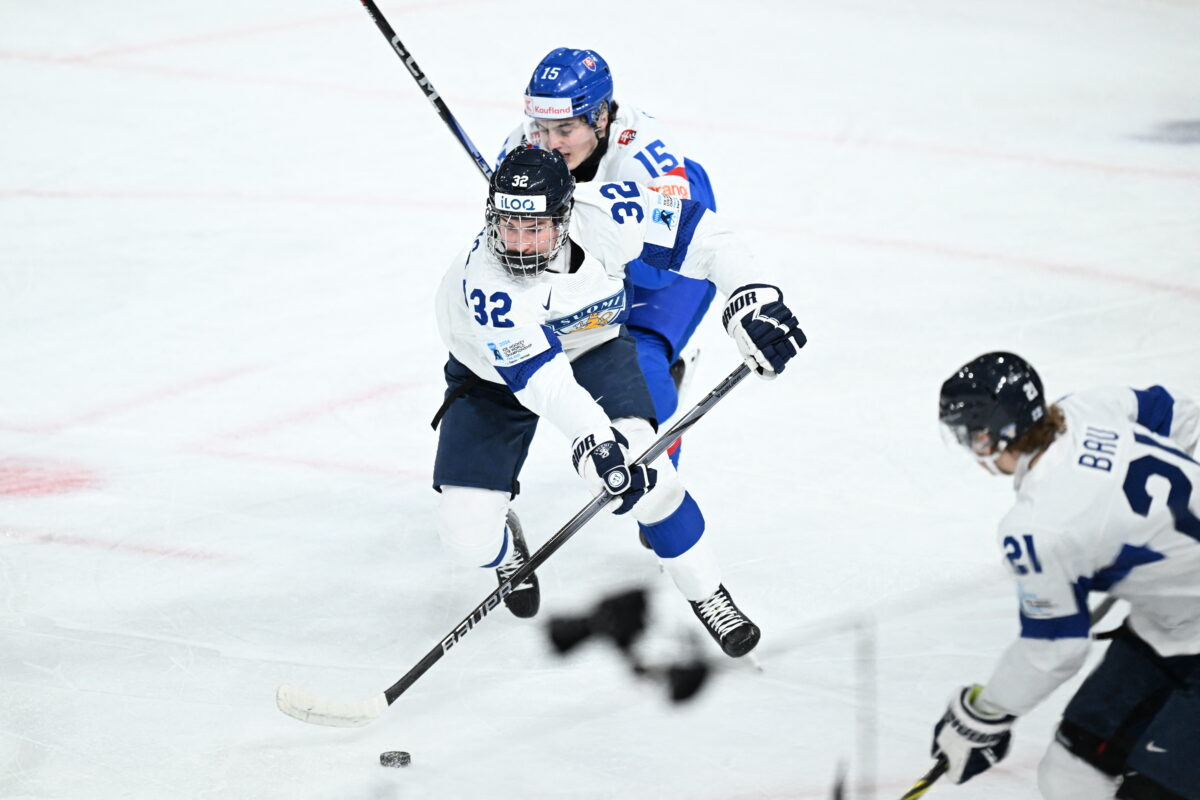
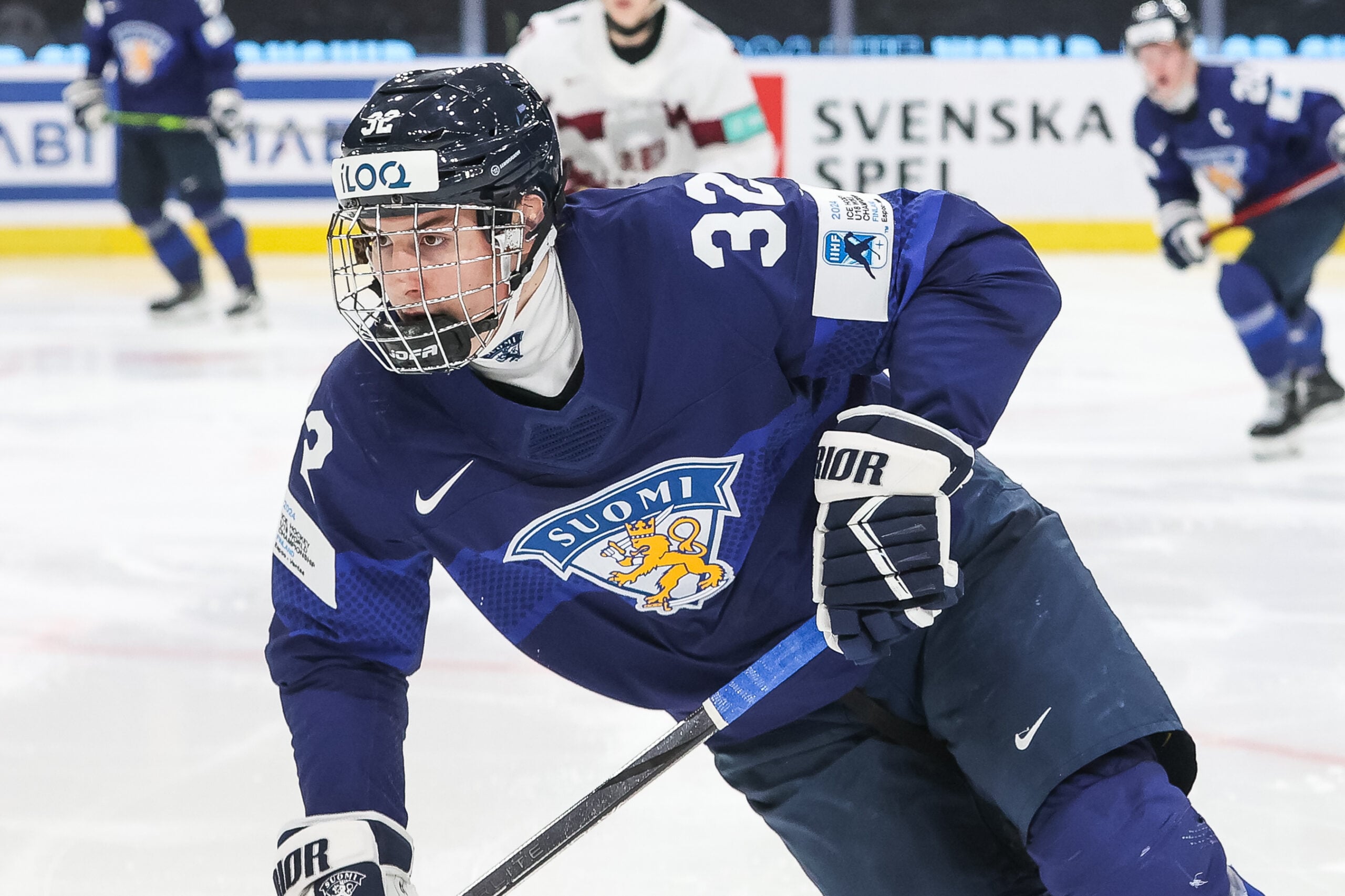
None of that involves Hemming, but creates a unique situation for the 29th-overall pick from the 2024 NHL Draft who was already ticketed for a full-time jump to the American Hockey League (AHL) next season before Bourque was ever dealt. Stars director of amateur scouting Joe McDonnell said as much at development camp in Frisco this week, framing Hemming’s path as a hybrid of the way Roope Hintz transitioned slowly from Europe and the way Robertson, Logan Stankoven, and Bourque jumped straight from junior into pro roles.
Hemming’s Season in Review
It’s worth remembering how far off track Hemming’s season looked in October. He went scoreless in five games with the Texas Stars after training camp, got sent back to the Barrie Colts of the Ontario Hockey League (OHL) on Oct. 28, and looked like a player caught between levels. What happened next is the actual story. Back with the Colts, he put up 63 points (26 goals, 37 assists) in 46 games, then went on a playoff run that produced 28 points (15 goals, 13 assists) in 21 games as Barrie won the Bobby Orr Trophy as Eastern Conference champions before losing the OHL final in a four-game sweep to Kitchener. Hemming scored in three of those four championship games, including a coast-to-coast rush goal in the clincher.
He also picked up a bronze medal with Finland at the 2026 World Junior Championship in St. Paul, scoring three goals in seven games before the Finns fell to Sweden in a shootout semifinal.
Three Days Watching Hemming in Frisco
I was at the Stars’ development camp at Comerica Center this week, and Hemming was the prospect I most wanted to see live. A development camp is not a tryout. Nobody wins an NHL job in Frisco in July. It’s a prospect’s first real look at the organization, where the team starts installing its standards and gets a read on each player, and it’s the best chance a fan gets to watch these guys up close before the season starts.
Hemming is a tough player to watch, and I mean that as praise. He’s so reserved that some might call it lazy, like he’s coasting. He isn’t. He often tries to play a nearly mistake-free game, reading the play around him and rarely forcing anything risky. He waits for the other guy to make the error instead of chasing flash. At a camp where flash is what jumps out, that patience is easy to overlook, but it’s the core of his game.
By the third day of the development camp it was becoming more clear that Hemming shines most in the cycling drills. He likes structure and plays his best inside a formation, order over chaos. That fits what Jim Nill said the day Dallas drafted him, saying Hemming “plays the way we play.” He’s a calm, patient, defensively aware winger who rarely beats himself is a natural match for the Stars’ system, and three days of watching him only made that more obvious.
A Scout’s Verdict: Is Hemming Ready?
No. Not for opening night, not yet at least. When looking at player readiness we look at which tools hold up at NHL speed right now, and Hemming’s best ones still need pace he hasn’t shown at the pro level.
I would say his shot is a real NHL weapon today, a quick release he can fire off either leg, with a one-timer from the right circle that would score on a functioning power play the day he arrived. His frame checks out at 6-foot-1 and 205 pounds, and he pairs it with a real willingness to take pucks to the net and hold plays through contact. His defensive habits are ahead of most scoring wingers his age, a carryover from killing penalties and playing a checking role in Liiga as an 18-year-old. Shot, size, two-way reliability: those are the non-negotiables for a middle-six NHL winger, and he owns all three.
What’s missing is the piece that turns tools into production against pros. NHL defensemen close gaps faster than OHL defensemen do, and Hemming’s separation quickness in tight isn’t there yet. He’s fine in open ice and on the rush. It’s the first two steps out of a puck battle, and the strength on retrievals along the wall, where NHL players strip it off him before the shot ever loads. Add the consistency question scouts flagged at the draft, where a dominant night can be followed by an invisible one, and you have a player with a real ceiling and a low nightly floor. A full AHL season is exactly what sands that down. If the small-area pace climbs to meet the shot, Dallas has a middle-six scorer, probably by 2027-28. In October, he’s a step short.
If the Stars Are Forced to Push Him
But there is a counterargument that is worth taking seriously. Often Hemming rises when the moment gets big. He flipped his game after a slow 2025 World Juniors, and by his own account was “in the best shape and playing my best game” by that spring’s OHL playoffs.
Sometimes a player gets handed a job he isn’t ready for, and the challenge is what makes them ready. It’s a risk, it’s a gamble, but it’s one the Stars have won before, and recently. Lian Bichsel is the recent case. Dallas called the rookie up in January 2025, and when Miro Heiskanen went down with a knee injury in Bichsel’s first game back, the Swiss defenseman inherited a regular role he never gave up. He played all 18 games of a run to the Western Conference Final, defending the best forwards in the league and learning the emotional swings of playoff hockey on the fly. The reps were the reward. He walked into the next season a legitimate NHL piece.
Arttu Hyry is the more recent one, and I had a front-row seat to the question. I wrote about Hyry back in October, wondering when he’d be ready for the NHL. The answer came in the spring. Roope Hintz’s injury opened a spot in the first-round series against Minnesota, and after a Game 1 scratch, Hyry took the job and ran. By Game 3 he logged 20:34, more than Jamie Benn, Justin Hryckowian and Oskar Bäck, killed penalties in overtime, and won 12 of 23 faceoffs. You could watch him grow into an NHL player in real time, right there in the series, until a lower-body injury ended his run in Game 5.
He wasn’t ready in October. The playoffs made him ready, and the numbers backed it up: Hyry led all NHL rookies in short-handed ice time and finished third among them in faceoff percentage. Dallas re-signed him to a two-year deal on July 1, the reward for a bet that paid off.
The Realistic Path
Dallas has run this exact pipeline before. Robertson, Johnston, and Stankoven all needed real developmental time before becoming everyday NHL contributors, and none of them got there by winning a training camp battle off a good OHL season alone. Hemming is 20 now, physically caught up in a way he wasn’t a year ago, and he’s earned the full-time job in Cedar Park rather than another partial season shuttling between levels.
The catch with those Bichsel and Hyry comparisons is what came before the leap. Bichsel had three seasons in the Swedish Hockey League and AHL time behind him. Hyry had four years in Liiga and a full season in Cedar Park. Both were men playing a pro game by the time an injury forced the door open. Hemming has five AHL games. He’d be jumping from junior straight into the deep end, which is a different gamble entirely. The risk is real and the payoff is possible.
Free Newsletter
Get Dallas Stars coverage delivered to your inbox
In-depth analysis, breaking news, and insider takes – free.
Subscribe Free →