The Winnipeg Jets reached the end of November facing a reality that few expected earlier in the season. A 5-7-0 month, capped by a 1-4-0 stretch in their last five games, has pushed the Jets outside of a playoff spot in a tightly packed Western Conference. The timing couldn’t be worse. Their defensive play has eroded, their offence has grown inconsistent, and now the foundation of their team identity is shaken with the injury to Connor Hellebuyck.
Related: Seth Jarvis’ Hat Trick Leads Hurricanes to 5-1 Win Over Jets
For Winnipeg, this is no longer a mild slump. It is a defining stretch that will determine whether this season becomes a rebound year or the start of a painful regression. If the Jets are going to re-establish themselves as a playoff team, several areas must change immediately — not gradually, not after the All-Star break, but now.
Defensive Structure Can No Longer Rely on Survival Saves
For years, Winnipeg’s defensive identity has quietly revolved around goaltending excellence rather than structural dominance. When breakdowns occurred, they were often erased by elite saves. With Hellebuyck currently sidelined, that luxury no longer exists.
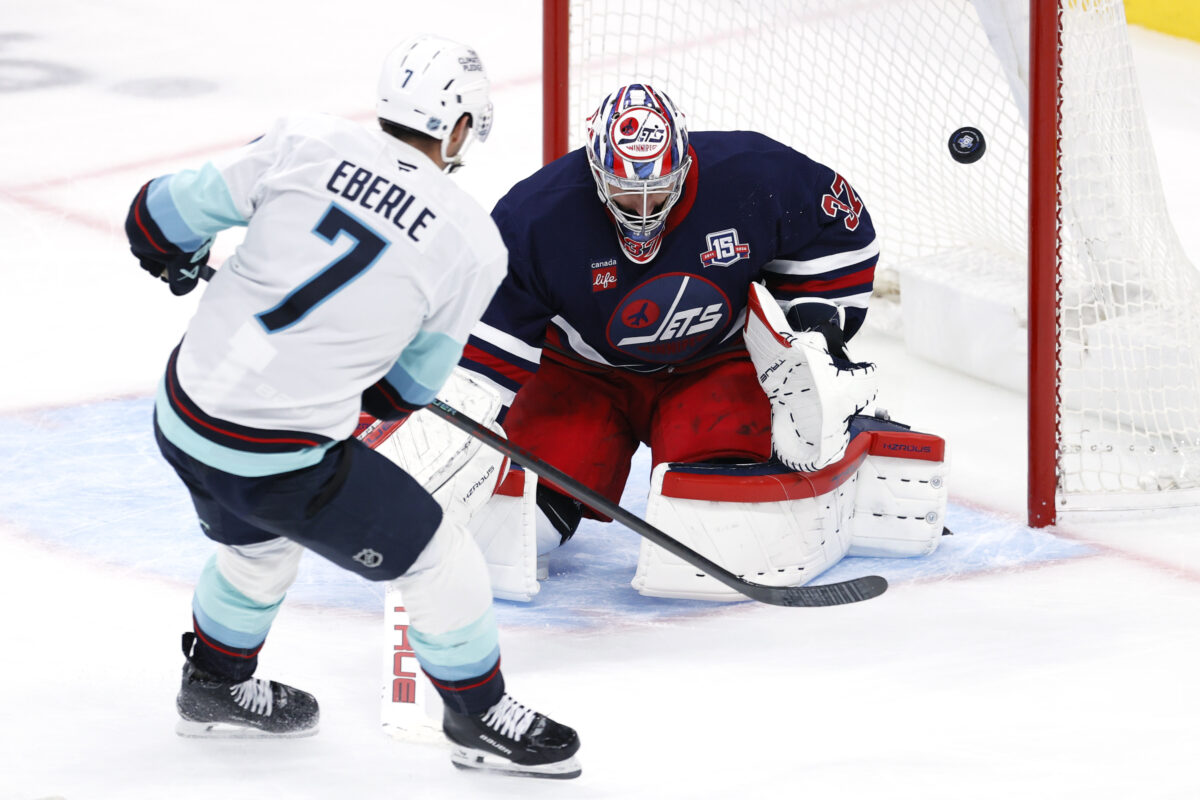
Recent games have exposed recurring defensive flaws. Slot coverage has been inconsistent, opposing forwards are finding seams off second chances, and Winnipeg’s net-front presence has thinned at key moments. Too often, Jets defenders are caught defending east-west attacks instead of keeping play to the outside. The result has been a steady stream of high-danger chances that simply can’t be allowed when elite goaltending is unavailable.
Josh Morrissey continues to shoulder massive responsibility, playing heavy minutes in all situations. But the supporting cast has been stretched thin. With Neal Pionk day-to-day and the rest of the blue line trying to stabilize under changing pairings, Winnipeg must simplify its game. That means fewer risky pinches at the offensive blue line, quicker outlet decisions under pressure, and far stricter discipline when defending the middle of the ice.
If the Jets continue defending as though Hellebuyck is behind them, the season will slip away fast.
The Top-Six Must Control Games Again
On paper, Winnipeg still has an elite forward core capable of driving offence. Kyle Connor’s finishing ability, Gabriel Vilardi’s net-front presence, Cole Perfetti’s creativity, and the experience of Mark Scheifele give the Jets all the ingredients of a dangerous top six. The problem has been consistency.
Over the last month, Winnipeg’s offence has increasingly drifted toward the perimeter. Controlled zone entries have been replaced by dump-and-chase hockey without the necessary pressure to retrieve pucks. Instead of extended cycle shifts that wear down opponents, the Jets are settling for low-percentage shots from the outside and hoping for rebounds that rarely come.
For this team to stabilize, the top six must dominate puck possession again. That means attacking through the middle rather than circling the boards, using layered support on zone entries, and creating traffic that forces goaltenders into difficult reads. The Jets can no longer afford to be a team that scores only when everything is perfectly set up.
Playoff-caliber teams tilt the ice at five-on-five. The Jets’ top six must reclaim that identity immediately.
The Power Play Has to Become a Momentum Engine
Winnipeg’s power play can really change the game, but lately, it’s been a problem. In recent losses, they’ve blown chances when they had a man advantage, and it’s really hurt them. The Jets’ power play just hasn’t been quick or sneaky enough. They’re slow getting into the zone, they force passes that get stolen, and they can’t even get shots on net.
Other teams have figured out their usual setups. Now, Winnipeg needs to move the puck quicker and shoot from closer in. They shoot from the point too much and don’t have enough guys in front of the net, which makes it easy to defend. There’s not enough traffic, they’re not getting second chances, and defenders are clearing rebounds before they can keep the pressure on.
If the Jets want to stop teams from turning the game around on them, their power play needs to be good again – something other teams worry about.
Life Without Elite Goaltending Means a Style Shift
With Hellebuyck out, the Jets have to switch up their game. They can’t just rely on outscoring other teams anymore; they need to clamp down on defence.
It starts in the neutral zone. Lately, they’ve been giving up too many goals because opponents are skating right through the middle with speed. Winnipeg’s defence has been slack, letting opposing forwards get to the blue line without much resistance. The defencemen need the forwards to provide better support and close the gaps so that they have to dump the puck in instead of attacking with control.
In their own zone, keeping control of the puck is super important. Right now, Winnipeg’s getting burned by weak plays along the boards, slow puck pickups, and hesitating when under pressure. These delays cause turnovers, which then create really dangerous scoring chances. And without Hellebuyck in net to bail them out, these chances are turning into goals against.
This isn’t just about tactics — it’s a whole mindset shift. The Jets now need to prioritize playing as a well-organized defensive team before trying to create offensive opportunities.
The Bottom Six Must Provide More Than Energy
The Jets have always counted on their bottom six for tough play, solid defence, and killing penalties. They’re still doing that, but these days, it’s just not cutting it.

Guys like Adam Lowry, Nino Niederreiter, Vladislav Namestnikov, Alex Iafallo, and Morgan Barron can wear down other teams. Still, when the top players aren’t scoring, someone from the bottom has to pick up the slack. That extra bit of scoring isn’t just a nice thing to have anymore; it’s a must.
If you’re going to win close games without amazing goalie play, you need goals from everyone. The Jets don’t need their bottom six to score every night, but they need them to flip the game around by pressuring the other team and taking advantage of scoring chances.
At the moment, teams can focus on stopping Winnipeg’s best players because the bottom six haven’t made them pay for doing that.
Special Teams Need to Get Their Act Together
Bad discipline has been a quiet problem during Winnipeg’s slump. Dumb penalties have made things harder for a defence that’s already struggling. Killing penalties without Hellebuyck is way harder, especially against teams that move the puck well.
The Jets need to get back in the lead in games. That starts with avoiding stupid penalties, mostly in the offensive zone where lazy stick penalties kill any pressure and change the momentum.
Playoff hockey is all about staying disciplined. Winnipeg can’t keep learning that lesson the hard way.
The Standings Aren’t So Nice Anymore
The Western Conference wild card race is super close. Every loss hurts, both in the standings and mentally. Winnipeg’s got no room to mess up. There’s no safety net anymore.
Teams ahead of them aren’t slowing down. Every week Winnipeg spends near the bottom, the less help they’ll get by the trade deadline. Buyers get stronger. Sellers get stuff. Teams in the middle are in trouble.
The Jets need to decide fast if they want to push for the playoffs or just watch other teams make moves without them.
Leadership and Responsibility Will Decide What Happens
This isn’t just about which players are playing together or who matches up well. It’s about leadership. When good teams face problems, they respond quickly and with a plan, not by doing nothing.
Every leader on the Jets is being closely watched. The team needs to get it together. Not by talking about it, but by doing it, which means taking shorter shifts, backchecking harder, and keeping things simple when games get tight. There’s no room for fancy plays. It’s all about getting the job done.
One Last Thing
The Jets can still save their season, but only if they shape up now. They need to be better on defence, score more on power plays, win at even strength, be smart in the neutral zone, and really work hard to protect the front of their own net.
With Hellebuyck hurt and the Western Conference so tight, this team can’t wait to feel better to start playing well. They need to create that confidence with structure, urgency, and responsibility.
How the Jets react to this tough time will really define this season, not how they started.