After an underwhelming trade deadline, many people are down on the Philadelphia Flyers‘ rebuild. Their inactivity, combined with poor decision-making, makes the team’s dreams of winning a Stanley Cup someday appear even bleaker.
Related: 3 Takeaways From Flyers’ Putrid 6–2 Loss to the Rangers
Perhaps the organization’s most glaring need is that of a first-line center (1C). Yet, there isn’t an obvious path to get one. The team has a 29–23–11 record—not good enough for a top draft pick (and not good enough for the playoffs, either). Plus, the 2026 NHL Draft doesn’t even have that great of a center class to begin with.
That really only leaves the Flyers with one path toward getting that highly coveted 1C: trading Travis Konecny, Travis Sanheim, or both.
Drafting a 1C Is Extremely Difficult
Maybe you’re a bit more inclusive, but personally, I limit the term “1C” to about 10–15 players in the league. In my eyes, for a player to truly fall under that umbrella, they have to be one of the very best at the center position.
Even with those limitations, it might seem like drafting a 1C isn’t that hard. Well, not quite. According to Evolving-Hockey, among players drafted since 2018, only six centers have at least 50 points this season: Macklin Celebrini, Tim Stützle, Wyatt Johnston, Connor Bedard, Trevor Zegras, and Leo Carlsson.
With Zegras being primarily on the wing, you can really narrow that list down to five. Among them, four were selected with a top-three pick: Celebrini and Bedard went first overall, Carlsson went second, and Stützle went third.
The only exception across eight draft classes is Johnston, taken 23rd in 2021. However, because of the COVID-19 pandemic, his action was severely limited in his draft year. He played seven games and recorded four points at the U18 World Championship. Even the exception became so under extraordinary circumstances.
Drafting a 1C is already incredibly challenging. But to do it without a top pick is next to impossible in today’s league. While the Flyers did it with Claude Giroux back in 2006, that is hardly recent history.
Konecny & Sanheim’s Primes Don’t Align with Cup Window
Now we get into the Konecny and Sanheim aspect of this whole thing. Before diving into what they’d return on the market, let’s look at why a trade would make sense to begin with.
The way I see it, the Flyers’ Cup window could open as early as 2029–30. My rationale for that specific season is detailed here.
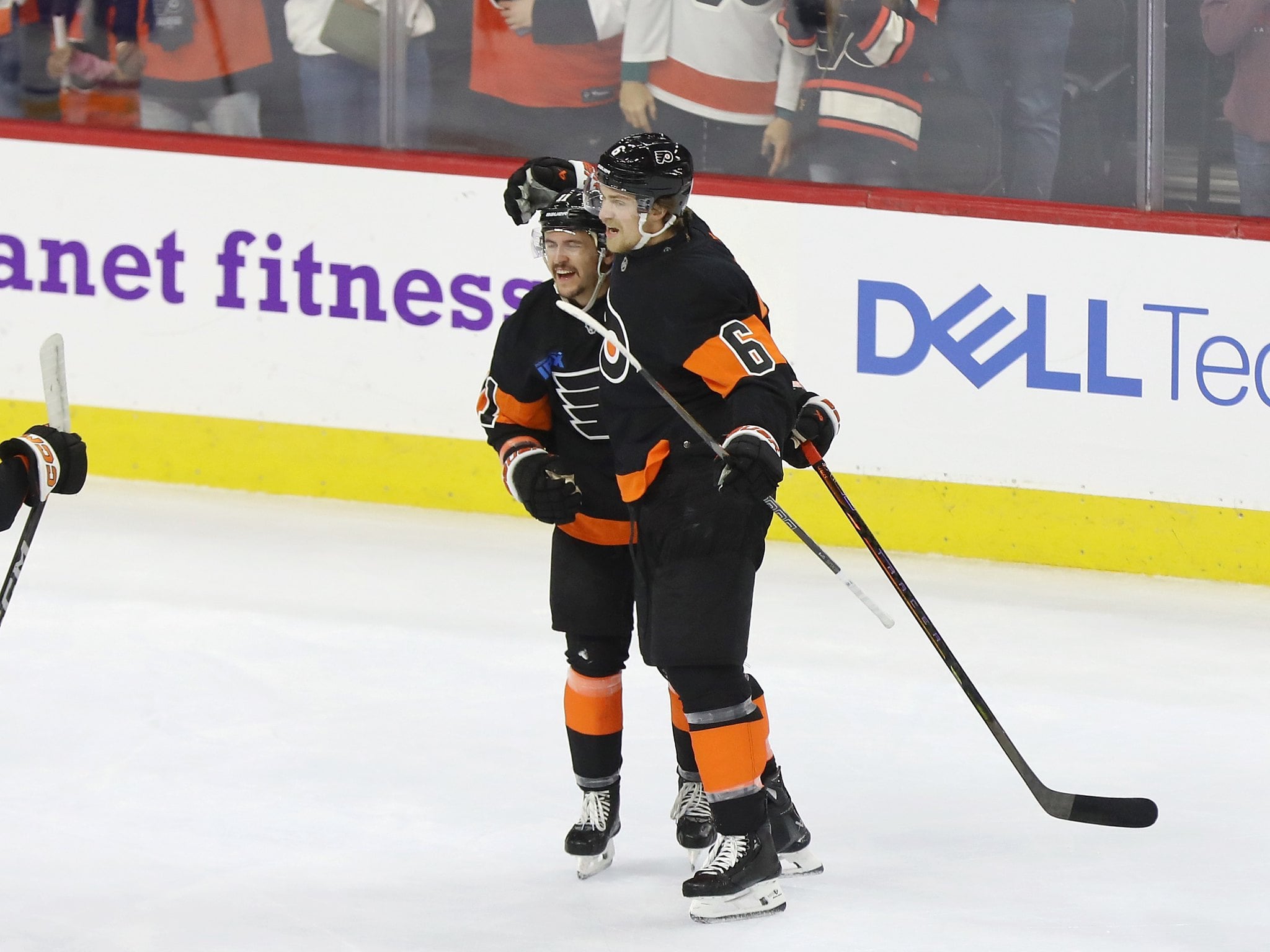
By the end of the 2029–30 regular season, Konecny will be 33 years old, and Sanheim will be 34. Based on aging trends, they’d be out of their primes at that point. They could still be second-line and second-pairing talents, but that’s a ways away from top line and top pair.
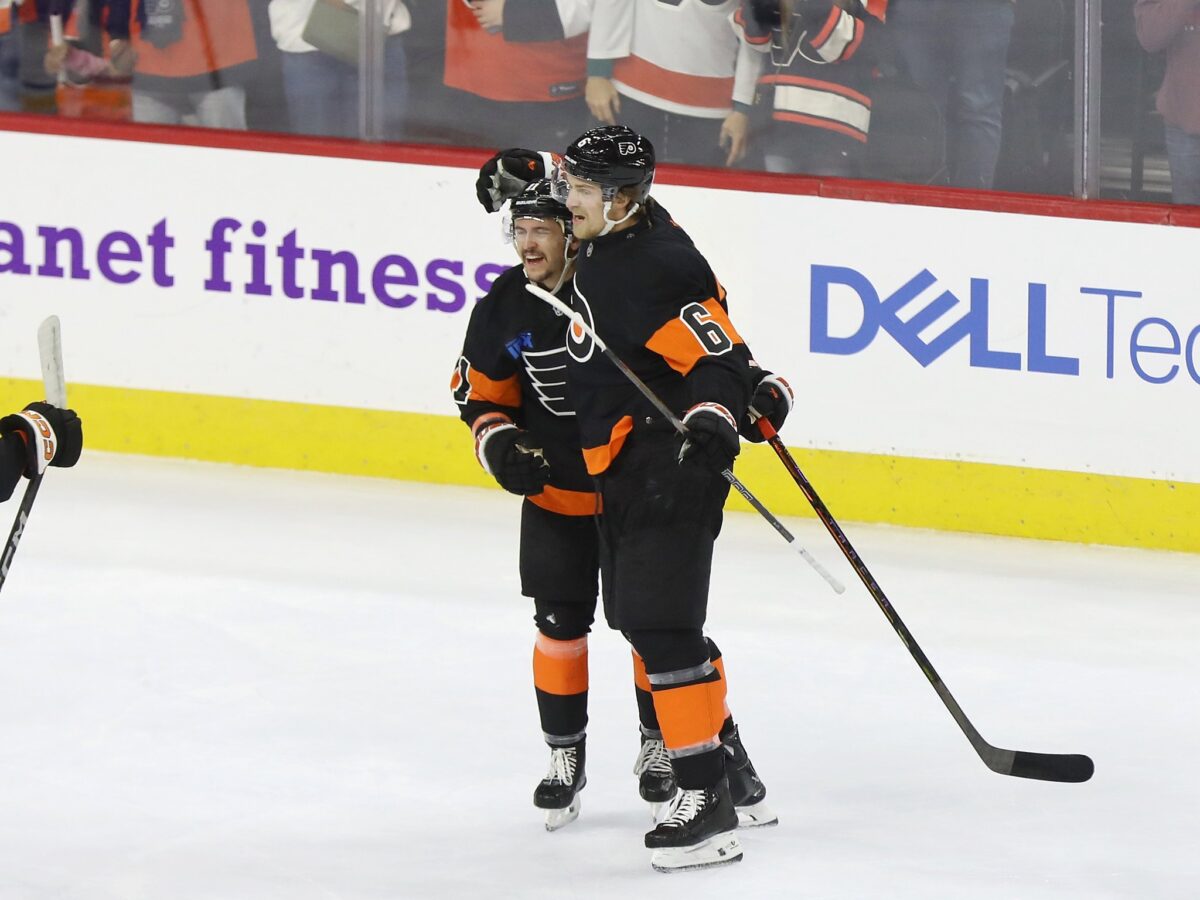
Again, that’s in 2029–30, and both players could just as easily fall off a cliff entirely by then. If you give it another one or two seasons, the likelihood only increases. Konecny and Sanheim don’t align with the Cup window.
Trade Return Would Be Significant for the Flyers
Konecny and Sanheim could still be impactful players during the Flyers’ Cup window, but trading them at their peak offers a far greater reward. The return would be significant.
Although the deal was nixed due to his no-trade clause, St. Louis Blues defenseman Colton Parayko returned Radim Mrtka—drafted ninth overall in 2025—and a first-round pick at this year’s deadline. It’s possible that Sanheim’s value is almost identical, especially since he’s younger.
Konecny, meanwhile, probably wouldn’t be too far off. He’s a borderline point-per-game player, even on a defense-first team, who can eat big minutes.
This is how you acquire a first-line center. They aren’t always on the market, but you can find them more often than late in the draft. If you offer the equivalent of two ninth-overall picks and two first-rounders, you can get just about anyone.
In theory, the Flyers can solve their 1C crisis by trading Konecny and Sanheim. You’d need them to waive their trade protections, which is easier said than done. But exploring a blockbuster could set the Orange and Black up nicely long-term.