Around the United States, K-12 students are either already or about to celebrate the start of summer. Warm weather is finally here to stay, beaches are becoming more crowded, and the Stanley Cup is about to be awarded.
School let out just over a month ago for the Philadelphia Flyers in a second-round loss to the Carolina Hurricanes, who could hoist the Cup with a win on Sunday. Before the page flips to 2026-27, though, we need to wrap things up the same way kids are familiar with: a report card. We’ll focus on the defensemen and goaltender subjects in a few days; for now, let’s start with the forwards.
A-Tier: Does Anybody Make It?
These grades are based on the production the players delivered, with a slight curve on their expectations and role. In a salary-capped league, it matters to get as much (or more) production that you pay for, and the importance of getting surplus value from young players on entry-level contracts is paramount. A depth player isn’t automatically getting a bad grade because they didn’t play big minutes, but the success of top-line players naturally matters more.
During the regular season, no Flyers forward hit 30 goals or 70 points. None of their regulars were top 50 in the NHL in expected goals or on-ice goals percentage relative to their teammates. None of the centers cracked the top 30 in faceoff percentage (min. 500 draws). In the playoffs, nobody had more than two goals. And the less said about the power play, the better.
You could make a case for a couple of players based on the production they delivered or what they could’ve been if they played a full NHL season. But based on what actually happened in reality, no one did enough to crack the upper echelon when compared to the rest of the league. It underscores the remaining need to develop high-end talent, but as we’ll cover in the B-tier, some players are knocking on the door.
B-Tier: New and Familiar Faces
The closest player to making the A-list was Trevor Zegras. His first season in Philadelphia went about as well as possible. His offensive production returned to the peaks he reached with the Anaheim Ducks. He wasn’t a defensive liability, even when he moved back down the middle late in the season. Overall, his playoff performance was pretty good. The home run acquisition indeed cleared the fence. He gets a B-plus.
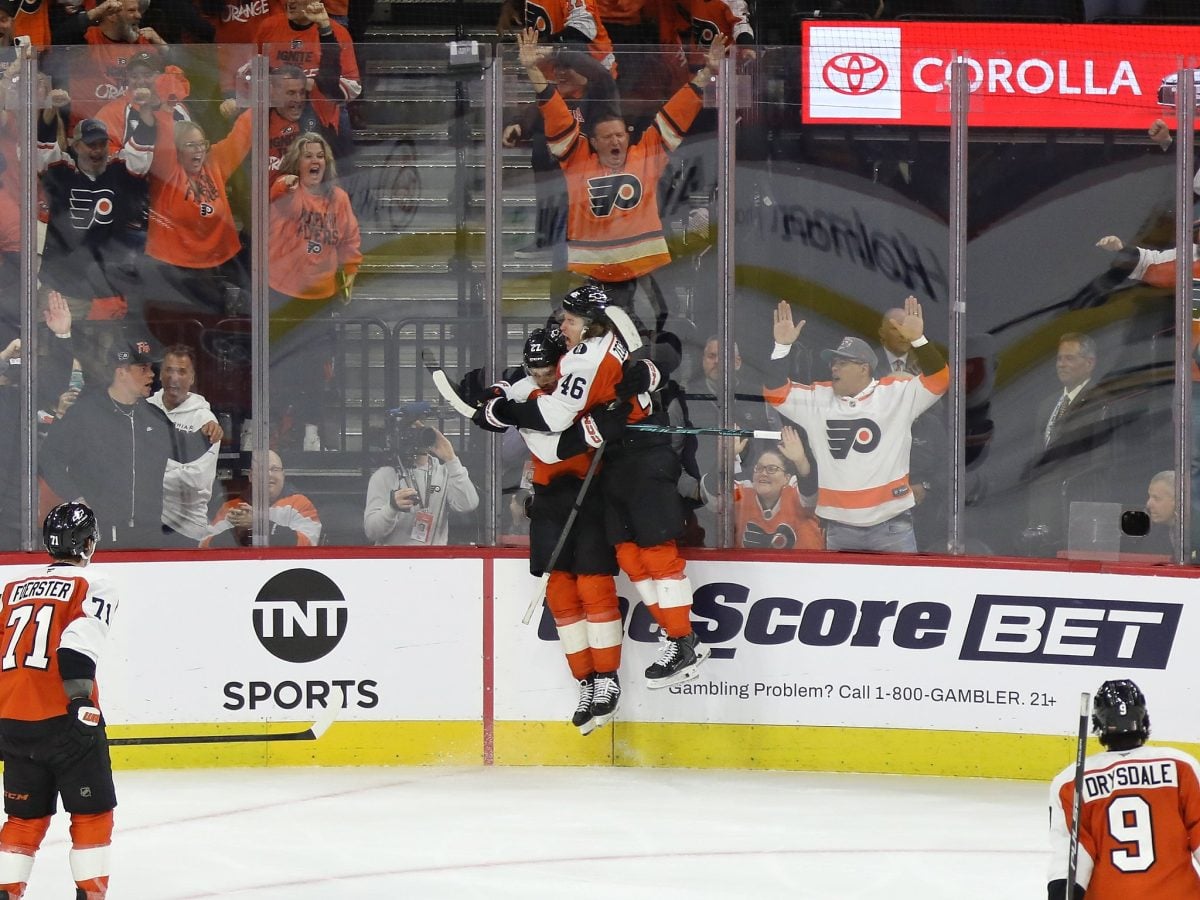
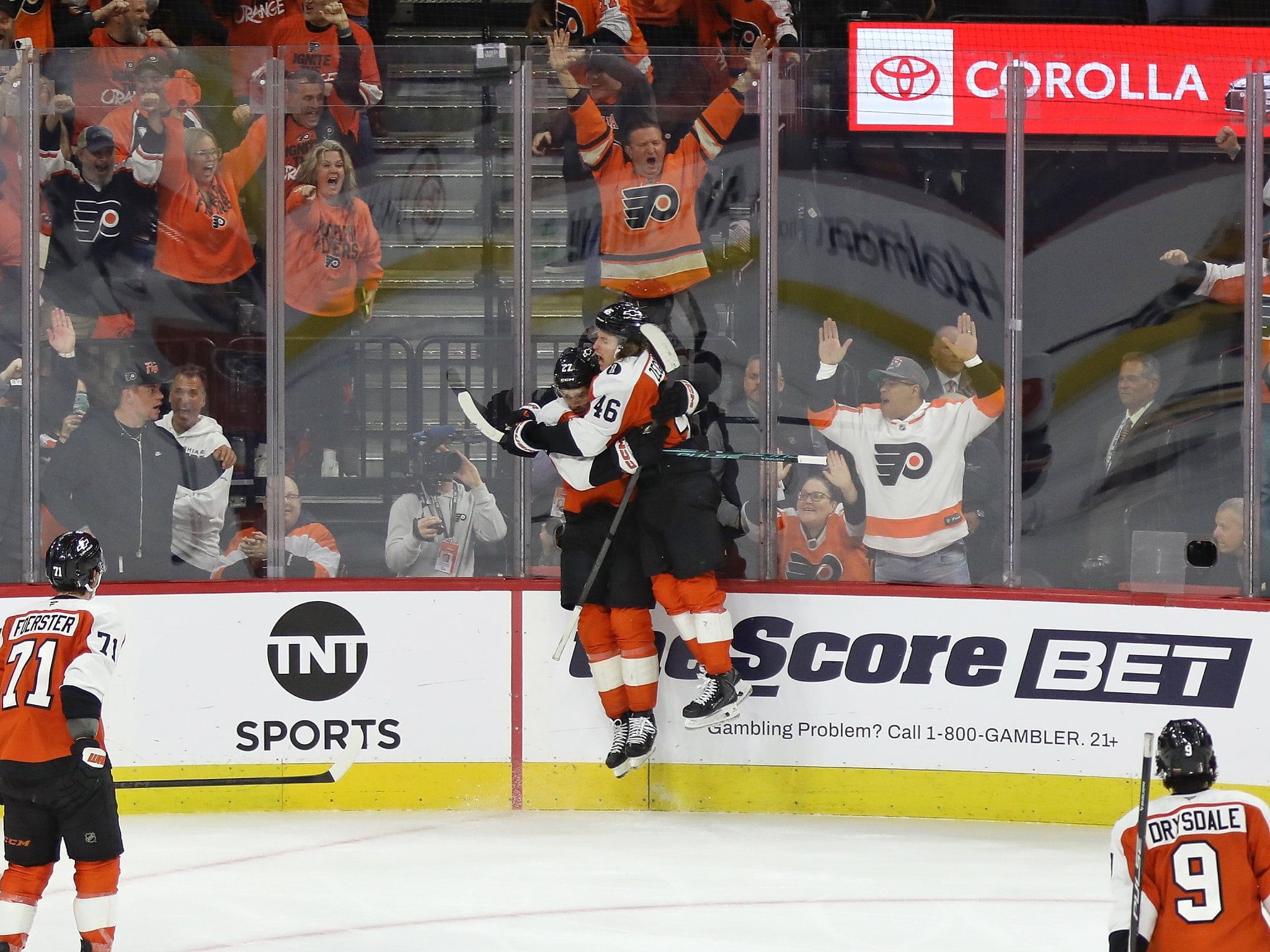
Two of the toughest players to fit in this list were Porter Martone and Tyson Foerster, purely due to a lack of data. Martone actually has more playoff games (10) than in the regular season (nine), but delivered in both atmospheres. Not only did he deliver a combined 15 points, but he displayed a knack for the clutch with three game-winning goals, with one in each of his first two playoff games.
Foerster was excellent early in the season until his freak injury on Dec. 1 that looked like it would end his season. To his credit, it didn’t, and Foerster displayed his signature mix of goal-scoring and defensive acumen upon returning. A shootout goal usually wouldn’t register on this list, but when it snaps a six-year playoff drought, it deserves a mention. But Foerster would only score once in the playoffs, understandably running out of gas following what was probably a rushed return from injury.
Martone gets a slight bump for a better playoff run, earning a B-plus while Foerster collects a B that probably would’ve been higher if he stayed healthy. Also earning that grade is Noah Cates with career highs of 18 goals and 47 points in his age-27 season. His defensive game earned national attention, finishing 11th in Selke Trophy voting and even earning a first-place vote. He’s a very unique player, maybe not skilled enough to be a traditional top-six talent but still valuable nonetheless.
Owen Tippett earned consideration for a B, but ultimately goes down with a B-minus. He didn’t score much in the playoffs while battling injury (two injuries in Tippett’s case). But he made an impact despite that, leading the Flyers with a 56.05% expected goal (xG) share at 5-on-5 in the playoffs, per Natural Stat Trick. And his lone assist was a thing of beauty.
Tippett’s production did rebound in the regular season after a down 2024-25 campaign, and he started killing penalties a bit down the stretch. At this point, 25-30 goals and 50-55 points feels like the player he is offensively, with the odds of significant growth very limited at 27 years old. It’s not impossible, though, as Cates displayed this season. And like Tippett, his absence was felt in the second round after breaking his foot in Game 2 against Carolina.
Maybe it’s a bit surprising, and perhaps harsh, to have Travis Konecny at a B-minus despite leading the Flyers with 68 points during the regular season. But there are a few reasons he was less valuable this season than in the past. He spent the time killing penalties since 2021-22. His xG mark relative to teammates was his worst since the season before (although the Flyers did outscore opponents 54-41 this season).
The big stain for Konecny, though, was the playoffs, especially because it’s becoming a recurring trend. With one goal in 10 games this spring, the Flyers’ highest-paid player has just two goals in 32 career playoff games across three runs. To his credit, he’s found other ways to contribute, flipping Game 3 of the first round with his agitation and breaking even as a play-driver (which was no small feat for the Flyers). But you need more than that from an $8.75 million player.
One of his more frequent linemates, Christian Dvorak, also earns the same grade. The thing with Dvorak is he was brought in to bring defensive stability down the middle but allowed 2.86 xG against per 60 at 5-on-5, the highest mark on the Flyers. But he made up for that by shattering his previous career-high of 38 points by 13, and it didn’t take a shooting percentage spike or secondary assist binge to get it. Time will tell how his five-year, $25.75 million extension ages, but year one went pretty well.
C-Tier: Kids and Vets Alike
In the C-plus grade are two very different types of players whose regular seasons actually mirrored each other pretty closely. Both Matvei Michkov and Sean Couturier struggled to produce early, with Michkov’s first half defined by a drop in usage and angst around his physical condition. Meanwhile, Couturier struggled through a 31-game goal drought.
By April, both were turning things around. Michkov led the team in scoring post-Olympics, and his overall 54.01% xG mark was spectacular, trailing only Denver Barkey and Couturier, who found new energy in a fourth-line role. The big difference was that Couturier maintained his momentum in the playoffs, putting up four points and excelling at the details, while Michkov was overwhelmed by the increased tempo. Whether you agree with his two healthy scratchings or not, he clearly struggled in his first playoff run.
If you’re asking how Michkov is below Tippett despite similar production, it’s a fair question. The playoffs are the big separator, naturally. Even though there was a minimal gap in points, Tippett not only looked much more dangerous but did so while significantly hampered. You could definitely argue the delta should be smaller, but more was expected out of Michkov this season.
Now, could head coach Rick Tocchet have handled things around Michkov better at times, whether in terms of deployment when Michkov was at his best or public messaging? Absolutely. Overall, it was a just okay sophomore season for the 21-year-old, who still has plenty of room for growth. Expect him to be higher on this list next season.
In terms of unexpected contributions, Barkey may have been the team’s biggest surprise this season. Unlike Martone, Barkey wasn’t really on the NHL radar for this season, but looked in place throughout his half-season or so of action. A 33-point pace as a rookie is nothing to scoff at, especially when it comes with a 54.1% xG mark, second on the team. He also wasn’t intimidated by the physicality and pace of the playoffs and even handled some action at center, earning him a promising C-plus.
In contrast with Barkey, Alex Bump was seen as a candidate, if not a favorite, to make the Flyers’ opening night roster. That didn’t happen due to an underwhelming training camp, and it took until March to earn an NHL look. But Bump produced at a nice clip, with nine points in 17 regular-season games and a pair of goals in six playoff contests, entering the lineup for Game 5 of the Pittsburgh Penguins series and never losing his spot. It’s not how you start, it’s how you finish, and Bump’s noteworthy closing act earns a C.
There’s one more player in this tier, and again, this is where the expectations part of the grade system comes into play. He wasn’t an incredible play-driver, and he definitely didn’t score much, but Luke Glendening played his role perfectly. What seemed like a nothing waiver claim on trade deadline day turned into a key fourth-liner, as the Flyers outscored opponents 8-4 with the veteran on the ice. He was part of those memorable cycles early in the first round as well. It’s a C-minus for the 37-year-old.
D-Tier: Bottom-Six Woes
It’s easy to forget how bad the Flyers’ bottom-six was early in the season after popping in the playoffs. It took a couple of months before the unit was even on the ice for a five-on-five goal, let alone delivered quality play. So, it’s unsurprising many of their fixtures find themselves here.
Nikita Grebenkin grades out the best at a D-plus. In his first full NHL season, Grebenkin did show some energy and skill at times, but just wasn’t consistent enough. Unlike most of the depth players, he didn’t benefit from Couturier’s drop to that line after suffering a season-ending injury in March. There’s still intrigue around Grebenkin, as long as he can stay healthy, but the strong finishes from players like Martone, Barkey and Bump have taken him off the radar of fans a fair bit.
Garnet Hathaway was staring down the barrel of an F for most of the season, and the questions about his Philadelphia and NHL future that would’ve come with it. There still has to be a price for falling from 21 points to just three this season. None of the other 350 NHL forwards with at least 600 5-on-5 minutes had a lower point-per-game than Hathaway’s 0.3. But he nearly matched his regular season production in the playoffs and threw the body effectively. He salvages a D grade.
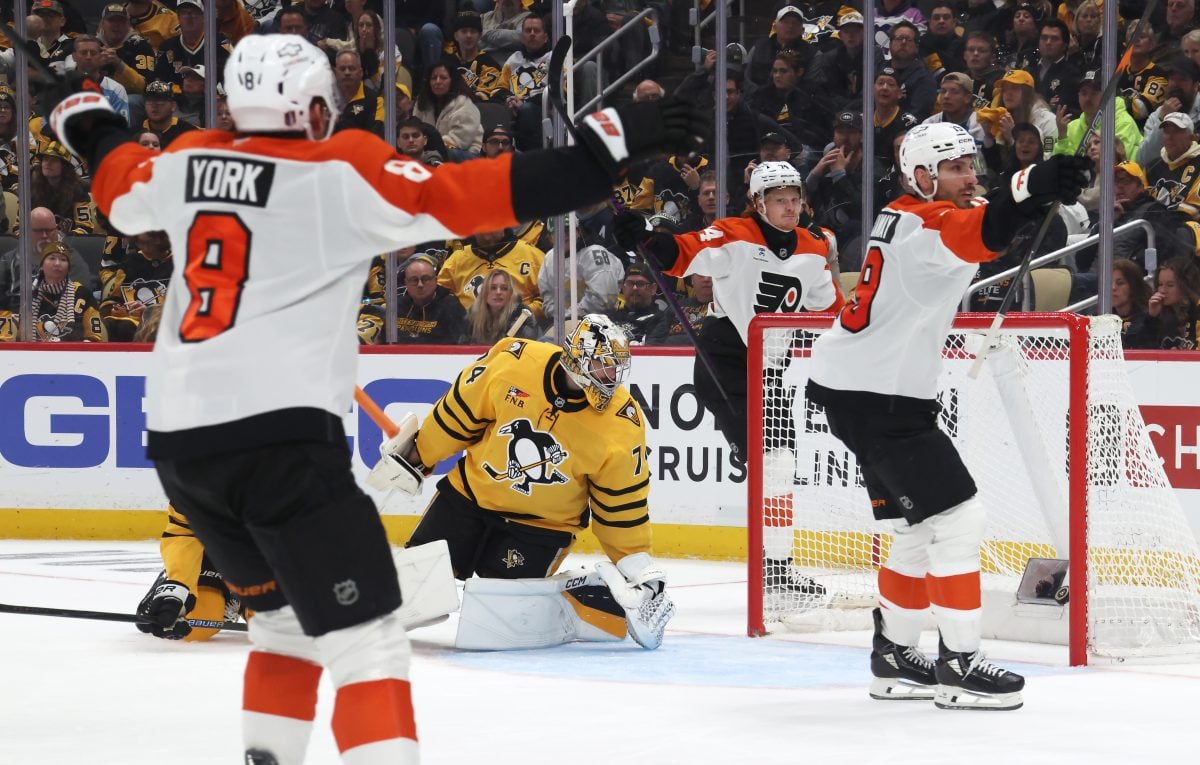
Remember when Carl Grundström had seven goals and eight points in his first 12 games as a Flyer? That was exciting. Recording just five points in his final 35 games was a predictable crash back to earth. Grundström will probably be one-and-done in Philadelphia, but it was still a nice find to get any production for Ryan Ellis’ dead contract. He gets another D mark.
Rodrigo Abols was the typical 4C in the first half of the season until a brutal injury in January ended his season and prevented him from competing for Latvia in the Olympics. For all the fourth-line offensive struggles, 10 points in 42 games is respectable production for a team’s 12th forward, and he was also solid on faceoffs. But a team-worst 41.67% xG rate and how much better Hathaway functioned later in the season with Couturier and Glendening show Abols’ limits. He gets a fairly generous D-minus.
Looking Ahead
As mentioned earlier, Michkov is easily someone who should be higher on this list next season. Is there anyone else who is ripe for similar mobility?
Martone is the other obvious big one. If he can maintain his performance from 2025-26 into his first full NHL season, the Flyers will have a star on their hands. It feels possible, although a slight sag in the middle of the playoffs is a reminder that getting used to the grind of the NHL may have some growing pains.
Michkov and Martone shining would open the door for their linemates to deliver more, too. Maybe that’s Zegras taking the next step offensively and maintaining the point-per-game status he held throughout the first half. Perhaps they combine with Konecny to help the second-longest-tenured Flyer get over his playoff struggles, or contribute to boosting Tippett over the 30-goal mark for the first time.
Foerster’s impact should improve regardless since he figures to be healthy, but he could also push for a jump in grade. At the time of his injury, he had 10 goals in 21 games, on pace to challenge to be the franchise’s first 40-goal scorer since Jeff Carter in 2008-09. Maybe he can also get back on Selke ballots after earning some votes in 2023-24. If both happen, he would possess one of the most unique skill sets in the NHL.
Free Newsletter
Get Philadelphia Flyers coverage delivered to your inbox
In-depth analysis, breaking news, and insider takes – free.
Subscribe Free →