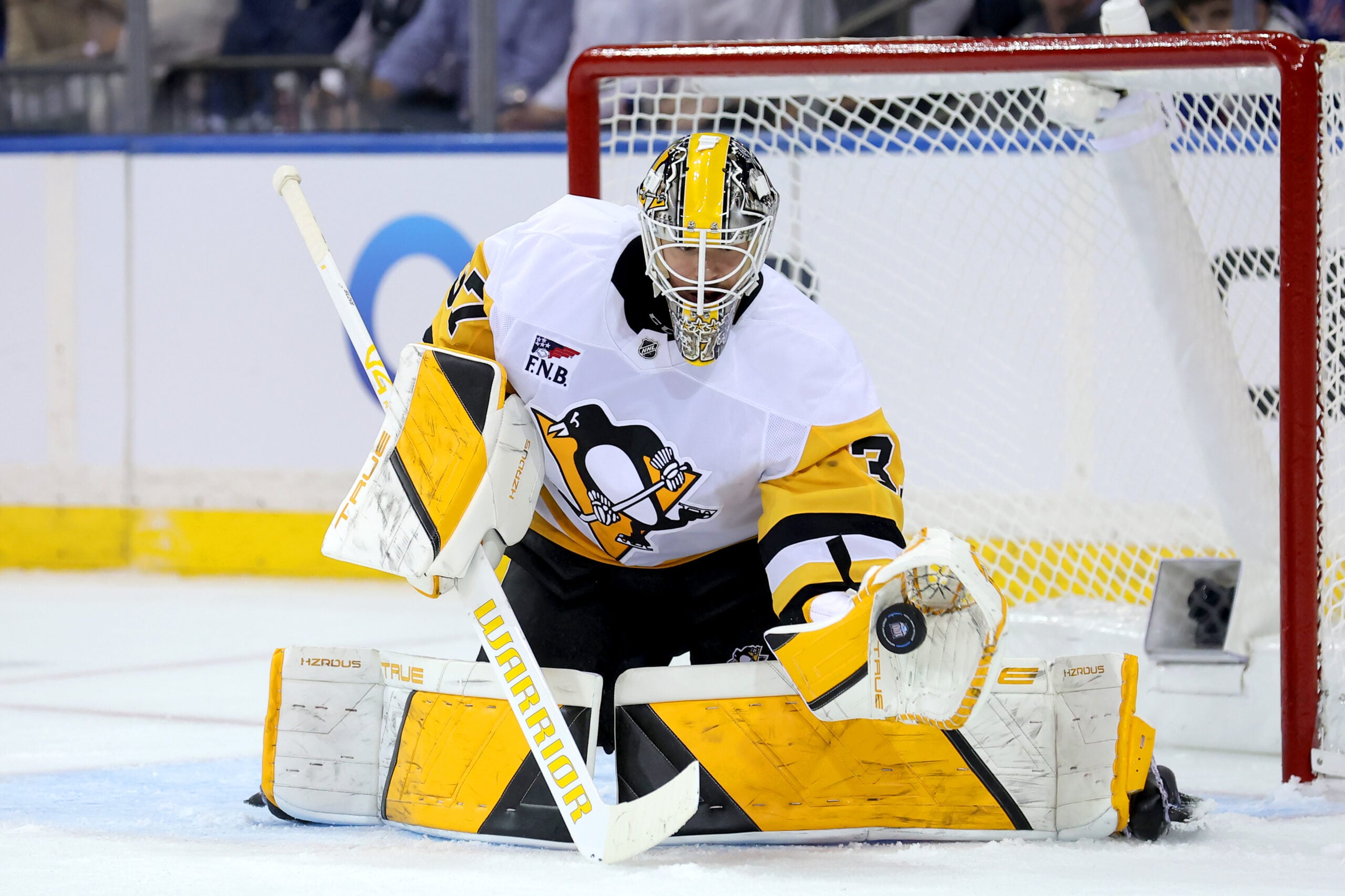
The Pittsburgh Penguins did not make a splash when they re-signed goaltender Joel Blomqvist on July 5. They did not name him their future starter or make the kind of commitment that immediately changes the depth chart or creates a direct path.
Blomqvist’s new deal looks like a small piece of business on the surface, but it is an indication that president of hockey operations and general manager Kyle Dubas is thinking about the Penguins’ goaltending beyond next season. Pittsburgh has Artūrs Šilovs on a short deal, Sergei Murashov pushing through the system, and Blomqvist still sitting close enough to the NHL picture to matter.
The Penguins are not committing to one answer in net yet. They are keeping multiple doors open, and Blomqvist’s contract helps them do that.
Penguins Keep Blomqvist in the Picture
Joel Blomqvist is no longer just a prospect. He has played NHL games, spent real time with the Wilkes-Barre/Scranton Penguins (Pittsburgh’s American Hockey League affiliate) and has reached the stage where management has to decide whether he is organizational depth or a goalie who can still be part of the NHL plan.
His new contract does not fully answer that question, but it keeps the conversation alive. The Blomqvist contract structure is especially notable because the first season is a two-way deal, before the second season becomes a one-way deal. That gives Pittsburgh a cleaner short-term AHL setup while also giving Blomqvist real financial security in 2027-28.
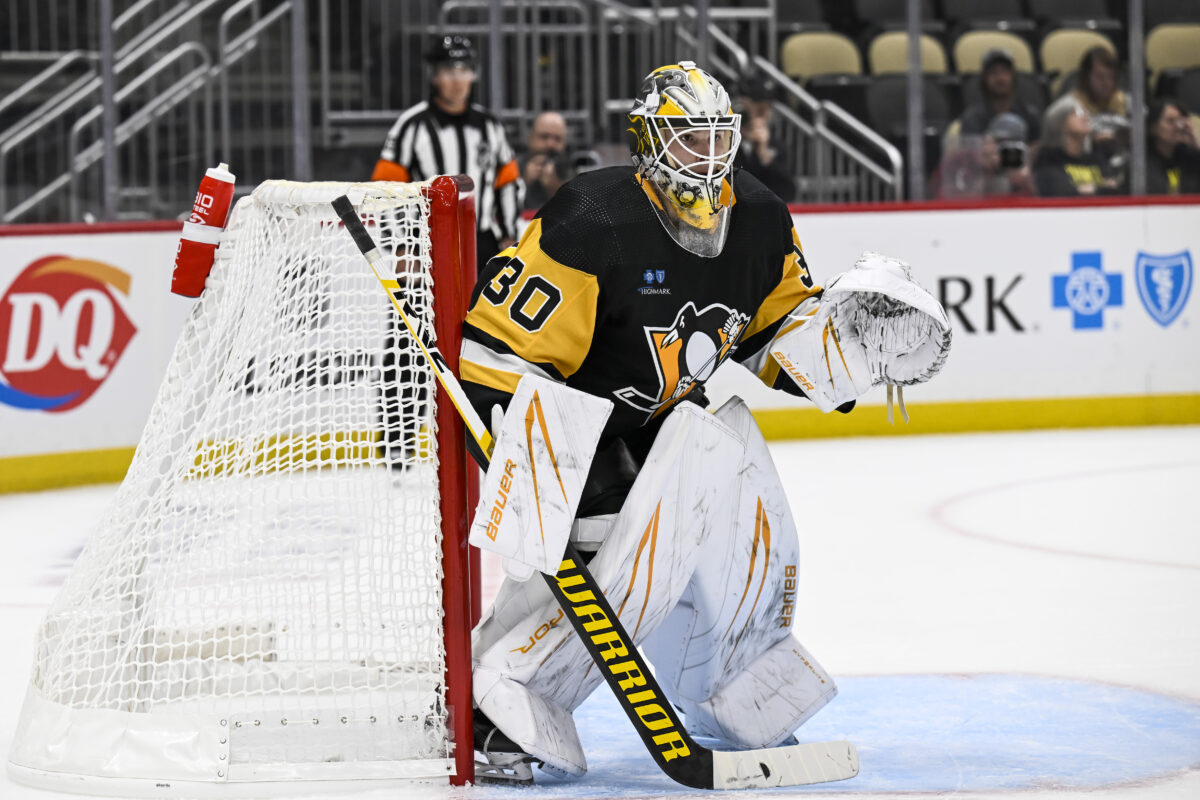
That is a smart compromise. The Penguins do not have to force him into the NHL before they are ready, and Blomqvist gets enough commitment to remain invested in the organization. For a goalie who could easily get squeezed out by Šilovs and Murashov, that second-year structure should be a confidence boost.
Blomqvist’s new $875,000 cap hit also keeps the risk low. If he develops into an NHL backup or tandem option, the deal becomes valuable. If he stays in the AHL, it is still manageable insurance for a position that can change quickly.
Blomqvist Gives Penguins Goalie Insurance
The Penguins need goalie insurance because their current setup is uncertain. Artūrs Šilovs has the inside track to an important NHL role, but his one-year deal does not make him a long-term answer. Management has given him an opportunity, not a permanent job. That same uncertainty was a major part of the Penguins’ recent Chinakhov and Šilovs signings, where the goalie picture still looked more like an audition than a finished plan.
That is where Blomqvist matters. He may not be first in line, but he gives the Penguins another option if Šilovs does not separate himself or if Murashov needs more time. Blomqvist did not play in Pittsburgh last season, but his AHL numbers still helped his case. His Wilkes-Barre/Scranton production included a 16-5-4 record, a 2.40 goals-against average and a .913 save percentage.
That is not the same as proving he can handle regular NHL starts, but it is enough to keep him relevant. Pittsburgh does not need him to be the clear No. 1 goalie in the system. They need him to be a credible option if the larger plan gets messy. Goalie plans often get messy.
Murashov Still Changes the Equation
The biggest reason Blomqvist’s contract is not a simple depth move is Murashov. Murashov looks like the most exciting goalie prospect in the organization, and his development could push everyone else down a spot. His strong AHL season has already made him difficult to ignore, and Wilkes-Barre/Scranton announced that he was named to the AHL Top Prospects Team after ranking near the top of the league in goals-against average and save percentage last season.
That makes the Penguins’ goalie structure more interesting. If Murashov is ready sooner than expected, Pittsburgh may not need Blomqvist to become anything more than a depth option. If Murashov needs more time, Blomqvist becomes more important. If Šilovs struggles, Blomqvist could be the cheaper bridge. If Šilovs plays well, Blomqvist can remain as insurance.
That is why the contract works. It does not block Murashov, and it does not force Blomqvist into a role he has not won. It simply protects the Penguins from having too few options at the most unpredictable position on the roster. For a team trying to manage the end of one era and the start of another, that matters.
Penguins Are Buying Flexibility in Net
The best way to view the Blomqvist deal is as flexibility. Pittsburgh is not paying for certainty because certainty does not really exist with this group yet. Šilovs has to prove he can handle a larger NHL role over time. Murashov has to show his AHL success can translate. Blomqvist has to prove he can still be more than the third goalie in the organization.
Those are three different questions, and the Penguins are giving themselves time to answer all of them. That is better than overcommitting to one goalie before the picture is clear.
The contract also protects against injury. Teams rarely get through a season using only two goalies, and Pittsburgh’s situation becomes even more fragile if either Šilovs or Murashov misses time. Blomqvist gives head coach Dan Muse another option who is already familiar with the organization and has enough pro experience to be trusted if needed.
That does not make Blomqvist the future starter. It does not even guarantee him an NHL job. What it does is keep him close enough to matter while the Penguins sort out a situation that could look very different by 2027-28.
Blomqvist Contract Could Age Well
The Penguins do not need Blomqvist’s deal to become a headline. They need it to become useful. If Šilovs takes the job and Murashov keeps rising, Blomqvist can be the kind of third goalie every organization needs. If one of them stumbles, he becomes a more realistic NHL option. If both goaltenders play well, Pittsburgh still has affordable depth at a position where depth disappears quickly.
That is the value of the contract. It is not about making one bold declaration. It is about making sure the Penguins are not trapped if their first plan does not work. Blomqvist still has plenty to prove. He has to show that his AHL success can become NHL reliability, and he has to do it while competing with two goalies who may have clearer paths right now. That is not easy.
Still, Pittsburgh did not let him drift away. The Penguins gave him a deal that keeps him in the organization, protects their depth and creates another possible answer for a future that remains unsettled. That may not be the loudest move Dubas makes this offseason, but it could end up being one of the more practical ones.
Free Newsletter
Get Pittsburgh Penguins coverage delivered to your inbox
In-depth analysis, breaking news, and insider takes – free.
Subscribe Free →