
By the time the 2024 NHL Draft reached pick No. 223, most of the recognizable names had been taken off the board. The Pittsburgh Penguins still found a defenseman who, two seasons later, is making that late draft position look irrelevant.
Finn Harding has gone from being one of the final selections of the draft to a legitimate prospect after completing his first full professional season. The 21-year-old recorded four goals and 22 points in 54 games with the Wilkes-Barre/Scranton Penguins of the American Hockey League (AHL), added four assists in seven appearances with the ECHL’s Wheeling Nailers and finished a combined plus-39. His development has now pushed him to No. 13 in The Hockey News’ latest Penguins prospect ranking, a substantial rise for someone selected three picks from the end of the 2024 Draft.
Calling Harding a steal is still premature. He has not played an NHL game, and the biggest tests of his development are still ahead. What Pittsburgh can say already is that its seventh-round gamble has turned into something far more valuable than a lottery ticket.
Harding Has Blown Past Seventh-Round Expectations
Late-round picks are supposed to require imagination. The Penguins saw enough in Harding’s defensive instincts to select him after two relatively quiet Ontario Hockey League (OHL) seasons. The organization did not draft a player with obvious offensive numbers or a clear NHL projection. They drafted a right-shot defenseman whose intelligence, positioning and shutdown qualities created enough intrigue to justify one of its final selections.
His offensive game arrived almost immediately afterward. Harding recorded seven goals and 57 points in 67 games with the Brampton Steelheads during the 2024-25 season, finishing eighth among OHL defensemen in points. His breakout convinced Pittsburgh to sign Harding to a three-year entry-level contract before his junior career was even complete. At the time of signing, his assist total had already established a single-season franchise record for a Steelheads defenseman.
The obvious concern was whether any of that offense would survive professional hockey. Harding answered enough of that question during his first season to keep the discussion moving forward. He did not dominate the AHL offensively, but 22 points in 54 games is meaningful production from a 20-year-old rookie defenseman who entered the season without a guaranteed place in Wilkes-Barre/Scranton.
Pittsburgh briefly sent him to the Nailers before bringing him back, and Harding gradually became one of the more dependable members of the AHL blue line. That is significant progress for a player who could easily have disappeared into organizational depth after draft day.
Harding’s Defensive Game Gives Him a Real NHL Path
The encouraging part of Harding’s development is that his NHL projection does not depend on him becoming a major point producer. His offense has expanded the possibilities. His defensive game gives him a foundation.
Harding uses positioning and an active stick to close space rather than constantly chasing hits. His gap control allows him to challenge entries, and he has enough physical edge to make life uncomfortable for opponents who get inside. The Hockey News highlighted those traits while describing him as a potential bottom-four NHL defenseman if his development continues.
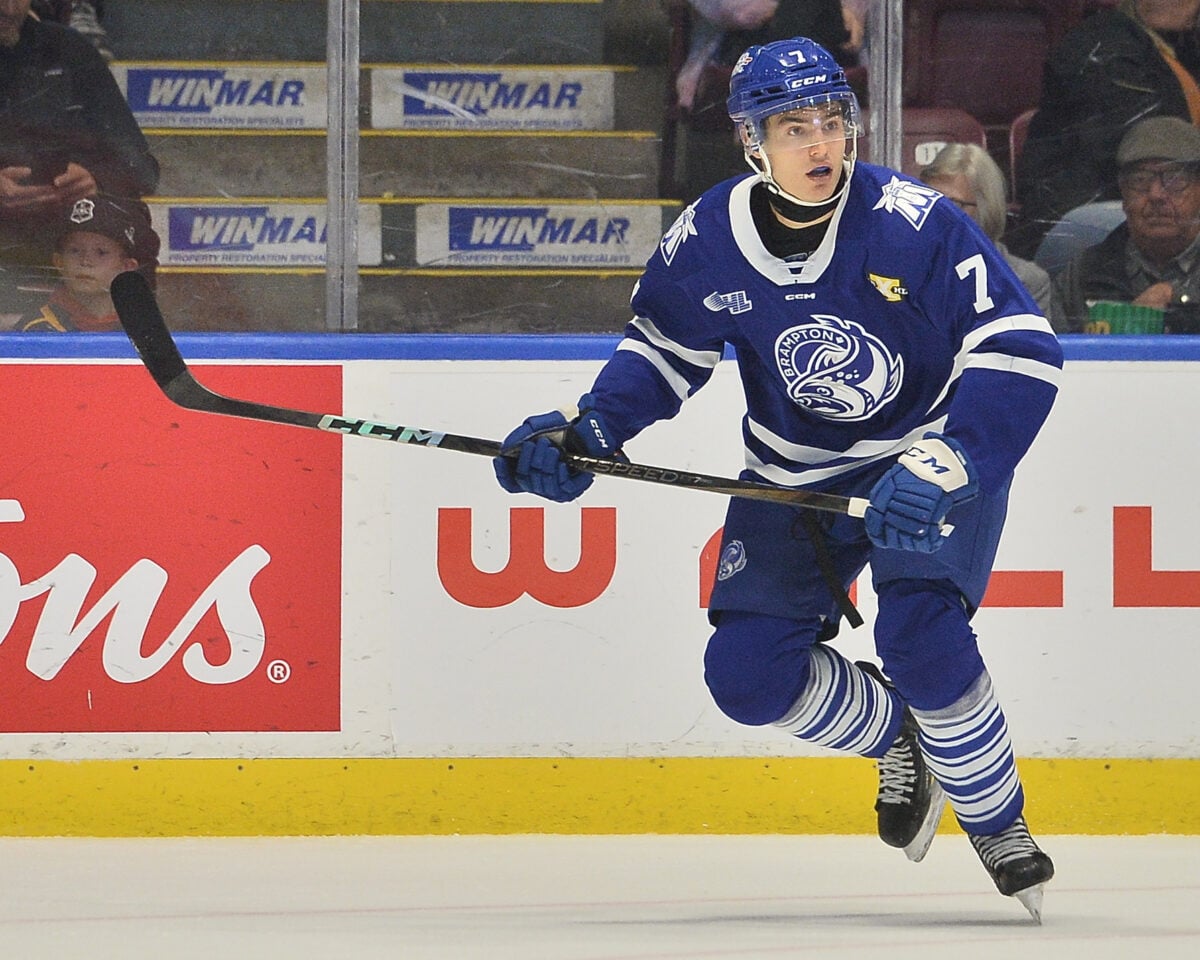
The combined plus-39 is worth treating carefully because plus-minus cannot isolate an individual defenseman’s performance. Harding also played on a Wilkes-Barre/Scranton team that won 46 games, so the number benefited from a successful environment. It becomes more interesting when paired with what Pittsburgh sees in the details.
Director of player development Tom Kostopoulos praised Harding’s intelligence, physicality and willingness to absorb coaching at development camp. Kostopoulos said Harding absorbs instruction “maybe better than any kid we have in our organization,” then pointed to the edge in his game and the trust he has earned from coaches and teammates. That combination translates.
A seventh-round defenseman does not need to quarterback an NHL power play to beat his draft position. If Harding eventually becomes a reliable third-pair option who can defend, move the puck and climb into a top-four role when necessary, Pittsburgh will have extracted enormous value from pick No. 223.
Harding’s Offense Has Become More Than a Bonus
Pittsburgh originally had more reason to trust Harding without the puck than with it. That distinction has started to disappear. He went from 44 points across his first 131 OHL games to 57 points in his final 67. He then avoided the offensive collapse that can happen when productive junior defensemen encounter the smaller windows and faster pressure of professional hockey.
His 22 points with the Wilkes-Barre/Scranton Penguins were not built around being the focal point of the offense. Harding learned to contribute within structure, moving pucks quickly, joining attacks when space developed and providing a secondary option rather than forcing himself into every possession. THW’s latest ranking of the Penguins’ top prospects noted that his responsible defensive play stood out most during his rookie season, even as he continued showing flashes of the offensive growth that first raised his profile.
That balance is important. Pittsburgh does not need Harding trying to recreate his final junior season at every level. The more useful development would be preserving enough offense to make opponents respect him while allowing his defensive intelligence to remain the trait that earns him NHL minutes.
Penguins Need More Defensive Prospects to Break Through
Harding’s ascent also carries more weight because of the position he plays. The Penguins have dramatically improved the overall depth of their prospect pool, but the blue line remains less certain than the forward group.
Harrison Brunicke is the clear headliner and already has NHL experience, while Owen Pickering enters an important season after spending most of 2025-26 in the AHL. Tomas Galvas adds another interesting name, but Pittsburgh does not have a long list of young defensemen who appear certain to become NHL regulars. Harding changing that equation would matter.
Brunicke carries the higher ceiling. Pickering has the first-round pedigree. Neither prevents Harding from carving out a completely different route to Pittsburgh. His emergence also gives the organization a reminder that rebuilding a defense pipeline cannot depend exclusively on first- and second-round selections. Good development organizations need to turn some of their less heralded picks into useful professionals.
Harding is beginning to look like one of those players. He has already jumped to No. 13 from No. 19 in The Hockey News’ prospect rankings before last season. THW also ranked him 13th in its 2026-27 Preseason Prospect Rankings, an impressive standing for someone drafted after 222 other players.
Skating Will Determine How High Harding Can Climb
There is still an obvious separator between Harding and the Penguins’ highest-upside defensive prospects. He needs to become a better skater.
Harding’s intelligence helps compensate because he usually understands where a play is headed before he has to recover from it. That advantage becomes smaller as the competition gets faster, particularly against NHL forwards capable of turning a small gap into a dangerous entry.
The Hockey News identified mobility as the most significant area Harding still needs to improve. That assessment also fits what Harding himself emphasized during his progression through the organization’s development system, where skating has remained a priority as he rounds out an increasingly complete game.
The encouraging part is that his development so far gives Pittsburgh reason to believe he can address a weakness. He has already transformed his offensive game. He adjusted quickly enough to spend 54 games in the AHL during his first full professional season. Coaches continue praising how effectively he turns instruction into changes on the ice.
Improving his skating does not require turning him into Brunicke. Harding needs enough mobility to make his anticipation, puck movement and defensive positioning work at NHL speed.
Harding Still Has to Earn the “Steal” Label
Draft steals are easier to identify in hindsight. Harding has yet to play an NHL game, so putting that label on him now would lower the standard too far. The accomplishment is that the possibility no longer sounds unrealistic.
Two seasons ago, Harding was pick No. 223. Since then, he has broken out offensively in junior hockey, earned an entry-level contract, established himself in the AHL and climbed toward the upper half of Pittsburgh’s prospect rankings.
The next step is harder. He must show that his first professional season was a foundation rather than a peak, improve his mobility and continue earning larger responsibilities in Wilkes-Barre/Scranton. If he does, the Penguins may look back at the final minutes of the 2024 Draft and wonder how a useful NHL defenseman was still available.
For a franchise searching for young answers on the blue line, finding one late in the draft should qualify as much more than good fortune. It would be exactly the type of development win the organization needs more of.
Free Newsletter
Get Pittsburgh Penguins coverage delivered to your inbox
In-depth analysis, breaking news, and insider takes – free.
Subscribe Free →