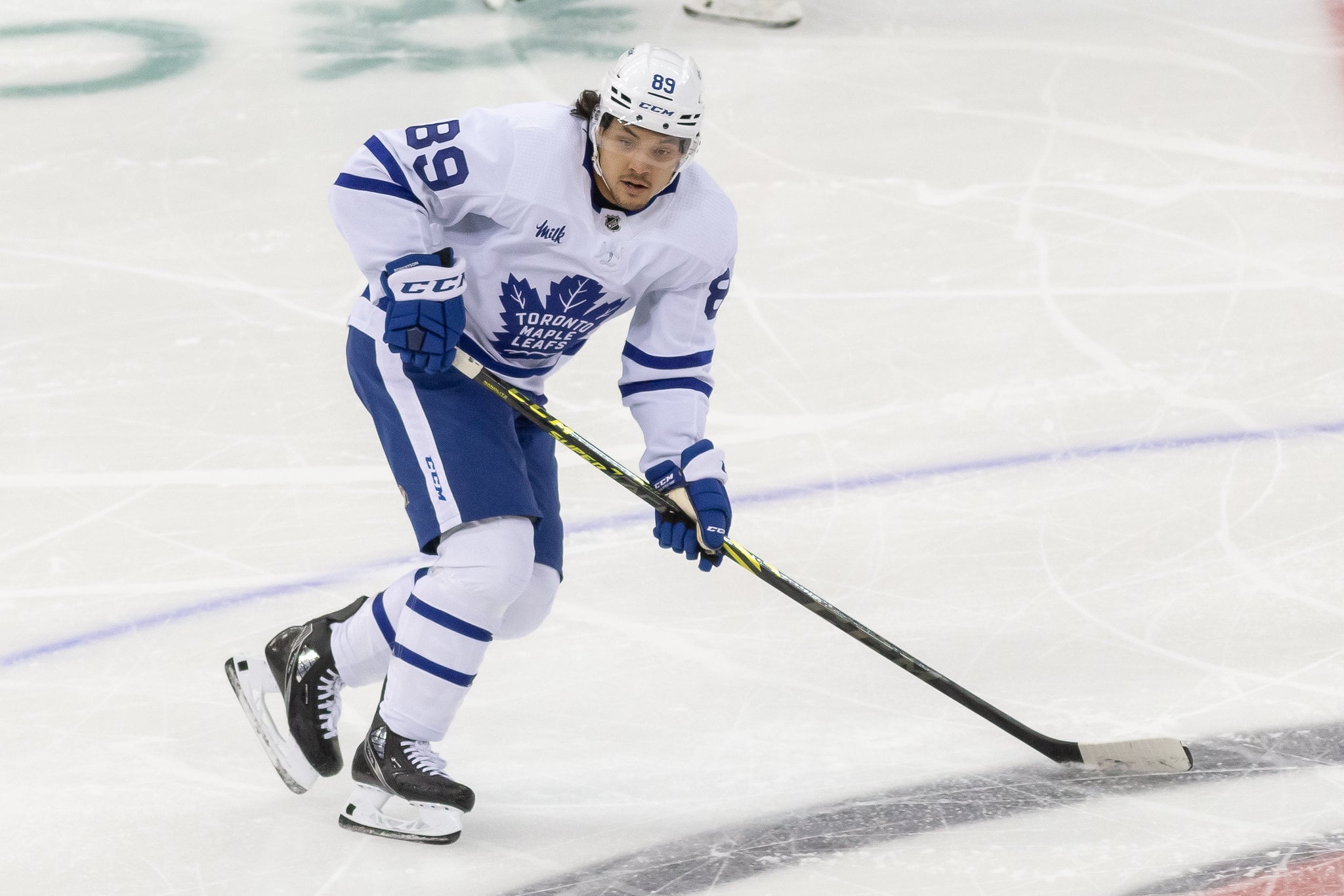
Nick Robertson’s arbitration date gives the Pittsburgh Penguins a deadline. It does not give them an answer. That is an important distinction.
The Penguins can try to settle on a number before his July 28 hearing, find another path or go through the arbitration process. The money matters, especially for a restricted free agent coming off the best season of his NHL career, but the bigger question is not only what Robertson should make, but who the Penguins want him to be.
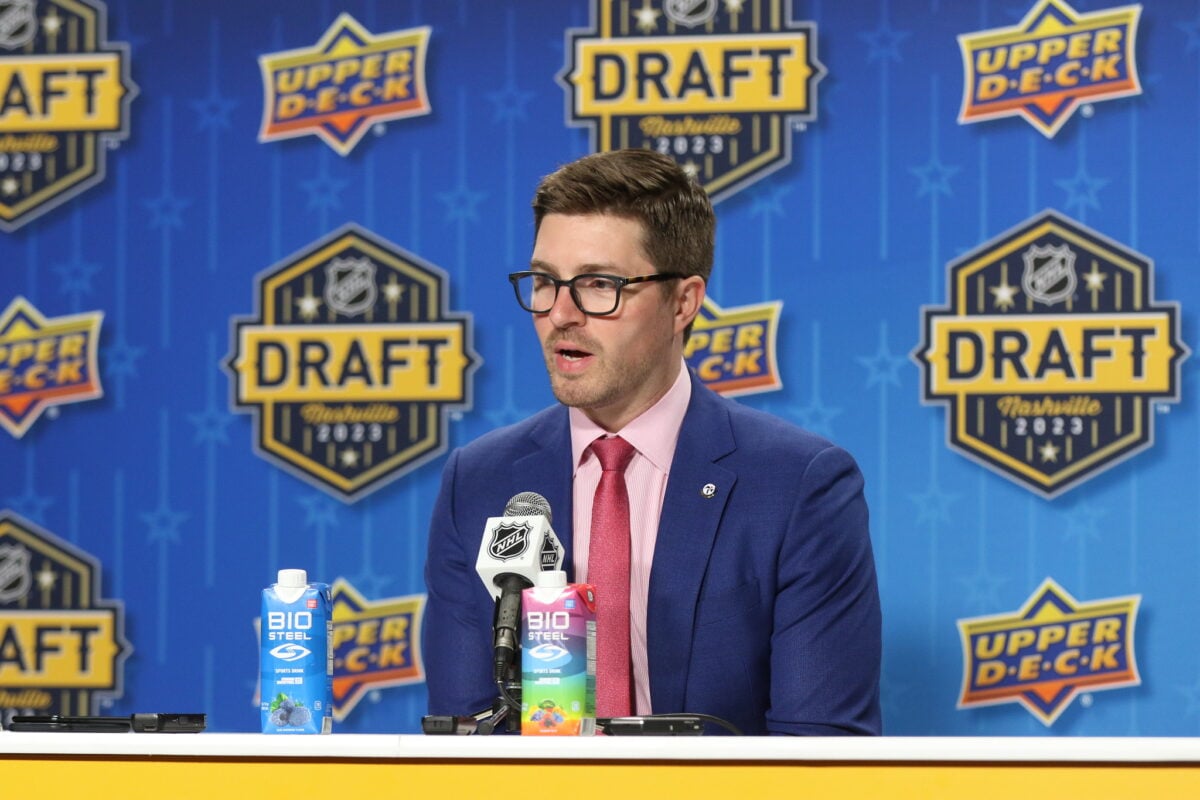
President of hockey operations and general manager Kyle Dubas acquired Nicholas Robertson from the Toronto Maple Leafs on July 1 because Pittsburgh needed more young forwards with scoring upside. That part makes sense. The Penguins have spent the offseason adding options, creating competition and trying to build a roster less dependent on their aging core.
Still, Robertson’s contract situation forces a more specific conversation. If Pittsburgh sees him as a real top-nine winger, the deal should reflect that. If he is only another upside bet in a crowded forward group, then the Penguins have to be careful not to treat a hopeful projection like a final answer.
Penguins Have a Contract Deadline, But Need a Role
Robertson’s July 28 arbitration date gives both sides a timeline to find common ground. Arbitration can settle the salary, but it cannot settle his role. That part belongs to Dubas, head coach Dan Muse and Robertson himself.
Robertson is 24 years old and coming off career highs with 16 goals and 32 points in 78 games. His 2025-26 production was strong enough to justify a raise from his $1.825 million cap hit, but not so impressive that Pittsburgh should hand him a major commitment.
That is where his role matters. Robertson is not just negotiating off a spreadsheet. He is trying to establish where he fits with a new organization. The Penguins did not acquire him to be a headline move, but they also don’t want to bury him behind a long list of similar forwards. The arbitration date creates pressure. The roster situation creates the real test.
Robertson Gives Penguins Needed Scoring Upside
The Penguins need what Robertson is expected to bring. He is a shooter. He can finish. He gives Pittsburgh another left-shot winger with enough offensive talent to make the top nine more interesting. That matters for a team still trying to take scoring weight off Sidney Crosby, Evgeni Malkin, Bryan Rust and Rickard Rakell.
Robertson’s current contract status also makes him the kind of player Pittsburgh should want to figure out. He is young enough to fit beyond one season, inexpensive enough to remain manageable and talented enough that a larger opportunity could lead to better results than he had with the Maple Leafs.
If the Penguins believe he can play higher in the lineup, this is the moment to give him a chance and be aggressive. Management has spent too much time looking for younger forwards who can become more than depth pieces, and Robertson at least has clear offensive talent that gives him a path.
That separates him from some of the other roster bets. He does not need to become a complete top-line winger to have value. He needs to score enough, play with enough pace and show that he can still generate offense in a more meaningful role.
Penguins’ Forward Group Is Crowded
The difficult part is that Robertson is entering a crowded room. The Penguins’ forward depth chart already has more players than clean jobs. Pittsburgh added Andrei Kuzmenko, kept Egor Chinakhov, brought in Hendrix Lapierre and still has young forwards like Rutger McGroarty and Ville Koivunen trying to push into the NHL picture.
That makes Robertson’s fit more complicated. He needs offensive opportunity, but so do several other players. Kuzmenko will need scoring touches. Chinakhov has already earned a bigger look. McGroarty’s roster squeeze is already hard to ignore, and Koivunen’s uncertain path shows how quickly young forwards can get caught between prospect status and NHL reality.
Robertson cannot be evaluated in isolation. If he is in Pittsburgh’s top nine, someone else may get pushed down or out. If he is not, then the Penguins have to ask whether they are paying for a player they are not actually prepared to use properly. That is why this is not just about arbitration.
Dubas Has to Decide What the Bet Means
Dubas has made several moves that fall into the same category. The Penguins have been adding players with enough pedigree, youth or skill to justify a second look. Robertson fits that group perfectly.
The problem is that not every second-chance player can get the same opportunity. At some point, the Penguins have to separate the real pieces from the placeholders. Their cap space gives them room to sign Robertson without much short-term stress, and the organization’s long-term flexibility leaves Dubas with room to keep working after this deal is resolved.
Still, cap room should not make the decision automatic. A short deal would protect Pittsburgh from overcommitting, but it might also keep Robertson in prove-it mode without giving him a clear place to prove anything. A longer deal would show belief, but it would also require the Penguins to create a real role for him that is more than just a depth option.
That is the balance. Robertson is exactly the kind of player Pittsburgh should bet on, but the bet has to come with a plan.
Robertson Has to Make the Decision Easy
The Penguins owe Robertson an honest opportunity. He owes them a reason to keep giving him one. That is how this should work. Pittsburgh can clear a path, give him skilled linemates and let his shot become part of the lineup. But he will have to prove he can handle that responsibility. He has to be more consistent than he was in Toronto, more reliable away from the puck and productive enough to justify offensive-zone usage.
That does not mean he has to become a star. It means he has to become useful in a specific way. If Robertson is scoring, driving chances and giving the Penguins another real finisher, the contract will not be the story for long. If he blends into the crowd, the arbitration number will matter more because the role will remain unclear. For Pittsburgh, that is the real danger. The Penguins do not need another forward who sounds interesting on paper. They need players who can force their way into defined roles.
Penguins Need Clarity Before Camp
Robertson’s arbitration deadline should help move the contract process along, but the Penguins need more than a signed deal. They need clarity before training camp.
If Robertson is a top-nine winger, Pittsburgh should treat him like one. If he is still fighting for that status, then camp should be built around finding out whether his scoring can separate him from the rest of the group. What cannot happen is letting him drift into the same pile of maybes that already makes the forward picture crowded.
The Penguins have made their roster more interesting this offseason. Robertson is part of that. He gives them shooting, youth and upside at a low acquisition cost. That is good business.
Now comes the hard part.
Pittsburgh has to turn Robertson’s potential into an actual role. The contract deadline will settle the salary. The real answer will come when the Penguins show where they believe he belongs.
Free Newsletter
Get Penguins Management coverage delivered to your inbox
In-depth analysis, breaking news, and insider takes – free.
Subscribe Free →