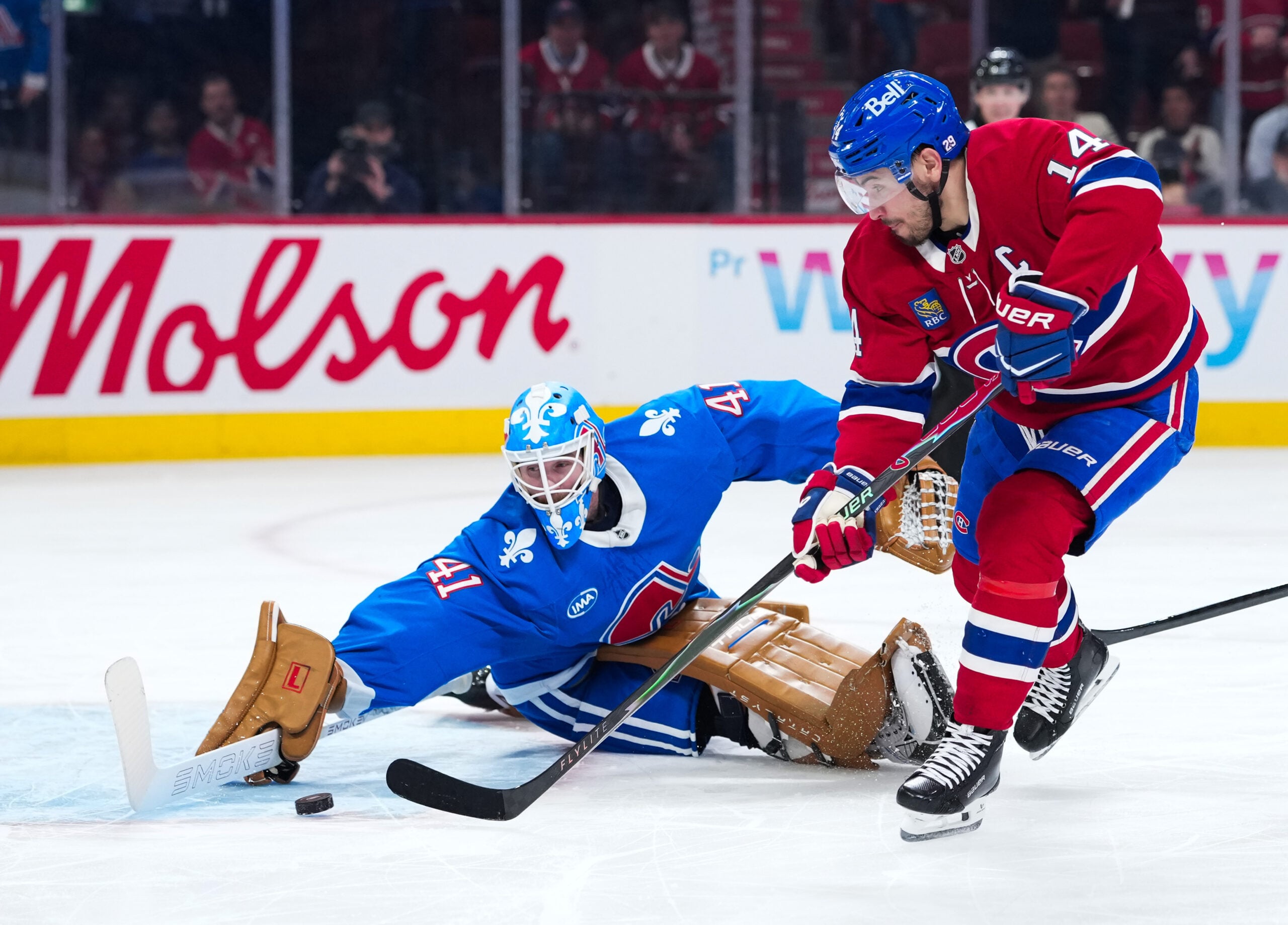
For over three decades, the Montreal Canadiens have been a franchise defined by its history, searching for a modern anchor to carry the torch of its defensive legacy. Not since Guy Carbonneau earned the Frank J. Selke Trophy in 1992 has a Canadiens’ skater been recognized as the league’s premier defensive forward. However, this season, the narrative has shifted from “if” the Canadiens will find that anchor to “when” captain Nick Suzuki will officially be crowned.
With Suzuki currently positioned as the front-runner for the Selke, the impact on the franchise transcends individual hardware. It is the ultimate validation of a rebuilding philosophy, a tactical accomplishment by the coaching staff, and a signal to the rest of the league that the “Bleu, Blanc, et Rouge” are no longer just a collection of prospects; they are a team led by a world-class, 200-foot engine.
The Ironman Captain
Suzuki’s journey to the top of the Selke conversation hasn’t been an overnight development. It has been a steady, methodical climb. In previous seasons, Suzuki consistently hovered around the periphery of the award, often finishing in the top 15 of voting. These finishes were impressive given the team’s struggles as a bottom-five NHL finisher, but those performances lacked the positive impact required to unseat incumbents like Aleksander Barkov or the now-retired, future Hall of Fame centre Patrice Bergeron.
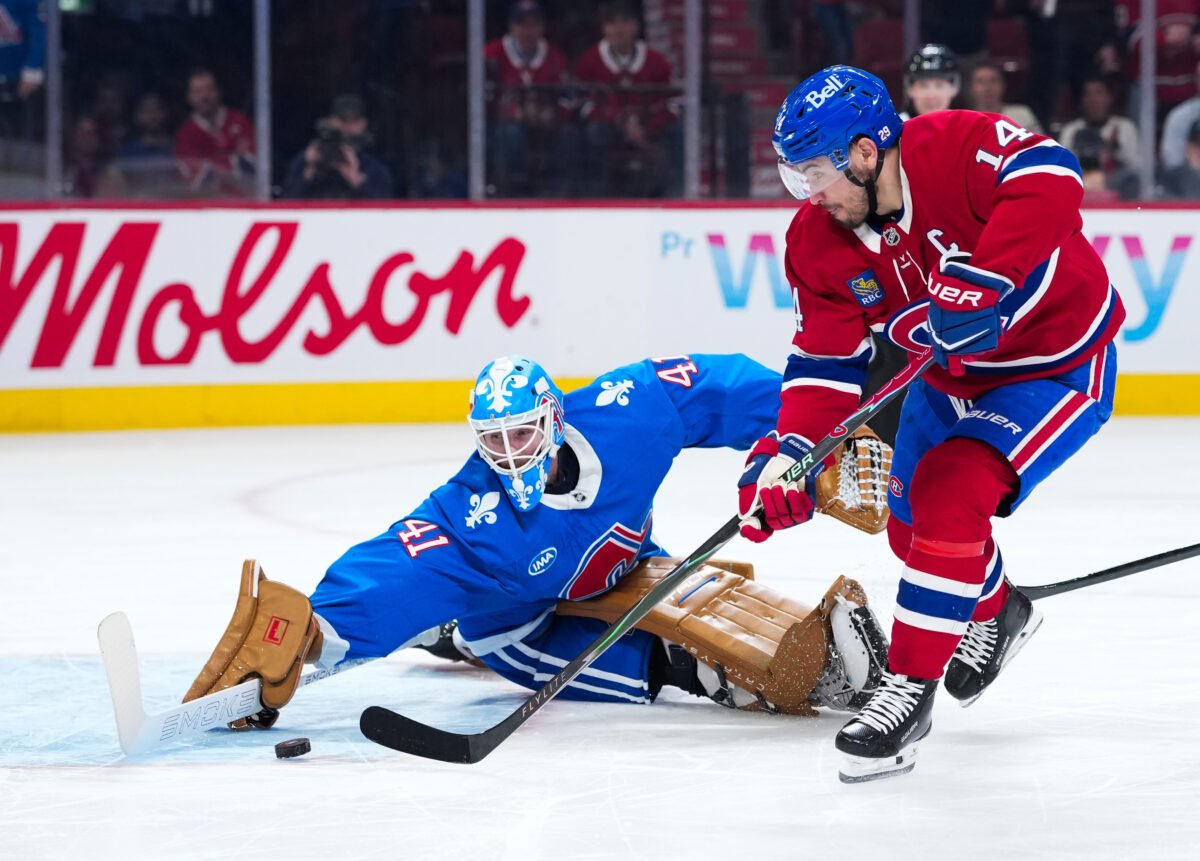
What changed in 2025-26 was the marriage of elite defensive metrics with superstar offensive production. Suzuki has gradually transitioned from a reliable top-line centre into a game-changing, dominating force. For the first time in his career, he broke the 100-point barrier (101 points), a statistical threshold that forces Professional Hockey Writers Association voters to take notice. Historically, the Selke has drifted toward players who provide defence through offence, the ability to keep the puck 200 feet away from their own net by simply owning it.
Cultural Validation
For head coach Martin St. Louis, Suzuki’s Selke nomination is the ultimate proof of concept. Since taking the reins, St. Louis has preached a philosophy of read-and-react hockey, encouraging his players to use their hockey IQ to solve problems rather than sticking to rigid, static systems.
Suzuki is the embodiment of this philosophy. His ability to anticipate plays before they develop allows him to suppress high-danger scoring chances at an elite level. By simply being a finalist for the Selke, Suzuki has validated the culture that the front office, led by general manager (GM) Kent Hughes, has been desperate to instil. It proves that a player does not have to sacrifice creativity or offensive flair to be a defensive stalwart. This sets a vital precedent for the next wave of Canadiens stars. When Ivan Demidov, a Calder Trophy nominee, or a prospect like Michael Hage, looks at their captain, they see a blueprint: you earn your offensive touches through defensive responsibility.
The Window Is Wide Open
From a purely tactical standpoint, having the league’s best defensive forward changes how the Canadiens match up against the NHL’s elite. In years past, Montreal was often forced to play a desperation and survival style against teams with dangerous top lines like the Toronto Maple Leafs, Tampa Bay Lightning, and Florida Panthers.
With Suzuki’s emergence, the script has flipped. St. Louis can now deploy the Suzuki line against any trio in the world with the statistical expectation that they will not only neutralize the opposition but win the puck-possession battle. Because Suzuki can handle the heavy lifting against the Connor McDavids and Nathan MacKinnons of the league, it creates favourable matchups for the Canadiens’ secondary scoring lines, allowing St. Louis to shelter his younger forwards.
This has also allowed players like Cole Caufield to focus on their predatory offensive instincts, which is a significant contribution to his 51-goal season. When Suzuki is on the ice, the defensive zone becomes a transition zone. His elite underlying metrics in goals-against per 60 minutes mean the Canadiens spend less time chasing the game and more time dictating it.
It’s Suzuki’s Turn
Despite the momentum he has generated for himself, the race for the Selke is rarely a runaway. In the NHL, awards based on defensive merit often carry a lag time as voters like to reward a player who has “paid their dues.” Barkov has been named the recipient for the past two seasons and undoubtedly would have been the favourite to win it again this year. With the perennial winner sidelined for the entire season, Suzuki’s elite two-way play has allowed him to seize the opportunity.
There is also the historical bias regarding team standings. Traditionally, Selke winners come from top-five teams in the standings. While the Canadiens have made massive strides, they are still a team fighting for respect in a loaded Atlantic Division. Yet Montreal’s 106-point season, coupled with Suzuki’s 101 points, may be enough to overcome that bias.
The Long-Term Impact on the Rebuild
Whether Suzuki wins the Selke Trophy this June or not, his nomination has fundamentally shifted Montreal’s trajectory. At the heart of this shift is the incredible salary cap leverage his performance provides. By securing a 101-point, Selke-calibre centre for under $8 million annually, Hughes has secured one of the NHL’s greatest bargains. This financial breathing room is the engine behind Montreal’s aggressive rebuild, allowing the front office to set a salary standard for the majority of their core group, including Caufield and Juraj Slafkovsky, whose cap hits remain below Suzuki’s. It also enticed an emerging star like Lane Hutson to take less than expected on a long-term contract.
Beyond the balance sheet, Suzuki’s ascent is actively transforming Montreal into a premier destination for elite talent. For years, the “Montreal tax” — the combination of high taxes, bad weather and intense media pressure — had deterred top-tier players. That narrative has flipped. Suzuki’s reputation as a top-tier leader and player makes him an attractive teammate. Goal scorers have always been eager to lineup with top-line centres who handle the defensive heavy lifting while consistently creating 100-point offensive opportunities.
Ultimately, this Selke recognition cements Suzuki’s place as a cornerstone of the first true rebuild of the winningest franchise in hockey. He is no longer just seen as a placeholder leader in a rebuilding era; he is etching his name alongside icons like Carbonneau. For the Canadiens, his Selke candidacy is another signal that the rebuild is nearing an end. Is the Selke his to lose? Perhaps, especially considering his impact on his team compared to the other two nominees. Whether he wins the award, one thing is certain: Montreal once again possesses a centre who can control the game in all three zones, and that is a prize far more valuable than any individual trophy.
Free Newsletter
Get Montreal Canadiens coverage delivered to your inbox
In-depth analysis, breaking news, and insider takes – free.
Subscribe Free →