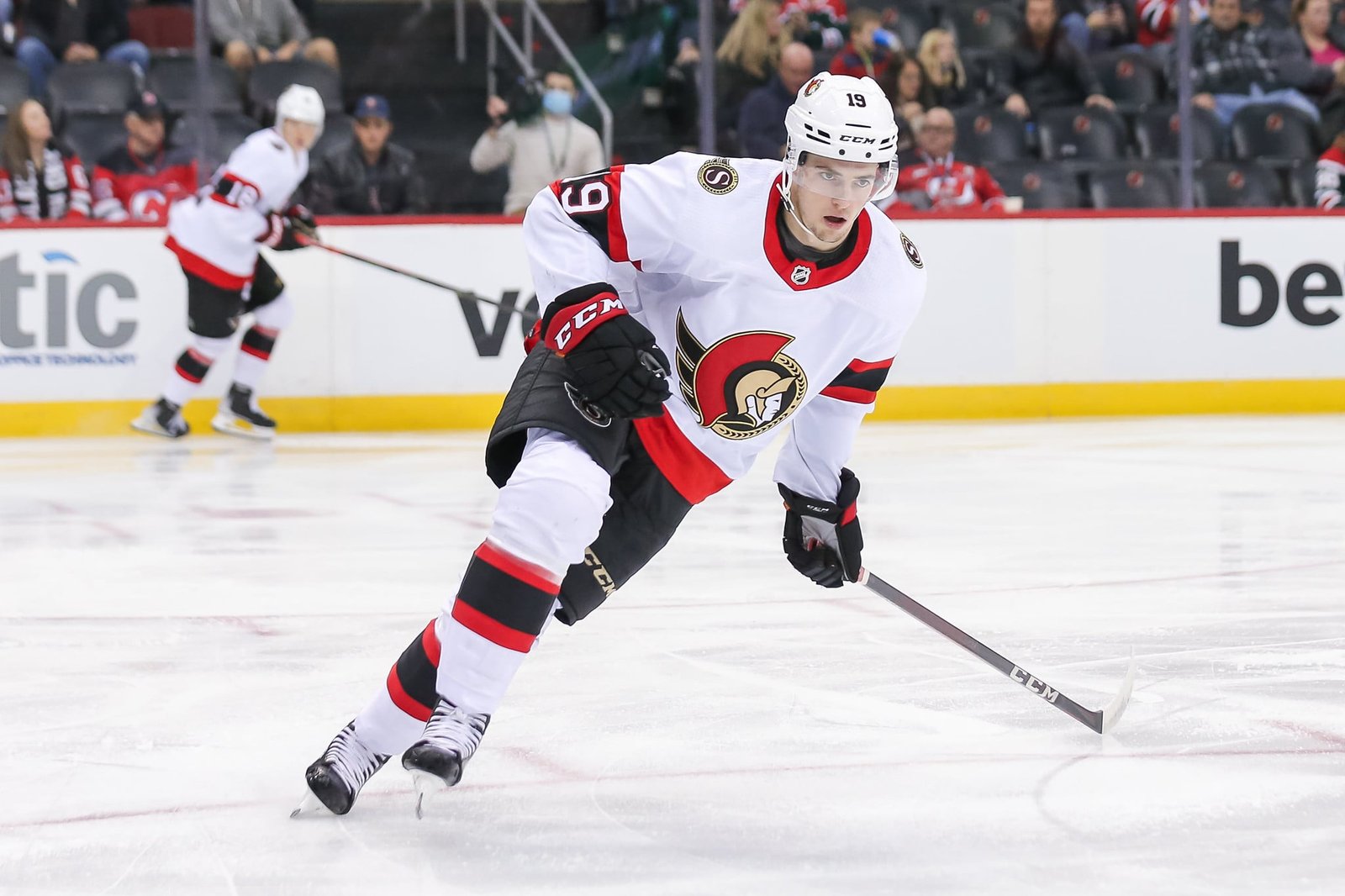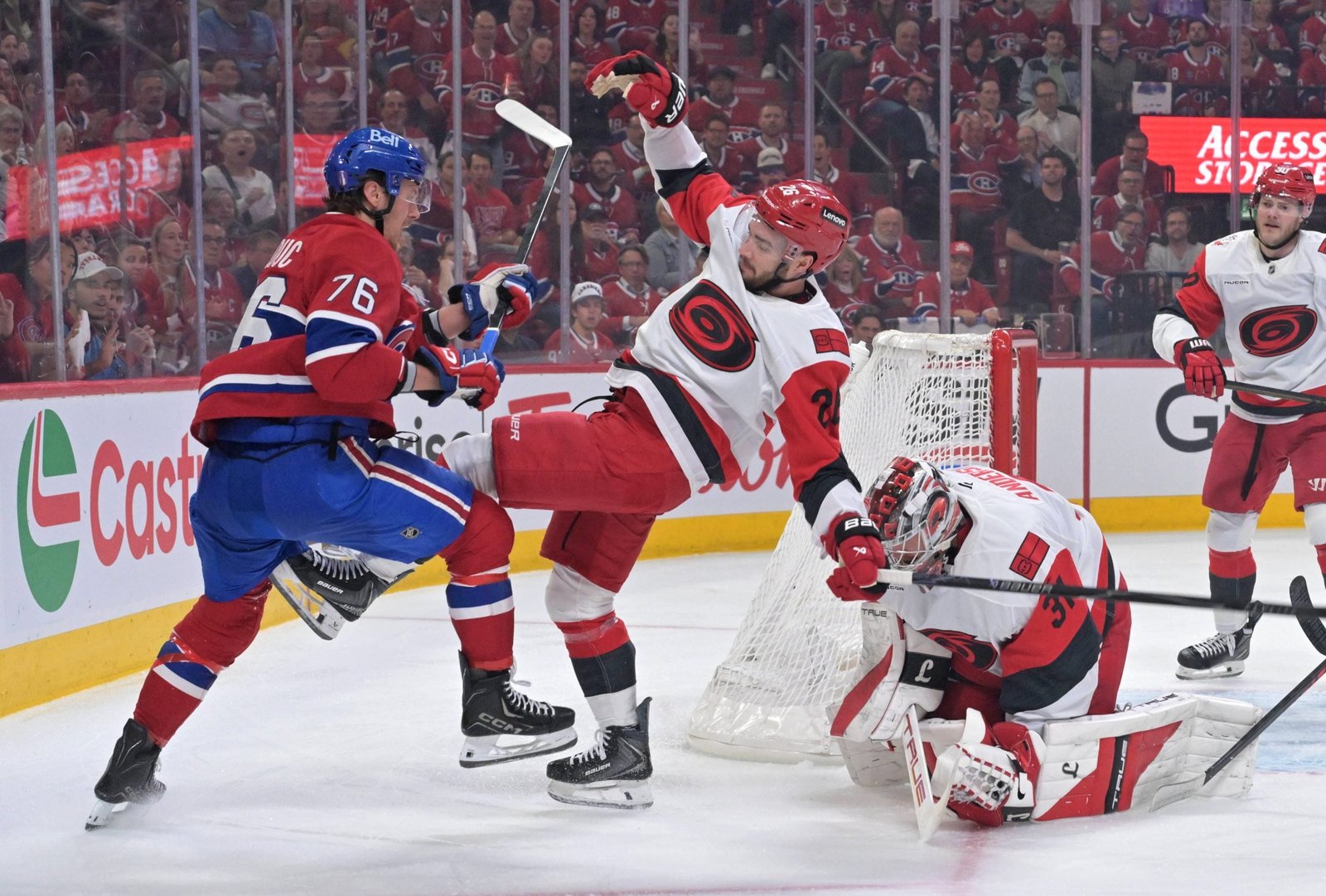
- 1. Alberts Šmits, LD, Jukurit (Liiga) / EHC Red Bull Munich (DEL)
- 2. Ivar Stenberg, LW, Frölunda HC (SHL)
- 3. Viggo Björck, C, Djurgårdens IF (SHL)
- 4. Gavin McKenna, LW, Penn State (NCAA)
- 5. Oliver Suvanto, C, Tappara (Liiga)
Most of the prospects selected in the 2026 NHL Draft on June 26 and 27 in Buffalo will spend years developing before they see real NHL minutes. The development runway for a drafted forward is typically three to four years. Defensemen take longer. Goaltenders take longer still.
But a small group of players in this draft class have already played against older players or in situations closer to NHL competition, which collapses that timeline. They are not playing against 22-year-old biology majors; they’re playing professional men’s hockey in the Swedish Hockey League (SHL), Finland’s Liiga, or Germany’s Deutsche Eishockey Liga (DEL), leagues where the opponents have mortgages, families, and professional contracts that depend on winning. One prospect played against NHLers at the Winter Olympics.
“NHL-ready” gets thrown around during draft season. But these are five players whose competition level, physical profile, and production suggest they could contribute to an NHL roster in 2026-27 – they’ve already been tested against professionals and passed.
Šmits is the only 2026 Draft-eligible player who skated at the Winter Olympics in Milan-Cortina. He is the second 18-year-old to play at an Olympic Games featuring NHL players, after Aleksander Barkov represented Finland in Sochi in 2014.
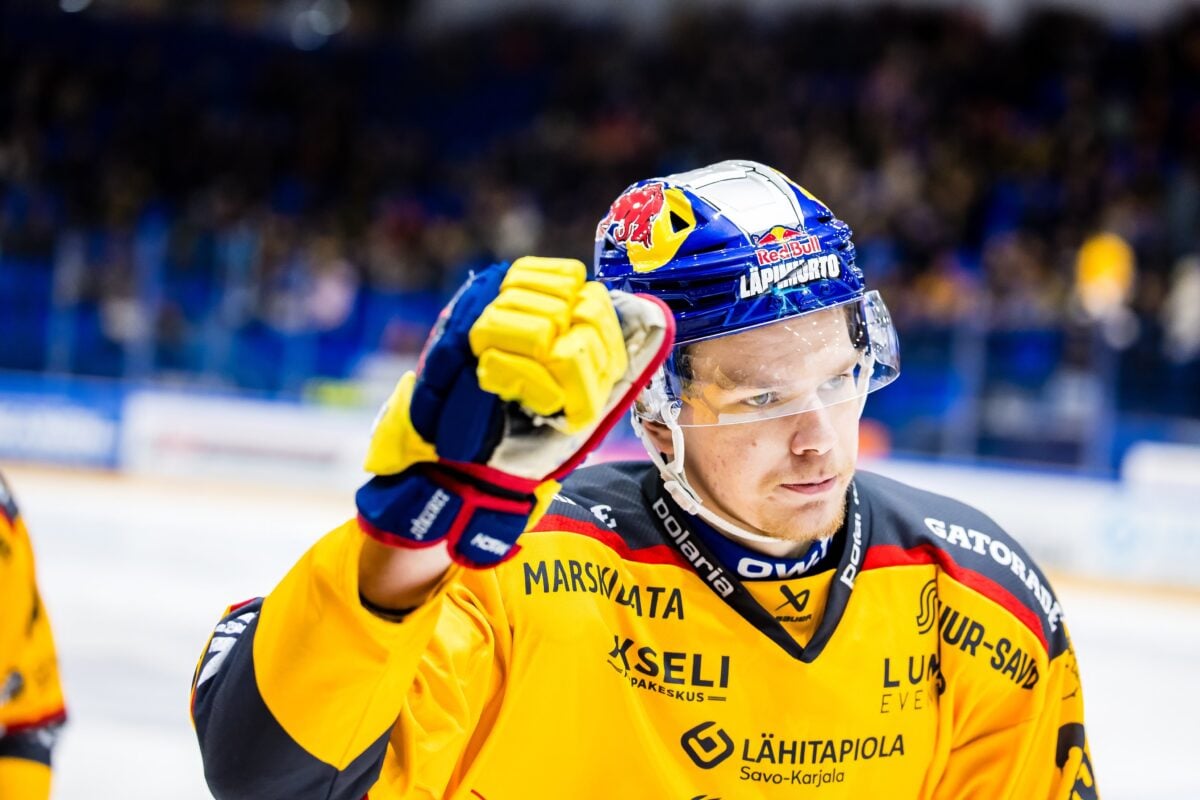
Latvia brought Šmits to Milan because they needed him. He played four games, recorded two assists, and averaged roughly 19 minutes of ice time per game. He played against rosters featuring Sidney Crosby, Connor McDavid, Nathan MacKinnon, David Pastrnak, and Cale Makar. Sam Cosentino of Sportsnet watched those games and came away with this:
He benefits from playing on a weak Liiga team, which has treated him to top pairing minutes all season long. The fact he also played so well at the Olympics for a weaker hockey nation in Latvia makes you wonder what he will develop into when he’s surrounded by elite talent. He has the confidence of a lion, NHL size and strength, and he proved he was able to keep pace against the best players in the world.
2026 NHL Draft Ranking: Cosentino’s Top 32 for February – Sam Cosentino, Sportsnet.
At the World Junior Championship in December, he was Latvia’s most important player by a wide margin, leading the team in ice time at 23:40 per game and producing five points in five games. He is now playing for Latvia at the 2026 IIHF World Championship in Switzerland, his third senior international event of 2025-26.
His club season was split across two professional leagues. He spent the first half playing full-time top-pairing minutes for Jukurit in Finland’s Liiga, posting 13 points in 37 games as a draft-eligible teenager. He then joined EHC Red Bull Munich on loan in the DEL, the same German league Moritz Seider played in before stepping into Detroit’s lineup and winning the Calder Trophy. The Seider comparison is the one scouts reach for most often: a big (6-foot-3, 205 pounds), mobile, physically aggressive defenseman from a non-traditional hockey nation who proved he could handle men’s hockey before arriving in the NHL.
He has excellent hands, both pulling pucks laterally and protecting them out wide, often with one hand on his stick. He has good size and a strong, pro frame that will continue to fill out. He’s a good skater with well-above-average four-way mobility
(from, 2026 NHL Draft Ranking: Gavin McKenna, Ivar Stenberg Top Wheeler’s March Top 64 List, Scott Wheeler, The Athletic, March 17, 2026).
Elite Prospects Film Room was direct about the timeline:
We project that he’ll be able to compete for and win a spot on the lineup of the team that drafts him as early as next fall.
Alberts Šmits Scouting Report – Elite Prospects Film Room.
No other player in this class has faced the competition Šmits has faced and performed at his level. NHL Central Scouting ranked him second among European skaters. Craig Button has him fourth overall. The team that drafts him is not buying potential. They’re buying proof.
Stenberg’s case rests on stats, and the stats are historic. His 33 points in 43 SHL games rank fifth in league history for an 18-year-old, and the most since Daniel Sedin’s 42 and Henrik Sedin’s 34 in 1998-99. He also led Frölunda in scoring. He produced at a near point-per-game pace in a league that is considered one of the three best professional circuits outside the NHL.

He is currently representing Sweden at the 2026 IIHF World Championship in Switzerland, the youngest forward on the roster. Before that, he led Sweden to a gold medal at the World Junior Championship, the country’s first since 2012, tying for the team lead with 10 points, including a goal and two assists in the final.
He’s exceptionally smart. High hockey IQ, elite awareness and decision-making. He’s a highly skilled playmaker/scorer hybrid, able to drive offense and finish.
McKenna or Stenberg Likely To Be Top Prize for Winner of NHL Draft Lottery – Jukka-Pekka Vuorinen, NHL.com.
At 5-foot-11 and 183 pounds, Stenberg’s frame is not imposing. But his game does not depend on physical dominance. He processes the ice at a speed that compensates for what he lacks in size, finds passing lanes that should not exist, and competes along the wall through leverage and positioning rather than brute strength. His shot is accurate, and his release is quick. Defensively, he is already trusted in all situations at the SHL level.
The competition he has faced this season, against SHL regulars, World Championship opponents, and WJC tournament pressure, constitutes the most complete test of any forward in this class. He could play on opening night for whatever NHL team drafts him.
Björck’s path runs through three levels of competition, all compressed into one season: the SHL regular season, the World Junior Championship, and the Men’s World Championship. He is 18 years old.
He posted six goals and 15 points in 42 SHL games for Djurgården, the most by an under-18 player in the league this season. But what separates Björck is how his role expanded as the season went on. By the second half, he was playing first-line center minutes and getting power play and penalty kill time. He logged 20-plus minute games. Djurgården’s coaching staff handed a 17-year-old the most important minutes on the team, and he handled them.
At the World Juniors, Björck scored three goals and nine points in seven games, was named one of Sweden’s top three players, and helped the country win gold. Craig Button watched that tournament and called him “Swedish Nick Suzuki”:
I thought he was Sweden’s best player at the World Juniors. I thought he was just unbelievable in respect to his two-way play and everything he did.
‘Swedish Nick Suzuki’ Viggo Björck Rises to No. 4, Caleb Malhotra Hits Top Six in Craig’s List – Craig Button, TSN.
He is now skating for Sweden at the World Championship, where he has a goal and an assist through three round-robin games. That makes him one of two draft-eligible players (alongside Stenberg) representing their country at these Worlds.
At 5-foot-10 and 172 pounds, his frame is a concern. His skating, while smart in route selection and efficiency, lacks the explosive gear that NHL teams want in a top-six center. McKeen’s Hockey drew a best-case comparison to Brayden Point, another undersized center who improved his skating enough to become a genuine star. The Win Column projected a 60-plus-point ceiling if his skating develops to pair with his elite two-way game.
The risk is real. Undersized centers who lack top-end speed face a steep NHL path. But Björck has played meaningful professional hockey all season, won gold at the World Juniors as one of the tournament’s best players, and earned a spot on Sweden’s senior team. His game sense is already pro-caliber. The question is whether his body and feet catch up.
McKenna is the outlier on this list. He did not play in a European professional league. He did not skate at the Olympics or the Men’s World Championship. He played college hockey. He belongs here anyway, because what he did in the NCAA as an 18-year-old and at the World Juniors is not replicable.
McKenna posted 51 points (15 goals, 36 assists) in 35 NCAA games for Penn State and won the Big Ten scoring title. He set program single-season records for assists and freshman points. He was named a Hobey Baker Award Top-10 Finalist. He set a single-game record with eight points and seven assists against Ohio State, the most points in an NCAA Division I game in 39 years. His 1.46 points-per-game average ranked second in college hockey, and he did this as a freshman, against 20-to-24-year-old opponents, in one of the toughest conferences.
The NCAA is not a professional men’s league, but it is more competitive than major junior. McKenna was already the youngest Canadian Hockey League Player of the Year in history behind Sidney Crosby and John Tavares before he left Medicine Hat for Penn State. The step up in competition did not slow him down. It barely registered. At the World Juniors, he put up 14 points in seven games (four goals, 10 assists), finishing second in tournament scoring while representing Canada.
At 5-foot-11 and 170 pounds, he needs to get stronger. His off-ice conduct (a felony aggravated assault charge from January 2026) adds a layer of uncertainty that teams will weigh independently. But the hockey question, can this player contribute at the NHL level next season, has a clear answer. His ability to process speed, his playmaking creativity, and his ability to elevate everyone around him are NHL tools deployed at an NHL pace. He is the consensus first overall pick for a reason.
Suvanto is the prospect who scouts did not expect to be on this list at the start of the season:
Nobody expected him to be so good and smooth in the men’s top league yet, as he has been strong in Tappara’s lineup.
McKenna, Stenberg Among Top 2026 Draft Prospects To Watch at World Juniors – Jukka-Pekka Vuorinen, NHL.com.
He played the full 2025-26 season navigating between Tappara’s Liiga roster and their U20 program, averaging 12:56 of ice time per game in Finland’s top professional league. He won 49.2 percent of his faceoffs in the Liiga. At 6-foot-3 and 207 pounds, Suvanto is already built like a professional hockey player, and his game looks like one, too. He wins board battles through positioning and strength rather than speed, protects pucks in traffic, and plays a relentless two-way game.
Suvanto profiles as a prototypical middle-six forward who can provide reliable, high-utility minutes in any situation. He represents a “coach’s dream” archetype, a player who prioritizes winning the shift over personal flair.
2026 NHL Draft: Detailed Scouting Report – Oliver Suvanto, C, Tappara (Liiga) – McKeen’s Hockey.
His seven points in 30 Liiga games are modest production. But the context matters: he turned 18 in September, making him one of the youngest players in his draft class, and he was earning real minutes against men in one of the world’s top five leagues. His game is not about offense right now. It is about reliability, structure, and physical maturity that most prospects his age do not have.
The Daily Faceoff’s mock draft placed Suvanto in the top 10, noting his “reliable two-way game” and projecting him as “a big, middle-six guy.” NHL Central Scouting ranked him third among European skaters in its final list. DobberProspects highlighted his multi-category fantasy appeal, citing not just scoring potential but block, shot, and hit contributions.
Suvanto’s NHL timeline is probably longer than the others on this list. His skating lacks explosiveness, and his offensive game needs to develop. But the physical tools, the Liiga experience, and the professional habits are already there. He played the majority of his draft year against men, in a hard league, and earned the trust of a Tappara coaching staff that had no obligation to play him.
Honorable mentions: Keaton Verhoeff (RD, North Dakota) brings a 6-foot-4, right-shot, NCAA-tested profile that NHL teams covet, though his skating remains a question. Caleb Malhotra (C, Brantford Bulldogs) posted 84 Ontario Hockey League points and a historic playoff run, but is committed to Boston University for 2026-27.
Ryan Lin (LD, Vancouver Giants) earned THW’s “most polished player in the draft” label, but his 5-foot-11 frame and Western Hockey League competition level make an opening-night spot in an NHL lineup less likely. All three could be top-10 picks, but none of them have played a full professional season against men to get the measurement we are looking for on this list.
Not every team drafting in June is building for 2030. Some are building for October. Contending teams that acquired picks at the trade deadline, or playoff clubs picking in the mid-to-late first round, don’t have the luxury of a four-year development runway. They need players who can help now or soon. That changes the meaning of “best available player.” A rebuilding franchise can afford to draft raw talent and wait. A team chasing a Cup window cannot.
Šmits, Stenberg, Björck, McKenna, and Suvanto have all played meaningful minutes against professional or near-professional competition and produced. They don’t need to be taught how to handle the speed, the physicality, or the structure of men’s hockey. They’ve already done it. The gap between where they are today and where an NHL roster needs them to be is smaller than it is for anyone else in this class. In a draft where most picks are three-to-five year investments, these five are closer to one-to-two.
Free Newsletter
Get NHL Entry Draft coverage delivered to your inbox
In-depth analysis, breaking news, and insider takes – free.
Subscribe Free →